
Glossary
▶ Table of Contents

Develop a Language in Which We Can Both Understand and Challenge the World
The shift from the pathology paradigm to the neurodiversity paradigm calls for a radical shift in language, because the appropriate language for discussing medical problems is quite different from the appropriate language for discussing diversity.
THROW AWAY THE MASTER’S TOOLS: LIBERATING OURSELVES FROM THE PATHOLOGY PARADIGM
In politics our frames shape our social policies and the institutions we form to carry out policies. To change our frames is to change all of this. Reframing is social change.
The ALL NEW Don’t Think of an Elephant!: Know Your Values and Frame the Debate
When we successfully reframe public discourse, we change the way the public sees the world. We change what counts as common sense. Because language activates frames, new language is required for new frames. Thinking differently requires speaking differently.
Terror comes in many forms and one powerful expression is when people become too fearful to develop a language in which they can both understand and challenge the world in which they live. Not only does such linguistic deprivation fail to ward off the plague of propaganda, but it also contributes ‘to an annihilation of the self and the destruction of the capacity to recognize the real world’.
Giroux, Henry A.. Pedagogy of Resistance (p. 31). Bloomsbury Publishing.
You Cannot Change a Reality That You Cannot Name
Kimberlé Crenshaw | ‘You Cannot Change a Reality That You Cannot Name’: — FAIR
Language is also a place of struggle.
—bell hooks, Choosing the Margin as a Space of Radical Openness
“Language is also a place of struggle.” “Thinking differently requires speaking differently.” “Develop a language in which they can both understand and challenge the world in which they live.”
We may not know it, and be able to talk about it, because there’s been an agenda to erase our capacity to name that reality. And the clear fact is that you cannot change or transform a reality that you cannot name, you cannot historicize, you cannot conceptualize.
Kimberlé Crenshaw | ‘You Cannot Change a Reality That You Cannot Name’: — FAIR
People often take issue against the terms used by marginalized people. We experience this in our advocacy regarding Identity First Language and the terms neurodivergent and neurotypical. These terms were coined to examine power and privilege, which is exactly what some don’t like about them.
Our glossary grows rapidly. We’re defining the small truths and the big truths of our daily existence.
Post-truth is pre-fascism.
Snyder, Timothy. On Tyranny: Twenty Lessons from the Twentieth Century (p. 71). Crown/Archetype. Kindle Edition.
“Language is also a place of struggle.”
“Thinking differently requires speaking differently.“
“Develop a language in which they can both understand and challenge the world in which they live.”
Language is the most powerful tool we have.
Divisive, demeaning and devoid of feeling: how social work jargon causes problems for families
Let’s use it well.
Latest Glossary Terms
-

Connection
A sense of being connected to other autistic people has been reported anecdotally. Friendships and connectedness may be important to autistic people and beneficial for their wellbeing. Our research aimed to understand the autistic community by interviewing 20 autistic people about their experiences of being connected to other autistic people. Participants were interviewed in person,…
-
Aphantasia
Some neurodivergent individuals, especially autistic folks, may experience aphantasia, an inability to visualise something in one’s mind. For these folks, mindfulness exercises that rely on visualisation aren’t really effective. The Neurodivergent Friendly Workbook of DBT Skills I can think about the idea of a red triangle. But it’s blackness behind my eyes. Blackness next to…
-
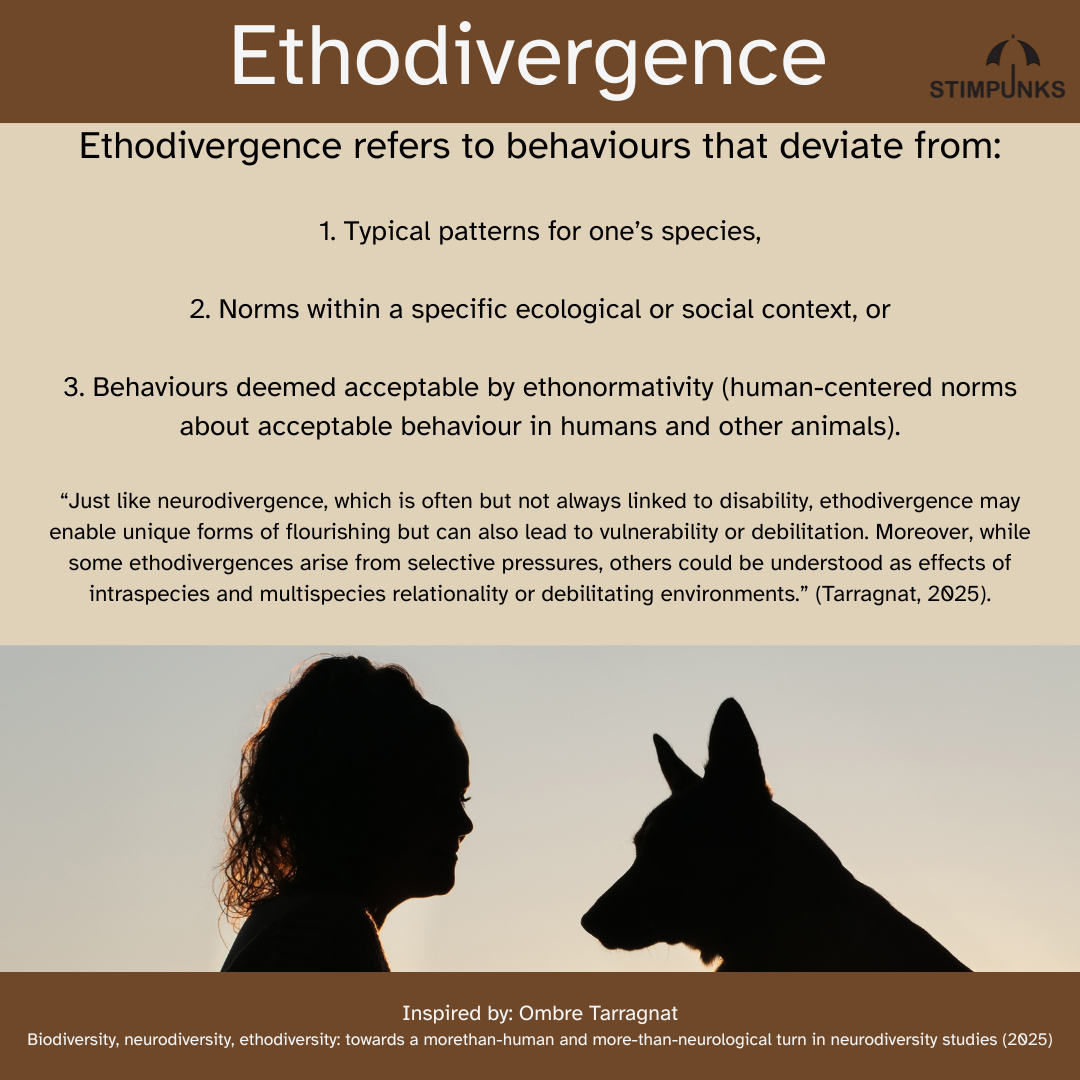
Ethodivergence
…ethodivergence refers to ways of being and behaving that depart from the behavioural patterns (1) dominant in one’s species, (2) in one’s ecological and social milieu, and/or (3) imposed by anthropocentric ethonormativity – understood as the normative regulation, based on humanist principles, of the behaviours which can (or cannot) be accepted in given animals (human…
-
Ethodiversity
Ethodiversity, short for ethological diversity, refers to the intra- and inter-specific variabilities and differences in behavioural or existential styles in (human and nonhuman) animals. Ethodiversity encompasses biological (including traditional ethological) needs, behavioural patterns, existential orientations, affects, as well as inter- and intraspecific relationality. The term ‘ethodiversity’ parallels ‘biodiversity’ and ‘neurodiversity’. As a phenomenon, I suggest…
-
Popular Education
Popular education is based upon the teaching and practices of Pablo Freire’s Pedagogy of the Oppressed. Freire believed that “knowledge emerges only through invention and re-invention, through the restless, impatient, continuing, hopeful inquiry human beings pursue in the world, with the world, and with each other.” Popular education is an interactive way of teaching and…
-
Empire of Normality
Robert Chapman calls the “Empire of Normality” the set of scientific, institutional, cultural, and legal impositions that define what is considered pathological and what is deemed normal, based on its alignment with the mandate of productivity. Today, cognitive capitalism has transformed the world into an increasingly uninhabitable place for both neurodivergent and neurotypical people. This…
-
R-Word
For example, people with intellectual disabilities get called the R-word. People used the R-word to say that it was okay to discriminate against us. Some people still use the R-word that way. It still hurts us to hear the R-word. It makes us feel bad about having an intellectual disability. It makes us feel scared…
-

Object Personification
Object personification is the attribution of human characteristics to non-human agents. In online forums, autistic individuals commonly report experiencing this phenomenon. Given that approximately half of all autistic individuals experience difficulties identifying their own emotions, the suggestion that object personification may be a feature of autism seems almost paradoxical. Why would a person experience sympathy…
-
Safe Space
A place where anyone can relax and be fully self-expressed, without fear of being made to feel uncomfortable, unwelcome or challenged on account of biological sex, race/ethnicity, sexual orientation, gender identity or expression, cultural background, age, or physical or mental ability; a place where the rules guard each person’s self-respect, dignity and feelings and strongly…
-

Fuel Bubble
“Fuel bubble” is a metaphor for energy and attention management that incorporates niche construction, interests, psychological safety, self-determination, regulation, and flow states into a carefully woven balance of inputs and outputs that supports an individual to thrive. He explained that his fuel bubble has several components. It is the physical space, around his desk, as…
-
Weirdwashing
Weirdwashing is when people and especially corporations trade on surface indicators of strangeness, difference or rebellion, without making space for the real thing. Weirdwashing. Capitalism & Non-Conformity; Co-option… | by Fergus Murray | Mar, 2025 | Medium As well as reducing political movements to little more than marketable images, this can lead to signifiers of…
-
AuDHD
Autistic and ADHD? That’s AuDHD. AuDHD Explained I The Overlap of Autism and ADHD – Tiimo App AuDHD is the intersection of Autism and ADHD, two neurotypes that frequently co-occur. While they’re often seen as opposites – one craving routine, the other drawn to novelty – the reality is far more complex. AuDHD is not…
All Glossary Entries
- Ableism
- Abraction
- Acceptance
- Access Intimacy
- Accessibility
- Accommodation
- ActuallyAutistic
- Addiction
- ADHD Tax
- Administrative Burden
- Advice Process
- Affinity Group
- Affinity Space
- Alexithymia
- Algorithm
- Alien
- Allistic
- Allyship
- Aloneness
- Alt Text
- Alternative and Augmentative Communication
- Altruism
- Americans with Disabilities Act
- Anarchism
- Anti-library
- Aphantasia
- Applied Learning
- Art
- Artificial Intelligence
- Artificial Scarcity
- Asynchronous Communication
- AuDHD
- Autigender
- Autism Grievance Parent
- Autism Warrior Parent
- Autistic
- Autistic Chronophobia Theory
- Autistic Joy
- Autistic Language Hypothesis
- Autistic Polling
- Autistic Rapport
- Autistic Rhizome
- Autistic Shielding
- Canary
- Care
- Care Web
- Cavendish Space
- Caves, Campfires, and Watering Holes
- Change
- Checklists
- Childism
- Chosen Family
- Chronic
- Chronic Constellation
- Clumping
- Co-regulation
- Coddle
- Code
- Code-Meshing
- Cognitive Behavioral Therapy
- Cognitive Liberty
- Collaborative Morality
- Collective Risk Shift
- Comedy
- Commonplace Book
- Community
- Community of Practice
- Community Organizing
- Compassion
- Competency Network
- Conceptual Portmanteau
- Concision
- Connection
- Conservatism
- Constructionism
- Created Serendipity
- Crip
- Crip Linguistics
- Crip Tax
- Crip Time
- Cripple Punk
- Critical Race Theory
- Critical Thinking
- Critical Wellness
- Cyborg
- Dandelions, Tulips, and Orchids
- DARVO
- Data Void
- Deep Pressure
- Deficit Ideology
- DEIAB
- Demand Avoidance
- Design Justice
- Design Questioning
- Diagnosis
- Dialectical Behaviour Therapy
- Different
- Differentiated Instruction
- Digital Gardening
- Digital Sociology
- Disability Dongle
- Disability Double-bind
- Disability Justice
- Disability Police
- Disabled
- DisCrit
- Diversity
- Dolphining
- Dopamine Dressing
- Double Empathy Extreme Problem
- Double Empathy Problem
- Dress Codes
- Dyslexia
- Dyspraxia
- Echolalia
- Edges
- Education
- Efficiency
- Elopement
- Embodied Attunement
- Embodiment
- Emergence
- Emotional Bid
- Empathy
- Empire of Normality
- Employee Resource Group
- Enshittification
- Epistemic Authority
- Epistemic Injustice
- Epistemic Pluralism
- Epistemic Trespassing
- Equity
- Ethodivergence
- Ethodiversity
- Eugenics
- Evidence-Based
- Evolution
- Executive Function
- Experiential Learning
- Expertise
- Exposure Anxiety
- Extractive Abandonment
- Eye Contact
- Identity
- Identity First Language
- Identity Politics
- Imposter Syndrome
- Inclusion
- Infodump
- Inspiration Exploitation
- Intelligence
- Intelligence Quotient
- Interdependence
- Interdisciplinary Learning
- Intermittent Collaboration
- Internalized Ableism
- Interoception
- Intersectionality
- Interviews
- Intrinsic Motivation
- Invisible Disability
- Iteration
- Nature
- Neoliberalism
- Nesting
- Neuro-anarchy
- Neuro-Holographic
- Neuroaffirming
- Neurocentrism
- Neuroception
- Neurocosmopolitanism
- Neurocousin
- NeurodiVenture
- Neurodivergent
- Neurodiversity
- Neuroessentialism
- Neurokin
- Neurokit
- Neurological Pluralism
- Neurome
- Neurominority
- Neuronormativity
- Neuroqueer
- Neurospicy
- Neurosupremacy
- Neurotype
- Neurotypical
- Neurotypical Perspectivelessness
- Niche Construction
- Noncompliance
- Nonspeaking
- Normal
- Parallel Play
- Pathology Lite
- Pathology Paradigm
- Peer Respite
- Peer Support
- Penguin Pebbling
- Performative Neurodiversity (Neurodiversity Lite)
- Phone Calls
- Place-Based Education
- Plain Text
- Play
- Pluralism
- Polyvagal Theory
- Popular Education
- Posthumanism
- Postmortem
- Power
- Precarity
- Predatory Inclusion
- Prepping
- Privacy
- Privilege
- Problem Behavior
- Processing Time
- Progressive Education
- Prosocial
- Psychological Safety
- Punk
- Puzzle
- Sadopopulism
- Safe Space
- Samefood
- Scenius
- School-Induced Anxiety
- Schoolishness
- Scientific Essentialism
- Scientism
- Segregationist Discourse
- Self-Care
- Self-Determination Theory
- Self-Injurious Stimming
- Self-Organizing
- Semiotic Domains
- Sensory Hell
- Sensory Trauma
- Shame
- Shutdown
- Situational Mutism
- Sleep
- Slow Pedagogy
- Social Model of Disability
- Solarpunk
- Somatic
- Somatic Rudder
- Southern Strategy
- Space Bunny
- Space Holder
- Spaced Repetition
- Sparkle Brain
- Special Interest
- Special Needs
- Spiky Profile
- SpInfodump
- Spoon Theory
- STEM
- Stigma
- Stim Listening
- Stim-Watching
- Stimming
- Stimpunk
- Strategic Essentialism
- Straws
- Structural Ideology
- Subtype
- Suicide
- Support Swapping
- Systems Generated Trauma
- Techno-Legal Solutionism
- Techno-solutionism
- Technoableism
- Tendril Theory
- Theory of Mind
- Thick Data
- Third Places
- Tone Indicators
- Tonic Masculinity
- Toolbelt Theory
- Tourette Syndrome
- Toxic Masculinity
- Toxic Positivity
- Transcendent Thinking
- Transepistemics
- Transformative Justice
- Trauma
- Triple Empathy Problem
- Triskelion
- Trust
- Tryborg
Essential Neurodiversity Vocabulary: The Good, The Bad, The Different
Here’s some essential neurodiversity, disability, and equity vocabulary grouped by the good, the bad, and the different.
Other Glossaries
- Neuro-affirming Language & Glossaries | Autistic Realms
- Neuroaffirmative Neurodivergent Flashcards
- Autistic Glossary – AMASE
- Autism Glossary — Aurora Autistic Consulting
- The Words We Use | CommunicationFIRST
- Words that make me go hmmm… – Rewriting social care
- Parley Vouz Health & Social Care? (An A to Z of Carespeak) – Love, Belief and Balls
- Voices of Neurodiversity: An Inclusive Encyclopaedia


