

What might education look like in a system in which the acceptance, inclusion, and accommodation of every sort of bodymind represents an unquestioned baseline?
Walker, Nick. Neuroqueer Heresies: Notes on the Neurodiversity Paradigm, Autistic Empowerment, and Postnormal Possibilities (p. 77). Autonomous Press.
This pathway guides us through the ableist reality of mainstream education into progressive, neuroaffirming education that scales from home to entire school districts.
What if both the education of youth and adults, and the training of educators, included the explicit understanding that no neurocognitive style is more “correct” or “normal” than any other, and that the work of mutual accommodation is both an essential part of a proper education and an essential preparation for being a participating citizen in a civilized society?
Walker, Nick. Neuroqueer Heresies: Notes on the Neurodiversity Paradigm, Autistic Empowerment, and Postnormal Possibilities (p. 78). Autonomous Press.
About Learning Pathways
A learning pathway is a route taken by a learner through a range of pages, modules, lessons, and courses to build knowledge progressively.
Pathways don’t need to be traversed in order. Pick what looks interesting. Choose your own adventure.
Table of Contents
- Prologue
- Education Access
- Reframe Education
- Behaviorism
- Neuroaffirming Practice
- Progressive, Human-Centered Education
- Home Education
- Six Things Educators Must Know About Neurodivergent People
- What Six Common Features of Autistic Thinking Mean for Teachers in the Classroom
- Five Ways to Welcome All Bodyminds to Your Learning Space
- The Five Neurodivergent Love Locutions
Prologue
This section welcomes you into the lived reality of neurodivergent and disabled people in education. It centers a powerful video that shows how school environments themselves—not students—create barriers. It asks us to see classrooms through the eyes of those who have struggled there and to change the circumstances rather than demand more resilience from young people.
Take a Walk in Our Shoes
This powerful animation reveals that the barriers and solutions lie not within the young person, but in the school environment, its ethos and in peer and teacher relationships and attitudes.
Walk in My Shoes – The Donaldson Trust
We have turned classrooms into a hell for neurodivergence. Telling young neurodivergent people struggling to attend school to be more resilient is profoundly inappropriate.
Erin’s experiences shine a light on issues beyond her control that could be resolved by others; by listening and by showing they care. She could not have done more. Telling young autistic people struggling to attend school to be more resilient is profoundly inappropriate, if what you are really asking is for them to keep going under circumstances they should not be asked to endure. We need to change the circumstances.
Walk in My Shoes – The Donaldson Trust
Education Access: We’ve Turned Classrooms Into a Hell for Neurodivergence
The number of autistic young people who stop attending mainstream schools appears to be rising.
Walk in My Shoes – The Donaldson Trust
My research suggests these absent pupils are not rejecting learning but rejecting a setting that makes it impossible for them to learn.
We need to change the circumstances.
Trainers are rejecting behaviorism because it harms animals emotionally and psychologically.
Empty Pedagogy, Behaviorism, and the Rejection of Equity | Human Restoration Project | Chris McNutt
What does that say about classrooms that embrace it?
This “science-driven” mantra has been seen before through eugenics.
Therefore, eugenics is an erasure of identity through force, whereas radical behaviorism is an erasure of identity through “correction.”
This all assumes a dominant culture that one strives to unquestionably maintain.
Let’s change the circumstances.
Education Access
Here we explore how mainstream schooling is shaped by norms that favor only some ways of learning. This section shows how traditional classrooms, technology, and behavior-based systems can make learning unsafe or impossible for many bodyminds. It argues that the right to learn in your own way should be a basic human right, not something granted only after fitting in.
Neurodiversity is an equity imperative and is critical in shifting the culture of teaching and learning.
“Neurodiversity is Human Diversity: An Equity Imperative for Education” in the International Journal for Talent Development and Creativity (Volume 10, Number 2, December, 2022) IJTDC Journal – IJTDC 10(1&2) 2022
- Education Access: We’ve Turned Classrooms Into a Hell for Neurodivergence
- School-Induced Anxiety
- We Don’t Need Your Mindset Marketing: Education Technology and the New Behaviorism
- Fix Injustice, Not Kids: Justice, not grit. Justice, not growth mindset. Justice, not behavior “management.” Justice, not rearrangement of injustice.
- The Road to Neuronormative Domination: Thorndike won, Dewey lost. Skinner won, Papert lost.
- The right to learn differently should be a universal human right that’s not mediated by a diagnosis.
Reframe Education
This part challenges the idea that differences are deficits. It invites us to see diverse ways of thinking, sensing, and engaging as natural human variation. By reframing how we talk about ability and learning, education becomes more supportive and respectful—focused on strengths, individualized support, and environments that actually include everyone.
Reframe these states of being that have been labelled deficiencies or pathologies as human differences.
Normal Sucks: Author Jonathan Mooney on How Schools Fail Kids with Learning Differences
- Reframe Our Ways of Being
- ♿️📚The Need: Anti-Ableist Space for Human-Centered Learning
- ❤️ The Answer: Reframing, Respectful Connection, and the Presumption of Competence
- ⚡️🦅🌈 The Feeling: Electric Belonging and Soaring Inclusion
- 📚 The Learning: Passion-Based, Human-Centered Learning Compatible With Neurodiversity and the Social Model of Disability
- The Gift: Learning Disabilities Reframed
- Neurodiversity in the Classroom
- Neuroqueer Learning Spaces Manifesto
- An Open Framework For Neuroqueer Learning Spaces
Behaviorism
Traditional behaviorist approaches—emphasizing reward and punishment—are critiqued here as limiting and dehumanizing. This section explains how reducing learning to observable “behavior” ignores real needs, intentions, and experiences. It pushes back on coercive systems that try to shape students into compliance rather than support their growth and autonomy.
The most restrictive virtual straitjacket that educators face is behaviorism.
It’s Not About Behavior – Alfie Kohn
- Behaviorism Why Sheet
- Behaviorism Glossary Page
- A Fade to Extinction for Ethically Questionable Approaches That Disregard Neurodiversity
- There Is Little Empirical Basis to Suggest That PBS Is Effective
- Ordinary tried to fix me. I was a threat to a page in history.
- Letter to the Boston Globe on “The Mismeasure of Misha: My son broke free from the most common therapy for autism. Why is it used on so many kids like him?”
- Profiting from Misery: When Autism Researchers Disregard Harms
- DIY at the Edges: Surviving the Bipartisanship of Behaviorism by Rolling Our Own
- Does Behaviorism Belong in the Classroom?
- Persuasion and Operant Conditioning: The Influence of B. F. Skinner in Big Tech and Ed-tech
Behaviorism is a dehumanizing mechanism of learning that reduces human beings to simple inputs and outputs. There is an ever-growing body of research suggesting that behaviorism is not only harmful to how we learn, but is also oppressive, ableist, and racist.
More Human Than a Ladder or Pyramid: Psychology, Behaviorism, and Better Schools | Human Restoration Project | Chris McNutt
Behaviorism measures the surface, badly.
- Behaviorism is a theory of learning that focuses on observable behaviors and environmental stimuli.
- Behaviorism only looks at observable behavior which can be measured. It doesn’t take into account thoughts, genetics, anxiety, trauma, health, or emotions because those things cannot be measured.
- The more our attention is fixed on the surface, the more we slight students’ underlying motives, values, and needs.
- Behaviors are just the protruding tip of the proverbial iceberg. What matters more than “What?” or “How much?” is “How come?”
- Behaviorists ignore, or actively dismiss, subjective experience – the perceptions, needs, values, and complex motives of the human beings who engage in behaviors.
- Behaviourism is a reduction of dimensions which creates an illusion of scientific worth by focussing only on what we can ‘know for sure’.
- Ultimately behaviorism provides a simplistic lens that can’t see beyond itself.
- Why is the doctrine of behaviorism still being used, at all?
- Behaviorism is a repudiation, an almost willful dismissal, of subjective experience.
- It’s time we outgrew this limited and limiting psychological theory. That means attending less to students’ behaviors and more to the students themselves.
- How can ABA be the gold-standard for autism when it ignores everything we know about autism?
- The focus on surface behavior, without seeming to understand or be concerned about the complexity, or even the simple dichotomy of volitional versus autonomic (stress response) and the use of outdated, compliance based, animal based behaviorism (which has no record of long term benefits) continues to fail our country’s students.
- Radical Behaviourism is broadly seen by psychology professionals as a simplistic and restrictive theory which is useful in certain situations but cannot sum up the entirety of the human experience. It doesn’t even satisfactorily answer some questions about behaviours seen in animals.
- Findings did not reveal compelling evidence that ABA is an approach that improves the quality of life or wellbeing of autistic people.
- It’s been refuted so overwhelmingly.
The primary legacy of ABA is trauma.
- “I have ABA (Applied Behavioural Analysis) therapy and I hate it, probably the worst part of my autism. Everyday I have someone come to my house wake me up and boss me around for 4 hours.”
- The problems associated with ABA run very deep. It is a human rights violation to continue to ignore and discount the voices of Autistic people about deeply traumatising and harmful “therapies” such as ABA.
- The behaviorist strategies caused a fracturing of identity and mental health problems.
- “I became a frightened passive prisoner in a world I was alienated from by their violent attempts to avoid seeing who I really was and what I may contribute to humankind.”
- ABA is a breeding ground for meltdowns. The only way ABA knows how to “train” a child, to “motivate” them (as if they were lacking in motivation before this), is to negate their needs or take away their joy.
- This is a child’s heart in fight or flight mode, constantly, that is being bombarded with all these instructions and prompting.
- Nearly half (46 percent) of the ABA-exposed respondents met the diagnostic threshold for PTSD, and extreme levels of severity were recorded in 47 percent of the affected subgroup.
- Adults and children both had increased chances (41 and 130 percent, respectively) of meeting the PTSD criteria if they were exposed to ABA.
- Current research has suggested ABA as causing a severe level of trauma from childhood participation.
- Autistic individuals continue to highlight the suffering felt through ABA’s inability to acknowledge the negativity inflicted through forceful coercion.
- To be punished for a stress response is harmful and traumatic.
- Adults who received ABA as children are at an increased risk of suicide and PTSD.
- The conditions created by ABA foster psychological ill-being.
- It focuses on training children by holding their sources of happiness hostage and using them as blackmail to get the children to meet goals which are not necessarily in the best interest of their emotional health.
- Behaviorism is harmful for vulnerable children, including those with developmental delays, neuro-diversities (ADHD, Autism, etc.), mental health concerns (anxiety, depression, etc.)
- Any reasonable observer cannot confidently deny that ABA is negatively affecting the autistic population.
- Compliance, learned helplessness, food/reward-obsessed, magnified vulnerabilities to sexual and physical abuse, low self-esteem, decreased intrinsic motivation, robbed confidence, inhibited interpersonal skills, isolation, anxiety, suppressed autonomy, prompt dependency, adult reliance, etc., continue to be created in a marginalized population who are unable to defend themselves.
- These children are the population that was chosen to be the subjects of an experimentally intense, lifelong treatment within a therapy where most practitioners are ignorant regarding the Autistic brain—categorically, this cannot be called anything except abuse.
ABA violates the fundamental tenets of bioethics.
- Applied Behavior Analysis (ABA) … manifests systematic violations of the fundamental tenets of bioethics.
- Adult autistics who have undergone ABA have described as violating the fundamental tenets of bioethics, as well as the United Nation’s Convention on the Rights of Persons with Disabilities.
- Autism advocates are fully justified in their concerns-the rights of autistic children and their parents are being regularly infringed upon.
- Employing ABA violates the principles of justice and nonmaleficence and, most critically, infringes on the autonomy of children and (when pushed aggressively) of parents as well.
- Radical behaviorism is an erasure of identity through “correction.” This all assumes a dominant culture that one strives to unquestionably maintain.
- PBS is not actually supported by Disabled People’s Organisations and allies. This is because PBS does not meet human rights, has a poor quality evidence base and its risks and harms are not understood.
- Providing a treatment that causes pain in exchange for no benefit, even if unknowingly, is tantamount to torture and violates the most basic requirement of any therapy: to do no harm.
- Autistics have been excluded from all committees, panels, boards, etc., charged with developing, directing, and assessing ABA research and treatment programs.
Behaviorist education is ableist education.
- Behaviorist education is ableist education.
- We are in a sort of remediation industrial complex, where there’s all sorts of services and treatments and interventions to make the square peg fit the round hole. Parents are relentlessly told that that’s their job.
- This is a top-down, power over, authoritarian approach that is not in alignment with the rest of the goals of the educational system that is designed to teach children to think and learn.
- The most restrictive virtual straitjacket that educators face is behaviorism.
ABA violates autonomy.
- ABA violates autonomy insofar as it coercively closes off certain paths of identity formation.
- ABA violates autonomy by coercively modifying children’s patterns of behavior to be misaligned with their preferences, passions, and pursuits. Such superficial change is a pervasive form of interference that compromises children’s present and future autonomy.
- Pretty much everything an autistic child does, says, doesn’t do or doesn’t say is pathologised and made into a way to invent a ‘therapy’ for it. It’s actually hell to experience.
- Our non-compliance is not intended to be rebellious. We simply do not comply with things that harm us. But since a great number of things that harm us are not harmful to most neurotypicals, we are viewed as untamed and in need of straightening up.
- Many autistic persons who have participated in ABA anecdotally reported feelings of belittlement, expressed the loss of behavioural autonomy, recalled external pressure to “not be themselves”, and viewed reward or consequence systems as a form of control.
Autistic adults loathe ABA.
- It is nothing short of stunning to learn just how widely and intensely ABA is loathed by autistic adults who are able to describe their experience with it.
- The majority of the 620 survey respondents from Europe were strongly against the use of ABA and ABA-based methods with autistic people.
- Yet the vast majority of autistic people when polled (typically 97%) oppose ABA including and especially those who went through it as children.
ABA is badly out of date.
- ABA therapy is badly out of date, scientifically speaking.
- Until ABA updates its scientific methods, its functions of behavior, and incorporates modern day psychology – including neurology, child development, educational psychology, and other vital research – it cannot be considered to be a safe, effective, or ethical field.
- Research in ABA continues to neglect the structure of the autistic brain, the overstimulation of the autistic brain, the trajectory of child development, or the complex nature of human psychology.
- Radical Behaviourism is considered out-of-date by modern psychologists.
- The future of Autism and other conditions ABA professes to treat is very bleak.
I would never treat a dog that way.
- Trainers are rejecting behaviorism because it harms animals emotionally and psychologically. What does that say about classrooms that embrace it?
- Dog trainers don’t talk about systematically altering behaviour as if the dog weren’t a thinking, feeling, sentient being.
- A good dog trainer doesn’t extinguish behaviours which improve the dog’s mental health and happiness. But an ABA practitioner may not think twice before doing this to a human child.
- Dog trainers understand that dogs need to chew and bark and dig, but ABA therapists don’t understand that autistic children need to repeat words and sentences, flap their hands, and sit quietly rocking in a corner when things get too much.
- So if it isn’t sufficient to properly train a dog, is it sufficient in educating a child?
- I would never treat a dog that way.
When I was a little girl, I was autistic. And when you’re autistic, it’s not abuse. It’s therapy.
Quiet Hands | Just Stimming…
Neuroaffirming Practice
This section introduces practices that affirm neurodivergent bodyminds. It emphasizes principles like acceptance, authenticity, agency, and empowerment. Instead of forcing students to conform to rigid norms, neuroaffirming practice supports self-direction, builds trust, and listens to what learners themselves bring to the table.
Instead of behaviorism, do this:
- Create a Neurodiversity Inclusive Environment
- Alternatives to ABA
- Neuroaffirming
- Key Principles When Supporting Autistic People
- High School Anti-Behaviourism Behaviour Management Policy
- Seven Principles for Valuing, Prioritising and Enabling Autistic Children’s Autonomy
- 14 Obstacles to Neurodiversity Affirming Practice
Back Off
I want to talk about the potential benefits of less therapies. I want to talk about eliminating interventions. I want to talk about why what is called “prompting” is actually forcing and how that should be stopped.
Basically, I want to make the case for backing the eff off Autistic kids–Autistic people in general, actually.
All I’m asking for is a SINGLE study that provides any evidence that ABA is any more effective than kids spending equivalent time with someone who knows nothing about ABA.
If they can’t show that, how on Earth do they think they can justify a multi-billion dollar industry? What?
Pretty much everything an autistic child does, says, doesn’t do or doesn’t say is pathologised and made into a way to invent a ‘therapy’ for it.
It’s actually _hell_ to experience.
We should stop doing this and start learning about autism.
The Basics of Neurodiversity Affirming Practice
- Presume Competence — Presuming competence means assuming an individual can learn, think, and understand, even when we may not have evidence available to confirm this.
- Promote Autonomy — When we promote autonomy with children and young people, we are giving them the opportunity to make informed decisions about their care and supporting them to have a voice in all aspects of their lives.
- Respect all Communication Styles — To be neurodiversity affirming regarding communication, we need to consider all communication as valid and acknowledge that there are many ways that individuals communicate beyond spoken language.
- Be Informed by Neurodivergent Voices — Evidence-based practice incorporates research, clinical knowledge and expert opinion, along with client preferences, to provide effective support, and who better to provide expert opinion than neurodivergent individuals themselves.
- Take a Strengths-Based Approach — A strengths-based approach not only considers an individual’s personal strengths, but also how conditions in their environment can be adapted to remove barriers and facilitate access to desired activities.
- Honor Neurodivergent Culture — As therapists, we can honor our client’s neurodivergence by giving them a safe space to be themselves, accommodating their needs and being accepting of their neurodivergent style of being.
- Tailor Support to Individual Needs — Tailoring an approach specifically to a client’s needs involves recognising that due to differences in sensory processing, cognition, communication, and perception, neurodivergent individuals experience the world differently to the neurotypical population, and as such are likely to need different therapeutic supports.
The 5 As of Neurodiversity Affirming Practice
- Authenticity – A feeling of being your genuine self. Being able to act in a way that feels comfortable and happy for you.
- Acceptance – A process whereby you feel validated as the person you are, not only by yourself but by others too.
- Agency – A feeling of control over actions and their consequences in your day-to-day life.
- Autonomy – A state of being self-directed, independent, and free. Being able to act on your ideas and wants.
- Advocacy – To speak for yourself, communicate what is important to you and your needs or the needs of others.
The 6 Key Principles of Trauma-Informed Practice
- Safety: Prioritising the physical, psychological and emotional safety of young people.
- Trustworthiness: Explaining what we do and why, doing what we say we will do, expectations being clear and not overpromising.
- Choice: Young people are supported to be shared decision makers and we actively listen to the needs and wishes of young people.
- Collaboration: The value of young people’s experience is recognised through actively working alongside them and actively involving young people in the delivery of services.
- Empowerment: We share power as much as we can, to give young people the strongest possible voice.
- Cultural consideration: We actively aim to move past cultural stereotypes and biases based on, for example, gender, sexual orientation, age, religion, disability, geography, race or ethnicity.
The NEST Approach for Supporting Young People in Distress
- Nurture — The very first thing we need to remember is to help a young person feel safe – remember that experiencing a meltdown is incredibly scary. If someone is upset/ stressed/ having a meltdown, focusing on helping them to feel calm is important as people cannot think logically at this time. Until they feel safe, there is no next productive step.
- Empathise — If someone is struggling or has reached crisis point, it is important to assume there is a good reason why and to try to understand their perspective, plus any reasoning for their current struggle.
- Sharing Context — Why do we want to problem solve with the young person? We need to show that how the young person feels is important to us, but also share the perspectives of other people so they can fully understand the situation if the situation is a result of miscommunication.
- Teamwork — Most services and settings focus on a system of rewards and punishments for changing behaviour. We understand that when young people are struggling we need to address the root cause. The best way to do this is by working together.
Source: The NEST Approach for Supporting Young People in Distress
Understanding Motivation and Behaviour through Self-Determination Theory
- Autonomy — Self-Determination Theory (SDT) underscores the importance of autonomy in motivation and behaviour. Autistic young people are more likely to engage positively when they have choices and control over their actions. Our school environment is designed to provide opportunities for autonomy, such as choosing activities and setting goals.
- Competence — Competence is another key component of SDT. We recognize the importance of providing opportunities for young people to develop and showcase their skills and abilities. This fosters a sense of competence and achievement. We take an asset-based approach: identifying key strengths that our pupils have and fostering these strengths rather than solely focusing on their challenges. As a result, pupils feel empowered to further develop their own skill sets and recognise their unique contributions.
- Relatedness — Relatedness, the third component of SDT, emphasises the significance of positive social connections. Our school promotes acceptance, teamwork, and relationship-building among participants, creating a sense of belonging and relatedness.
- Integration with Our Principles — The principles of SDT are integrated into our behaviour management approach. By supporting autonomy, competence, and relatedness, we enhance motivation, engagement, and overall wellbeing of our students.
Source: Understanding Motivation and Behaviour through Self-Determination Theory
Key Principles When Supporting Autistic People
- Autism Acceptance — In many spaces and places autism is seen as a negative thing. Autism is not a ‘disorder’ or a ‘burden’, it is simply a difference. Just like every other brain type, the autistic brain has its negatives and its positives.
- Young people often need to recover from their negative experiences to be able to thrive — Young people need time, and the right support to recover. Especially since outside of safe spaces, they may still be exposed daily to trauma and stress.
- Young people do well if they can — We believe that all young people do well if they can. Everyone wants to thrive, do well, and no one wants to cause upset with others or break rules. If someone is struggling – there is a reason why they are struggling. We can work together to identify reasons why and what may help.
- Co-regulation — Young people need repeated experiences of co-regulation from a regulated adult before they can begin to self-regulate. They may also not know how to regulate by themselves and we may be a key resource to help them create ways that work for them.
- Self-Care — Self care is vital – it isn’t possible to properly care for young people when you are overwhelmed yourself.
- Neurodiversity affirming practice — We believe in the 5 As of neurodiversity affirming practice, from The Autistic Advocate. This is a strengths and rights-based approach to affirm a young person’s identity, rather than focusing on ‘fixing’ a young person because of their neurotype.
Top 5 Neurodivergent-Informed Strategies
- Be Kind — Take time to listen and be with people in meaningful ways to help bridge the Double Empathy Problem (Milton, 2012). Be embodied and listen not only to people’s words but also to their bodies and sensory systems.
- Be Curious — Be informed by the voices of those with lived experience, learn from and act on the neurodiversity-affirming research that is evolving and that validates the inner experiences of neurodivergent people. For Autistic/ ADHD people, this includes understanding how the theory of monotropism and embracing people’s natural flow state can support well-being (Murray et al., 2005) and (Heasman et al., 2024).
- Be Open — Be open and be compassionate. It has been shown that neurodivergent people are at a higher risk of mental difficulties and suicide (Moseley, 2023). Think about the weight a neurodivergent person carries in a society that values neuronormative ways of being and consider the impact of masking on people’s mental health (Pearson and Rose, 2023).
- Be Radically Inclusive — We need a strength-based approach to care and education. (Laube 2023) suggested we must acknowledge and respect a person’s neurodivergence, learn how it affects them, and value their unique experiences. We need individualised support instead of using a one-size-fits-all approach. We should try to reduce and challenge stigma and stereotypes and provide radically inclusive spaces for people to thrive in.
- Be Neurodiversity-Affirming — Take time to read about the neurodiversity paradigm “Neurodiversity itself is just biological fact!” (Walker, 2021); a person is neurodivergent if they diverge from the dominant norms of society. “The Neurodiversity Paradigm is a perspective that understands, accepts and embraces everyone’s differences. Within this theory, it is believed there is no single ‘right’ or ‘normal’ neurotype, just as there is no single right or normal gender or race. It rejects the medical model of seeing differences as deficits.” (Edgar, 2023)
Autistic SPACE: A Novel Framework for Meeting the Needs of Autistic People
- Sensory needs — Autistic people experience the world differently (Royal College of Psychiatrists, 2020). Sensory sensitivities are common to almost all autistic people (MacLennan et al, 2022), but the pattern of sensitivities varies (Lyons-Warren and Wan, 2021). Autistic people can be sensory avoidant, sensory seeking or both (Royal College of Psychiatrists, 2020); hypo- or hyper-reactivity to any sensory modality is possible (Tavassoli et al, 2014) and a person’s sensory responsiveness can vary depending on circumstances (Strömberg et al, 2022). A ‘sensory diet’ provides scheduled sensory input which can aid physical and emotional regulation (Hazen et al, 2014).
- Predictability — Autistic people need predictability and may experience extreme anxiety with unexpected change (Royal College of Psychiatrists, 2020). This underlies the autistic preference for routine and structure.
- Acceptance — Beyond simple awareness, there is a pressing need for autism acceptance. A neurodiversity-affirmative approach recognises that neurodevelopmental differences are part of the natural range of human development (Shaw et al, 2021) and acknowledges that attempts to make autistic people appear non-autistic can be deeply harmful (Bernard et al, 2022). This does not exclude inherent or environmental disability.
- Communication — Autistic people communicate differently. Many use fluent speech, but may experience challenges with verbal communication at times of stress or sensory overload (Cummins et al, 2020; Haydon et al, 2021). Others do not speak or may use few words (Brignell et al, 2018). Many non-speaking or minimally speaking autistic people use augmentative and alternative communication (AAC) methods, including visual cards, writing or electronic devices, which should be facilitated (Zisk and Dalton, 2019).
- Empathy — Despite common assumptions to the contrary, autistic people do not lack empathy (Fletcher-Watson and Bird, 2020). It may be experienced or expressed differently, but this is perhaps the most damaging misconception about autism (Hume and Burgess, 2021). In fact, many autistic people report experiencing hyper-empathy, to the point of being unable to deal with the onslaught of emotions, leading to ‘shutdown’ in order to cope (Hume and Burgess, 2021). A bi-directional, mutual misunderstanding occurs between autistic and non-autistic people, termed ‘the double empathy problem’ (Milton, 2012). As such, non-autistic healthcare providers may struggle to empathise with autistic patients, particularly where communication training is generally conducted from a neuronormative, non-autistic perspective, in which the needs of autistic people are not considered (Bradshaw et al, 2021).
Source: Autistic SPACE: A Novel Framework for Meeting the Needs of Autistic People
NEST (NEurodivergent peer Support Toolkit)
- Inclusivity. The NEST group is a club for all neurodivergent young people, whether they have a formal diagnosis or not. NEST groups should also be thinking about other forms of inclusivity – for example making sure that any students who might feel marginalised in other ways (e.g. being from a minority ethnicity or sexuality group, or having a physical disability) are welcomed to the group.
- Belonging. Peer support allows neurodivergent young people to support each other through their shared understanding. Through NEST groups, we envisage opportunities for neurodivergent young people to share stories and strategies that help them flourish, to feel welcomed ‘as they are’, and to be part of the school community.
- Acceptance. When people feel accepted, they can relax, be frank about their troubles without fear of judgement, and enjoy themselves. Students attending a NEST group should be supported to accept each other, and themselves. This may also lead to greater participation in school life, leadership in the community, and wellbeing.
- Advocacy. Getting support from other people can help make sure neurodivergent young people’s voices are heard on issues that are important to them, that their rights are protected and promoted, and that their views and wishes are genuinely considered when decisions are being made about their lives. NEST groups aim to help neurodivergent students advocate for each other, and for themselves.
The Eight Dimensions of Care
- Insiderness/Objectification
- “…insiderness recognizes that we each have a personal world that carries a sense of how things are for us. Only the individual themself can be the authority on how this inward sense is for them.”
- “Objectification treats someone as lacking in subjectivity, or as a tool or object lacking agency…”
- “Objectification denies the inner subjectivity of a child or young person, removing their full humanness or agency, while treating their inner world as thin or non-existent.”
- Agency/Passivity
- “Being human involves being able to make choices and to be generally held accountable for one’s actions. Having a sense of agency is closely linked to a sense of dignity.”
- Uniqueness/Homogenization
- “To be human is to actualize a self that is unique.”
- “Each person’s uniqueness is a product of their relationships and their context.”
- “Recognizing the child and young person’s characteristics, attributes, and roles (e.g., age, gender, ethnicity, class, friend, son, and student) honors and supports them in their journey toward a flourishing life and is essential for well-being.”
- “Homogenization erodes identity by focusing on conformity and norming.”
- Togetherness/Isolation
- “A person’s uniqueness exists in relation to others and in community with others.”
- “Through relationships, practitioners and the children and young people they work with have the opportunity to learn more about themselves, through both commonalities and differences.”
- “Inclusive practices nurture a sense of belonging and connection.”
- “Togetherness is experienced through building bridges of understanding and empathy to validate the young person’s suffering, struggles, strengths, and perspectives.”
- Sense-Making/Loss of Meaning
- “Sense-making involves a motivation to find meaning and significance in things, places, events, and experiences.”
- “The child or young person is viewed as the nascent storyteller and storymaker of their own life.”
- “Autistic ways of being and perceiving are understood as intrinsically meaningful and help formulate a view of the young person’s lifeworld, their health, well-being, and identity.”
- “Listening openly to autistic interpretations of experiences in a relational way supports the young person to make sense of their world so they can define their experiences and reflect on how these experiences have shaped them.”
- Personal Journey/Loss of Personal Journey
- “To be human is to be on a journey.”
- “Understanding how we are at any moment requires the context of the past, present, and future, and ways of bringing each of these parts together into a coherent or appreciable narrative.”
- “A child or young person can and should be able to simultaneously feel secure in connections to the past while moving into the unfamiliarity and uncertainty of the future.”
- Sense of Place/Dislocation
- “To feel “at home” is not just about coming from a physical place, it is where the young person finds meaning and feels welcome, safe, and connected.”
- “Security, comfort, familiarity, and continuity are important factors in creating a sense of place.”
- “Dislocation is experienced when the child or young person is in an unfamiliar, unknown culture where the norms and routines are alien to them.”
- “The space, policies, or conventions do not reflect their identity or needs.”
- Embodiment/Reductionist View of the Body
- “Being human means living within the limits of our human body.”
- “Embodiment relates to how we experience the world, and this includes our perceptions of our context and its possibilities, or limits.”
- “A child or young person’s experience of the world is influenced by the body’s experience of being in the world, feeling joy, playfulness, excitement, pain, illness, and loss of function.”
- “Embodiment views well-being as a positive quality while also acknowledging struggles and the complexities of living.”
Good Autism Practice
- Understanding the Individual
- Principle One: Understanding the strengths, interests, and needs of each autistic child.
- Principle Two: Enabling the autistic child to contribute to and influence decisions.
- Positive and Effective Relationships
- Principle Three: Collaboration with parents/carers and other professionals and services.
- Principle Four: Workforce development related to good autism practice.
- Enabling Environments
- Principle Five: Leadership and management that promotes and embeds good autism practice.
- Principle Six: An ethos and environment that fosters social inclusion for autistic children.
- Learning and Development
- Principle Seven: Targeted support and measuring the progress of autistic children.
- Principle Eight: Adapting the curriculum, teaching, and learning to promote wellbeing and success for autistic children.
Source: Good Autism Practice Guidance | Autism Education Trust
It’s Not Rocket Science: 10 Steps to Creating a Neurodiverse Inclusive Environment
- Adapt the Environment
- The sensory environment – Does the individual have a place to work where they feel comfortable? Are the ambient sounds, smells, and visuals tolerable? Is the lighting suitable? What about uncomfortable tactile stimuli? Has room layout been considered? Can ear defenders, computer screen filters or room dividers be used to create a more comfortable work environment? Do people working with them have information about what might be a problem – e.g. strong perfume – and do they understand why this matters?
- The timely environment – Has appropriate time been allowed for tasks? Allowing time to reflect upon tasks and address them accordingly will maximise success. Are time scales realistic? Have they been discussed? Are there explicit procedures if tasks are finished early or require additional time? Are requests to do things quickly kept to a minimum with the option to opt out of having to respond rapidly?
- The explicit environment – Is everything required made explicit? Are some tasks based upon implicit understanding which draw upon social norms or typical expectations? Is it clear which tasks should be prioritised over others? Avoid being patronising but checking that everything has been made explicit will reduce confusion later. Is there an explicit procedure for asking questions should they arise (e.g. a named person (a mentor) to ask in the first instance)?
- The predictable environment – How predictable is the environment? Is it possible to maximise predictability? Uncertainty can be anxiety provoking and a predictable environment can help in reducing this and enable greater task focus. Can regular meetings be set up? Is it possible that meetings may have to be cancelled in the future? Are procedures clear for when expected events (such as meetings) are cancelled, with a rationale for any alterations? Can resources and materials be sent in advance?
- The social environment – Are procedures clear for when expected events (such as meetings) are cancelled, with a rationale for any alterations? Can resources and materials be sent in advance?
- Support the Individual
- Disclosing diagnosis – Is the individual willing to disclose their diagnosis to colleagues, and if so, how would they like to manage this? Would people who work with the individual benefit from training, or an opportunity to ask questions? If so, can a trusted, independent person be brought in to orchestrate an open and friendly discussion? If the individual does disclose to their colleagues, are they also willing for those colleagues to share the information more widely, or is this privileged information? Using autism as an example, – if and when autism comes up in conversation, what language does the person prefer? (e.g., autistic person, Aspie, autistic, person with autism).
- Project management – Does the person experience difficulties with planning, flexibility, sustained attention or inertia? What exacerbates these difficulties and how can they be minimised? Are there digital tools (e.g. time management apps, shared calendars) which can provide extra structure to the project? Is the individual’s preferred planning system non-linear (e.g. mind maps, sketch notes) or linear (e.g. gantt chart, “to do” list) and can this be accommodated? Does the person prefer to be immersed in a specific topic or task, or to have a selection of different tasks / intermediate deadlines – and can this preference be built into the project work plan?
- Communication styles – Does the person prefer literal, specific language? And if so, can their line manager / supervisor and colleagues be reminded to use this? Does the person prefer written communication, or face-to- face? Is Skype easier than a phone call? Should colleagues be reminded to explain why they are offering a particular comment or piece of advice, as well as offering the comment? Does their line manager / supervisor / colleagues cultivate an atmosphere that enables them to ask for help if needed?
- Well-being and work-life balance – Is the individual sleeping and eating well? Are meetings scheduled at times that suit their personal routine? Can they work from home or have more flexible working hours and breaks? Is the person known to relevant services including disability support or HR? Are they registered with a GP? Do they require disability leave to receive treatment or therapeutic support? Do they need support or advice from external services like Access to Work?
- Trouble-shooting – Have you talked to the individual to discuss what is working well and what isn’t? Are there coping strategies that they use in other settings that could be used or adapted here? Could tasks falling within the job role or course be altered? Or could work be shared between workers so each can play to their strengths? Work together to come up with new solutions to difficulties that haven’t been solved, and address new difficulties should they arise.
Source: “IT’S NOT ROCKET SCIENCE”
12 Core Commitments to a Culture of Care
- lived experience: We value lived experience, including in paid roles, at all levels – design, delivery, governance and oversight
- safety: People on our wards feel safe and cared for
- relationships: High-quality, rights-based care starts with trusting relationships and the understanding that connecting with people is how we help everyone feel safe
- staff support: We support all staff so that they can be present alongside people in their distress.
- equality: We are inclusive and value difference; we take action to promote equity in access, treatment and outcomes
- avoiding harm: We actively seek to avoid harm and traumatisation, and acknowledge harm when it occurs
- needs led: We respect people’s own understanding of their distress
- choice: Nothing about me without me – we support the fundamental right for patients and (as appropriate) their support network to be engaged in all aspects of their care
- environment: Our inpatient spaces reflect the value we place on our people
- things to do on the ward: We have a wide range of patient requested activities every day
- therapeutic support: We offer people a range of therapy and support that gives them hope things can get better
- transparency: We have open and honest conversations with patients and each other, and name the difficult things
Source: NHS England » Culture of care standards for mental health inpatient services
Seven Principles for Valuing, Prioritising and Enabling Autistic Children’s Autonomy
- Give an ‘out’ whenever possible.
- Don’t offer choice when there isn’t any.
- Praise and acknowledge assertion of need- regardless of outcome.
- Focus on enabling children to have control of their bodily and sensory experience.
- Explain your ‘no’s, don’t expect children to accept and comply ‘just because’.
- Share your own processes.
- Create spaces where children can follow their instincts and interests.
Source: “Shut your face!”; Prioritising, Valuing and Enabling Autistic Children’s Autonomy. – Play Radical
Reasonable Adjustments Possible at School
Here are some possible reasonable adjustments that can be established in schools to make neurodivergent pupil’s school careers more equitable with their peers. All schools, employers, local authorities and shops or services like leisure centres have a duty to make reasonable adjustments for disabled people under the Equality Act, 2010.
This may mean:
- Changing the way things are done
- Changing a physical feature, or
- Providing extra aids or services
Reasonable Adjustments Possible at School | Autistic Girls Network
Going Into School and the School Day
- Should be able to go in at a different time to avoid crowds
- Provide an alternative to the school bell
- Uniform regulations need to be relaxed on an individual basis for sensory reasons
- Check attendance and behaviour policies to make sure they are inclusive of all pupils including those with SEND
- Check policies on exclusions to make sure pupils are not being punished for behaviours relating to their SEND
- Have a whole school understanding of neurodiversity
- Understand and teach others about interoception and alexithymia
- Understand and teach others about communication styles and how they differ across neurotypes – difference not deficit
- May require a dedicated teaching assistant who understands the child, preferably one who is autistic
- Give understanding support over change and transition and consider small as well as big transitions
- Play therapy or lego therapy may be appropriate (as long as it isn’t trying to modify autistic behaviour)
- Speech and language therapy may be beneficial (as long as it isn’t trying to modify autistic behaviour)
- Develop an active relationship with parents and communicate about the school day – not just academic or behavioural stuff
- Even at secondary, copy parents in on important communication
- Support students to be able to independently chunk and plan tasks in a way that works for them
- While not all autistic students think visually, a visual timetable adapted for how they process information may be helpful
- As always, there is no one-size-fits-all solution. All autistic children are different and will have variable strengths, interests and support needs
In the Classroom
- Make sure the child knows what’s going to happen – no sudden surprises
- If you promise something, keep that promise
- Sitting at the front/back/near doorway of the classroom (student’s choice)
- Use of fidget toys – may be restricted to those that don’t make a noise
- Seating that allows movement
- Movement breaks as necessary
- ‘Timeout’ card to leave class (but child may feel too self-conscious to use it)
- Tasks to be chunked down and presented in different formats appropriate to the learner
- Instructions to be written as well as verbal
- Use of voice to text software, reader pens, scribe etc
- Modelling the work and/or providing a visual explanation (though not all autistic children are visual learners of course)
- Use of ear-defenders/noise-cancelling headphones and music if required
- Adapt lessons to pupil’s passionate interests (see section on Monotropism in our white paper here)
- A laptop may be preferable to writing – but listening and taking notes at the same time may not be possible
- A ‘sensory diet’ may be crucial to school bearability – needs Occupational Therapist input
- Provide specific and adapted sex/relationship education which uses clear and unambiguous language and is inclusive (see the section on this in our white paper here)
- Keep shouting and telling off (by the teacher) to a minimum. The autistic child may not differentiate between the whole class or another group being told off and them being told off
- Do not force an autistic child to take part in group work with students they don’t know, or be called on in class
- Do not change seating arrangements without prior preparation
- Consider not giving neurodivergent children detentions/exclusions at all, but definitely not for anything caused by executive function or processing issues eg. Forgetting equipment, being late, being unable to find the class, being slow to get changed, being slow to form a group
- Understand that other neurotypes experience the world in a different way to you – not better or worse but different
At Break Times
- At least one special person who understands that student and who they can go to if needed
- Some structure and scaffolding for neurodivergent pupils
- A safe place to go to eat or chill out
- An alternative to the dining hall to get food, or the facility to go in without all the other pupils
- Clubs which are interesting for your neurodivergent pupils and NOT just the same old sports and computing clubs, eg. Anime, Pokemon, K-pop, rock painting, etc.
- Access to an area for sensory input and regulation
- Relaxation of food rules if ‘safe foods’ are not what is considered healthy eating
- May need adult support to be reminded to eat and drink
- A mentor/TA/LSA should know the pupil well enough to be able to recognise situations which will be difficult to navigate and provide scaffolding
- Any ‘interventions’ or therapies should be neuro-affirmative and not seeking to make an autistic child more neurotypical (eg. Not teaching to make eye contact)
In exams
- Any accommodation that is usually given in class
- Extra time
- A quiet room – may need to be on their own
- Specific teaching (preferably informed by a neurodivergent teacher) to be able to interpret ambiguous (to a non-neurotypical person) wording in exam papers
School Work at Home
- Little to no homework at home
- Where possible ‘homework’ should be done at school
Literally anything is possible!
Source: Reasonable Adjustments Possible at School | Autistic Girls Network
SPACE-TIME
We took a couple of our favorite studies from above and blended them into a concept, SPACE-TIME, that resonates with the lives and experiences of our community of neurodivergent and disabled people. SPACE-TIME is a strong neuroaffirming framework to guide more humanising care.
SPACE:
- Sensory
- Predictability
- Acceptance
- Communication
- Empathy
TIME:
- Togetherness
- Insiderness & Personal Journey
- Meaning-Making & Sense of Place
- Embodiment & Uniqueness
Recent research has built strong neuroaffirming frameworks to guide more humanising care. The Autistic SPACE framework sets out five key areas — Sensory, Predictability, Acceptance, Communication, and Empathy — as foundations for safe, inclusive practice in healthcare and education (Doherty et al., 2023; McGoldrick et al., 2025). Alongside this, the eight dimensions of care (based on the work from Todres et al., 2009) from An Experience Sensitive Approach to Care With and for Autistic Children and Young People in Clinical Services highlight the importance of Togetherness, Insiderness, Sense-Making,Uniqueness, Sense of Place, Embodiment, Agencyand validating our Personal Journey’s so Autistic people can thrive with dignity and a sense of belonging (McGreevy et al., 2024).
Being monotropic shapes how Autistic people sense, focus, and connect.
With Sensory attunement, Predictability, Acceptance, Communication, and Empathy, Autistic people find grounding and flow.
Through Togetherness, Insiderness, Meaning-Making, and Embodiment, we can thrive, belong, and share our unique ways of being.
SPACE–TIME helps us reimagine care and create environments where Autistic people can thrive.
Source: SPACE-TIME: A Monotropism Informed Framework for Autistic People | Autistic Realms
WARMTH Framework
The WARMTH Framework focuses on 6 key areas to enable young people to feel safe, a sense of belonging and for their needs to be met; with increased engagement in learning and school attendance being a byproduct of this. The framework was developed as a result of the consultation and involvement of over 1,500 stakeholders.
WARMTH Framework – Barriers to Education
- Wellbeing First – The understanding that young people are at their best when we prioritise their wellbeing.
- Affirming Practice – Practice underpinned by the understanding that everyone is different and that acceptance of difference ensures equity for all.
- Relational Approach – Supporting young people from a foundation of trusting relationships and addressing the underlying reasons behind observable behaviours.
- Mutual Understanding and Partnership – Working together in collaboration to achieve the best outcomes for young people.
- Timely Response – Identifying and responding to the problems that young people face at the earliest opportunity, providing the right support at the most effective time.
- Holistic Support – Exploring and addressing young people’s needs across all facets of their life.
Don’t take away your child’s voice; take away their suffering.
Don’t take away your child’s voice; take away their suffering. ABA is a cruel response to aggressive behavior. Meet that behavior with love, calm, support, and an investigative search for the source of your child’s struggle instead. Learn why your child is getting so stressed out that they are frightening the people around them, and help make your child’s life calmer, safer, and happier. That is what you were hoping ABA therapy would do, but I am here to tell you that ABA cannot do that. It is your role as a loving parent and you don’t need a behaviorist. You just need the love and compassion you already have for your beautiful child. Dealing with aggression really is a situation in life where love conquers all. Go forth now and vanquish suffering with curiosity, compassion, and calmness.
If Not ABA Therapy, Then What?
This study was performed to investigate why some caregivers of autistics choose an intervention other than ABA. The TA revealed that these parents quit ABA because of their observation of trauma symptoms coinciding with the intervention.
Overall, the longitudinal data provided a closer look into how the caregiver’s choice may impact the emotional wellbeing of the autistic child into adulthood. Autistics who received no intervention (“none”) in their lifetime, experienced the lowest rates of PTSS. Autistics who were not exposed to ABA were also accustomed to scoring sensitive behaviors pertaining to selfharm. They avoided the behaviorism-based self-report by abandoning the survey, and/or commenting about their aversion to these metrics. Parents may consider these findings to make an informed decision about pursuing an autism intervention that is least likely to correlate with traumatic stress, while optimizing the long-term outcomes. It is recommended that future researchers should develop inclusive self-report instruments to clinically evaluate PTSD in autistics by adapting to known stressors for this demographic.
Why caregivers discontinue applied behavior analysis (ABA) and choose communication-based autism interventions | Emerald Insight

Recent research has built strong neuroaffirming frameworks to guide more humanising care. The Autistic SPACE framework sets out five key areas — Sensory, Predictability, Acceptance, Communication, and Empathy — as foundations for safe, inclusive practice in healthcare and education (Doherty et al., 2023; McGoldrick et al., 2025). Alongside this, the eight dimensions of care (based on the work from Todres et al., 2009) from An Experience Sensitive Approach to Care With and for Autistic Children and Young People in Clinical Services highlight the importance of Togetherness, Insiderness, Sense-Making, Uniqueness, Sense of Place, Embodiment, Agency and validating our Personal Journey’s so Autistic people can thrive with dignity and a sense of belonging (McGreevy et al., 2024).
SPACE-TIME: A Monotropism Informed Framework for Autistic People | Autistic Realms
Being monotropic shapes how Autistic people sense, focus, and connect.
With Sensory attunement, Predictability, Acceptance, Communication, and Empathy, Autistic people find grounding and flow.
Through Togetherness, Insiderness, Meaning-Making, and Embodiment, we can thrive, belong, and share our unique ways of being.
SPACE–TIME helps us reimagine care and create environments where Autistic people can thrive.
My offering of the SPACE-TIME framework highlights how monotropism, safe environments, and an attunement to Autistic inner experience can bring systemic change into relation with the eight dimensions of care. When we recognise that attention flows differently for Autistic people, we open possibilities for creating environments where Autistic people not only feel safe but can truly belong and thrive.
I imagine SPACE-TIME to be more than a framework for inclusion; it is an invitation to reimagine and re-world care and support, centering Autistic ways of being as vital, valuable, and full of possibility.
SPACE-TIME: A Monotropism Informed Framework for Autistic People | Autistic Realms
Progressive, Human-Centered Education
This section describes what education looks like when centered on people—not systems. It elevates environments designed for safety, sensory needs, joy, and personal meaning. Instead of compliance and metrics, this section advocates for spaces that nurture passion, collaboration, and diverse paths of learning for all bodyminds.
The place where we belong does not exist.
James Baldwin via Gayatri Sethi in Unbelonging
We will build it.
- Learning Space
- 🌎 Online: Bringing Safety to the Serendipity
- ☀️💪 Offline: Fresh Air, Daylight, and Large Muscle Movement
- ⛺️🔥 Cavendish Space: Caves, Campfires, and Watering Holes for Dandelions, Tulips, and Orchids
- ✌️ We Believe: Human-Centered, Trauma-Informed, Self-Determined, Equity-Literate, Interdisciplinary Learning with Open Technology
- A Neurobiological Basis for Progressive Education
- We’re Raising Whole Children, Not Frankenstein Children
- Cavendish Spaces For Multi-Sensory Learners and Those with Profound and Multiple Learning Disabilities
- Cavendish Space, NeuroTribes, and Steve Silberman
- Instead of metrics, fixate on joy to motivate learning.
- Experiential Learning
- Progressive Education
- Human-Centered Education
- Education
- Classroom UX: Designing for Pluralism
- Toolbelt Theory
- Caves, Campfires, and Watering Holes
- Place-Based Education
- Try Again: Mercy is Necessary to Learner Safety
- Exceeding Least Restrictive Environment with Niche Construction and the Honor of Legibility
- Horizontal Learning
- Gestalt Learning
- Omni-directional Learning
- Interdisciplinary Learning
- Universal Design for Learning
- Learning Is a Series of Iterations, Mercy Is Necessary to Learner Safety
- Fundamental Texts of Progressive Pedagogy
Cavendish Space and Classroom UX: Designing for Pluralism
Since reading NeuroTribes, we think of psychologically & sensory safespaces suited to zone work as “Cavendish bubbles” and “Cavendish space”, after Henry Cavendish, the wizard of Clapham Common and discoverer of hydrogen. The privileges of nobility afforded room for his differences, allowing him the space and opportunity to become “one of the first true scientists in the modern sense.”
Cavendish Space: psychologically & sensory safe spaces suited to zone work, flow states, intermittent collaboration, and collaborative niche construction.
It’s Not Rocket Science: Considering and meeting the sensory needs of autistic children and young people
Outside space. Many people find being outside and in natural very calming. Space to move away from other people, internal noises and distractions can be a good way to self-regulate.
“I think things that are useful for autistic people would be beneficial for everyone. It would have stopped a lot of distress for a lot of people if they can take themselves away and calm down.”
EmilyA sensory room or de-stress room. Easy access to a quiet space to de-stress can be an enormously helpful tool for people to be able to self-manage. Ideally, this room will be away from areas where there is heavy footfall or other outside noise. Many people find neutral spaces beneficial, with the option of lights and other sensory stimulus.
“I think you should just be able to walk into the sensory room instead of asking staff and waiting for them to unlock it.”
It’s Not Rocket Science: Considering and meeting the sensory needs of autistic children and young people
Jamie
Autistic SPACE: a novel framework for meeting the needs of autistic people in healthcare settings
SPACE is a great mnemonic and heuristic for supporting autistic people in all kinds of settings. We love the inclusion of physical, temporal, and emotional space.
Autistic SPACE: a novel framework for meeting the needs of autistic people in healthcare settings | British Journal of Hospital Medicine
Autistic SPACE: a novel framework for meeting the needs of autistic people in healthcare settings | British Journal of Hospital Medicine
- Sensory needs.
- Predictability.
- Acceptance.
- Communication.
- Empathy.
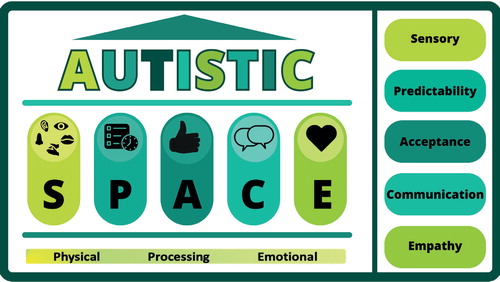
Autistic SPACE: a novel framework for meeting the needs of autistic people in healthcare settings | British Journal of Hospital Medicine
Autistic sensory differences
Table 1 outlines sensory considerations.
| Sensation | Considerations |
|---|---|
| Sight | Visual sensitivities are common. Bright lighting (particularly fluorescent) is a common challenge. Visual stimuli which may go unnoticed by non-autistic people, such as the flickering of fluorescent lighting or computer screens, an overhead rotary fan, or highly patterned surfaces, may all cause sensory stress |
| Sound | Autistic people experience auditory sensitivities and auditory processing differences. Environmental noise can cause intense distress, particularly when sudden or unexpected. Sounds unnoticed by non-autistic people, such as the humming of electrical equipment, may be perceived by autistic people without ‘fade’ (where inconsequential sounds are no longer noticed over time). Autistic people may not filter out environmental sounds and therefore may struggle to hear a conversation in a noisy room |
| Smell | Autistic people are often highly sensitive to smell and may perceive olfactory stimuli that others do not. Common and usually inoffensive smells may be perceived as highly noxious. In contrast, some autistic people are hyposensitive to smell and may enjoy smelling pungent objects |
| Taste | Autistic people may be hypo- or hyper-sensitive to taste, needing either highly flavoured or very bland food. Food texture is important, as is predictability (see below). Autistic people commonly enjoy colloquially termed ‘same foods’, which may explain a limited diet and negative reactions to a change of brand or recipe for a known brand of food |
| Touch | Tactile sensitivities range from inability to tolerate the sensation of certain fabrics to an inability to be touched, particularly by strangers. This leads to predictable challenges in a medical consultation where physical examination is required. Knowing the tactile sensitivity profile of a patient is helpful because difficulties commonly arise with light touch, whereas a strong deep touch may be more acceptable |
| Temperature | Thermal sensitivity is common and may lead to apparently inappropriate or out of season clothing. The range of tolerated temperatures is likely to be person-specific |
| Proprioception | Proprioception appears different for autistic people. Some may need lots of proprioceptive input leading to a tendency to climb, swing, rock or jump. Others will avoid such movements and may experience balance difficulties during day-to-day activities |
| Interoception and pain | A particular challenge for some autistic people is accurately interpreting internal bodily sensations. This can lead to difficulties noticing hunger, thirst, tiredness, or a need to urinate or defaecate. Difficulties with pain perception can lead to unrecognised injuries but it must be emphasised that while reduced pain sensitivity occurs for some, others experience increased pain sensitivity, and this should never result in under-treatment of pain for autistic patients |
Recommendations for supporting Autistic SPACE in practice
| SPACE framework aspect | Recommendations for implementation | |
|---|---|---|
| Sensory | Sight | Turn off or turn down artificial lights |
| Remove flickering or oscillating environmental features | ||
| Avoid highly stimulating decor | ||
| Promote the use of sunglasses | ||
| Sound | Consider environmental sounds | |
| Reduce auditory clutter | ||
| Avoid conversation in noisy environment | ||
| Promote the use of noise-cancelling headphones and/or ear plugs | ||
| Smell | Avoid wearing perfume or highly scented cosmetics or toiletries | |
| Avoid aerosols or chemical ‘air fresheners’ | ||
| Avoid highly scented cleaning products | ||
| Consider ventilation, open windows where possible | ||
| Taste | Respect sensory preferences when considering nutrition | |
| Consider taste and texture of medications | ||
| Consider non-standard medication formulations where necessary | ||
| Touch | Ascertain tactile preferences and modify examination technique | |
| Avoid casual touch | ||
| Promote sensory-friendly clothing choices | ||
| Sensory aids such as weighted blankets may be helpful | ||
| Temperature | Consider environmental temperature | |
| Adjust temperature where required | ||
| Proprioception | Understand the need for proprioceptive input | |
| Avoid making inferences from unusual body posture | ||
| Interoception and pain | Ask directly about internal sensations but understand that answering may be difficult | |
| Pay attention to verbal reports of pain where possible | ||
| Be aware that non-verbal expression of pain may be different | ||
| Consider the need for adapted pain scales | ||
| Predictability | Give realistic information in advance | |
| Ensure clear and accurate directional signage in physical spaces | ||
| Provide photographs or videos of the physical environment and staff | ||
| Allow waiting in a familiar environment (eg a patient’s own car or outside) | ||
| Ensure care is provided by staff familiar to the patient where possible | ||
| Acceptance | Neurodiversity-affirmative approach beneficial | |
| Understand autistic stimming and monotropic thinking patterns | ||
| Facilitate need for detailed factual information | ||
| Understand distress behaviour | ||
| Communication | Understand autistic verbal and non-verbal communication differences | |
| Know that communication ability is reduced by anxiety and sensory stress | ||
| Clear unambiguous communication required | ||
| Avoid phone-based appointment systems | ||
| Promote use of augmentative and alternative communication (AAC) | ||
| Empathy | Recognise that autistic people feel empathy but may display it differently | |
| Empathy towards autistic patients may be more challenging for non-autistic healthcare providers | ||
| Physical space | Expect a need for increased personal space | |
| Avoid proximity to other people where possible | ||
| Temporal space | Allow increased time to respond to questions | |
| Allow increased time for decision making | ||
| Emotional space | Expect differences in emotional expression | |
| Allow restorative solitude to recover (without additional input) if distressed | ||
The acronym ‘SPACE’ offers a simple framework for autism-specific accommodations: Sensory needs, Predictability, Acceptance, Communication and Empathy plus physical, processing and emotional space.
Autistic SPACE
A Neurobiological Basis for Progressive Education
As the host mentions in this excellent conversation, Mary Helen Immordino-Yang‘s work essentially provides the neurobiological basis for progressive education.
In short, learning is dynamic, social, and context dependent because emotions are, and emotions form a critical piece of how, what, when, and why people think, remember, and learn.
Emotions, Learning, and the Brain: Exploring the Educational Implications of Affective Neuroscience by Mary Helen Immordino-Yang
Building Meaning Builds Teens’ Brains
Although our coordinated neuroscientific and classroom studies are still in progress, educating for dispositions of mind is not new—in fact it is highly consistent with a century of educational research and theory (for example, Dewey, Montessori, Bruner, Perkins, Gardner), as well as with Doug’s decades of experience working with successful progressive public secondary schools. But tying these dispositions to neural development, life success, and mental health gives this effort new urgency, and points us due north in an attempt to reimagine adolescents’ schooling. Evidence suggests that educators can learn to recognize, model, and support the development of these dispositions if they know what kind of narratives to listen for and what kind of learning experiences lead to these patterns of thinking.
Building Meaning Builds Teens’ Brains
Why is the narrative building process so compelling to teenagers, and so tied to their growth and well-being? In adolescence, the emotional engine that drives the hard work of learning comes from connecting the goings-on, procedures, and tasks of the here-and-now to newly emerging big-picture ideas that, in essence, become a person’s abstract narratives. Crucially, these stories are connected to individuals’ sense of self and values, and to their scholarly skills, resulting in agentic scholarly identity, durable understanding, and transferable capacities. To get a sense of why, we return to the brain.
Building Meaning Builds Teens’ Brains
Today, there is a renewed focus on whole-learner approaches in schools, districts, and philanthropy, though now with explicit commitments to cultural responsiveness, trauma-informed practices, and restorative justice. Our findings reinforce the importance of these efforts, which focus on pedagogies that support youth in reworking the kinds of abstract narratives they create to affirm their lives, experiences, identities, values, decisions, and possible futures. By situating daily happenings in systems-level contexts with bigger, personal meaning, these pedagogies support youth learning to engage with, but also transcend and eventually reinvent, the here-and-now.
Building Meaning Builds Teens’ Brains
New research on the connections between adolescents’ narrative building and brain development aligns closely with old lessons from progressive practices. Adolescent learners thrive when provided an environment conducive to building strong, personal narratives that leverage the emotional power of big ideas and abstract meaning-making in the service of motivated work on concrete tasks and skills. Presently, our public school system undercuts much of the approach we outline here, typically focusing on the here-and-now, the what-can-you-recall. Though student-driven approaches are often employed well in extracurricular activities and nonacademic spaces like the arts and afterschool clubs (Mehta & Fine, 2019), success in academics overwhelmingly relies on fast and rote activities. Students build narratives anyway, of course—but these, sadly, do not usually point kids in enlivening and healthy directions.
Building Meaning Builds Teens’ Brains
The thing is, learning is essential…but it is essential because you need fodder to be able to develop around, not because it is the end point, but we call learning the ‘outcome’, ‘learning outcomes’, and then we’re done! That’s what school’s about: it’s about producing learning outcomes. But it’s not. The learning outcomes are just the midway to what you’re really supposed to be working on, which is: how did learning these things, how did engaging with thinking about these things develop you as a thinker, as a person, as a citizen? Those are the outcomes we should be caring about but we think about them as on a separate track from the learning. There’s the math, and then there’s the other stuff…which is kind of ridiculous.
Mary Helen Immordino-Yang, Future Learning Design Podcast – The Philosopher & the Neuroscientist – A Conversation with Zak Stein and Mary Helen Immordino-Yang
You have to be safe. You have to have time.
Safety and time.
Future Learning Design Podcast – The Philosopher & the Neuroscientist – A Conversation with Zak Stein and Mary Helen Immordino-Yang
Learn About Neurodiversity at School (LEANS)
LEANS explains neurodiversity to pupils in the following way:
Neurodiversity means that we are all different in how we think, feel, and learn, because our brains process information differently. Your whole class is diverse, not just in the way you look or what you enjoy doing, but also in the way your brains work and how you think, feel, and learn.
LEANS stresses how many different things the brain does—and thus why information-processing differences can have such profound effects across different domains. As one story character reflects, this is how her dyspraxia (DCD) diagnosis can affect her memory and her feet at the same time!
Read more about why it’s important to teach about neurodiversity in schools
Find more general neurodiversity resources on the Salvesen Mindroom Research Centre’s website
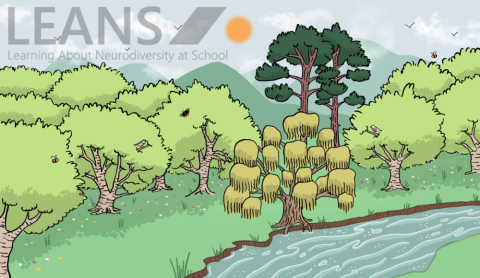
To help explain neurodiversity and neurodivergence in the classroom, LEANS uses the metaphor of trees growing in a woodland. One group of trees is in the majority—this woodland is an environment that perfectly meets their needs for water, shade, etc. Other types of trees are growing there, but they are minorities, and this environment is less ideal for their needs. The metaphor makes clear that the less-common trees are having a hard time growing in the woodland. A willow tree is not inherently “better” or “worse” than a beech tree—they are only different, with different needs. It is important that when talking about neurodiversity and differences between people, that we don’t end up minimising the impact of those differences. We want to recognise the struggles some children face in school and so that’s reflected in the woodland metaphor too.
Three big things to know about neurodiversity content in LEANS
- LEANS is a neurodiversity introduction. We hope it will be only the start of your class exploring this topic. It’s also not possible for one resource to cover every possible situation, or experience!
- It is about neurodiversity within primary schools, rather than all of society. Starting close to home helps keep this topic accessible and relevant for everyone.
- The materials focus on lived experiences over diagnostic labels. It doesn’t give facts about a list of diagnoses. It stresses that neurodiversity includes everyone in the classroom, and that neurodivergent people may not have diagnoses.
Read more about what LEANS is—and isn’t—on our resource overview page, and our FAQs page.
Source: About neurodiversity content in LEANS | Salvesen Mindroom Research Centre
Twenty Systems, Summarized Within 4 Values Statements, That Must Be Changed for a Human-Centric, Equitable System
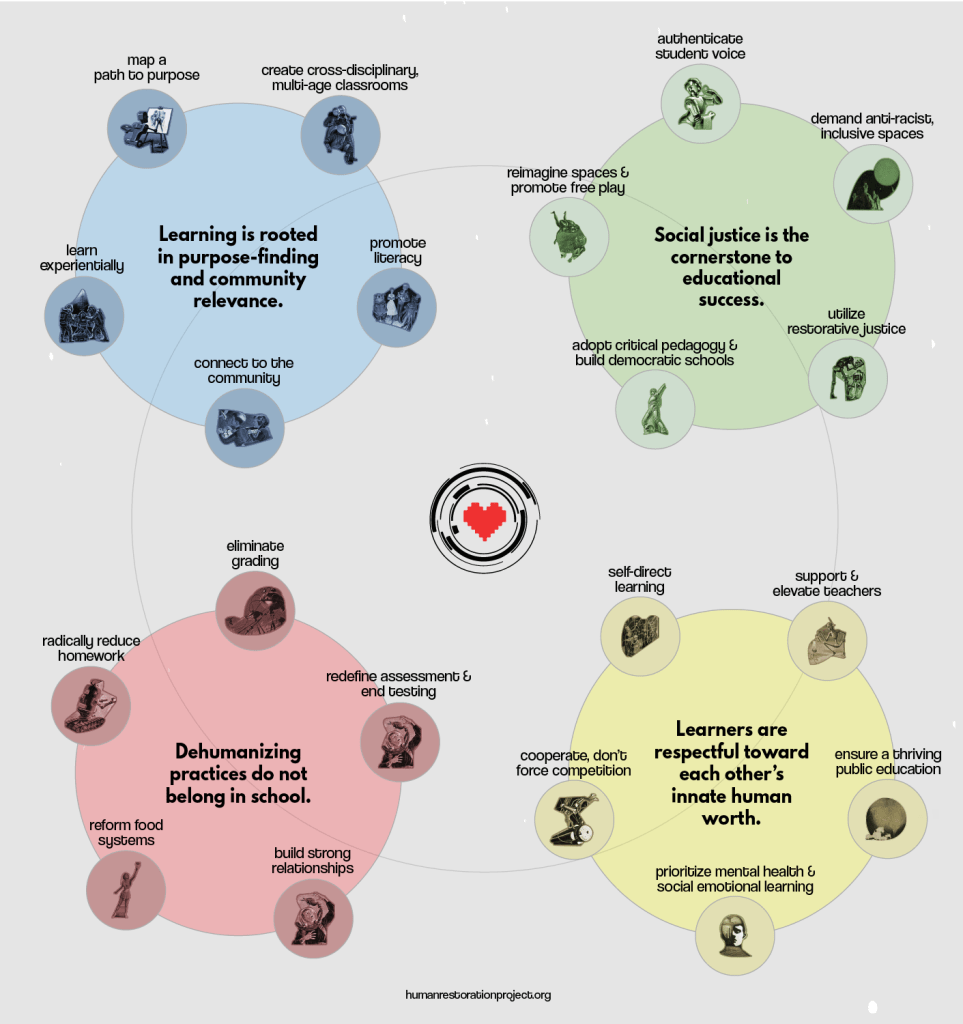
Learning is rooted in purpose finding and community relevance.
- Map a Path to Purpose
- Learn Experientially
- Connect to the Community
- Promote Literacy
- Create Cross-Disciplinary, Multi-Age Classrooms
Social justice is the cornerstone to educational success.
- Support a Reflective Space
- Demand Inclusive Spaces
- Authenticate Student Voice
- Adopt Critical Pedagogy
- Utilize Restorative Justice
Dehumanizing practices do not belong in schools.
- Radically Reduce Homework
- Build Strong Relationships
- Eliminate Grading
- Redefine Assessment and End Testing
- Reform Food Systems
Learners are respectful toward each other’s innate human worth.
- Self-Direct Learning
- Support and Elevate Teachers
- Ensure a Thriving Public Education
- Cooperate, Don’t Force Competition
- Prioritize Mental Health & Social Emotional Learning
Solarpunk gives us the permission to imagine differently.
Solarpunk gives us the permission to imagine differently; to resist Giroux’s “dead zone of imagination.”
Imagining a better future isn’t naivety, it’s essential for a thriving world
We must preserve in the face of everything a positive outlook toward organizing surviving, and building anew or risk becoming stagnant.
Individual actions snowball and propagate through systems, and each act of service, each pushback, each classroom decision can fundamentally build a better future.
It’s up to us to make that tomorrow a reality.
Fighting Back Against the Future: Imagining a Solarpunk Education – YouTube
I would call our work to change the world “science fictional behavior”—being concerned with the way our actions and beliefs now, today, will shape the future, tomorrow, the next generations.
We are excited by what we can create, we believe it is possible to create the next world.
We believe.
Emergent Strategy: Shaping Change, Changing Worlds
Interdisciplinary Subject (IDS)
An interdisciplinary curriculum equips students with a toolkit for thinking about the complex problems of the world and of themselves as learners. The interdisciplinary subject is a series of lessons, activities, and projects that aim to combine all typical school subjects into one holistic view of education. Our draft curriculum, in partnership with ongoing grant-funding from Holistic Think Tank, provides teachers with actionable steps toward making change. Further developments of the IDS will occur across 2023-2024.
At a Glance
Interdisciplinary education is crucial for fostering innovative thinking and solving complex problems across multiple fields. In other words, multi-subject learning is required to tackle the problems of today and work collaboratively toward change. Our phase 1 (of 3) contribution to the IDS includes:
629 pages of:
- 41 far-ranging, broad interdisciplinary lessons
- 246 extension activities to focus each of these lessons across the entire curriculum, as well as supplement media and extensive projects
- A pedagogical guide for teaching and using the IDS
- An impact guide for fostering experiential learning
- Alignment to community change & concepts of wonder, including the Sustainable Development Goals (SDGs)
Source: Interdisciplinary Subject
Trust Kids!
…control over children is the narrative that society has internalized, and it has become so entrenched that opting out seems radical.
Other than those who are incarcerated, no group of people are more routinely denied autonomy over their bodies and minds than young people. Autonomy is a basic human need, and distress in response to violations of that autonomy is not a defect of the child. We can change the context for these young people by removing the oppressive practices and structures that are placed upon and inhibit the autonomy of children.
As a result of Stephanie’s decision to move Zachary from an environment that disregarded his personal autonomy to one that openly acknowledged it, many of Zachary’s struggles quickly disappeared, and the quality of his life and that of his family improved substantially. For example, the tussling each morning at the door disappeared, and Zachary and his family avoided a stressful event at the beginning of the day, which helped head off a cascade of follow-on crises.
“Changing the Context” by Antonio Buehler in “Trust Kids! Stories on Youth Autonomy and Confronting Adult Supremacy”
trust kids to be kids in a world that does not want them to be kids.
“youth ellipsis: an ode to echolalia” by kitty sipple in “Trust Kids! Stories on Youth Autonomy and Confronting Adult Supremacy“
trust kids to be kids.
to be neurodivergent.
neuroemergent.
neurodifferent.
neurofabulous.
neurodimensional.
neuroqueer.
trust kids to be.
trust (these) kids.
trust (those) kids too.
trust kids / all kids / sad kids / mad kids / happy kids / Black kids / Indigenous kids / magical kids / anxious kids / quiet kids / outspoken kids / undocumented kids / adopted kids / thoughtful kids / tree-climbing kids / naming-all-the-frogs-George kids / otherworld otherworld-daydreaming kids / mutain’eering kids / screaming kids / joyful kids / disabled kids / grieving kids / autistic kids / sick kids / scared kids / hurt kids / traumatized kids /
non-verbal kids / compassionate kids / empathetic kids / system kids / hypervigilant kids / voice-hearing kids / stimming kids / hungry kids / tired kids / ticcing kids / hopeful kids / trans kids / queer kids / intersex kids / 2SLGBTQIAA+ kids / all (and we mean all) kids. because this list is not exhaustive of kids to trust
how about
just
trust (all) kids.
A Human Centered Education: Ends Dehumanizing Practices
Where behaviorism fails to foster agency it simultaneously creates a framework for excluding neurodivergent and disabled students while enabling the policing of students from non-dominant cultural, linguistic, and racial backgrounds.
A Human Centered Education: Ends Dehumanizing Practices – YouTube
Restoring Humanity to Education
There is a point to taking these individualistic actions towards systemic change, because kids notice this stuff.
Restoring Humanity to Education w/ Nick & Chris of HRP | CTRH2023 – YouTube
Progressive education is research-based education. We have the research on our side. The traditional practices do not.
Restoring Humanity to Education w/ Nick & Chris of HRP | CTRH2023 – YouTube
100 Seconds to Midnight: The Need for a Human-Centered Education
In January 2020 – in what now seems like a prophetic forecast for the distressing year to come – the Bulletin of Atomic Scientists announced to the world that it was “100 Seconds to Midnight”:
“It is 100 seconds to midnight. We are now expressing how close the world is to catastrophe in seconds – not hours, or even minutes. It is the closest to Doomsday we have ever been in the history of the Doomsday Clock. We now face a true emergency – an absolutely unacceptable state of world affairs that has eliminated any margin for error or further delay.”
It’s never been enough to “prepare every learner for a lifetime of personal success”, but a pedagogy of normalcy seems particularly maladaptive for the challenges our students will face.
So what does a human-centered education look like 100 seconds from midnight? What is it about the world that is worth preparing students for, and are we dedicated to the work of building that better world alongside them?
100 Seconds to Midnight: The Need for a Human-Centered Education
A humane education is one whose organizing principle is the innate capacity of students to be critical, empathetic agents in their communities and on the global stage.
100 Seconds to Midnight: The Need for a Human-Centered Education
Axioms, Principles, and Values
These are the axioms, principles, and values, some based on research on learning, that guide my practice, my praxis—a fancy word that reminds us that practices are built on theories, which might be either implicit or explicit. In making them explicit, we can interrogate them.
Here’s a preview of my conclusions, both about schoolishness and about humans and the world I hope we create:
Axioms and Observations
- Humans are amazing learners; that’s our superpower
- Humans are always learning Humans are deeply curious
- People learn for need or interest
- People usually learn by doing (something), not by being talked at or told “Banking” information for the future is ineffective
- Threats and fear are not as good motivators as use, confidence, and responsibility
- Giving people responsibility makes them rise to the challenge
- Twenty-year-olds are not usually “children”
Principles
- Multimodality—the use of multiple channels of communication and activity—helps learning
- Internalizing standards takes practice
- Structures communicate more powerfully than explicit “missions”
- Humans are social, emotional, bodily learners in specific contexts
- Democratic practices teach democracy better than lectures about democracy
- “The floor” matters in terms of power
Values
Blum, Susan D.. Schoolishness: Alienated Education and the Quest for Authentic, Joyful Learning (pp. 15-16). Cornell University Press.
- Equality is better than inequality; equity is better than equality
- The principal goal of school should not be mere school success
- Sorting is not my business or calling (vocation)
- Multiple types of variation and diversity are an asset; uniformity of input, process, and outcome is an industrial artifact
- Inauthenticity takes a toll
- Genuine results feed the soul
5E: Embodied, Embedded, Enactive, Emotive, Extended
Research increasingly recognizes that, as medical researchers Peter Stilwel and Katharine Harmon write, “Cognition is not simply a brain event.”(*) Drawing from their intuitive 5E model, we can better understand learning as a process of sense-making about ourselves in relation to the world that is:
Embodied – sense-making shaped by being in a body
Embedded – bodies exist within a context in the world
Enactive – active agents in interactions with the world
Emotive – sense-making always happens in an emotional context
Extended – sense-making relies on non-biological tools and technologies
Rather than rely exclusively on tests of memory and retention, as The Science of Learning would direct us, this holistic 5E model lives at the intersection of the multiple missions of school: to provide an emotionally and physically safe and productive environment, to promote social and emotional growth, to develop executive skills and self-regulation, and to improve the intellectual capacity of kids to be active agents in the world. Summarized beautifully by education, psychology, and neuroscience professor Mary Helen Immordino-Yang, “As human beings, feeling alive means feeling alive in a body but also feeling alive in a society, in a culture; being loved, being part of a group, being accepted, and feeling purposeful.”
There is No Such Thing As “The Science of Learning” | Human Restoration Project | Nick Covington Michael Weingarth
5 Key Takeaways from the Science of Learning and Development (SoLD)
Whole-Child Education is grounded in the “emerging and growing body of knowledge illuminating how young people best learn and develop,” called the Science of Learning and Development (SoLD).
The U.S. education system was not designed with the goal of whole-child education, or with a comprehensive understanding of the science of learning and development. In fact, it was designed using biased “research” conducted by those in power to justify false and oppressive ideas about which students are capable and deserving of high-quality schooling. These deeply racist, sexist, classist, and ableist ideas created a structure whose foundations we are still wrestling with today as we attempt to solve the problem of our profoundly inequitable education system.
To confront and dismantle the systems, structures, practices and mindsets that continue to limit the endless potential of our students, we can use the science of learning and development as a lever for equity, instead of a tool of oppression. Using the best of what we know from research and practice, we can engage together in the needed redesign to transform our schools — schools that put students on the path toward healthy development, learning and thriving.
5 Key Takeaways from the Science:
- Development is Bi-Directional – The ongoing, dynamic interaction between nature and nurture – our genes and environment – drives all development.
- Context Matters – The malleable nature of development is both an opportunity and a vulnerability, depending on the context.
- Learning is Integrated – Learning isn’t “academic” OR “social and emotional” – students become increasingly capable of complex skills through the integration of their cognitive, social, and emotional development.
- Pathways are Unique – There is no such thing as an average student – each is on their own individual developmental trajectory.
- Student Voice is Critical – Creating better conditions for learning and development must build from the assets and interests of young people.
Toolbox | Science – Center for Whole-Child Education (Turnaround for Children)
How We Learn
- play
- neurodiversity
- psychological safety
- neurological pluralism
- self-determination
- intrinsic motivation
- flow states
- flexibility
- experiential learning
- interdependence
- intermittent collaboration
- iteration
- advice process
- prosocial
- trust
- multi-modal communication
- multiliteracies
- niche construction
- immediate contact with the outdoors
- connectivity to nature
- embodied attunement
- horizontal learning
- omni-directional learning
- interdisciplinary learning
- gestalt learning
- transcendent thinking
- Cavendish Space
- place-based education
- human-centered education
- progressive education
- open space
- open source
- self-organizing learning environments
- caves, campfires, and watering holes
- teams, technology, and help
- open technology
- toolbelt theory
- liberatory design
- universal design
- cognitive liberty
- radical inclusivity
- projects, passion, problems, and purpose
- fresh air, daylight, large muscle movement
- stimming
- fidgeting
- love, care, community, and respect
Home Education
This part explores how learning can happen beyond traditional school walls. It highlights ways families and learners can center autonomy, comfort, and individualized pace at home. It shows that education doesn’t have to look like school did for most of us—it can be shaped by need, curiosity, and context.
- Home Education and De-dogmatising
- Neuroqueering Education at Home
- Creating Cavendish Space on a Budget
Six Things Educators Must Know About Neurodivergent People
This section gives practical insights for educators grounded in respect and understanding. Instead of assuming how neurodivergent people “should” behave or learn, it emphasizes listening, flexibility, and human-centered care. These principles help teachers meet actual needs rather than enforce arbitrary norms.
If we are right, then monotropism is one of the key ideas required for making sense of autism, along with the double empathy problem and neurodiversity. Monotropism makes sense of many autistic experiences at the individual level. The double empathy problem explains the misunderstandings that occur between people who process the world differently, often mistaken for a lack of empathy on the autistic side. Neurodiversity describes the place of autistic people and other ‘neurominorities’ in society.
Monotropism – Welcome
- Spiky Profiles
- Monotropism
- Double Empathy Problem
- Rejection Sensitive Dysphoria
- Exposure Anxiety
- Situational Mutism
Source: Six Things Educators Must Know About Neurodivergent People
Monotropism and the Double Empathy Problem are two of the biggest and most important things to happen to autism research. These two videos, totaling 9 minutes, are well worth an educator’s time.
What Six Common Features of Autistic Thinking Mean for Teachers in the Classroom
Here we break down specific features often associated with autistic thinking and translate them into teaching insights. This helps educators shape environments that support strength and reduce unnecessary stress—showing how small shifts in understanding can make big differences in inclusion.
I want to expand on what each of six common features of autistic thinking means for teachers in the classroom.
- Coping with multiple channels is hard
- Filtering is tricky and error-prone
- Changing tracks is destabilising
- I often experience things intensely
- I keep looping back to my interests and concerns
- Other things that drop out of my awareness tend to stay dropped
Five Ways to Welcome All Bodyminds to Your Learning Space
This section offers concrete steps to make learning spaces truly welcoming for everyone. From adjusting physical environments to shaping relational practices, these ideas prioritize real access, safety, and belonging rather than compliance or superficial inclusion.
- Create real access pages.
- Create Cavendish Space.
- Provide interaction badges.
- Offer bodymind affirmations and provide outlets for stimming, pacing, fidgeting, and retreating.
- Ensure there is quiet space and outdoor space that people can access at any time.
Source: Five Ways to Welcome All Bodyminds to Your Learning Space
The Five Neurodivergent Love Locutions
This part describes the core ways neurodivergent people express care, connection, and communication. Understanding these helps educators and peers meet people where they are instead of forcing them into narrow models of participation.
Recognize and encourage the five neurodivergent love locutions in your classroom.
The Five Neurodivergent Love Locutions

- Infodumping – Talking about an interest or passion of yours and thus sharing information, usually in detail and at length
- Parallel Play, Body Doubling – Parallel play is when people do separate activities with each other, not trying to influence each others behavior.
- Support Swapping, Sharing Spoons – Accommodating and supporting each other within a community. Asking, offering, and receiving help among people who “get it”.
- Deep Pressure: Please Crush My Soul Back Into My Body – Regulating with deep pressure input such as through swaddles, weighted blankets, and hugs.
- Penguin Pebbling: “I found this cool rock, button, leaf, etc. and thought you would like it” – Penguins pass pebbles to other penguins to show they care. Penguin Pebbling is a little exchange between people to show that they care and want to build a meaningful connection. Pebbles are a way of sharing SpIns, both inviting people into yours and encouraging other’s. SpIns are a trove for unconventional gift giving.


