

Design for nervous systems, not aesthetics.
What Is Cavendish Space?
Cavendish Space: psychologically and sensory safe spaces suited to zone work, flow states, intermittent collaboration, and collaborative niche construction.
Cavendish Space – Stimpunks Foundation
Cavendish Space is a regulation-centered learning environment built around three spatial archetypes:
- Caves — quiet, low-input, restorative spaces
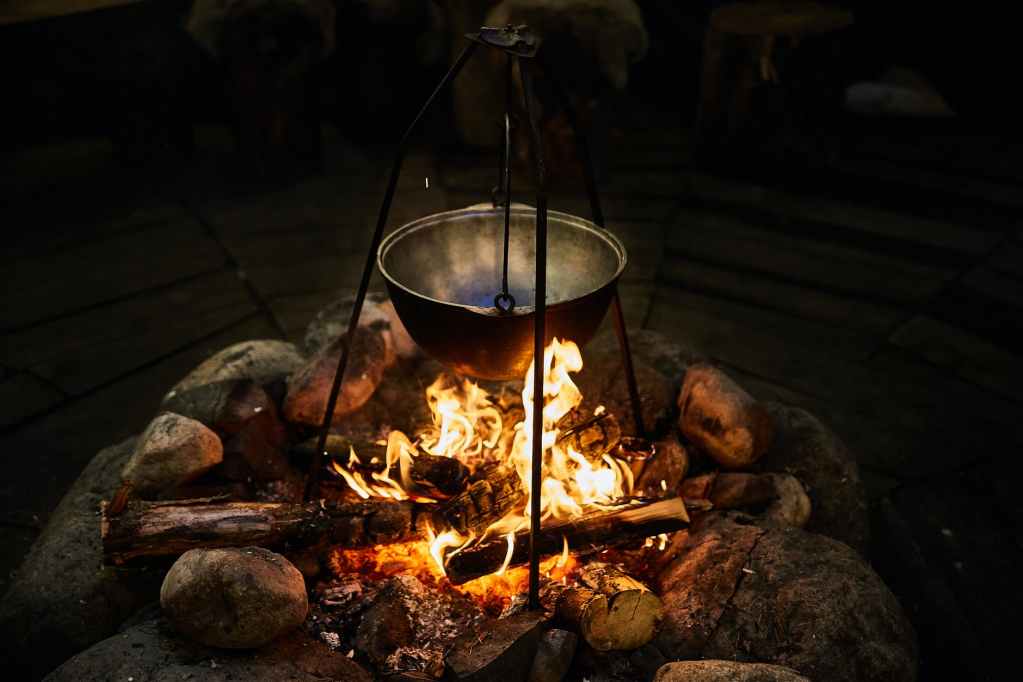
- Campfires — small-group connection and storytelling spaces
- Watering Holes — informal peer interaction spaces
The Main Elements of Cavendish Space Are
- caves, campfires, and watering holes
- intermittent collaboration
- niche construction
- flow states
- sensory safety
- psychological safety
- learner safety
- embodiment and regulation
- cognitive liberty
- somatic liberty
- neurological pluralism
What do those mean?
*caves = spaces for quiet reflection, introspection and self-directed learning.
*campfires = spaces for learning with a storyteller – teacher, mentor, elder, expert.
*watering holes = spaces for social learning with peers.
intermittent collaboration = group work punctuated by breaks to think and work by ourselves.
niche construction = directly modifying the environment in such a way that it enhances someone’s chances for success.
flow state = the experience of complete absorption in the present moment.
sensory safety = understanding the sensing and perceptual world (especially for neurodivergent people) and being serious about our sensory needs in every setting.
***psychological safety = a condition in which you feel (1) included, (2) safe to learn, (3) safe to contribute, and (4) safe to challenge the status quo—all without fear of being embarrassed, marginalized, or punished in some way.
***learner safety = safety to engage in the discovery process, ask questions, experiment, and even make mistakes.
embodiment = staying present in our own bodies to sensations, emotions and the external environment without going into dysregulation without going into fight/flight/freeze/fawn.
regulation = tending to and responding to the body’s needs.
**cognitive liberty = the idea that individuals have the right to absolute sovereignty over their own minds and their own cognitive processes.
**somatic liberty = freedom of embodiment, freedom to indulge, adopt, and/or experiment with any styles or quirks of movement and embodiment, whether they come naturally to one or whether one chooses them. the freedom to give bodily expression to one’s neurodivergence.
neurological pluralism = the multiplicity of different bodyminds with diverse and conflicting needs coexisting peaceably and interdependently.
* = Inspired by David Thornburg’s ‘primordial learning metaphors’ from “Campfire to Holodeck” (2013)
** = Inspired by Nick Walker’s “Neuroqueer Heresies” (2021)
*** = Inspired by Timothy R. Clark’s “The 4 Stages of Psychological Safety” (2020)
Our advocacy for Cavendish Space and caves, campfires, and watering holes, prompts questions of how to create Cavendish Space on a budget and in one room.
You do not need a renovation budget to create these. You need intentional design.
Table of Contents
- Why Budget Doesn’t Matter As Much As Design
- Tiered Budget Options
- Classroom Implementation Model
- DIY Sensory Packs
- Why This Works
- What This Is Not
- Explore the Framework
- Multiple Multisensory Rooms
- Selected Quotes from “Multiple Multisensory Rooms: Myth Busting the Magic”
- Darkness and Control
- Sensory Packs (Packing List)
- The Three Primordial Learning Spaces
- More Sensory Ideas
- Projects
Why Budget Doesn’t Matter As Much As Design
Many schools assume sensory-safe space requires expensive infrastructure. It doesn’t.
- Lowering sensory load
- Increasing predictability
- Allowing autonomy
- Supporting regulation
These are design principles, not purchases.
Tiered Budget Options
$0 Tier — Rearrangement
- Rearrange desks to create a quiet corner.
- Turn off overhead fluorescent lights when possible.
- Remove unnecessary wall clutter.
- Allow alternative seating (floor, standing).
- Create a soft-voice zone.
$50–$150 Tier — Micro Investments
- Clip lamps
- Foam earplugs or headphones
- Fabric canopy or pop-up tent
- Floor cushions
- Fidget baskets
- Visual schedule cards
$300–$1,000 Tier — Structural Additions
- Soft seating
- Sound-dampening panels
- Portable dividers
- Dedicated reset nook
- Weighted lap pads
Even at this level, design matters more than spending.
Classroom Implementation Model
Step 1: Identify Stress Points
- Where do meltdowns cluster?
- Where does shutdown occur?
- Where does noise spike?
- Where do transitions break down?
Step 2: Add One Cave
Every classroom should have one low-light, low-input space with optional seating and no public pressure.
Step 3: Soften the Campfire
- Use small groups
- Encourage written-first participation
- Reduce cold-calling
Step 4: Humanize the Watering Hole
- Allow short decompression windows
- Model co-regulation
- Set clear norms without public shaming
DIY Sensory Packs
Sight
- Soft lamp
- Neutral coverings
- Eye mask
Sound
- Ear defenders
- White noise app
- Soft instrumental playlist
Touch
- Stress ball
- Textured fabric square
- DIY weighted lap pad
Movement
- Resistance bands
- Rocking stool
- Stretch cards
Communication
- Visual schedules
- Emotion cue charts
- Written response slips
Why This Works
- Supports nervous system regulation
- Reduces cognitive load
- Improves attention stability
- Prevents escalation
Flexibility prevents escalation.
What This Is Not
- Not permissiveness
- Not eliminating accountability
- Not aesthetic luxury
- Not replacing instruction
Explore the Framework
- Cavendish Space Overview
- Design Is Tested at the Edges
- Seeds for Classrooms
- Regulation-First Discipline Framework
Multiple Multisensory Rooms
A book we highly recommend is “Multiple Multisensory Rooms: Myth Busting the Magic”. It has many great ideas for creating Cavendish Space on a budget. Our community includes classroom teachers who have successfully and joyfully used these techniques to make their classrooms more welcoming to more bodyminds.
Multiple Multisensory Rooms: Myth Busting the Magic
Check nearby libraries:
Buy this book:
Below are some of our favorite quotes from the book followed by lists and notes on implementing them. As you read these quotes and notes, consider these reflection questions.
Reflection Questions
What do kids see? What do they feel? What do they smell? What do they hear? What is their experience as they move through your school?
How much more effective we might be if our user interface design was intentional, and intentionally designed to support children?
Your School’s UX. What is it? And where to start.
Selected Quotes from “Multiple Multisensory Rooms: Myth Busting the Magic”
Where is nature in your room? Items sourced from nature were a central feature in the first multisensory rooms. Is nature present in your room? Are natural experiences facilitated in another way? Or has nature been lost to a world of gadgetry?
Grace, Joanna. Multiple Multisensory Rooms: Myth Busting the Magic (p. 30). Taylor and Francis.
The research that yields positive outcomes indicates that it is the being in a different space, and the opportunity to relate to another person, that are the most powerful drivers of change when using multisensory rooms. My own research highlights the importance of this space being free of interruptions and the benefits of being able to control the lighting in the space.
Grace, Joanna. Multiple Multisensory Rooms: Myth Busting the Magic (p. 75). Taylor and Francis.
- A space notably different from our day to day environment – answering the researchers that speculated that it could have been the novelty of the experience rather than the experience itself which was the catalyst for the responses witnessed.
- A space in which it is possible to control the light levels – in answer to the findings in my research that indicated that being able to reduce lighting was a key factor in creating engagement.
- A space where we are not interrupted – again in answer to findings from my own research about what practitioners currently using multisensory rooms found to be significant.
Being in a small space promotes feelings of security and can lead to greater engagement with people or objects.
Grace, Joanna. Multiple Multisensory Rooms: Myth Busting the Magic (p. 76). Taylor and Francis. Kindle Edition.
“A tent, like a quiet corner of a room, offers a calmer and less distracting environment for the child who may experience difficulty in blocking out the inessential sights and sounds of everyday commotion.”
Grace, Joanna. Multiple Multisensory Rooms: Myth Busting the Magic (p. 77). Taylor and Francis.
One of the most powerful features of a multisensory room is the ability to control the lighting.
Grace, Joanna. Multiple Multisensory Rooms: Myth Busting the Magic (p. 78). Taylor and Francis.
Another often overlooked power of multisensory rooms is simply the association of a space with an activity or atmosphere. The person recognises the multisensory room as the place where they do a particular task or the place where they get to relax. The association of the space with the activity contributes to making that activity more accessible, as it enables the person to mentally prepare for what will happen. Simply creating a designated space can achieve this.
Grace, Joanna. Multiple Multisensory Rooms: Myth Busting the Magic (p. 78). Taylor and Francis.
My numinous tent was in fact four pieces of plumber’s pipe joined together with cord so that they formed a 2mx2m square. The pipe was plastic and lightweight so it was easy for me to hang this square from the ceiling of my classroom. I purchased an 8m length of fabric from my local haberdashery and hung this from the pipe to create a fabric box.
Grace, Joanna. Multiple Multisensory Rooms: Myth Busting the Magic (pp. 78-79). Taylor and Francis.
Pop-up gardens or beach gazebos can be purchased for under 100 pounds and be used to create a room outside or a room-within-a-room. Dressing the gazebo with coloured fabrics can create different atmospheres. Using fairy lights strung from the struts of the gazebo can create visual interest. Similarly, items to be explored can be hung from the struts of the gazebo to create interactive components. Remember that Hulsegge and Verheul’s first multisensory room was a large tent outside.
Grace, Joanna. Multiple Multisensory Rooms: Myth Busting the Magic (p. 80). Taylor and Francis.
Using decorated umbrellas to create pop-up sensory spaces that can easily be positioned on a floor for a person to lie beneath or held aloft to hide a person or two people beneath are an invention made famous by the likes of Flo Longhorn and Richard Hirstwood. The possibilities for these simple sensory spaces are seemingly endless: use a black brolly and suspend UV florescent materials from it, project onto a white brolly to create moving scenery, use themed brollies to hold sensory conversations about different topics beneath, decorate a clear brolly with coloured marker pens to create a highly personalised stained glass effect, find brollies with amazing patterns to spin and create hypnotic visual effects, and so on and so forth.
Grace, Joanna. Multiple Multisensory Rooms: Myth Busting the Magic (p. 81). Taylor and Francis. Kindle Edition.
Lilli Neilsen’s “Little Rooms” have made a massive impact on provision for people with complex disabilities. Simply described, they are small spaces/boxes big enough for a person to lie or sit inside. Hanging from the ceiling of the Little Room are various items that if interacted with offer sensory feedback. The walls and the floors of the rooms can also be constructed to offer feedback. Moving within such an environment is an education in locating yourself in space, as you discover that moving that limb creates that sound, whereas moving that other limb creates a particular sensation.
Grace, Joanna. Multiple Multisensory Rooms: Myth Busting the Magic (p. 81). Taylor and Francis.
An activity arch can be built around a space already occupied by the person for whom you are making the arch, such as an armchair or wheelchair. Essentially you are creating a seated version of the baby gyms that babies explore before they can crawl. Use anything you like to create an arch that will allow objects to be hung within the person’s field of vision and in a position easy for them to reach. You do not have to position the arch over the hands; it could go over their feet if they are more able to use these to explore items.
Grace, Joanna. Multiple Multisensory Rooms: Myth Busting the Magic (p. 82). Taylor and Francis.
Sequence strings are similar to activity arches but can be explored by people across a wider space. All you need to create one is a long piece of cord and around a dozen bulldog clips. Attach the bulldog clips to the cord at regular intervals and tie the cord up at a height that will allow for easy interaction. Your aim with a sequence string is to tell a story as you move along the string. This might be a very simple sensory story, for example, one about colour as the colours of the items clipped to the string shift slowly from one tone to another, or it could be one about sound, with bells clipped to the string that will chime with increasing or decreasing pitch as you progress along the string. It could be a more elaborate story, perhaps the items from a sensory story, or items gathered from a recent walk displayed in the order in which they were discovered on the walk.
Grace, Joanna. Multiple Multisensory Rooms: Myth Busting the Magic (p. 82). Taylor and Francis.
Hula-Hoops and shower curtains can be used to make instant small spaces in which to cocoon people. Find a large, light-weight Hula-Hoop and tie string across it so that you can hang it from the ceiling, and then clip a shower curtain to it. Hoop worlds are a more flexible way of creating a tent-like environment. It does not have to be a Hula-Hoop – by using coat hangers hung from different points on the ceiling you can create a wider space. Do not worry if your ceiling hasn’t got any points for you to hook onto; just tie a cord across the room. In the past I have used window handles, the tops of doors and well secured shelving for this purpose.
Grace, Joanna. Multiple Multisensory Rooms: Myth Busting the Magic (p. 83). Taylor and Francis.
A Brief Review of the Senses: We Have Five External Senses and Three Internal Senses
We have five external senses:
- Taste
- Smell
- Touch
- Sight
- Hearing
And three internal senses:
- Proprioception
- Vestibular
- Interoception
We engage those senses with stimming for a few reasons:
- Self-regulation
- Sensory seeking
- Expression
We have five external senses and three internal senses. All must be processed at the same time and therefore add to the ‘sensory load’.
Understanding the sensing and perceptual world of autistic people is central to understanding autism.
Autism is viewed as a sensory processing difference. Information from all of the senses can become overwhelming and can take more time to process. This can cause meltdown or shutdown.
“It’s Not Rocket Science” – NDTi
Autistic sensory differences
| Sensation | Considerations |
|---|---|
| Sight | Visual sensitivities are common. Bright lighting (particularly fluorescent) is a common challenge. Visual stimuli which may go unnoticed by non-autistic people, such as the flickering of fluorescent lighting or computer screens, an overhead rotary fan, or highly patterned surfaces, may all cause sensory stress |
| Sound | Autistic people experience auditory sensitivities and auditory processing differences. Environmental noise can cause intense distress, particularly when sudden or unexpected. Sounds unnoticed by non-autistic people, such as the humming of electrical equipment, may be perceived by autistic people without ‘fade’ (where inconsequential sounds are no longer noticed over time). Autistic people may not filter out environmental sounds and therefore may struggle to hear a conversation in a noisy room |
| Smell | Autistic people are often highly sensitive to smell and may perceive olfactory stimuli that others do not. Common and usually inoffensive smells may be perceived as highly noxious. In contrast, some autistic people are hyposensitive to smell and may enjoy smelling pungent objects |
| Taste | Autistic people may be hypo- or hyper-sensitive to taste, needing either highly flavoured or very bland food. Food texture is important, as is predictability (see below). Autistic people commonly enjoy colloquially termed ‘same foods’, which may explain a limited diet and negative reactions to a change of brand or recipe for a known brand of food |
| Touch | Tactile sensitivities range from inability to tolerate the sensation of certain fabrics to an inability to be touched, particularly by strangers. This leads to predictable challenges in a medical consultation where physical examination is required. Knowing the tactile sensitivity profile of a patient is helpful because difficulties commonly arise with light touch, whereas a strong deep touch may be more acceptable |
| Temperature | Thermal sensitivity is common and may lead to apparently inappropriate or out of season clothing. The range of tolerated temperatures is likely to be person-specific |
| Proprioception | Proprioception appears different for autistic people. Some may need lots of proprioceptive input leading to a tendency to climb, swing, rock or jump. Others will avoid such movements and may experience balance difficulties during day-to-day activities |
| Interoception and pain | A particular challenge for some autistic people is accurately interpreting internal bodily sensations. This can lead to difficulties noticing hunger, thirst, tiredness, or a need to urinate or defaecate. Difficulties with pain perception can lead to unrecognised injuries but it must be emphasised that while reduced pain sensitivity occurs for some, others experience increased pain sensitivity, and this should never result in under-treatment of pain for autistic patients |
Recommendations for supporting Autistic SPACE in practice
Autistic SPACE: a novel framework for meeting the needs of autistic people in healthcare settings | British Journal of Hospital Medicine
- Sensory needs.
- Predictability.
- Acceptance.
- Communication.
- Empathy.
| SPACE framework aspect | Recommendations for implementation | |
|---|---|---|
| Sensory | Sight | Turn off or turn down artificial lights |
| Remove flickering or oscillating environmental features | ||
| Avoid highly stimulating decor | ||
| Promote the use of sunglasses | ||
| Sound | Consider environmental sounds | |
| Reduce auditory clutter | ||
| Avoid conversation in noisy environment | ||
| Promote the use of noise-cancelling headphones and/or ear plugs | ||
| Smell | Avoid wearing perfume or highly scented cosmetics or toiletries | |
| Avoid aerosols or chemical ‘air fresheners’ | ||
| Avoid highly scented cleaning products | ||
| Consider ventilation, open windows where possible | ||
| Taste | Respect sensory preferences when considering nutrition | |
| Consider taste and texture of medications | ||
| Consider non-standard medication formulations where necessary | ||
| Touch | Ascertain tactile preferences and modify examination technique | |
| Avoid casual touch | ||
| Promote sensory-friendly clothing choices | ||
| Sensory aids such as weighted blankets may be helpful | ||
| Temperature | Consider environmental temperature | |
| Adjust temperature where required | ||
| Proprioception | Understand the need for proprioceptive input | |
| Avoid making inferences from unusual body posture | ||
| Interoception and pain | Ask directly about internal sensations but understand that answering may be difficult | |
| Pay attention to verbal reports of pain where possible | ||
| Be aware that non-verbal expression of pain may be different | ||
| Consider the need for adapted pain scales | ||
| Predictability | Give realistic information in advance | |
| Ensure clear and accurate directional signage in physical spaces | ||
| Provide photographs or videos of the physical environment and staff | ||
| Allow waiting in a familiar environment (eg a patient’s own car or outside) | ||
| Ensure care is provided by staff familiar to the patient where possible | ||
| Acceptance | Neurodiversity-affirmative approach beneficial | |
| Understand autistic stimming and monotropic thinking patterns | ||
| Facilitate need for detailed factual information | ||
| Understand distress behaviour | ||
| Communication | Understand autistic verbal and non-verbal communication differences | |
| Know that communication ability is reduced by anxiety and sensory stress | ||
| Clear unambiguous communication required | ||
| Avoid phone-based appointment systems | ||
| Promote use of augmentative and alternative communication (AAC) | ||
| Empathy | Recognise that autistic people feel empathy but may display it differently | |
| Empathy towards autistic patients may be more challenging for non-autistic healthcare providers | ||
| Physical space | Expect a need for increased personal space | |
| Avoid proximity to other people where possible | ||
| Temporal space | Allow increased time to respond to questions | |
| Allow increased time for decision making | ||
| Emotional space | Expect differences in emotional expression | |
| Allow restorative solitude to recover (without additional input) if distressed | ||
Darkness and Control
Recently I completed an 18-month research study that looked into the use of multisensory rooms in the UK currently. As part of this study, I asked practitioners to identify what aspects of their multisensory rooms gave them their power. Together, we identified 12 features of effective sensory rooms; many of these features can be replicated in improvised sensory spaces for a fraction of the budget.
Two of those features identified as being critical to the effectiveness of people’s multisensory rooms in my research, were darkness and control.
Darkness – participants in my research sited the ability to achieve blackout in a multisensory room as underpinning much of the focus and attention and calming responses they saw within their multisensory room.
Control – the fact that multisensory room users were able to control the sensory experiences they experienced in a multisensory room themselves, was cited by participants in my research as being critical to the success of the rooms. Control does not have to be a high-tech thing. Control can come from amazing remote-controlled effects, electronic buttons, or it can come simply from holding a torch oneself or from banging on the space blanket and changing the way it looks and sounds for oneself.
Alternative sensory spaces: the essentials | Parenta.com
We like warm white. The warm glow effect dimmable bulbs from Philips shift color temperature as they dim, from 2200 to 2700-kelvin, like an incandescent does. We find soft, warm white light on dimmers to be broadly pleasing and sensory compatible.
We like our lights warm and on dimmers. The Lutron Caseta smart wireless dimmer ecosystem is the gold standard in home lighting automation. We have lots of home automation experience, and Lutron Caseta has proven itself. Caseta is the best choice we made in our smart homes. Being able to adjust lighting with voice, app, or remotes is an accessibility boon.
For settings where you can’t replace the wall switch, the Caseta plug-in lamp dimmer is a good choice. It comes with a remote that can be stuck anywhere.
Combine the plug-in lamp dimmer with a cheap lamp with a warm glow bulb for flexible, portable, accessible lighting control.
Sensory Packs (Packing List)
Notice: This is a public draft that needs a lot of work. Suggestions and photos of implementations that can be shared on the open web very welcome.
Get storage boxes, one for each of the senses and one for AAC.
- Fill them with delight, and with escape.
- Consider the needs of sensory seekers and the sensory avoidant.
- Remember that sensory needs are fluid.
Sight
- Seeking
- light up stuff
- shiny stuff
- glitter wands
- light ropes
- Avoiding
- sunglasses
- eye masks
- hoodies
- pop up pod for darkness
- fort building materials
- Both
- fairy lights
- dimmable lanterns
Sound
- Seeking
- clicky fidgets
- Avoiding
- ear plugs
- ear defenders
- Both
- noise generator
- noise-canceling headphones
Touch
- Seeking
- textured materials
- vibrating toys
- haptic fidgets
- worry stones
- slime
- squishies
- plush toys
- slow rise foam
- Avoiding
- gloves
Smell
- Seeking
- Nitro stubby roll on perfumes
- Scented stickers
- Scented markers
- Solid perfumes
- Avoiding
- nose plugs/clips
- air purifiers
Proprioception / Vestibular
- wobble board
- physio ball
- things to pull / twist / stretch / prod poke
- weighted blanket
- bubbles to blow
- balloons
AAC
- whiteboard
- switches
- key symbols
- photos
The Three Primordial Learning Spaces

Caves
Spaces for quiet reflection, introspection and self-directed learning.
Campfires
Spaces for learning with a storyteller – teacher, mentor, elder, expert.

Watering Holes
Spaces for social learning with peers.
In schools, we find that the cave form of learning is never a priority. This is a serious problem because the millions of dollars spent on many new schools will do little to improve educational outcomes if they are built without cave spaces.
The Language of School Design : Design Patterns for 21st Century Schools : Nair, Prakash
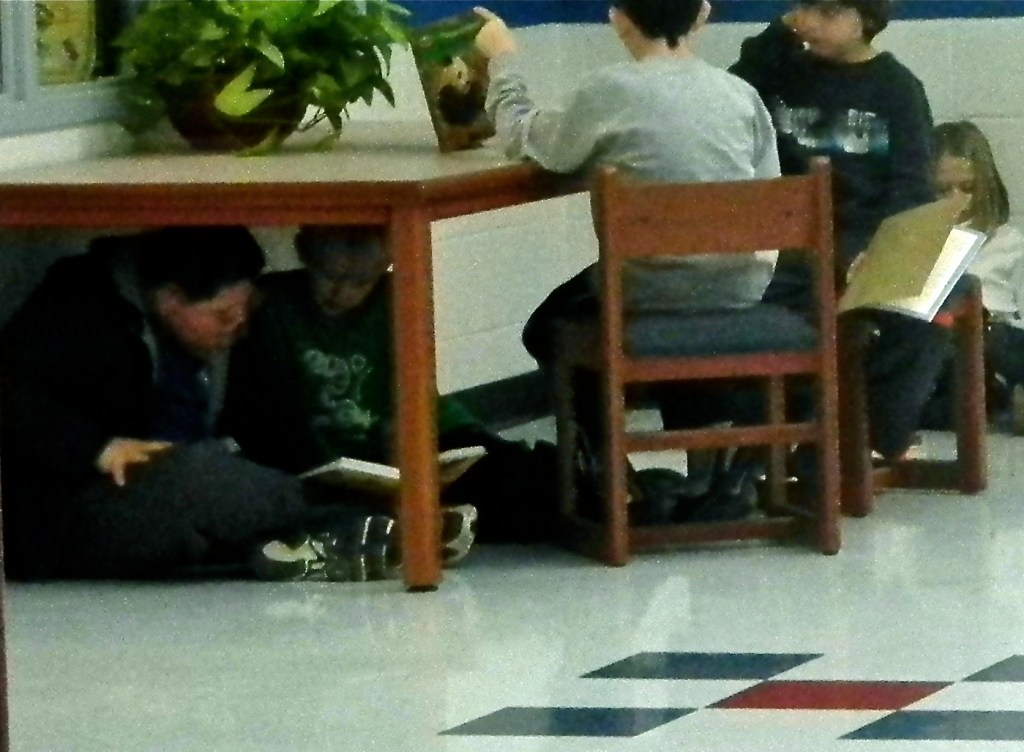
Image Credit: Ira Socol
I made massive signs on the walls so people wouldn’t interrupt while I was trying to self-regulate. I made a den in my wardrobe so I could feel safe. I hung a blanket up to help block out the sound and light and to give me an enclosed space.
“It’s Not Rocket Science”: Considering and meeting the sensory needs of autistic children and young people in CAMHS inpatient services
Gallery of Alternative Sensory Spaces
In this album I am collecting photographs of Sensory Engagement Spaces that could be used as alternatives to a Multi Sensory Room.
If you know of a space that might be relevant please let me know.
This album is a resource to go with the book: Multiple Multisensory Rooms: Myth Busting the Magic published by Routledge.
The Sensory Project’s online college has a course and workshop dedicated to multisensory room practice, find out more at www.thesensoryprojects.co.uk/online-college
Alternative Sensory Space – The Sensory Projects
Caves
Caves can be created a variety of ways:
- pop up pods, tents, changing stalls
- umbrellas
- cardboard boxes
- nooks
- numinous tents
- Little Rooms
- hula hoops and shower curtains
- PVC plumbing pipe and fittings
- beach towel clips for blanket forts
- fort building kits
- pillows
- nap mats, sleeping pads
- resonance boards
- portable screens
- rolling whiteboards
- nooks: sides, boundaries, corners, edges
Some things to put in a cave:
- fairy lights
- dimmable lanterns
- tapestries and backdrops, particularly nature themed ones
- bean bag chairs
- paper rolls for wall color blocking
- artificial and real plants
- blankets
- pillows
- physio balls
- standing rockers
- sensory mats
Try creating personalised dens; you could personalise this space by adding a scent a person likes or responds well to so they begin to associate the scent with their cave space, which can help to create a feeling of safety and familiarity over time. Simple changes can make a big difference, such as lighting, textures or materials and the surrounding noise/sounds. For some people, their cave space will need to be a shared space to enable co-regulation and to meet needs; carers have to adopt the role of a space holder(Aldred, 2023) so they can help facilitate rest and recharge time in the best ways possible for those they are with.
Construction suggestions:
- Over a bed: use a frame structure with lights/materials / favourite sensory toys nearby or hanging over so people can reach for or explore with different body parts.
- On the floor: use a tent so a person’s physio equipment can be inside if needed (e.g., side-lyers / positioning wedges/cushions/beanbags or wheelchair/standing frame). For those who enjoy sensory lights, you could add a projector for light effects and have a basket or favourite items near by or attach items by Velcro or hang down from poles so they can reach out/ look or explore if able.
- On the floor: use a large photography or golf umbrella and place it on the floor so a person can lie underneath. This can create a quick and easy way to create a portable cave space. You can easily transport this into other rooms as you change environments through the day so they still have a safe and familiar space. You can expand learning by attaching motivating or interesting times such a windchimes, ribbons, ballooons, mirrors or other media that are interesting for stimulation and to widen learning experiences.
- Try hanging a large hoop on the ceiling or using curtain tracks to hang different-themed shower curtains. This can create a nice, cosy den that can fit one or two people inside (ensure you consider the size of wheelchair/standing frame or other seating needed). If you choose white material, you can use a projector to change the images to suit each person’s interests, depending on how they engage.
Campfires
Campfires can be open to the rest of the space or closed off. They can be created from:
- chairs and desks arranged together
- rugs
- sofas
- bean bag chairs
- casual seating
- coffee tables
- conference tables
- Harkness table
- portable screens
- rolling whiteboards
- resonance boards
- window sills
- nooks: sides, boundaries, corners, edges
The same things added to cave spaces can also enhance watering hole spaces.
Campfire space construction will depend upon the individual’s well-being. It may be a nice idea to incorporate a person’s physio plan into their ‘campfire experiences’ and try to time events around any medical interventions/feeding /positioning that may need to take place. The following activities can be easily adapted for different positions and care needs of people if you take time and plan things ahead.
- Natural treasury baskets
- Dance Massage
- Messy Play (dry/wet/warm/cold / food / non-food/combination of textures /scents /colours)
- Story Massage
- Multisensory Stories
- Rhyming Multisensory stories and more..
- Themed sensory explorations, e., moon sand, shaving foam bubbles, exploring percussion instruments, switch-activated toys and technology
Watering Holes
- circled tables and chairs
- conference rooms
- break rooms
- stages
- nooks: sides, boundaries, corners, edges
Watering hole spaces and interaction will depend upon the individual’s needs and well being at the time. Much like campfire experiences, if caregivers plan ahead, they can create meaningful moments in the day for people to be with their peers when they may feel more comfortable, be more alert and interested in others. Even if the person is not showing much awareness of other people, I believe there is still great value in being together in shared spaces so people get to experience a sense of togetherness and belonging as part of a community. Belonging and togetherness is something that can only really be felt, it is about having a good quality of life and rich human experiences with others. Watering holes can also be a wonderful opportunity for co-regulation, exploring and experiencing things together, a shared space allows connections to develop at a more profound emotional level and share presence and love.
Setting up activities people can access, experience, and share together can be really meaningful and bring joy. It is an opportunity to build relationships and form new connections and can enhance some learning experiences. The following activities can be easily adapted for different positions, and people’s care needs if you take time and plan things ahead.
- Shared sensory messy play
- Shared trays or mats of paint to explore with different body parts
- Baskets or a hanging clothes rail with musical instruments or sensory toys on for both people to share and engage with / reach out for with feet/hands/ arms
- Create a shared multi-sensory environment — use projectors on the floor/ceiling/add scents/other sensory resources to create different experiences, e.g. Winter Wonderland, SeaSide, and Woodland scenes.
More Sensory Ideas
https://www.youtube.com/@TheSensoryProjects
Niche Construction
Reflection
Consider ways these materials and techniques can be used for positive niche construction.
Niche Construction
In Nature: Helping to ensure the thriving of an organism by directly modifying the environment in such a way that it enhances that organism’s chances for survival.
In Culture: Helping to ensure the thriving of a child by directly modifying the environment in such a way that it enhances that child’s chances for success.
Neurodiversity in the Classroom: Strength-Based Strategies to Help Students with Special Needs Succeed in School and Life
https://www.rhymingmultisensorystories.com/story-libraryandshop
What would you add?
Help us iterate this draft.
Nooks: Sides, Boundaries, Corners, Edges
Sides, Boundaries, Corners, Edges are powerful and cheap. They can become caves, campfires, and watering holes.

- Nooks: spaces with sides & boundaries; spaces available in every room; the corners, and edges, where you can feel, see & sometimes hear where you are
- Structure, predictability, control over the input to reduce sensory overwhelm.
- Safety & space to regain & restore energy
This brief video shows how to make a classroom safe enough to regain and restore energy at no real cost. Notice in the video that when given freedom, kids use the corners and the edges.
Space matters. Listening to people’s preferences matters. We can support wellbeing in everyday moments, in everyday places. Sensory spaces don’t have to be ‘specialist, part of a diet, or a reward’. Sensory spaces can be used fluidly, when needed, to both absorb & restore energy.
lisa chapman on X
Projects
Here are some things you can build without investing much time or money.
Resonance Boards
Instructions for making a resonance board: Resonance Board – Active Learning Space


Leave a Reply