
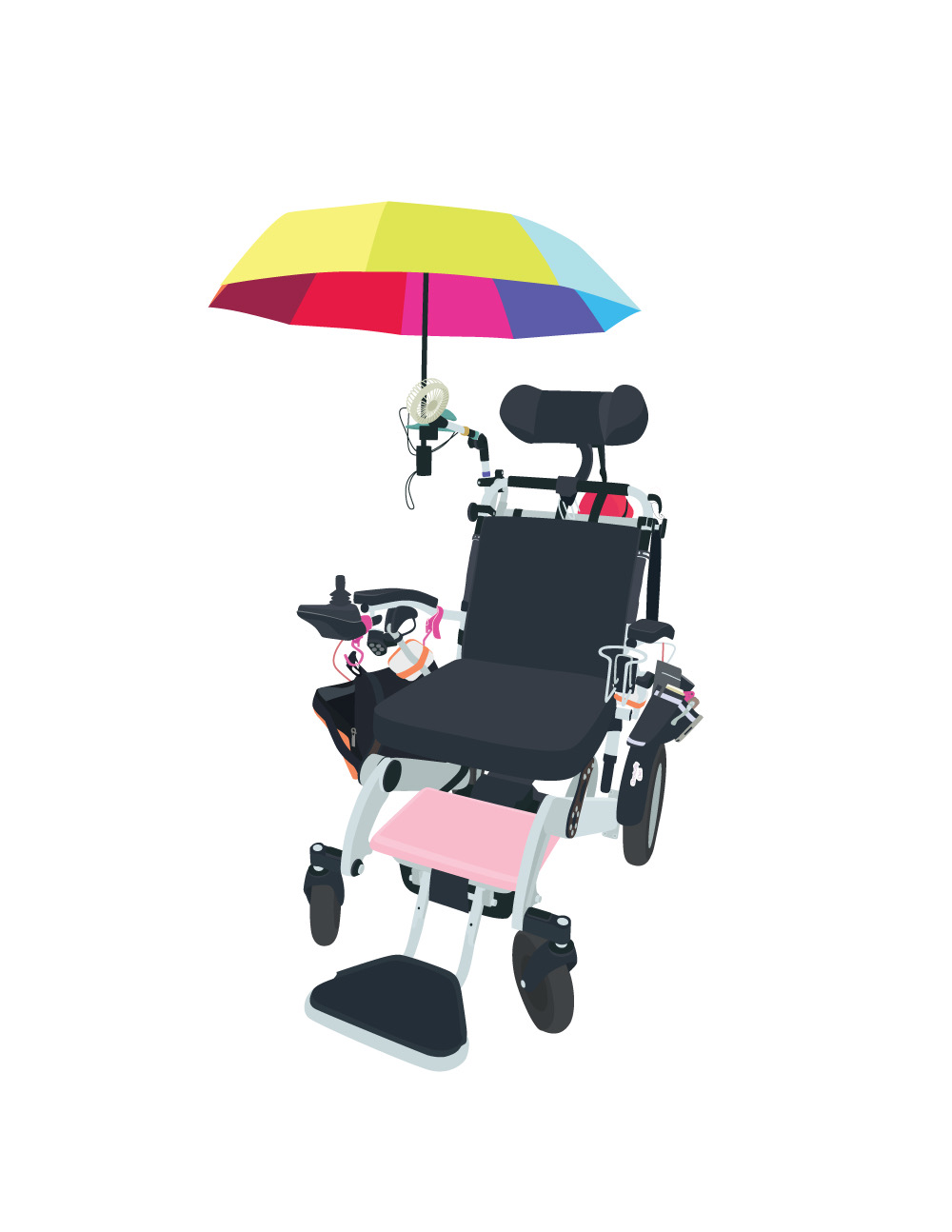
It is time to celebrate our interdependence!
The Myth of Independence: How The Social Model of Disability Exposes Society’s Double Standards » NeuroClastic
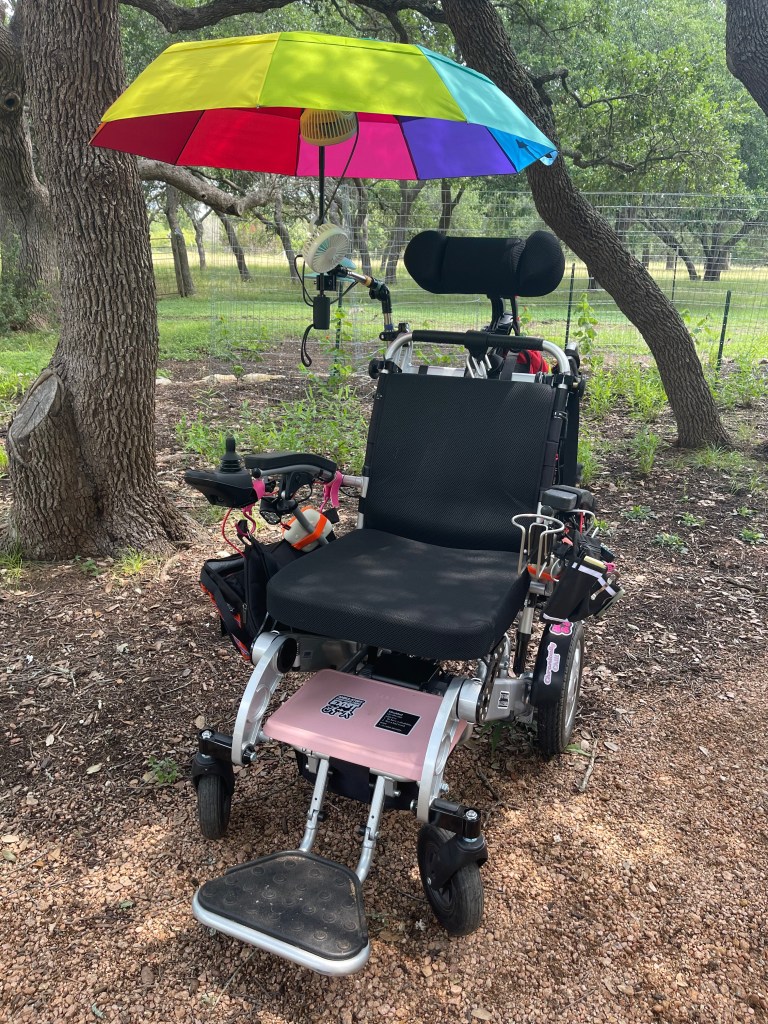
Our Umbrella page is a celebration of those who helped us build the Stimpunks Umbrella as well as a showcase of the tools and philosophy we used to build it.
We like the umbrella as a symbol of shelter, sanctuary, respite, community, inclusion, and pluralism. In our logo, the umbrella emanates from and covers U and PUNKS, evoking our mission.

We exist for the direct support and mutual aid of neurodivergent and disabled people.
Mission – Stimpunks
evoke = to make someone remember something or feel an emotion
The Stimpunks umbrella evokes crip space.
It is very rare, as a disabled person, that I have an intense sense of belonging, of being not just tolerated or included in a space but actively owning it; “This space,” I whisper to myself, “is for me.” Next to me, I sense my friend has the same electrified feeling. This space is for us.
This is precisely why they are needed: as long as claiming our own ground is treated as an act of hostility, we need our ground. We need the sense of community for disabled people created in crip space.
How can we cultivate spaces where everyone has that soaring sense of inclusion, where we can have difficult and meaningful conversations?
Because everyone deserves the shelter and embrace of crip space, to find their people and set down roots in a place they can call home.
“The Beauty of Spaces Created for and by Disabled People” by s.e. smith in “Disability Visibility: First Person Stories from the 21st Century“.
The Stimpunks umbrella evokes access intimacy.
Access intimacy is that elusive, hard to describe feeling when someone else “gets” your access needs. The kind of eerie comfort that your disabled self feels with someone on a purely access level. Sometimes it can happen with complete strangers, disabled or not, or sometimes it can be built over years. It could also be the way your body relaxes and opens up with someone when all your access needs are being met. It is not dependent on someone having a political understanding of disability, ableism or access. Some of the people I have experienced the deepest access intimacy with (especially able bodied people) have had no education or exposure to a political understanding of disability.
Access Intimacy: The Missing Link | Leaving Evidence
The Stimpunks umbrella evokes the electrifying feeling of belonging.
Belonging is very close to the idea of feeling safe.
Belonging in School: Resource Introduction Webinar – YouTube
All human beings have the same innate need: We long to belong.
Clark, Timothy R.. The 4 Stages of Psychological Safety . Berrett-Koehler Publishers. Kindle Edition.
We believe belonging is an essential concept for thinking about inclusion and planning successful policies—so important we included it twice! In addition to adopting a belonging-focused definition of inclusion in Change #1, one of our four planning approaches focuses on facilitating pupil belonging.
Guidance Part 1: An Introduction to School-level Approaches for Developing Inclusive Policy – Belonging in School – a school-level resource for developing inclusive policies
Belonging is about creating an environment where people feel emotionally and psychologically safe.
DEIB in WordPress – DEIB in WordPress – Working group
The 4 Stages of Psychological Safety
The Stimpunks umbrella evokes peer respite.
A safe place to rest and rebuild in between moments of stress is essential for autonomic nervous system balance.
The Vagus Nerve & Chronic Illness — Trauma Geek
A peer-run respite center is a non-clinical, completely voluntary service operated by people with their own stories of mental health recovery, trauma, hospitalization, incarceration, substance use, homelessness or some combination of these.
An alternative to the psych hospital, run by people in mental health recovery – NC Health News
Afiya strives to provide a safe space in which each person can find the balance and support needed to turn a difficult time into a learning and growth opportunity.
Afiya Peer Respite
“When you’re in a psych hospital, they take everything — down to your shoelaces — for your protection. Then they slap a diagnosis on you,” Hart explained. “I got worse before I got better.”
Alternatively, the doors at the respite house are not locked. Guests are able to come and go to the store, their job, school or wherever they want to be.
“I think this would have definitely been a healing place,” Hart said. “You’re still part of the community and not on lockdown. In this space, you can feel the warmth, the encouragement, the safety.”
An alternative to the psych hospital, run by people in mental health recovery – NC Health News
The house is intended to provide an alternative to hospitalization for individuals who are experiencing emotional and/or mental distress, and who feel they would benefit from staying in a community-based environment that offers peer-to-peer support focused on turning ‘crisis’ into a learning and growth opportunity.
The house offers individual bedrooms, community spaces (a living room, a finished basement, a meeting room, a kitchen and a sitting room), a variety of supplies (yoga, art, weighted blankets, etc.), and resource information for up to three people at a time. Stays generally range from one to seven nights.
Everyone who works at Afiya (as with the rest of our community) identifies as having ‘been there’ in some way. Experiences of various team members range from histories of psychiatric hospitalization to trauma to living in residential programs to living without a home to dealing with addiction and so on. No clinical supports are offered, but people who stay at the house have free access to the community where they can keep (or get) connected to clinical supports as desired.
Afiya House (full version) – YouTube
The Stimpunks umbrella evokes the magic, resistance, and power of community.
What I have always been hoping to accomplish is the creation of community.
Alice Wong, Disability Visibility: First Person Stories from the 21st Century
Community is magic.
Community is power.
Community is resistance.
Asking for help is a wonderful way to build community & engage in meaningful collaboration. In asking for help you also uplift others who want to show up for you.
Just a reminder that asking for help is a contribution

Image Credit: Ashanti Fortson, Community As Home – Portraits – Disability Visibility Project
Disability’s no longer just a diagnosis; it’s a community.
Liz Jackson: Designing for Inclusivity

Image Credit: Ashanti Fortson, Community As Home – Portraits – Disability Visibility Project
“Mutual aid is recognizing first of all our neighbors and the root problems in our communities,” Cantor says. “It’s about openly opposing the systems of racism, class discrimination and large retailers. Mutual aid requires that we look at those among us who are privileged and those who aren’t, and to ask how we achieve control of the resources and distribute them so as to advance justice in our communities. What makes our actions acts of resistance is that we’re operating in the direction of dismantling oppressive mechanisms by means of showing radical empathy. It’s political.”
They just wanted to help a few hungry Israelis. They ended up replacing Israel’s welfare system – Israel News – Haaretz.com
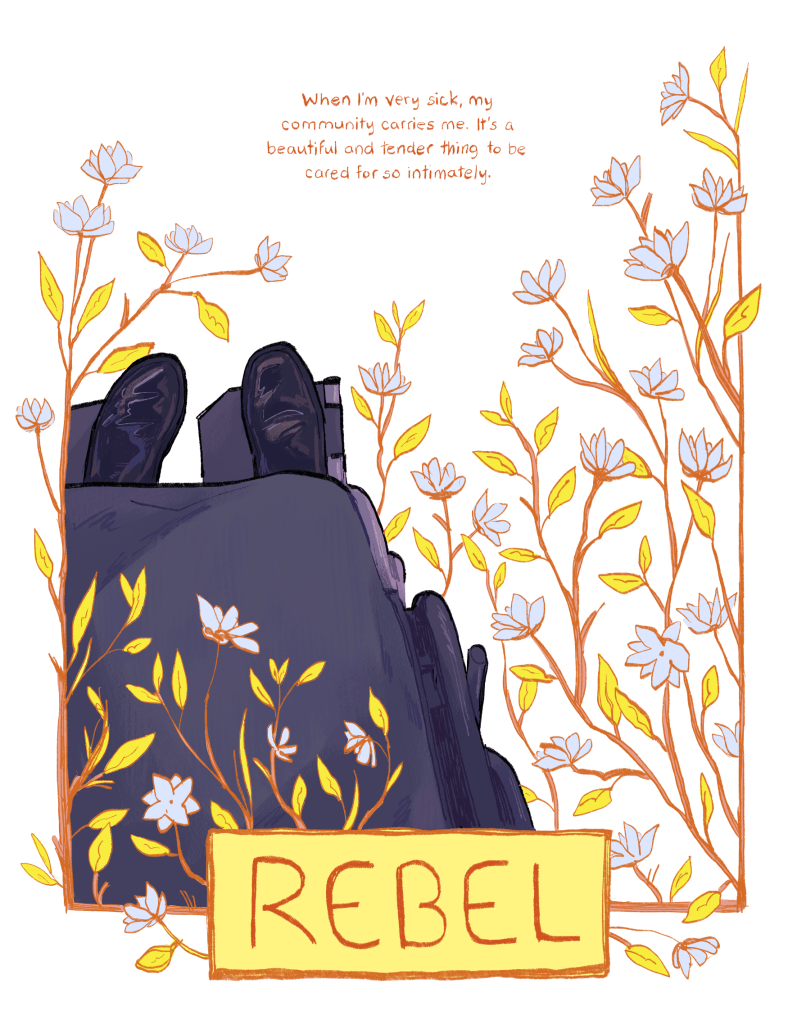
Image Credit: Ashanti Fortson, Community As Home – Portraits – Disability Visibility Project
Non-disabled people in my life don’t know how to love me like disabled people do. I’m so thankful for all my disabled friends who know how to provide care, rest, support and love. Disabled love is critically different from my other interactions with the world.
I really wish non-disabled people could learn to love in the same caring modalities. Love looks like remembering my food intolerances. Love looks like saying “that sucks” when I complain. Love looks like calling to check in and telling me stories.
Love looks like someone bustling around at home doing everyday things that wanted to call just to be with me across time and space. Love looks like not trying to fix everything and just allowing bad days to be bad. Love looks accepting my need to isolate as much as possible.
Originally tweeted by Nicole Lee Schroeder, PhD (@Nicole_Lee_Sch) on April 15, 2022.
What is mutual aid?
“Solidarity, not charity.”
Collective Community Care: Dreaming of Futures in Autistic Mutual Aid
- Interdependence, understanding and support
- Gives opportunity to help & care for other in on our own terms and within our own capacities
- Direct support in a community within a community
- It’s much easier to practice asking, offering, receiving, and declining among people who “get it”!

Image Credit: Ashanti Fortson, Community As Home – Portraits – Disability Visibility Project
The Stimpunks umbrella evokes creating for and with each other.
We urgently need to bring to our communities the limitless capacity to love, serve, and create for and with each other.
Boggs, Grace Lee; Kurashige, Scott. The Next American Revolution (p. 47). University of California Press. Kindle Edition.
The Design of Childhood: How the Material World Shapes Independent Kids
This is another area where working with disabled people can prove beneficial to all employees. We tend to feel most greatly the unseen negative effects many employees feel on a lesser degree. Design workspaces with us and we can help you design a better space for everyone.
John Marble (@JHMarble) February 18, 2018
We have an imperative to make sure we are not building a new world for ourselves alone.
Building for Inclusive Community Participation: Meeting Residents Where They Are – YouTube
Build with, not for.
There can be no trickle down civic tech.

Weaving all of that together, the Stimpunks umbrella evokes interdependence, which we have a whole section on below. But first, let’s meet some creative allies.
All the systems of oppression are woven together and our work to get free will only succeed when we are woven together.
find your place on deck
We all find a way to love & live interdependently.
Tinu Abayomi-Paul
Or we all die.
The whole of humanity.
Table of Contents
- Testimonials
- Testimonial from Educator Ira Socol, Co-Author of “Timeless Learning”
- Testimonial from Human Restoration Project
- Testimonial from Author Kristina Brooke Daniele
- Testimonial from Creator Jesse Mercury
- Testimonial from Artist Kaya Oldaker
- Testimonial from Composer Brett L. Wery
- Testimonial from Artist Adriel Jeremiah Wool
- Testimonials from Grantees
- We serve our loved people so we can keep on livin’ through the onslaught.
- Join us under the umbrella. Anyone can be a Stimpunk.
- It is time to celebrate our interdependence!
- Do you know why we have the sunflowers?
- 🫀🧠🖼 We Reframe
- Reframe with Us
Testimonials
Here are testimonials from folks who helped us build our umbrella. We are happy to be interdependent with them. They provided yarn for our weaving and cloth for our patchwork.
The accordions in each section below provide yarn and cloth for creating your own bricolage umbrella for your loved people, your chosen family. Use the tools on our website to build your own niche community.
Autistic people have built many niche communities from the ground up—both out of necessity and because our interests and modes of being are, well, weird.
Unmasking Autism: Discovering the New Faces of Neurodiversity (p. 218)
Testimonial from Educator Ira Socol, Co-Author of “Timeless Learning”
“Stimpunks is an essential resource for educators.”
Ira Socol, co-author of Timeless Learning
“Timeless Learning” is a fundamental text of progressive pedagogy and an important part of our journey at Stimpunks. It helped us develop our notions of Cavendish Space, classroom UX, toolbelt theory, caves, campfires, and watering holes, and more.
More About Timeless Learning

When learning is allowed to be project, problem, and passion driven, then children learn because of their terroir, not disengage in spite of it. When we recognize biodiversity in our schools as healthy, then we increase the likelihood that our ecosystems will thrive.
To be contributors to educating children to live in a world that is increasingly challenging to negotiate, schools must be conceptualized as ecological communities, spaces for learning with the potential to embody all of the concepts of the ecosystem – interactivity, biodiversity, connections, adaptability, succession, and balance.
Timeless Learning: How Imagination, Observation, and Zero-Based Thinking Change Schools

Creating paths to equity and access for all children remains the grand challenge of public education in America.
Equity provides resources so that educators can see all our children’s strengths. Access provides our children with the chance to show us who they are and what they can do. Empathy allows us to see children as children, even teens who may face all the challenges that poverty and other risk factors create. Inclusivity creates a welcoming culture of care so that no one feels outside the community.
Timeless Learning: How Imagination, Observation, and Zero-Based Thinking Change Schools
Consider how the “habitable world” concept developed by Rosemarie Garland‐Thomson, Emory University researcher and professor, sits at the core of the philosophy of educators who developed and now sustain the structures and processes of schooling that impact young people such as Kolion (Garland‐Thomson 2017b). Garland‐Thomson views public, political, and organizational philosophy as representative of one of “two forms of world‐building, inclusive and eugenic” (Garland‐Thomson 2017a). Unfortunately, often it’s the soft educational eugenics philosophy that is most often expressed in practice, if not in words, across the nation’s schools rather than the creation of habitable worlds that are inclusive of all learners.
If we want our schools to be learning spaces that reveal the strengths of children to us, we have to create a bandwidth of opportunities that do so. That means making decisions differently, decisions driven from values that support equity, accessibility, inclusivity, empathy, cultural responsiveness, and connected relationships inside the ecosystem. Those are the words representative of habitable worlds, not words such as sort, select, remediate, suspend, or fail.
Timeless Learning: How Imagination, Observation, and Zero-Based Thinking Change Schools
Cavendish Space and Classroom UX: Designing for Pluralism
Since reading NeuroTribes, we think of psychologically & sensory safespaces suited to zone work as “Cavendish bubbles” and “Cavendish space”, after Henry Cavendish, the wizard of Clapham Common and discoverer of hydrogen. The privileges of nobility afforded room for his differences, allowing him the space and opportunity to become “one of the first true scientists in the modern sense.”
Cavendish Space: psychologically & sensory safe spaces suited to zone work, flow states, intermittent collaboration, and collaborative niche construction.
It’s Not Rocket Science: Considering and meeting the sensory needs of autistic children and young people
Outside space. Many people find being outside and in natural very calming. Space to move away from other people, internal noises and distractions can be a good way to self-regulate.
“I think things that are useful for autistic people would be beneficial for everyone. It would have stopped a lot of distress for a lot of people if they can take themselves away and calm down.”
EmilyA sensory room or de-stress room. Easy access to a quiet space to de-stress can be an enormously helpful tool for people to be able to self-manage. Ideally, this room will be away from areas where there is heavy footfall or other outside noise. Many people find neutral spaces beneficial, with the option of lights and other sensory stimulus.
“I think you should just be able to walk into the sensory room instead of asking staff and waiting for them to unlock it.”
It’s Not Rocket Science: Considering and meeting the sensory needs of autistic children and young people
Jamie
Autistic SPACE: a novel framework for meeting the needs of autistic people in healthcare settings
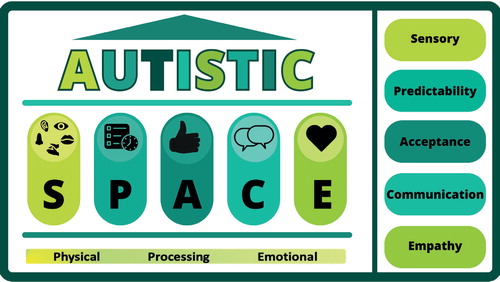
SPACE is a great mnemonic and heuristic for supporting autistic people in all kinds of settings. We love the inclusion of physical, temporal, and emotional space.
Autistic SPACE: a novel framework for meeting the needs of autistic people in healthcare settings | British Journal of Hospital Medicine
Autistic SPACE: a novel framework for meeting the needs of autistic people in healthcare settings | British Journal of Hospital Medicine
- Sensory needs.
- Predictability.
- Acceptance.
- Communication.
- Empathy.
Autistic SPACE: a novel framework for meeting the needs of autistic people in healthcare settings | British Journal of Hospital Medicine
Autistic sensory differences
Table 1 outlines sensory considerations.
| Sensation | Considerations |
|---|---|
| Sight | Visual sensitivities are common. Bright lighting (particularly fluorescent) is a common challenge. Visual stimuli which may go unnoticed by non-autistic people, such as the flickering of fluorescent lighting or computer screens, an overhead rotary fan, or highly patterned surfaces, may all cause sensory stress |
| Sound | Autistic people experience auditory sensitivities and auditory processing differences. Environmental noise can cause intense distress, particularly when sudden or unexpected. Sounds unnoticed by non-autistic people, such as the humming of electrical equipment, may be perceived by autistic people without ‘fade’ (where inconsequential sounds are no longer noticed over time). Autistic people may not filter out environmental sounds and therefore may struggle to hear a conversation in a noisy room |
| Smell | Autistic people are often highly sensitive to smell and may perceive olfactory stimuli that others do not. Common and usually inoffensive smells may be perceived as highly noxious. In contrast, some autistic people are hyposensitive to smell and may enjoy smelling pungent objects |
| Taste | Autistic people may be hypo- or hyper-sensitive to taste, needing either highly flavoured or very bland food. Food texture is important, as is predictability (see below). Autistic people commonly enjoy colloquially termed ‘same foods’, which may explain a limited diet and negative reactions to a change of brand or recipe for a known brand of food |
| Touch | Tactile sensitivities range from inability to tolerate the sensation of certain fabrics to an inability to be touched, particularly by strangers. This leads to predictable challenges in a medical consultation where physical examination is required. Knowing the tactile sensitivity profile of a patient is helpful because difficulties commonly arise with light touch, whereas a strong deep touch may be more acceptable |
| Temperature | Thermal sensitivity is common and may lead to apparently inappropriate or out of season clothing. The range of tolerated temperatures is likely to be person-specific |
| Proprioception | Proprioception appears different for autistic people. Some may need lots of proprioceptive input leading to a tendency to climb, swing, rock or jump. Others will avoid such movements and may experience balance difficulties during day-to-day activities |
| Interoception and pain | A particular challenge for some autistic people is accurately interpreting internal bodily sensations. This can lead to difficulties noticing hunger, thirst, tiredness, or a need to urinate or defaecate. Difficulties with pain perception can lead to unrecognised injuries but it must be emphasised that while reduced pain sensitivity occurs for some, others experience increased pain sensitivity, and this should never result in under-treatment of pain for autistic patients |
Recommendations for supporting Autistic SPACE in practice
| SPACE framework aspect | Recommendations for implementation | |
|---|---|---|
| Sensory | Sight | Turn off or turn down artificial lights |
| Remove flickering or oscillating environmental features | ||
| Avoid highly stimulating decor | ||
| Promote the use of sunglasses | ||
| Sound | Consider environmental sounds | |
| Reduce auditory clutter | ||
| Avoid conversation in noisy environment | ||
| Promote the use of noise-cancelling headphones and/or ear plugs | ||
| Smell | Avoid wearing perfume or highly scented cosmetics or toiletries | |
| Avoid aerosols or chemical ‘air fresheners’ | ||
| Avoid highly scented cleaning products | ||
| Consider ventilation, open windows where possible | ||
| Taste | Respect sensory preferences when considering nutrition | |
| Consider taste and texture of medications | ||
| Consider non-standard medication formulations where necessary | ||
| Touch | Ascertain tactile preferences and modify examination technique | |
| Avoid casual touch | ||
| Promote sensory-friendly clothing choices | ||
| Sensory aids such as weighted blankets may be helpful | ||
| Temperature | Consider environmental temperature | |
| Adjust temperature where required | ||
| Proprioception | Understand the need for proprioceptive input | |
| Avoid making inferences from unusual body posture | ||
| Interoception and pain | Ask directly about internal sensations but understand that answering may be difficult | |
| Pay attention to verbal reports of pain where possible | ||
| Be aware that non-verbal expression of pain may be different | ||
| Consider the need for adapted pain scales | ||
| Predictability | Give realistic information in advance | |
| Ensure clear and accurate directional signage in physical spaces | ||
| Provide photographs or videos of the physical environment and staff | ||
| Allow waiting in a familiar environment (eg a patient’s own car or outside) | ||
| Ensure care is provided by staff familiar to the patient where possible | ||
| Acceptance | Neurodiversity-affirmative approach beneficial | |
| Understand autistic stimming and monotropic thinking patterns | ||
| Facilitate need for detailed factual information | ||
| Understand distress behaviour | ||
| Communication | Understand autistic verbal and non-verbal communication differences | |
| Know that communication ability is reduced by anxiety and sensory stress | ||
| Clear unambiguous communication required | ||
| Avoid phone-based appointment systems | ||
| Promote use of augmentative and alternative communication (AAC) | ||
| Empathy | Recognise that autistic people feel empathy but may display it differently | |
| Empathy towards autistic patients may be more challenging for non-autistic healthcare providers | ||
| Physical space | Expect a need for increased personal space | |
| Avoid proximity to other people where possible | ||
| Temporal space | Allow increased time to respond to questions | |
| Allow increased time for decision making | ||
| Emotional space | Expect differences in emotional expression | |
| Allow restorative solitude to recover (without additional input) if distressed | ||
The acronym ‘SPACE’ offers a simple framework for autism-specific accommodations: Sensory needs, Predictability, Acceptance, Communication and Empathy plus physical, processing and emotional space.
Autistic SPACE
A Neurobiological Basis for Progressive Education
As the host mentions in this excellent conversation, Mary Helen Immordino-Yang‘s work essentially provides the neurobiological basis for progressive education.
In short, learning is dynamic, social, and context dependent because emotions are, and emotions form a critical piece of how, what, when, and why people think, remember, and learn.
Emotions, Learning, and the Brain: Exploring the Educational Implications of Affective Neuroscience by Mary Helen Immordino-Yang
Building Meaning Builds Teens’ Brains
Although our coordinated neuroscientific and classroom studies are still in progress, educating for dispositions of mind is not new—in fact it is highly consistent with a century of educational research and theory (for example, Dewey, Montessori, Bruner, Perkins, Gardner), as well as with Doug’s decades of experience working with successful progressive public secondary schools. But tying these dispositions to neural development, life success, and mental health gives this effort new urgency, and points us due north in an attempt to reimagine adolescents’ schooling. Evidence suggests that educators can learn to recognize, model, and support the development of these dispositions if they know what kind of narratives to listen for and what kind of learning experiences lead to these patterns of thinking.
Building Meaning Builds Teens’ Brains
Why is the narrative building process so compelling to teenagers, and so tied to their growth and well-being? In adolescence, the emotional engine that drives the hard work of learning comes from connecting the goings-on, procedures, and tasks of the here-and-now to newly emerging big-picture ideas that, in essence, become a person’s abstract narratives. Crucially, these stories are connected to individuals’ sense of self and values, and to their scholarly skills, resulting in agentic scholarly identity, durable understanding, and transferable capacities. To get a sense of why, we return to the brain.
Building Meaning Builds Teens’ Brains
Today, there is a renewed focus on whole-learner approaches in schools, districts, and philanthropy, though now with explicit commitments to cultural responsiveness, trauma-informed practices, and restorative justice. Our findings reinforce the importance of these efforts, which focus on pedagogies that support youth in reworking the kinds of abstract narratives they create to affirm their lives, experiences, identities, values, decisions, and possible futures. By situating daily happenings in systems-level contexts with bigger, personal meaning, these pedagogies support youth learning to engage with, but also transcend and eventually reinvent, the here-and-now.
Building Meaning Builds Teens’ Brains
New research on the connections between adolescents’ narrative building and brain development aligns closely with old lessons from progressive practices. Adolescent learners thrive when provided an environment conducive to building strong, personal narratives that leverage the emotional power of big ideas and abstract meaning-making in the service of motivated work on concrete tasks and skills. Presently, our public school system undercuts much of the approach we outline here, typically focusing on the here-and-now, the what-can-you-recall. Though student-driven approaches are often employed well in extracurricular activities and nonacademic spaces like the arts and afterschool clubs (Mehta & Fine, 2019), success in academics overwhelmingly relies on fast and rote activities. Students build narratives anyway, of course—but these, sadly, do not usually point kids in enlivening and healthy directions.
Building Meaning Builds Teens’ Brains
The thing is, learning is essential…but it is essential because you need fodder to be able to develop around, not because it is the end point, but we call learning the ‘outcome’, ‘learning outcomes’, and then we’re done! That’s what school’s about: it’s about producing learning outcomes. But it’s not. The learning outcomes are just the midway to what you’re really supposed to be working on, which is: how did learning these things, how did engaging with thinking about these things develop you as a thinker, as a person, as a citizen? Those are the outcomes we should be caring about but we think about them as on a separate track from the learning. There’s the math, and then there’s the other stuff…which is kind of ridiculous.
Mary Helen Immordino-Yang, Future Learning Design Podcast – The Philosopher & the Neuroscientist – A Conversation with Zak Stein and Mary Helen Immordino-Yang
You have to be safe. You have to have time.
Safety and time.
Future Learning Design Podcast – The Philosopher & the Neuroscientist – A Conversation with Zak Stein and Mary Helen Immordino-Yang
Testimonial from Human Restoration Project

“Stimpunks is a creative, thriving community that is vital to connecting and learning. We must critically examine our classrooms to build neurodiversity-friendly spaces. Stimpunks gives us the tools to do so.”
Human Restoration Project
Neurodiversity is one of the most powerful ideas of our generation. Human Restoration Project understands the importance of neurodiversity and disability in an era of mass behaviorism and unvarnished eugenics. They are true allies in the fight for the right to live and learn differently.
HRP’s vision for human-centered education is compatible with neurodiversity, the social model of disability, and human dignity. They understand that sharing power fosters self-determination, something dearly important to our community of neurodivergent and disabled people.
Trainers are rejecting behaviorism because it harms animals emotionally and psychologically. What does that say about classrooms that embrace it?
Empty Pedagogy, Behaviorism, and the Rejection of Equity – Human Restoration Project
This “science-driven” mantra has been seen before through eugenics.
Therefore, eugenics is an erasure of identity through force, whereas radical behaviorism is an erasure of identity through “correction.” This all assumes a dominant culture that one strives to unquestionably maintain.

Artist: Farimah Khavarii
More About Human Restoration Project

Human Restoration Project is informing, guiding, and growing a movement toward a progressive, human-centered education system. We are bringing together a network of radical educators who are transforming classrooms across the world.
About Human Restoration Project
At Stimpunks, we choose the margin, because design is tested at the edges. HRP likewise designs for those of us at the margins. That’s because they have joined us at the edges. They show up. They listen. They integrate. They practice good allyship.
This is exemplified throughout their work, including the implementation of the Conference to Restore Humanity, a conference model for the future compatible with us Stimpunks like no other. No one else includes us like HRP.
Conference to Restore Humanity
Reframing is a big part of our advocacy. Reframing ourselves and others is hard and important work necessary to all other work.
The long-term well-being and empowerment of Autistics and members of other neurocognitive minority groups hinges upon our ability to create a paradigm shift – a shift from the pathology paradigm to the neurodiversity paradigm.
Dr. Nick Walker
HRP helps create this paradigm shift with their handbooks and why sheets. HRP’s materials help us reframe people as we journey through our systems.
Finding HRP was like finding an oasis. They understand, and they help.
Learn About Neurodiversity at School (LEANS)
LEANS explains neurodiversity to pupils in the following way:
Neurodiversity means that we are all different in how we think, feel, and learn, because our brains process information differently. Your whole class is diverse, not just in the way you look or what you enjoy doing, but also in the way your brains work and how you think, feel, and learn.
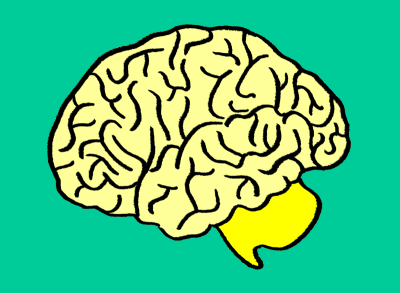
LEANS stresses how many different things the brain does—and thus why information-processing differences can have such profound effects across different domains. As one story character reflects, this is how her dyspraxia (DCD) diagnosis can affect her memory and her feet at the same time!
Read more about why it’s important to teach about neurodiversity in schools
Find more general neurodiversity resources on the Salvesen Mindroom Research Centre’s website
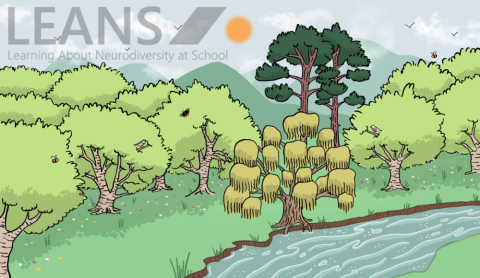
To help explain neurodiversity and neurodivergence in the classroom, LEANS uses the metaphor of trees growing in a woodland. One group of trees is in the majority—this woodland is an environment that perfectly meets their needs for water, shade, etc. Other types of trees are growing there, but they are minorities, and this environment is less ideal for their needs. The metaphor makes clear that the less-common trees are having a hard time growing in the woodland. A willow tree is not inherently “better” or “worse” than a beech tree—they are only different, with different needs. It is important that when talking about neurodiversity and differences between people, that we don’t end up minimising the impact of those differences. We want to recognise the struggles some children face in school and so that’s reflected in the woodland metaphor too.
Three big things to know about neurodiversity content in LEANS
- LEANS is a neurodiversity introduction. We hope it will be only the start of your class exploring this topic. It’s also not possible for one resource to cover every possible situation, or experience!
- It is about neurodiversity within primary schools, rather than all of society. Starting close to home helps keep this topic accessible and relevant for everyone.
- The materials focus on lived experiences over diagnostic labels. It doesn’t give facts about a list of diagnoses. It stresses that neurodiversity includes everyone in the classroom, and that neurodivergent people may not have diagnoses.
Read more about what LEANS is—and isn’t—on our resource overview page, and our FAQs page.
Source: About neurodiversity content in LEANS | Salvesen Mindroom Research Centre
Twenty Systems, Summarized Within 4 Values Statements, That Must Be Changed for a Human-Centric, Equitable System
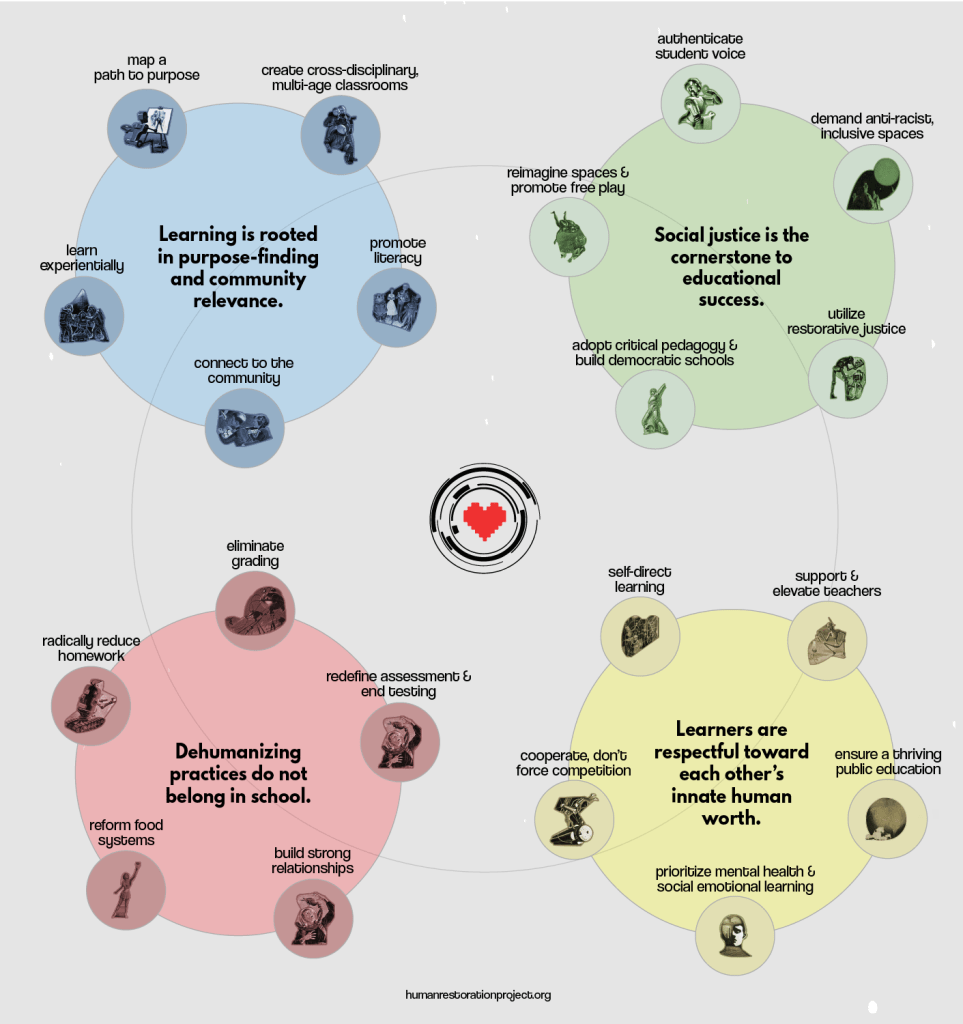
Learning is rooted in purpose finding and community relevance.
- Map a Path to Purpose
- Learn Experientially
- Connect to the Community
- Promote Literacy
- Create Cross-Disciplinary, Multi-Age Classrooms
Social justice is the cornerstone to educational success.
- Support a Reflective Space
- Demand Inclusive Spaces
- Authenticate Student Voice
- Adopt Critical Pedagogy
- Utilize Restorative Justice
Dehumanizing practices do not belong in schools.
- Radically Reduce Homework
- Build Strong Relationships
- Eliminate Grading
- Redefine Assessment and End Testing
- Reform Food Systems
Learners are respectful toward each other’s innate human worth.
- Self-Direct Learning
- Support and Elevate Teachers
- Ensure a Thriving Public Education
- Cooperate, Don’t Force Competition
- Prioritize Mental Health & Social Emotional Learning
Solarpunk gives us the permission to imagine differently.
Solarpunk gives us the permission to imagine differently; to resist Giroux’s “dead zone of imagination.”
Imagining a better future isn’t naivety, it’s essential for a thriving world
We must preserve in the face of everything a positive outlook toward organizing surviving, and building anew or risk becoming stagnant.
Individual actions snowball and propagate through systems, and each act of service, each pushback, each classroom decision can fundamentally build a better future.
It’s up to us to make that tomorrow a reality.
Fighting Back Against the Future: Imagining a Solarpunk Education – YouTube
I would call our work to change the world “science fictional behavior”—being concerned with the way our actions and beliefs now, today, will shape the future, tomorrow, the next generations.
We are excited by what we can create, we believe it is possible to create the next world.
We believe.
Emergent Strategy: Shaping Change, Changing Worlds
Interdisciplinary Subject (IDS)
An interdisciplinary curriculum equips students with a toolkit for thinking about the complex problems of the world and of themselves as learners. The interdisciplinary subject is a series of lessons, activities, and projects that aim to combine all typical school subjects into one holistic view of education. Our draft curriculum, in partnership with ongoing grant-funding from Holistic Think Tank, provides teachers with actionable steps toward making change. Further developments of the IDS will occur across 2023-2024.
At a Glance
Interdisciplinary education is crucial for fostering innovative thinking and solving complex problems across multiple fields. In other words, multi-subject learning is required to tackle the problems of today and work collaboratively toward change. Our phase 1 (of 3) contribution to the IDS includes:
629 pages of:
- 41 far-ranging, broad interdisciplinary lessons
- 246 extension activities to focus each of these lessons across the entire curriculum, as well as supplement media and extensive projects
- A pedagogical guide for teaching and using the IDS
- An impact guide for fostering experiential learning
- Alignment to community change & concepts of wonder, including the Sustainable Development Goals (SDGs)
Source: Interdisciplinary Subject
Trust Kids!
…control over children is the narrative that society has internalized, and it has become so entrenched that opting out seems radical.
Other than those who are incarcerated, no group of people are more routinely denied autonomy over their bodies and minds than young people. Autonomy is a basic human need, and distress in response to violations of that autonomy is not a defect of the child. We can change the context for these young people by removing the oppressive practices and structures that are placed upon and inhibit the autonomy of children.
As a result of Stephanie’s decision to move Zachary from an environment that disregarded his personal autonomy to one that openly acknowledged it, many of Zachary’s struggles quickly disappeared, and the quality of his life and that of his family improved substantially. For example, the tussling each morning at the door disappeared, and Zachary and his family avoided a stressful event at the beginning of the day, which helped head off a cascade of follow-on crises.
“Changing the Context” by Antonio Buehler in “Trust Kids! Stories on Youth Autonomy and Confronting Adult Supremacy”
trust kids to be kids in a world that does not want them to be kids.
“youth ellipsis: an ode to echolalia” by kitty sipple in “Trust Kids! Stories on Youth Autonomy and Confronting Adult Supremacy“
trust kids to be kids.
to be neurodivergent.
neuroemergent.
neurodifferent.
neurofabulous.
neurodimensional.
neuroqueer.
trust kids to be.
trust (these) kids.
trust (those) kids too.
trust kids / all kids / sad kids / mad kids / happy kids / Black kids / Indigenous kids / magical kids / anxious kids / quiet kids / outspoken kids / undocumented kids / adopted kids / thoughtful kids / tree-climbing kids / naming-all-the-frogs-George kids / otherworld otherworld-daydreaming kids / mutain’eering kids / screaming kids / joyful kids / disabled kids / grieving kids / autistic kids / sick kids / scared kids / hurt kids / traumatized kids /
non-verbal kids / compassionate kids / empathetic kids / system kids / hypervigilant kids / voice-hearing kids / stimming kids / hungry kids / tired kids / ticcing kids / hopeful kids / trans kids / queer kids / intersex kids / 2SLGBTQIAA+ kids / all (and we mean all) kids. because this list is not exhaustive of kids to trust
how about
just
trust (all) kids.
A Human Centered Education: Ends Dehumanizing Practices
Where behaviorism fails to foster agency it simultaneously creates a framework for excluding neurodivergent and disabled students while enabling the policing of students from non-dominant cultural, linguistic, and racial backgrounds.
A Human Centered Education: Ends Dehumanizing Practices – YouTube
Restoring Humanity to Education
There is a point to taking these individualistic actions towards systemic change, because kids notice this stuff.
Restoring Humanity to Education w/ Nick & Chris of HRP | CTRH2023 – YouTube
Progressive education is research-based education. We have the research on our side. The traditional practices do not.
Restoring Humanity to Education w/ Nick & Chris of HRP | CTRH2023 – YouTube
100 Seconds to Midnight: The Need for a Human-Centered Education
In January 2020 – in what now seems like a prophetic forecast for the distressing year to come – the Bulletin of Atomic Scientists announced to the world that it was “100 Seconds to Midnight”:
“It is 100 seconds to midnight. We are now expressing how close the world is to catastrophe in seconds – not hours, or even minutes. It is the closest to Doomsday we have ever been in the history of the Doomsday Clock. We now face a true emergency – an absolutely unacceptable state of world affairs that has eliminated any margin for error or further delay.”
It’s never been enough to “prepare every learner for a lifetime of personal success”, but a pedagogy of normalcy seems particularly maladaptive for the challenges our students will face.
So what does a human-centered education look like 100 seconds from midnight? What is it about the world that is worth preparing students for, and are we dedicated to the work of building that better world alongside them?
100 Seconds to Midnight: The Need for a Human-Centered Education
A humane education is one whose organizing principle is the innate capacity of students to be critical, empathetic agents in their communities and on the global stage.
100 Seconds to Midnight: The Need for a Human-Centered Education
Testimonial from Author Kristina Brooke Daniele

I am honored to be a recipient of the Stimpunks Creator Grant paid to #neurodivergent and #disabled #creators in support of their work. This grant is a big deal for me and my family as it helps create a space where I can focus on my writing without worry for the next few months. I am so grateful to the organization for providing a light in the midst of darkness! If you want to learn more about Stimpunks, you can check out the website here: https://stimpunks.org/pillars/
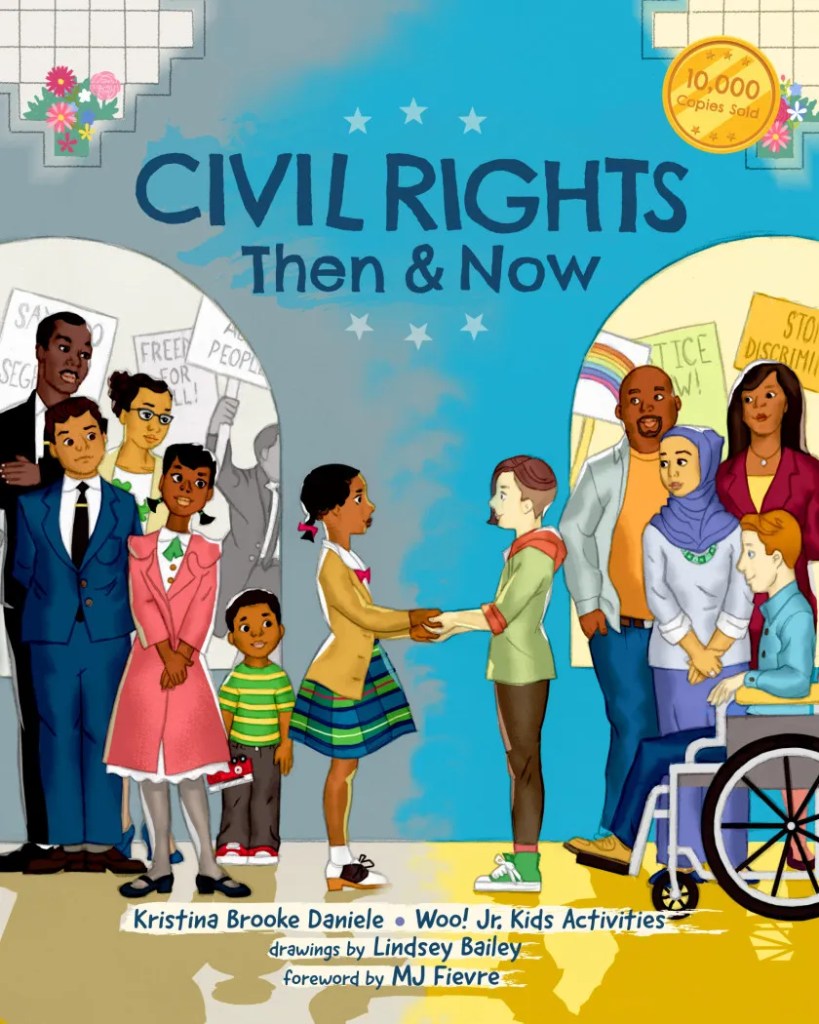
Kristina Brooke Daniele, author of “Civil Rights Then & Now“
Inside, you’ll find:
- Vocabulary lists suitable for developing minds
- Questions to promote healthy discussion
- Essay and journal prompts with processing concepts and topics
Buy from a local independent bookstore or save 30% at Mango.bz
More About Kristina Brooke Daniele

Kristina Brooke Daniele is a Black, queer, neurodivergent homeschooling mom, educator, wife, and author of two books, (Civil Rights Then and Now and i wandered, lost: poems). Kristina has worked as an educator in some capacity for over 15 years- first as a classroom teacher, then as a homeschooling teacher, and currently, as an education consultant. She is passionate about collaborative projects centering on creating and maintaining safe-spaces for those who have for too long been pushed aside. During her time at Automattic, Kristina spearheaded the creation of the Employee Resource Group, Cocoamattic for Black employees at the company.
Kristina enjoys reading speculative fiction, write tales of romance, build homes and design apartments in The Sims 4, peacefully commune with ancient lands in Age of Empires, dabble in various arts and crafts, and spend time with her family.
- CONFERENCE TO RESTORE HUMANITY! 2022: SYSTEM REBOOT TRACK 3/4 DIY AT THE EDGES Surviving the Bipartisanship of Behaviorism by Rolling Our Own July 25 – 28
- Naked Words Podcast: How Black Writers are Changing the Stories Told About Us
- Anti-Racism Resources from The iBelieve Foundation
- Misogynoir Nearly Killed Meghan Markle by Mo
- Under the Mango Tree Black Girl Magic Chat
- Black History Month Reading List from Mango Publishing
- Get Drunk, Get Woke: Cancel Culture
- The Rashad Mills Show w/ Kristina Brooke Daniele
- Black Heroes Of The American Revolution Activities And Lesson Plan
- All About Kwanzaa For Kids
- Civil Rights Supreme Court Cases Every Child Should Know
- Learn About Juneteenth For Kids: A Celebration Of Freedom
- 10 Black Women Pioneers To Know For Black History Month
- Sukey And The Mermaid Lesson Plan and Activities
- Ray Charles By Sharon Bell Mathis – Lesson Plan And Worksheets
- Anansi The Spider Lesson Plan And Activities
- The People Could Fly Lesson Plan
- Mufaro’s Beautiful Daughters Lesson Plan and Activities
- Wrinkle In Time Reading Comprehension Worksheets
Sameness-based Versus Needs-based Fairness
What’s fair depends on what people need.
Explaining Fairness (LEANS resource 5.3)
Learning About Neurodiversity at School (LEANS) | The University of Edinburgh
- What I need may be different than what other people need, and that is OK. Everyone has things they need to thrive at school and in their life.
- Fairness in school isn’t always about being treated the same or getting the same things.
- Sometimes, it can be fair for people to get or to do different things than their classmates, because they don’t have the same needs. Being treated fairly helps us be able to do our best at school.
- Due to their learning and thinking, some neurodivergent students may do things differently in the classroom. What helps one person may not help another—neurodivergent people are very different from each other too.
Tall Poppy Syndrome, the politics of resentment, fundamental attribution error, and sameness-based notions of fairness are a systemic slog for neurodivergent and disabled people. We really appreciate this video from LEANS explaining fairness.
Video: Explaining Fairness (LEANS resource 5.3) – Media Hopper Create
LEANS introduces a balance scale metaphor for fairness.
In this story, Mr. Oliver introduces a new metaphor for fairness, the balance scale. He is trying to address concerns that classroom changes or additional supports give some pupils an advantage over others (i.e. are actively disadvantaging classmates). The point of the balance scale is to suggest that supports may help “even things up” rather than putting some people ahead of others. People getting or doing apparently “extra” things may be making school more fair, not less.
Mr. Oliver reminds the class that the example is about one person in one situation. People’s scales will differ from one another, and each person would have a different scales in a different situations (for example, sports, maths, or art rather than a book report). Different situations make different demands on us—and our available tools and coping capacity can vary too.
Learning About Neurodiversity at School (LEANS) | The University of Edinburgh


Explaining Fairness (LEANS resource 5.3)
Props to the LEANS Team for the quotes and images used above. Stimpunks recommends LEANS to all educators.
Illustrations ©Claire Hubbard 2022
The handbook and associated LEANS materials are published under a Creative Commons CC-BY-NC-ND 4.0 license: Attribution-NonCommercial-NoDerivatives 4.0 International.
Terms of use | The University of Edinburgh
Equity Literacy
With this in mind, my purpose is to argue that when it comes to issues surrounding poverty and economic justice the preparation of teachers must be first and foremost an ideological endeavour, focused on adjusting fundamental understandings not only about educational outcome disparities but also about poverty itself. I will argue that it is only through the cultivation of what I call a structural ideology of poverty and economic justice that teachers become equity literate (Gorski 2013), capable of imagining the sorts of solutions that pose a genuine threat to the existence of class inequity in their classrooms and schools.
Poverty and the ideological imperative: a call to unhook from deficit and grit ideology and to strive for structural ideology in teacher education
The Direct Confrontation Principle: The path to equity requires direct confrontations with inequity—with interpersonal, institutional, cultural and structural racism and other forms of oppression. “Equity” approaches that fail to directly identify and confront inequity play a significant role in sustaining inequity.
Basic Principles for Equity Literacy
The Prioritization Principle: In order to achieve equity we must prioritize the interests of the students and families whose interests historically have not been prioritized. Every policy, practice, and program decision should be considered through the question, “What impact is this going to have on the most marginalized students and families? How are we prioritizing their interests?”
Basic Principles for Equity Literacy
The “Fix Injustice, Not Kids” Principle: Educational outcome disparities are not the result of deficiencies in marginalized communities’ cultures, mindsets, or grittiness, but rather of inequities. Equity initiatives focus, not on “fixing” students and families who are marginalized, but on transforming the conditions that marginalize students and families.
Basic Principles for Equity Literacy
Avoid These Equity Pitfalls:
Equity Pitfalls
- Universal Validation – Not all ideas and perspectives are equitable. We don’t want to validate someone’s racist perspective. Equity is not about universal validation.
- Equity Detours: Addressing Equity Problems with Cultural Solutions – There is no path toward equity that does not involve a direct confrontation with inequity.
- Lack of Leadership – The people with the most equity literacy have to be the people with the most power.
- Going at the Pace of the Most Resistant – We are prioritizing the comfort of the people who are most resistant instead of prioritizing the discomfort the most marginalized people in the institution experience.
- Doing What’s Popular Instead of Doing What’s Effective
- Embracing a Deficit Ideology Instead of a Structural Ideology – If your equity initiatives are about fixing marginalized people rather than about addressing the conditions that marginalize people, there’s no way to get to equity.
Testimonial from Creator Jesse Mercury
Receiving a Stimpunks creator grant has been life changing. It has ensured the continued creation of the Major Pain podcast for many months, while giving me some flexibility to experiment with advertising the podcast for the first time. It has also been an incredibly validating vote of confidence for this project, which I am deeply passionate about continuing. After years of being unable to work consistently due to my chronic illness, it is easy to feel like my value and contribution to society are diminished. Connecting with the Stimpunks and receiving this grant makes me feel the exact opposite, that this project has a value I am just beginning to explore.
Jesse Mercury
The Major Pain podcast is a collection of interviews from people living with chronic illness and disability. Our goal is to spread awareness, empathy and community around experiences often lived in isolation. Through sharing these stories important themes have become increasingly apparent, including the dangers of medical gaslighting, the importance of self-advocacy and the fact that none of us are in this alone.
Major Pain: A Podcast About Chronic Illness and Disability
If you are neurodivergent or disabled and you’re struggling to get by, you’ve gotta check out the Stimpunks Foundation.
Jesse Mercury
We exist for the direct support and mutual aid of neurodivergent and disabled people. Direct supporting includes just giving you cash. That’s one of the best things you can do to help someone. Just give them some money to make their own decisions to make their life what they need it to be.
We try to reduce the administrative burden that is heaped upon people in our systems. It is ridiculous to get aid almost anywhere. We make our application process as neurodivergent and disabled friendly as you can.
That’s what we’re mainly about.
Ryan Boren, Co-founder and Creative Director of Stimpunks Foundation
More About Jesse Mercury and Major Pain
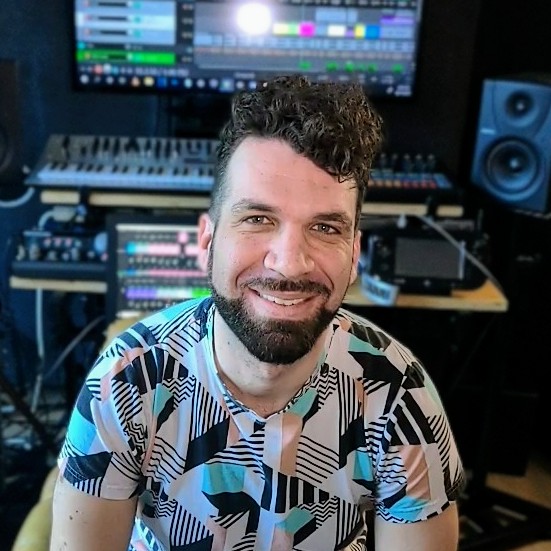
Major Pain is created by Jesse Mercury, a content creator with a long history of undiagnosed illness. His podcasting career started in 2015 on a show called SciFi with Jesse Mercury, which evolved into Space Nerds before being put to rest. As Jesse’s health declined he switched gears to launch the Major Pain podcast in 2021, seeking to find community around his health challenges. In 2023 he finally uncovered the mystery driving his long illness when he was diagnosed with mast cell activation syndrome and small fiber neuropathy, made possible in large part by what he learned from hosting Major Pain. He is now seeing improvement in his health for the first time in years, as he learns to integrate his diagnoses into his life.
Major Pain: A Podcast About Chronic Illness and Disability
Economic justice is disability justice. Every disabled person…
The Disability Economic Justice Policy Framework is intended to be used by all and shared widely as a guide for policy development. Its applicability includes federal policy making in Congress, the White House, and across federal agencies; at the state and local levels; as well as at policy and advocacy organizations that shape policy making. Whether you are an advocate, policymaker, funder, practitioner, or researcher, the goal is to find yourself within the framework and use the values it articulates to bring a disability policy lens to your work.
Every Disabled Person:
- can live free from disability-based discrimination, as well as discrimination based on multiply marginalized and intersecting identities such as race, gender (including sexual orientation and gender identity), immigration status, and religion;
- has accessible, affordable, stable, safe, and quality housing;
- has access to reliable, affordable, and accessible transportation;
- can live independently, with dignity, access to support in the community, and access to culturally and linguistically appropriate care and services at their direction;
- has access to the health care they need, when they need it, and from the providers they want to be served by, including primary and specialist health care, sexual and reproductive health care, dental care, mental health care, medication, telehealth, and emergency care;
- has access to adequate, nutritious, and culturally appropriate food;
- is provided a high-quality, equitable education in an inclusive educational setting, from early childhood to post-secondary education, including an affordable higher education;
- can find and retain equitable employment at competitive wages, in integrated settings, and with appropriate accommodations and paid leave, including access to self-employment and entrepreneurship opportunities;
- has direct, equitable pathways to attain economic security and mobility through building wealth and savings;
- has access to an equitable public benefits system that provides a robust social safety net adequate to ensure a basic, dignified standard of living and free from intrusive barriers to work, savings, and marriage;
- is provided fair and equitable access to and treatment by the American legal system, including through civil, criminal, immigration, and family courts; court fines and fees; and the right to support for legal decision-making and the right to counsel as a reasonable accommodation;
- can engage in civic participation by voting and engaging in the democratic process with appropriate accommodations provided equitably and fairly;
- is centered in emergency and disaster planning, as well as climate change sustainability and other infrastructure discussions, to ensure accessible and inclusive solutions for the future of the United States; and
- has access to and can fully engage with affordable technologies at home, in the community, and at work, including broadband and assistive technologies that keep pace with the rapidly changing technology of the times, while ensuring freedom from surveillance when engaging with such technology.
Source: How to Embed a Disability Economic Justice Policy Framework in Domestic Policy Making
- $750 a month, no questions asked, improved the lives of homeless people – Los Angeles Times
- Denver Basic Income Project’s cash has saved lives, homeless participants say
- Thanks to $500 a month of basic income for six months, homelessness reduced by two-thirds
- Providing $7500 each to 50 homeless people resulted in a savings of $8100 per person according to new unconditional cash grant experiment
- Robust COVID Relief Achieved Historic Gains Against Poverty and Hardship, Bolstered Economy | Center on Budget and Policy Priorities
They don’t take Disability Studies classes. They don’t socialize with us. They don’t listen to us.
CW: medical trauma, medical ableism
I remember laying there, remembering that this experience I’m having is like the other times that I almost died.
And I can feel my life slipping away.
Is it worth it for me to call out and have someone save me?
That’s how traumatized that I’ve been by being in hospitals and in medical settings.
And I need for doctors and healthcare professionals to understand that many of us are traumatized like that.
It’s not abnormal for people like myself who have chronic illnesses, who have cancer, and have high touch and high interactions with medical professionals, to feel traumatized, to feel, is it worth it for me to go and get help for this experience that I’m having, for the possibility that something major is wrong?
Because for some of us waiting to see is worth the risk of possibly dying.
That’s how much we are no longer emotionally prepared to go to the hospital.
That’s how bad a physical experience it is for some of us.
Tinu Abayomi-Paul – YouTube
During the hospital experience, I dealt with racism, I dealt with sexism.
The first doctor I had was fantastic, but they rotated him out.
And the rest of my experience, I had to fight every single day to be heard and understood and to get better care.
I didn’t have my chronic illnesses properly addressed, I didn’t have any of my neurodiversities taken into consideration at all, nor my comfort.
It was a hellish experience towards the end.
And I finally decided I just need to get out of there.
Tinu Abayomi-Paul – YouTube
Karrie Higgins
Which means THEY actually reduce us to “nothing but our conditions” far more than we do. #MedTwitter But hey, wouldn’t want to tell the good doctors they’re ignorant.
Karrie Higgins
The people society says are the most qualified to help are the people least equipped to understand.
How Autistic Mentors Can Help “Problematic” Autistic Students Succeed In School — THINKING PERSON’S GUIDE TO AUTISM
Our entire medical system from the rooter to the tooter is eugenics.
Imani Barbarin on Instagram: “The sad part is…I’m not even a little bit wrong. #ushealthcare #childfree #disability”
Bodies ride the waves
Somebody's gonna have to pay
Bodies, living on the shore in their sandcastles
Bodies, sea is getting rough and the walls rattle
Bodies, come with the tide
Nowhere left to hide
Bodies
Bodies

A thousand thoughts ride the waves
Can't save nobody, I'm too late
Bodies, no one cares about the coming last battle
Bodies, wavеs crashing down and the ocean swallows
Bodies
Whеre you gonna hide the bodies?
Bodies
Hey-oh-hey-oh
On the shore living in sandcastles
No one cares about the coming last battle
Sea is getting rough and the walls rattle
Waves crashing down and the ocean swallows
Bodies
Bodies

--Bodies by Rabbit Junk
Because every single thing you hate about us, you will hate about yourself. And becoming us is a lot easier than you think it is.
The instant, almost the very instant, you become disabled, you cease to be seen as a reliable narrator of your own story to literally everybody else, except for disabled people.
Every single ableist stereotype that you’ve heard for your entire life that you’ve never evaluated, that will be the lens through which other people see you, including people that know you.
This is one of the many reasons why people need to do anti-ableism work. Because every single thing you hate about us, you will hate about yourself. And becoming us is a lot easier than you think it is.
Imani Barbarin, MAGC | Crutches&Spice
Dear Problem Patients
Dear Problem Patients: An open letter to anyone who’s ever felt dismissed by their doctor – No End In Sight
- We believe you.
- You’re not alone.
- The wellness industry is gaslighting you.
- It’s not your fault.
- You are worthy of compassion.
- Medical bias is real.
- The way we see medicine practiced on television is a fantasy.
- We believe that you have a problem.
- We are angry and grieving too.
- Talking to other people who know what this feels like has changed everything for us.
- It’s okay to feel joy when your body is hurting.
- Feeling joy doesn’t undermine how much you are struggling.
- It’s okay if you haven’t found any joy in your struggle at all.
- Your story doesn’t need a neat and tidy ending.
- Somebody out there is yearning for a story just like yours that is honest about pain or maybe joy and that ends in an uncertain and messy place.
- Your story matters.
- We want to know your story.
- We want to help you find the stories you’ve been yearning for.
“Bread and roses” are what the humans involved in care—the patient and the clinician—want from healthcare.
Over this summer both of us read Rebecca Solnit’s latest book, Orwell’s Roses,1 which she was inspired to write when she discovered that George Orwell had not only written the bleakest and most powerful portrayals of the totalitarian regimes of the twentieth century,2 but had also planted rose bushes, costing him sixpence each from Woolworths. This apparent contradiction between the bleak worldview and the hopeful act of gardening, reminded Solnit of the political slogan “Bread and Roses” which seems to have emerged in the US around 1910 and was used by women campaigning for votes for women and for workers’ rights. Describing the power of the slogan, Solnit wrote:
“Bread fed the body, roses fed something subtler: not just hearts, but imaginations, psyches, senses, identities. It was a pretty slogan but a fierce argument that more than survival and bodily well-being were needed and were being demanded as a right. It was equally an argument against the idea that everything that human beings need can be reduced to quantifiable, tangible goods and conditions. Roses in these declarations stood for the way that human beings are complex, desires are irreducible, that what sustains us is often subtle and elusive.”
“Bread and roses” are what the humans involved in care—the patient and the clinician—want from healthcare. Bread is sustenance and therefore life; roses are courage and hope, curiosity and joy, and all that makes a life worth living. Bread is biology; roses are biography. Bread is transactional and technocratic; roses are relational. Bread is science; roses are care, kindness and love.
“Bread and roses” can also describe how healthcare can support care. With apologies to those who bake their own loaves, the parallel here is with the industrial production of bread, so that bread represents the bureaucratic processes that make healthcare efficient and safe, preventing waste and error through standardisation, regulation, and training. Baking bread is like the technologies and innovations that make unhurried conversations and continuity of care possible and feasible, that reduce diagnostic errors, and detect and correct harms early and reliably. Attending to the bread makes sure healthcare retains the potential to attend to the object of care, to the bodies and minds, the fears and feelings of individual patients, and to create the conditions for careful and kind care to emerge.
Roses represent what makes life worth living, all that is good in human relationships, and the stories we use to make sense of our desperate situations and of what is possible with treatment. Roses are what gives us comfort in the face of failure, pain, decay, and death, that is, in the face of living. Attending to roses brings the subject of care into sharp relief so that the scars of injustice, racism, inequity, and violence can be made visible alongside the scars of disease. Roses, like careful and kind care,3 speak of hope—our work of planting and creating conditions of light, soil, and water makes it possible that a flower will appear in the future. Just like roses, care cannot be summoned or coaxed, but must emerge from the right conditions.
Responding to the crisis of care | The BMJ
How to respond to this crisis of care?
Here, Orwell himself holds the clue. The discovery that Orwell had planted those roses led Solnit to reassess his novel 1984. Within all the greyness and cruelty and oppression, there is this great truth:
“What mattered were individual relationships, and that a completely helpless gesture, an embrace, a tear, a word spoken to a dying man, could have value in itself.”2
All the joy, all the roses of health, even in these dire times, exist within relationships, between patients and professionals, and between healthcare colleagues; and in the sure knowledge that all these helpless gestures have value in themselves.
It turns out that the subversive, almost revolutionary thing to do within contemporary healthcare is to build, quietly and unobtrusively, these crucial relationships. We now know that continuity of care, within a unique dyad of patient and doctor, delays disease and prolongs lives5 and thereby supplies bread, but it does so by simultaneously giving us the roses of joy, trust, curiosity, care, kindness, and solidarity. A life worth living tends to last longer.
In fact, care, like love, is abundant and self-sustaining, a potential of everyone. Trained and celebrated, caring is a demanding human capability that swells with the satisfaction of having opted to run towards the pain, that replenishes with the smile and the gratitude with which we evaluate our effectiveness, that regenerates when the care, and love, returns to care givers when they, invariably, must become care receivers. Care, like roses, gives meaning to living. We must cultivate care.
In fighting our way out of this healthcare crisis, in working for careful and kind care for all, we must follow the suffragettes and demand “bread and roses.”
Responding to the crisis of care | The BMJ
We gotta really try, Try so hard to get by, And where are we going to?
Don't wanna be free of hope
And I'm at the end of my rope
It's so tough just to be alive
When I feel like the living dead

I'm givin' it up so plain
I'm livin' my life in vain
And where am I going to?
I gotta really try
Try so hard to get by
And where am I going to?
Flip on your TV
And try to make sense out of that
If we were all in the movies
Maybe we wouldn't be so bored

We're givin' it up so plain
We're livin' our lives in vain
And where are we going to?
We gotta really try
Try so hard to get by
And where are we going to?
Life in Vain by Daniel Johnston

I call it burning these days because that’s what it feels like: like there’s an idea inside me burning its way out. But when I was younger, I called it flying. What I really meant was controlled falling. Like there was a tornado going on and I would leap off something and ride right through the middle of it, all the way up, chasing words. Because that’s what it felt like for me, rolling on through the manic energy that comes with being bipolar.
A lot of folks equate the manic energy of being bipolar with the creative spark that drives artists to brilliance. They point to so many great artists in history who lived with mental illness and say, “There it is, that energy, that’s what made them great!”
Except for so many artists, mental illness didn’t make them great. It made them ill. And if they weren’t careful, it made them gone.
DISABILITY VISIBILITY: FIRST PERSON STORIES FROM THE 21ST CENTURY
Do you know why we have the sunflowers?

Do you know why we have the sunflowers? It’s not because Vincent van Gogh suffered. It’s because Vincent van Gogh had a brother who loved him. Through all the pain, he had a tether, a connection to the world. And that is the focus of the story we need. Connection.
Hannah Gadsby: Nanette


#/media/File:Six_Sunflowers_1888.jpg)
She talked about Vincent van Gogh, the artist who suffered during his life from mental illness, self-medicated, was treated by doctors, and struggled to succeed despite his obvious impossible talent due to his sickness. She talked about her knowledge of his life, thanks to her art history degree, and how he sold only one painting his entire life—not because he wasn’t recognized by his community as a genius but because he struggled to even be part of a community due to his illness.
And I thought of the flying and the hard days at the word mines. I thought about the days when I heard the tornado in my head and couldn’t make the words get to my fingers. I thought about the frustration, the depression, the difficulties talking to people about what it sounded like inside my skull some days when I could barely pay attention because of the rush of words and ideas.
Hannah Gadsby told people artists don’t have to suffer for their art, and I’ll forever thank her for having the guts to stand up and say that to the world. Because I used to believe it was true.
DISABILITY VISIBILITY: FIRST PERSON STORIES FROM THE 21ST CENTURY
Being bipolar is a constant system of checks and balances. These days I fight against needing my medication adjusted a lot, against depression and anxiety, mania and hypomania. I still end up flying some days, sometimes for days at a time, because as time goes on, the body changes and you have to adjust to new needs, new doses, new medication.
Coping mechanisms change, life situations go ways you never expected, mania and depression rear their ugly heads. But the day I went on medication was one of the greatest days of my life, because it was the day my creative spark stopped becoming an excuse to keep putting up with an illness that was killing me.
DISABILITY VISIBILITY: FIRST PERSON STORIES FROM THE 21ST CENTURY
Remember to breathe, Love. For you are alive.
Remember to
breathe, Love.
For you are alive.

--Breathe, You are Alive! by Gaelynn Lea
These essays are the heart, the bones, and the blood of Disability Rights.
Gaelynn Lea, musician and activist
Staying alive is a lot of work for a disabled person in an ableist society.
DISABILITY VISIBILITY: FIRST PERSON STORIES FROM THE 21ST CENTURY
Testimonial from Artist Kaya Oldaker
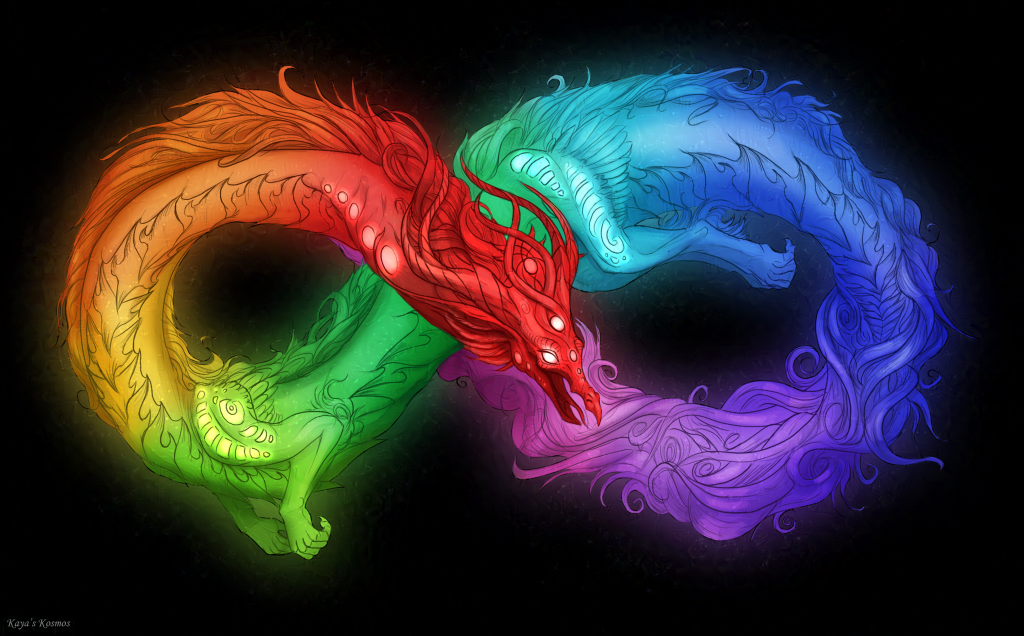
“The Autism Infinity Dragon” by Kaya Oldaker is licensed under CC BY-NC 4.0
Stimpunks is such a fantastic organisation with incredible resources.
Kaya Oldaker
They really helped me out a while ago with a very generous donation towards my art and webcomic project.
They offer creative grants to neurodivergent and disabled artists as well and provide mutual aid, too.
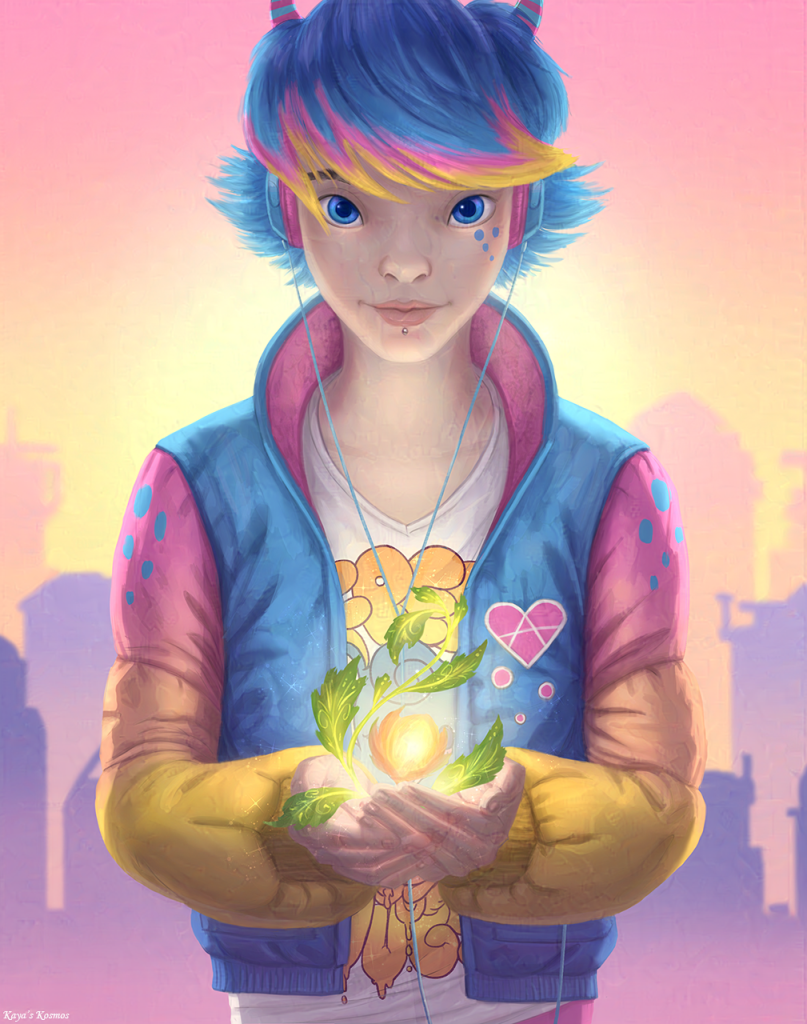
Flowerpunk: Anarchy isn’t about chaos. It’s about love.
Flowerpunk is the new umbrella name for the webcomic universe I am creating. Previously known as “The Increasingly Absurd Endeavours of Gretchen Goosander,” Flowerpunk now no longer has a main character, instead it follows multiple characters across multiple stories. This story is a dark fantasy that takes place in a world very much like our own, only there are some intruding magical elements. Magic used to be much more abundant, but it is now starting to disappear as Capitalism lays waste to the world and has commodified what is left of the magic elements.
The first story begins in the city of Wyrdon, where a supernatural plague known as “the rot” is slowly decaying everything it comes into contact with. It is up to a group of anarchists to try and help as many people as possible through acts of radical compassion before more citizens are turned into maggots. Along the way, our main characters, Ludwig and Kimi, come to realise that in order to save everyone, they must bring back the magic.
Flowerpunk | Kaya’s Kosmos

“Anarchy isn’t about chaos. It’s about love”
In the city of Wyrdon, a supernatural plague known as “the rot” ravages the streets, slowly rotting the city to its core and turning the residents into maggots. A small group living outside of society known as “The Lovely Anarchists” are working tirelessly to save the city’s soul by bringing back the magic needed to stave of the rot. This is no easy task since the world’s magic has been hoarded by the ultra-wealthy.
Expect anarchist hijinks, weird magical plant-powered machinery, messed-up nightmarish monsters and tons of queer goodness!
Read Flowerpunk | Tapas Web Comics, Flowerpunk | WEBTOON
Testimonial from Composer Brett L. Wery
Brett L. Wery
The Stimpunks Foundation provided me with so much more than financial support. They gave me a space in a community that I never knew existed for a person like myself. They showed me how I can help create the same sort of community for other artists.
Brett L. Wery is an active composer/arranger in the Capital Region area of upstate New York. He is the Music Director/Conductor of the Capital Region Wind Ensemble in Schenectady, NY and composer/editor for Sonata Grendel Publishing in Scotia, NY. He was recently named Visiting Artist in Residence in Winds and Director of the Wind Ensemble at Williams College in Williamstown MA.
Short Bio — Brett L. Wery—Composer
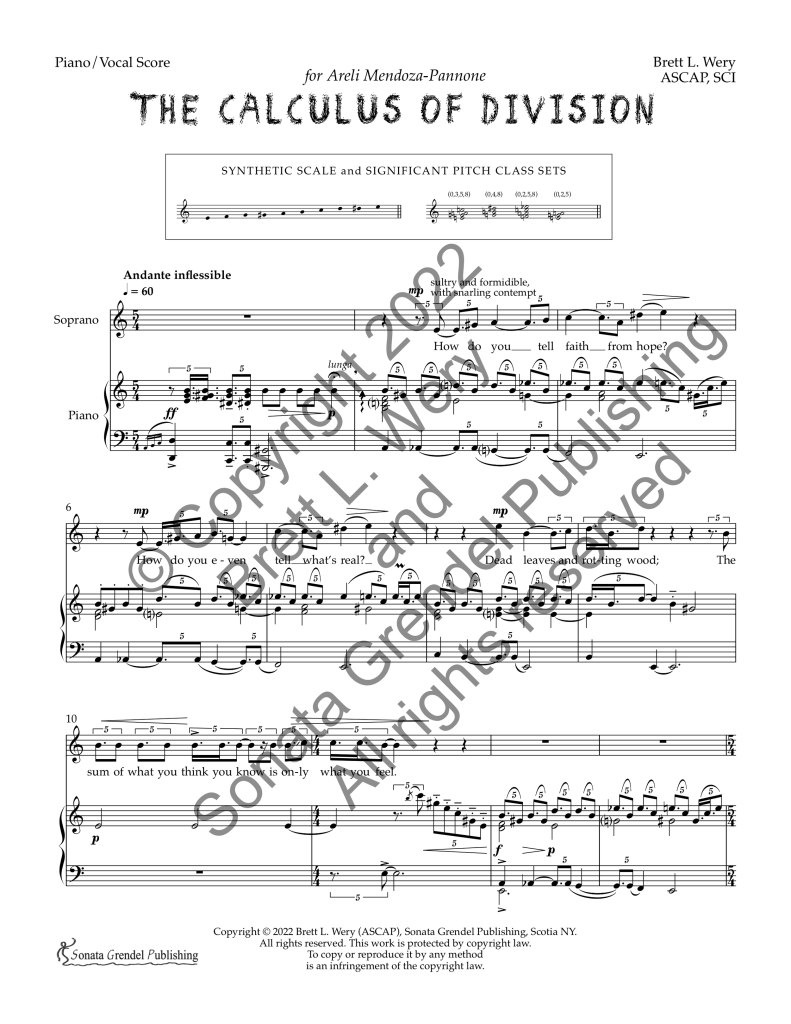


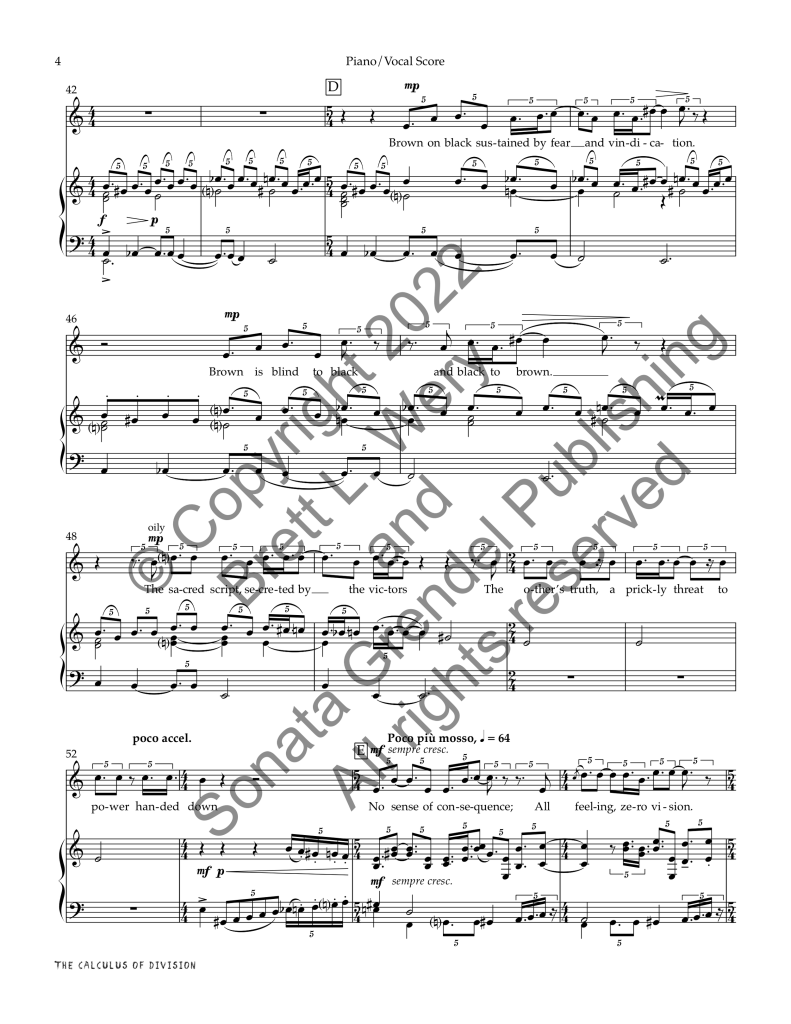
More About Brett L. Wery
For twenty-five years he taught theory, conducting, and applied woodwind studies at the State University of New York, Schenectady County Community College where he also directed the college wind ensemble. As a professor at SUNY Schenectady, Wery has been the recipient of the SUNY Chancellor’s Award for Excellence in Teaching, the SUNY Chancellor’s Award for Excellence in Scholarship and Creative Activities, and the SCCC Foundation Award for Excellence in Teaching. Wery later served as dean of the School of Music at SUNY Schenectady before retiring from academic administration to pursue composition and conducting full time.
An award winning member of ASCAP and SCI, Wery’s compositions have been performed and recorded around the world and include Sonata for Guitar Quartet, Dance Variations for Woodwind Quintet, Oot-kwa-tah for chamber orchestra, Four World Variants for Clarinet Quartet, and Sonata for Multiple Woodwinds and Piano. Wery’s 2013 String Quartet was the 2021 Grand Prize winner of the Classic Pure Vienna International Music Competition. In addition to composing and conducting, Wery is an active woodwind doubler—performing on flute, clarinet, and saxophone.
Mr. Wery received his bachelor’s degree at the North Carolina School of the Arts and his Master’s Degree at the University of Denver.
Short Bio — Brett L. Wery—Composer
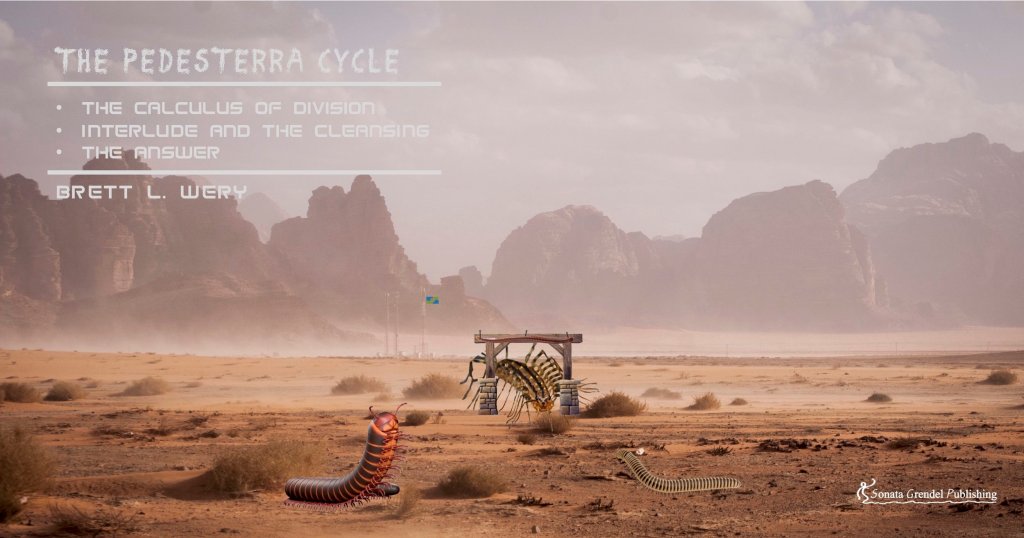
The Pedesterra Cycle is science-fiction trilogy set in a universe where myriapods—a subphylum of arthropods containing millipedes and centipedes—are sentient and sapient. Songs include The Calculus of Division, Interlude and the Cleansing, and The Answer. The songs center on a plot by the more advanced centipedes to dominate the millipedes in order to sow doubt in math and thereby divide them into factions. While the millipedes distracted, the carnivorous centipedes will eat the detritivorous—eating organic waste such as rotting wood—millipedes’ young.
The Pedesterra Cycle — Brett L. Wery—Composer
Embrace diversity. Unite—Or be divided, robbed, ruled, killed By those who see you as prey. Embrace diversity Or be destroyed.
Embrace diversity.
Parable of the Sower (p. 196)
Unite—
Or be divided,
robbed,
ruled,
killed
By those who see you as prey.
Embrace diversity
Or be destroyed.
In the Parable books Lauren is a young, black, disabled woman who manages to not merely survive but to create a belief system and lead a community that brings together and helps thousands in the midst of chaos. As a result, this series is one example of how a better future can include those of us whose lives, bodyminds, and perspectives are often devalued and discounted.
Bodyminds Reimagined: (Dis)ability, Race, and Gender in Black Women’s Speculative Fiction
Earthseed is Olamina’s contribution to what she feels should be a species-wide effort to evade, or at least to lengthen the specialize-grow-die evolutionary cycle that humanity faces, that every species faces.
Parable of the Sower (Parable, 1)
The strategies that played out in Octavia’s books included adaptability and interdependence—often through the practice of repeated vulnerability.
Emergent Strategy: Shaping Change, Changing Worlds
Testimonial from Artist Adriel Jeremiah Wool
Stimpunks is gently debugging society.
Adriel Jeremiah Wool
The charity protects, helps and comforts individuals, while pointing out library-level flaws in some of the concepts that end up harming those individuals.
This help is profoundly wonderful, morally and functionally coherent to great need, and as true as a pure circle in its cause-and-effect form.
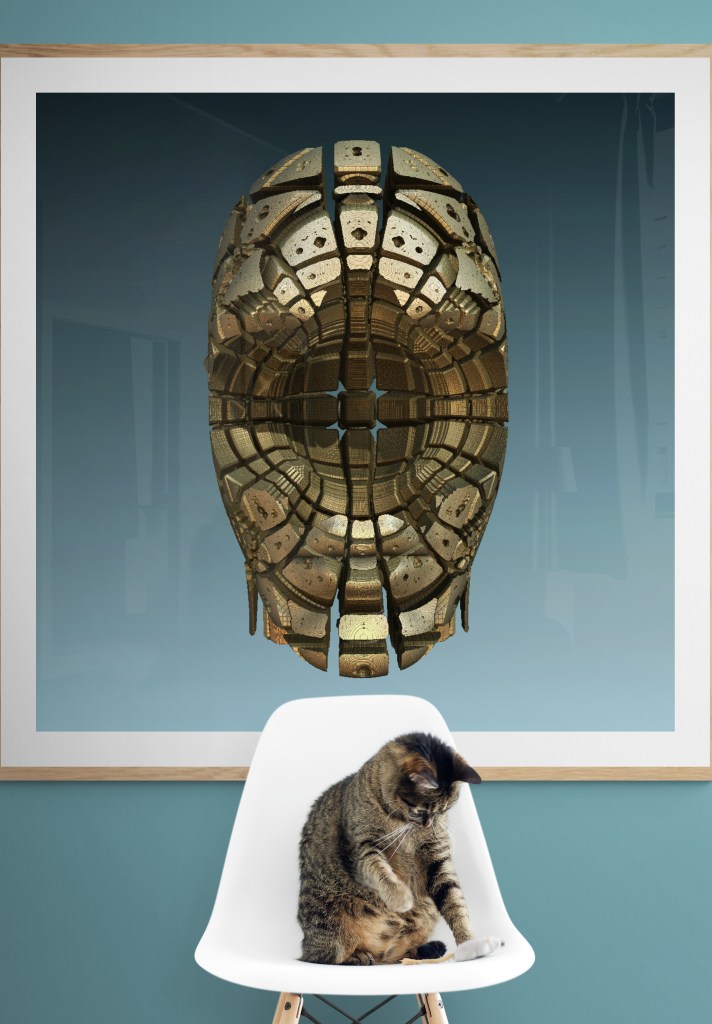
Stimpunks has put the fingernail into the orange-peel of the rigid world. It leaves a crescent 🌙 that others can use to help peel away those dangerous layers of as-of-yet-unmade change.
Adriel Jeremiah Wool
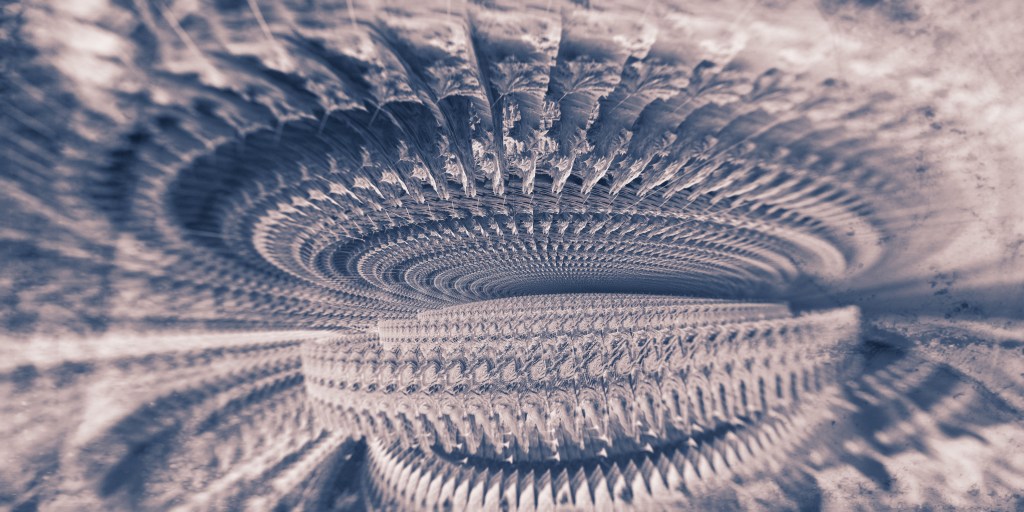
The universe is given forth folded and unfolded.
The artist hopes to convey this: that the universe is given forth folded and unfolded. Although explicit understanding helps, it is too cumbersome, and should only provide refinement to something already greater that exists.
Adriel Jeremiah Wool
That greater thing is what was given to the artist first by the practice of origami. An enlivening of the intuitive mind, experience with a universe of many dimensions, and the promise of creation revealed when one folds a flat square into the likeness of a higher dimensional thing. That inspiration reaches a young mind in a powerful way.
The artist wants the viewer to see proof of what their intuitive mind already knows is true, the universe is a multidimensional phenomenon and the ability to understand its nature already exists within us each.
The artist hopes the viewer will be inspired to seek the understanding of freedoms available to the individual inspired by the exposure to artistic expressions, and of a nature of dimensionality unimaginably greater than the object presented here.

Adriel Jeremiah Wool
When we speak of systemic change, we need to be fractal. Fractals—a way to speak of the patterns we see—move from the micro to macro level. The same spirals on sea shells can be found in the shape of galaxies. We must create patterns that cycle upwards. We are microsystems.
Emergence is the way complex systems and patterns arise out of a multiplicity of relatively simple interactions.
Emergent Strategy: Shaping Change, Changing Worlds
Emergent strategy is a way that all of us can begin to see the world in life-code—awakening us to the sacred systems of life all around us. Many of us have been and are becoming students of these systems of life, wondering if in fact we can unlock some crucial understanding about our own humanity if we pay closer attention to this place we are from, the bodies we are in.
Emergent Strategy: Shaping Change, Changing Worlds
But emergence notices the way small actions and connections create complex systems, patterns that become ecosystems and societies. Emergence is our inheritance as a part of this universe; it is how we change. Emergent strategy is how we intentionally change in ways that grow our capacity to embody the just and liberated worlds we long for.
Emergent Strategy: Shaping Change, Changing Worlds
What is Emergent Strategy? “Emergence is the way complex systems and patterns arise out of a multiplicity of relatively simple interactions”—I will repeat these words from Nick Obolenksy throughout this book because they are the clearest articulation of emergence that I have come across. In the framework of emergence, the whole is a mirror of the parts. Existence is fractal—the health of the cell is the health of the species and the planet.
Emergent Strategy: Shaping Change, Changing Worlds
Octavia wrote novels with young Black women protagonists meeting aliens, surviving apocalypse, evolving into vampires, becoming telepathic networks, time traveling to reckon with slave-owning ancestors. Woven throughout her work are two things: 1) a coherent visionary exploration of humanity and 2) emergent strategies for being better humans.
Emergent Strategy: Shaping Change, Changing Worlds
The idea of interdependence is that we can meet each other’s needs in a variety of ways, that we can truly lean on others and they can lean on us. It means we have to decentralize our idea of where solutions and decisions happen, where ideas come from.
Emergent Strategy: Shaping Change, Changing Worlds
We have to embrace our complexity. We are complex.
When we speak of systemic change, we need to be fractal. Fractals—a way to speak of the patterns we see—move from the micro to macro level. The same spirals on sea shells can be found in the shape of galaxies. We must create patterns that cycle upwards. We are microsystems.
Emergent Strategy: Shaping Change, Changing Worlds
I was looking for language and frameworks to use when exploring the kind of leadership Butler’s protagonists practiced, and found them in conversations with ill and Grace about emergence—interdependence, iteration, being in relationship with constantly changing conditions, fractals.
Emergent Strategy: Shaping Change, Changing Worlds
fractals: the relationship between small and large
A fractal is a never-ending pattern. Fractals are infinitely complex patterns that are self-similar across different scales. They are created by repeating a simple process over and over in an ongoing feedback loop.
Emergent Strategy: Shaping Change, Changing Worlds
Rather than narrowing into one path forward, Octavia’s leaders were creating more and more possibilities. Not one perfect path forward, but an abundance of futures, of ways to manage resources together, to be brilliant together.
Emergent Strategy: Shaping Change, Changing Worlds
Fractals are one form of redundancy that has attracted particular attention from scientists. A fractal pattern is one in which the same motif is repeated at differing scales. Picture the frond of a fern, for example: each segment, from the largest at the base of the plant to the tiniest at its tip, is essentially the same shape. Such “self-similar” organization is found not only in plants but also in clouds and flames, sand dunes and mountain ranges, ocean waves and rock formations, the contours of coastlines and the gaps in tree canopies. All these phenomena are structured as forms built of smaller forms built of still smaller forms, an order underlying nature’s apparently casual disarray.
Fractal patterns are much more common in nature than in man-made environments. Moreover, nature’s fractals are of a distinctive kind. Mathematicians rank fractal patterns according to their complexity on a scale from 0 to 3; fractals found in nature tend to fall in a middle range, with a value of between 1.3 and 1.5. Research shows that, when presented with computer-generated fractal patterns, people prefer mid-range fractals to those that are more or less complex. Studies have also demonstrated that looking at these patterns has a soothing effect on the human nervous system; measures of skin conductance reveal a dip in physiological arousal when subjects are shown mid-range fractals. Likewise, people whose brain activity is being recorded with EEG equipment enter a state that researchers call “wakefully relaxed”—simultaneously alert and at ease—when viewing fractals like those found in nature.
There is even evidence that our ability to think clearly and solve problems is enhanced by encounters with these nature-like fractals.
The Extended Mind – Annie Murphy Paul
Testimonials from Grantees
Thank you so much @stimpunks for supporting & believing in me & my artwork.
It’s okay to be you. It’s okay to be different. It’s okay to have a disability. Never give up on yourself.
Jasmine Slater
If y’all care about me, read what @stimpunks is saying.
Liana McCrea
Huge thank you to @stimpunks for this generator so if we lose power, the oxygen concentrator can still run! I can’t thank you enough!!
Karrie Higgins
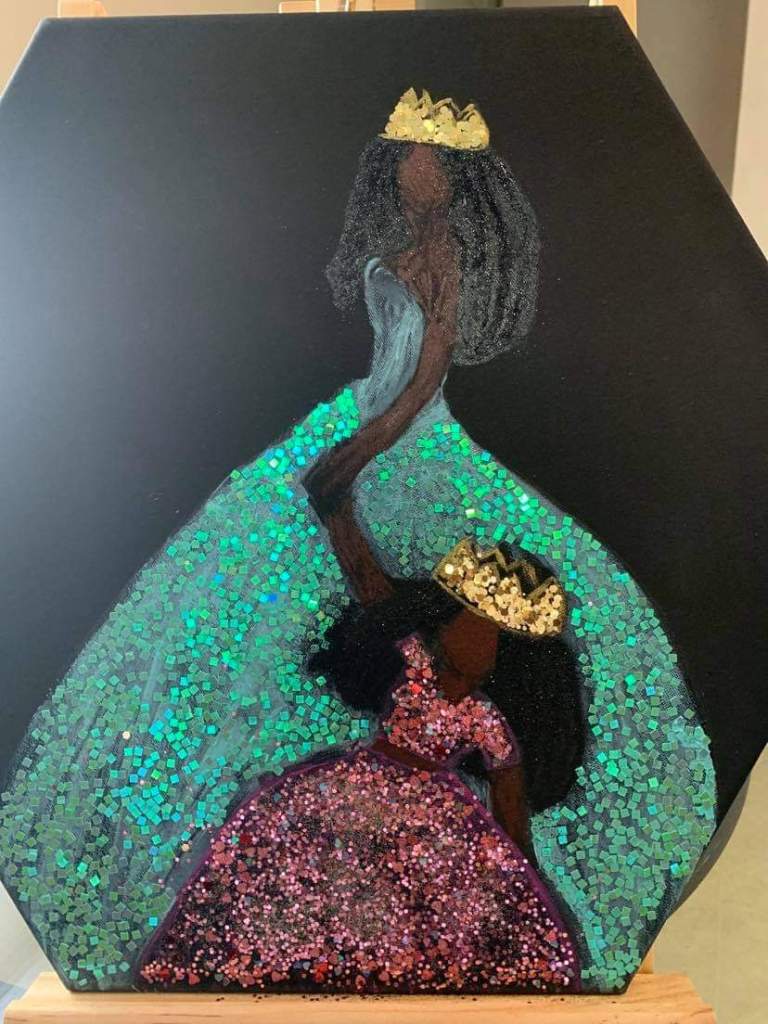
I want to say thank you and tell you you made a big difference in someone’s life today. I can’t stop crying. I’ve never felt understood or seen like this before. I’m desperately looking for community, perspective, support, tools to survive and feel backed into a corner.
I’m honestly in tears right now because of you guys.
Thank you so, so much for caring about my family. Thank you for sharing your kindness & support.
I want to say thank you and tell you you made a big difference in someone’s life today. I can’t stop crying. I’ve never felt understood or seen like this before. I’m desperately looking for community, perspective, support, tools to survive and feel backed into a corner.
Thank you for reaching out! I’m doing well – thanks to your generosity as well as some other donations I was fortunate to receive, I was able to trade my car for a van and order a lift for the wheelchair! The lift won’t be here until the end of March, but I’m SO excited to finally be free to use my wheelchair out in the world! Thank you SO much for your donation!!
Thank you so much for reaching out and I cannot express how grateful I am to have been selected! This is going to be a massive weight lifted off my shoulders!
Thank you so much for the support. I truly appreciate it! It’s really nice to connect with others who “get it” too!
I can’t believe how incredible y’all are. I’m in tears. This is the biggest thing that’s ever happened to me like this.
Oh my gosh, thank you SO MUCH! This is truly amazing!
Extremely blessed to be able to get my procedure and medication. Huge thank you to @stimpunks. I’m honestly in tears, thank you guys so much.
Thank you so much. This is exactly what I needed right when I needed it. Y’all are heros. I appreciate your help.
Thank you all so very much! This is a very beautiful thing your team is doing and gives me hope for our society.
Deeply appreciative of this and all of you at Stimpunks, thank you so much! This is an extremely impactful relief.
Again, thank you so much for everything you’ve provided. Stimpunks is doing wonderful work. Our needs may be great, but our gratitude when we receive what we need is even greater. 💕
Thank you so deeply for your help and for your care of others.
My partner told me about you and when I saw your mission page I cried for like an hour because it resonated so strongly.
It shocked me, humbled me, and made me wonder how you were able to do what you did for me!
You made someone struggling alone feel a little better and less lonely today.
Grantee
We serve our loved people so we can keep on livin’ through the onslaught.
I would like to honour all the autistic people who survive the care system somehow.
Ann Memmott PGC on Twitter
All those who survive extreme ‘therapy’.
All those who are brought to their knees, reading hellish descriptions of their loved people.
And all who did not survive this onslaught.
Look up to the sky, sky, sky
Take back your own tonight
You'll find more than you see
It's time now, now, get ready
This is your time, this is your life and
This is your time, this is your life and
This is your time, this is your life and
This is your time, this is your life and
You gotta keep on (Keep on livin!)
Gotta keep on (Keep on livin!)
You gotta keep on (Keep on livin!)
Gotta keep on (Keep on livin!)
You gotta keep on (Keep on livin!)
Gotta keep on (Keep on livin!)
You gotta keep on (Keep on livin!)
Gotta keep on (Keep on livin!)

Keep On Livin' by Le Tigre
Join us under the umbrella. Anyone can be a Stimpunk.
☂️ The Neurodivergent Umbrella

- ADHD (Kinetic Cognitive Style)
- DID & OSDD
- ASPD
- BPD
- NPD
- Dyslexia
- CPTSD
- Dyspraxia
- Sensory Processing
- Dyscalculia
- PTSD
- Dysgraphia
- Tourette’s Syndrome
- Stuttering & Cluttering
- Anxiety & Depression
- Personality Disorders/Conditions
- Bipolar
- Autism
- Epilepsy
- OCD
- ABI
- Tic Disorders
- Schizophrenia
- Misophonia
- HPD
- Down Syndrome
- Synesthesia
- Panic Disorders/Conditions
- Developmental Language Disorder/Condition
- Developmental Co-ordination Disorder/Condition
- Hearing Voices
Non-exhaustive list
About the Neurodivergent Umbrella
Friendly reminder that neurodivergent is an umbrella term that is inclusive and not exclusive – this means mental illnesses are considered neurodivergent.
Sonny Jane Wise (@livedexperienceeducator)
A few things:
Neurodivergent is an umbrella term for anyone who has a mind or brain that diverges from what is seen as typical or normal.
Neurodivergent is a term created by Kassiane Asasumasu, a biracial, multiply neurodivergent activist. Neurodiversity is a different term created by Judy Singer, an autistic sociologist.
Neurodivergent doesn’t just refer to neurological conditions, this is an inaccurate idea based on the prefix of neuro.
Identifying as neurodivergent is up to the individual and we don’t gatekeep or enforce the term.
Disability and neurodivergence are broad umbrellas that include many people, possibly you. The neurodivergent umbrella includes a diversity of inherent and acquired differences and spiky profiles. Many neurodivergent people don’t know they are neurodivergent. With our website and outreach, we help people get in touch with their neurodivergent and disabled identities. We respect and encourage self-diagnosis/self-identification and community diagnosis. #SelfDxIsValid, and our website can help you understand your ways of being.
If you are wondering whether you are Autistic, spend time amongst Autistic people, online and offline. If you notice you relate to these people much better than to others, if they make you feel safe, and if they understand you, you have arrived.
A communal definition of Autistic ways of being
Self diagnosis is not just “valid” — it is liberatory.
Requiring diagnosis was counter to trans liberation and acceptance. The exact same is true of Autism.
Dr. Devon Price
Self diagnosis is not just “valid” — it is liberatory. When we define our community ourselves and wrest our right to self-definition back from the systems that painted us as abnormal and sick, we are powerful, and free.
Dr. Devon Price
Our Ways of Being
Most humans are average in all functional skills and intellectual assessment, some excel at all, some struggle in all and some have a spiky profile, excelling/average/struggling. The spiky profile may well emerge as the definitive expression of neurominority, within which there are symptom clusters that we currently call autism, ADHD, dyslexia and DCD; some primary research supports this notion.
Neurodiversity at work: a biopsychosocial model and the impact on working adults | British Medical Bulletin | Oxford Academic
Knowing about “spiky profiles” and “splinter skills” is important to understanding and accommodating neurodivergent ways of being.
Spiky Profiles and Splinter Skills
Understanding spiky profiles, learning terroir, collaborative niche construction, and special interests is critical to fostering neurological pluralism.
There is consensus regarding some neurodevelopmental conditions being classed as neurominorities, with a ‘spiky profile’ of executive functions difficulties juxtaposed against neurocognitive strengths as a defining characteristic.
Neurodiversity at work: a biopsychosocial model and the impact on working adults | British Medical Bulletin | Oxford Academic
One of the primary things I wish people knew about autism is that autistic people tend to have ‘spiky skills profiles:’ we are good at some things, bad at other things, and the difference between the two tends to be much greater than it is for most other people.
Autistic Skill Sets: A Spiky Profile of Peaks and Troughs » NeuroClastic
This is what life is like when you have a spiky profile: a phenomenon whereby the disparity between strengths and weaknesses is more pronounced than for the average person. It’s characteristic among neuro-minorities: those who have neurodevelopmental conditions including autism and ADHD. When plotted on a graph, strengths and weaknesses play out in a pattern of high peaks and low troughs, resulting in a spiky appearance. Neurotypical people tend to have a flatter profile because the disparity is less pronounced.
Autism And The Spiky Profile. When you excel at some things and… | Autistic Discovery
Because we are bad at some things, people often expect us to be bad at other things; for example, they see someone failing to conform with social expectations, and assume that person has impaired intelligence. But because we are good at some things, people are often impatient when we’re not as skilled or need support in other areas.
Sometimes people talk about these islands of ability as ‘splinter skills’ — often autistic people are really very good at things we’re good at. Mostly the skills are the result of putting a lot of work in because we’re interested in it, not that we always have much control over where our interest takes us.
Autistic Skill Sets: A Spiky Profile of Peaks and Troughs » NeuroClastic
…the psychological definition refers to the diversity within an individual’s cognitive ability, wherein there are large, statistically-significant disparities between peaks and troughs of the profile (known as a ‘spiky profile’, see Fig. 1). A ‘neurotypical’ is thus someone whose cognitive scores fall within one or two standard deviations of each other, forming a relatively ‘flat’ profile, be those scores average, above or below. Neurotypical is numerically distinct from those whose abilities and skills cross two or more standard deviations within the normal distribution.
Neurodiversity at work: a biopsychosocial model and the impact on working adults | British Medical Bulletin | Oxford Academic

Neurodivergent Ways of Being
Not every neurodivergent person will relate to all of these things. There are lots of different ways to be neurodivergent. That is okay!
- Spiky Profile
- Alexithymia
- Asynchronous Communication
- Autistic Language Hypothesis
- Autistic Rapport
- Burnout
- Canary
- Dandelions, Tulips, and Orchids
- Demand Avoidance
- Dolphining
- Echolalia
- Executive Function
- Exposure Anxiety
- Eye Contact
- Fawn
- Fidgeting
- Food Aversion
- Gestalt Learning
- Hyperlexia
- Interoception
- Justice Sensitivity
- Meerkat Mode
- Meltdown
- Monotropic Spiral
- Monotropic Split
- Monotropism
- Neuroception
- Neuroqueer
- Neurospicy
- Noncompliance
- Nonspeaking
- Phone Calls
- Play
- Problem Behavior
- Processing Time
- Queer
- Rabbit Hole
- Rejection Sensitive Dysphoria
- Rumination
- Samefood
- Self-Injurious Stimming
- Sensory Hell
- Sensory Trauma
- Situational Mutism
- Sleep
- Sparkle Brain
- Special Interest
- SpInfodump
- Stim Listening
- Stimming
- Stim-Watching
- Support Swapping
- Very Grand Emotions
- Weird
- Neuroception and Sensory Load: Our Complex Sensory Experiences
- Perceptual Worlds and Sensory Trauma
- The Five Neurodivergent Love Locutions
The Five Neurodivergent Love Locutions
The Five Neurodivergent Love Locutions

- Infodumping – Talking about an interest or passion of yours and thus sharing information, usually in detail and at length
- Parallel Play, Body Doubling – Parallel play is when people do separate activities with each other, not trying to influence each others behavior.
- Support Swapping, Sharing Spoons – Accommodating and supporting each other within a community. Asking, offering, and receiving help among people who “get it”.
- Deep Pressure: Please Crush My Soul Back Into My Body – Regulating with deep pressure input such as through swaddles, weighted blankets, and hugs.
- Penguin Pebbling: “I found this cool rock, button, leaf, etc. and thought you would like it” – Penguins pass pebbles to other penguins to show they care. Penguin Pebbling is a little exchange between people to show that they care and want to build a meaningful connection. Pebbles are a way of sharing SpIns, both inviting people into yours and encouraging other’s. SpIns are a trove for unconventional gift giving.
Autistic ways of being are human neurological variants that can not be understood without the social model of disability.
Autistic ways of being are human neurological variants that can not be understood without the social model of disability.
A communal definition of Autistic ways of being
If you are wondering whether you are Autistic, spend time amongst Autistic people, online and offline. If you notice you relate to these people much better than to others, if they make you feel safe, and if they understand you, you have arrived.
Autistic people / Autists must take ownership of the label in the same way that other minorities describe their experience and define their identity. Pathologisation of Autistic ways of being is a social power game that removes agency from Autistic people. Our suicide and mental health statistics are the result of discrimination and not a “feature” of being Autistic.
A communal definition of Autistic ways of being
Autistic inertia is similar to Newton’s inertia, in that not only do Autistic people have difficulty starting things, but they also have difficulty in stopping things. Inertia can allow Autists to hyperfocus for long periods of time, but it also manifests as a feeling of paralysis and a severe loss of energy when needing to switch from one task to the next.
A communal definition of Autistic ways of being
Every autistic person experiences autism differently, but there are some things that many of us have in common.
- We think differently. We may have very strong interests in things other people don’t understand or seem to care about. We might be great problem-solvers, or pay close attention to detail. It might take us longer to think about things. We might have trouble with executive functioning, like figuring out how to start and finish a task, moving on to a new task, or making decisions.
Routines are important for many autistic people. It can be hard for us to deal with surprises or unexpected changes. When we get overwhelmed, we might not be able to process our thoughts, feelings, and surroundings, which can make us lose control of our body.- We process our senses differently. We might be extra sensitive to things like bright lights or loud sounds. We might have trouble understanding what we hear or what our senses tell us. We might not notice if we are in pain or hungry. We might do the same movement over and over again. This is called “stimming,” and it helps us regulate our senses. For example, we might rock back and forth, play with our hands, or hum.
- We move differently. We might have trouble with fine motor skills or coordination. It can feel like our minds and bodies are disconnected. It can be hard for us to start or stop moving. Speech can be extra hard because it requires a lot of coordination. We might not be able to control how loud our voices are, or we might not be able to speak at all–even though we can understand what other people say.
- We communicate differently. We might talk using echolalia (repeating things we have heard before), or by scripting out what we want to say. Some autistic people use Augmentative and Alternative Communication (AAC) to communicate. For example, we may communicate by typing on a computer, spelling on a letter board, or pointing to pictures on an iPad. Some people may also communicate with behavior or the way we act. Not every autistic person can talk, but we all have important things to say.
- We socialize differently. Some of us might not understand or follow social rules that non-autistic people made up. We might be more direct than other people. Eye contact might make us uncomfortable. We might have a hard time controlling our body language or facial expressions, which can confuse non-autistic people or make it hard to socialize.
Some of us might not be able to guess how people feel. This doesn’t mean we don’t care how people feel! We just need people to tell us how they feel so we don’t have to guess. Some autistic people are extra sensitive to other people’s feelings.- We might need help with daily living. It can take a lot of energy to live in a society built for non-autistic people. We may not have the energy to do some things in our daily lives. Or, parts of being autistic can make doing those things too hard. We may need help with things like cooking, doing our jobs, or going out. We might be able to do things on our own sometimes, but need help other times. We might need to take more breaks so we can recover our energy.
Not every autistic person will relate to all of these things. There are lots of different ways to be autistic. That is okay!
About Autism – Autistic Self Advocacy Network
Autism + environment = outcome. Understanding the sensing and perceptual world of autistic people is central to understanding autism.
I have written elsewhere about what I refer to as ‘the golden equation’ – which is:
Autism + environment = outcome
What this means in an anxiety context is that it is the combination of the child and the environment that causes the outcome (anxiety), not ‘just’ being autistic in and of itself. This is both horribly depressing but also a positive. It’s horribly depressing because it demonstrates just how wrong we are currently getting things, but positive in that there are all sorts of things we can do to change environmental situations to subsequently alleviate the anxiety.
Avoiding Anxiety in Autistic Children: A Guide for Autistic Wellbeing, Dr Luke Beardon
Understanding the sensing and perceptual world of autistic people is central to understanding autism.
“It’s Not Rocket Science” – NDTi
it is so crucial that all environments to which your child has frequent access are assessed from a sensory perspective so that he has the least risk of anxiety. Very often within the sensory world, what seems so minor to others can be the key in terms of what is causing an issue for your child.
Avoiding Anxiety in Autistic Children: A Guide for Autistic Wellbeing, Dr Luke Beardon
All these examples show that sensory issues play a massive part in the day-to-day living experiences of your child. It is imperative that this is taken into account in as many environments as possible, in order that anxiety risk is minimized.
Avoiding Anxiety in Autistic Children: A Guide for Autistic Wellbeing, Dr Luke Beardon
Sensory needs are an absolute necessity to get right if your child is to feel comfortable (literally and figuratively) at school.
Avoiding Anxiety in Autistic Children: A Guide for Autistic Wellbeing, Dr Luke Beardon
Sensory pleasure (which could be viewed as almost the opposite feeling to anxiety) can be one of the richest, most delightful experiences known to the autistic population – and should be encouraged at any appropriate opportunity.
Avoiding Anxiety in Autistic Children: A Guide for Autistic Wellbeing, Dr Luke Beardon
Considering and meeting the sensory needs of autistic people in housing | Local Government Association
If we are serious about enabling thriving in autistic lives, we must be serious about the sensory needs of autistic people, in every setting. The benefits of this extend well beyond the autistic communities; what helps autistic people will often help everyone else as well.
Considering and meeting the sensory needs of autistic people in housing | Local Government Association
Finally, the involvement of autistic people in reviewing and changing the sensory environment will support the identification of things that are not visible or audible to their neurotypical counterparts. We strongly encourage this wherever possible.
Considering and meeting the sensory needs of autistic people in housing | Local Government Association
“Small changes that can easily be made to accommodate autism really do add up and can transform a young person’s experience of being in hospital. It really can make all the difference.”
“It’s Not Rocket Science” – NDTi
This report introduces autism viewed as a sensory processing difference. It outlines some of the different sensory challenges commonly caused by physical environments and offers adjustments that would better meet sensory need in inpatient services.
“It’s Not Rocket Science” – NDTi
We have five external senses and three internal senses. All must be processed at the same time and therefore add to the ‘sensory load’.
“It’s Not Rocket Science” – NDTi
Autism is viewed as a sensory processing difference. Information from all of the senses can become overwhelming and can take more time to process. This can cause meltdown or shutdown.
“It’s Not Rocket Science” – NDTi
ADHD (Kinetic Cognitive Style) is not a damaged or defective nervous system. It is a nervous system that works well using its own set of rules.
ADHD or what I prefer to call Kinetic Cognitive Style (KCS) is another good example. (Nick Walker coined this alternative term.) The name ADHD implies that Kinetics like me have a deficit of attention, which could be the case as seen from a certain perspective. On the other hand, a better, more invariantly consistent perspective is that Kinetics distribute their attention differently. New research seems to point out that KCS was present at least as far back as the days in which humans lived in hunter-gatherer societies. In a sense, being a Kinetic in the days that humans were nomads would have been a great advantage. As hunters they would have noticed any changes in their surroundings more easily, and they would have been more active and ready for the hunt. In modern society it is seen as a disorder, but this again is more of a value judgment than a scientific fact.
Bias: From Normalization to Neurodiversity – Neurodivergencia Latina

I’m not a fan of the “ADHD” label because it stands for “Attention Deficit Hyperactivity Disorder,” and the terms “deficit” and “disorder” absolutely reek of the pathology paradigm. I’ve frequently suggested replacing it with the term Kinetic Cognitive Style, or KCS; whether that particular suggestion ever catches on or not, I certainly hope that the ADHD label ends up getting replaced with something less pathologizing.
Toward a Neuroqueer Future: An Interview with Nick Walker | Autism in Adulthood
Almost every one of my patients wants to drop the term Attention Deficit Hyperactivity Disorder, because it describes the opposite of what they experience every moment of their lives. It is hard to call something a disorder when it imparts many positives. ADHD is not a damaged or defective nervous system. It is a nervous system that works well using its own set of rules.
Secrets of the ADHD Brain: Why we think, act, and feel the way we do.
First thing and this really is probably the most important thing that defines the syndrome is the cognitive component of ADHD: an interest-based nervous system.
So ADHD is a genetic neurological brain based difficulty with getting engaged as the situation demands.
People with ADHD are able to get engaged and have their performance, their mood, their energy level, determined by the momentary sense of four things:
Defining Features of ADHD That Everyone Overlooks: RSD, Hyperarousal, More (w/ Dr. William Dodson)
- Interest (Fascination)
- Challenge or Competitiveness
- Novelty (Creativity)
- Urgency (Usually a deadline)
Glickman & Dodd (1998) found that adults with self-reported ADHD scored higher than other adults on self-reported ability to hyper-focus on “urgent tasks”, such as last-minute projects or preparations. Adults in the ADHD group were uniquely able to postpone eating, sleeping and other personal needs and stay absorbed in the “urgent task” for an extended time.
From an evolutionary viewpoint, “hyperfocus” was advantageous, conferring superb hunting skills and a prompt response to predators. Also, hominins have been hunter gatherers throughout 90% of human history from the beginning, before evolutionary changes, fire-making, and countless breakthroughs in stone-age societies.
Hunter versus farmer hypothesis – Wikipedia
The most important feature is that attention is not deficit, it is inconsistent.
“Look back over your entire life; if you have been able to get engaged and stay engaged with literally any task of your life, have you ever found something you couldn’t do?”
A person with ADHD will answer, “No. If I can get started and stay in the flow, I can do anything.
Omnipotential
People with ADHD are omnipotential. It’s not an exaggeration, it’s true. They really can do anything.
Defining Features of ADHD That Everyone Overlooks: RSD, Hyperarousal, More (w/ Dr. William Dodson)
People with ADHD live right now.
Defining Features of ADHD That Everyone Overlooks: RSD, Hyperarousal, More (w/ Dr. William Dodson)
Defining Features of ADHD That Everyone Overlooks: RSD, Hyperarousal, More (w/ Dr. William Dodson)
- Performance is usually the only aspect that most people look for.
- Boredom and lack of engagement is almost physically painful to people with an ADHD nervous system.
- When bored, ADHDers are irritable, negativistic, tense,
argumentative, and have no energy to do anything.- ADDers will do almost anything to relieve this dysphoria. Self-medication. Stimulus seeking. “Pick a fight.”
- When engaged, ADHDers are instantly energetic, positive, and social.
- This shifting of mood and energy is often misinterpreted as Bipolar Disorder.
People with ADHD do not fit in any school system.
Defining Features of ADHD That Everyone Overlooks: RSD, Hyperarousal, More (w/ Dr. William Dodson)
People with ADHD live right now. They have to be personally interested, challenged, and find it novel or urgent right now, this instant, or nothing happens because they can’t get engaged with the task.
Passion. What is it about your life that gives your life meaning purpose? What is it that you’re eager to get up and go do in the morning? Unfortunately, only about one in four people ever discover what that is, but it is probably the most reliable way of staying in the zone that we know of.
Defining Features of ADHD That Everyone Overlooks: RSD, Hyperarousal, More (w/ Dr. William Dodson)
People who have ADHD nervous systems lead intense passionate lives. Their highs are higher, their lows are lower, all of their emotions are much more intense.
An ADHD Guide to Emotional Dysregulation and Rejection Sensitive Dysphoria (w/ William Dodson, M.D.)
At all points in the life cycle, people who have an ADHD nervous system lead intense, passionate lives.
They feel more in every way than do Neurotypicals.
Consequently, everyone with ADHD but especially children are always at risk of being overwhelmed from within.
Rejection sensitive dysphoria (RSD) is extreme emotional sensitivity and pain triggered by the perception that a person has been rejected or criticized by important people in their life. It may also be triggered by a sense of falling short—failing to meet their own high standards or others’ expectations.
How ADHD Ignites Rejection Sensitive Dysphoria
We have a couple of theme songs for KCS/DREAD/ADHD in our community: Guided by Angels by Amyl and the Sniffers and Monkey Mind by The Bobby Lees.
Guided by angels
But they're not heavenly
They're on my body
And they guide me heavenly
The angels guide me heavenly, heavenly
Energy, good energy and bad energy
I've got plenty of energy
It's my currency
I spend, protect my energy, currency

Guided by Angels by Amyl and the Sniffers
Monkey Mind
It's just my monkey mind
Monkey Mind
It's just my

I take him out, and then I sit him down
I look him in the eye, and say no more
monkeying around
Now you look-y here, you gonna leave me
alone
Cause there's no room here for a little
monkey in my home

Monkey Mind
It's just my monkey mind
Monkey Mind
It's just my
That monkey mind, he likes to eat himself alive
Think he's done, and then he takes another bite
Now see, I gotta learn to be kind
To my monkey mind, cause he'll be with me till I die

Monkey Mind
It's just my monkey mind
Monkey just my

Monkey Mind by The Bobby Lees
The ADHD Nervous System: An explanation of why we act the way we do.
Redefining Autism Science with Monotropism and the Double Empathy Problem
If we are right, then monotropism is one of the key ideas required for making sense of autism, along with the double empathy problem and neurodiversity. Monotropism makes sense of many autistic experiences at the individual level. The double empathy problem explains the misunderstandings that occur between people who process the world differently, often mistaken for a lack of empathy on the autistic side. Neurodiversity describes the place of autistic people and other ‘neurominorities’ in society.
Monotropism – Welcome
Monotropism and the Double Empathy Problem are two of the biggest and most important things to happen to autism research. In the previous two issues of the Guide to the NeurodiVerse, “From an Ivory Tower Built on Sand to Open, Participatory, Emancipatory, Activist Research” and “Mental Health and Epistemic Justice“, we tackled some bad trends in autism science. Here, we celebrate two trends that get it right.
Monotropism is a theory of autism developed by autistic people, initially by Dinah Murray and Wenn Lawson.
Welcome – Monotropism
Monotropic minds tend to have their attention pulled more strongly towards a smaller number of interests at any given time, leaving fewer resources for other processes. We argue that this can explain nearly all of the features commonly associated with autism, directly or indirectly. However, you do not need to accept it as a general theory of autism in order for it to be a useful description of common autistic experiences and how to work with them.
The ‘double empathy problem’: Ten years on – Damian Milton, Emine Gurbuz, Betriz Lopez, 2022
These two videos, totaling less than 10 minutes, are wonderful ways to get in touch with modern autism science.
Understanding monotropism and the double empathy problem will help you get things right, instead of wrong, when interacting with autistic people.
If an autistic person is pulled out of monotropic flow too quickly, it causes our sensory systems to disregulate.
This in turn triggers us into emotional dysregulation, and we quickly find ourselves in a state ranging from uncomfortable, to grumpy, to angry, or even triggered into a meltdown or a shutdown.
This reaction is also often classed as challenging behavior when really it is an expression of distress caused by the behavior of those around us.
How you can get things wrong:
An introduction to monotropism – YouTube
- Not preparing for transition
- Too many instructions
- Speaking too quickly
- Not allowing processing time
- Using demanding language
- Using rewards or punishments
- Poor sensory environments
- Poor communication environments
- Making assumptions
- A lack of insightful and informed staff reflection

Image license: CC-By Attribution 4.0 International

Image source: What is Neurodiversity? – Genius Within
Via: Point of View: An annotated introductory reading list for neurodiversity | eLife
An education that is designed to the edges and takes into account the jagged learning profile of all students can help unlock the potential in every child.
From Hostility to Community – Teachers Going Gradeless
Me and you and our diagnoses
A perfect match in a bag of explosives
Catch of the day in a toxic ocean
Nothing wrong with us, it's the world that's broken
Two tokens short of the rollercoaster
Ancient conditions
With brand new solutions
In the old days they'd be doing ablutions
I'd be a prophet and you'd be a seer
Or you'd be a healer, I'd be a freak
Run away with the circus
Then we'd meet after work for a barrel of beer, yeah

Me and you and our diagnoses
All cosied up but it's hard to focus
Me and you and our trauma flashbacks
Relaxing at home with a hornet's backpack
Stuffed full of my dysphoria
Your dyspraxia, off exploring
Panic attacks to get the heart rate up
Good cardio-vascular, will get back to ya afterwards
Short psychotic episode
If I even leave the house I'll forget to close the door
I'll forget what I went out for
And come back with a random object or four
Quetiapine, lamotrigine, fluoxetine
You'll wash it down with Listerine
I've never felt so at home
Since methylphenidate and testosterone

C-PTSD, ADHD, OCD and PMDD
Anxious attachment, TBI
But it's the world that's sick, baby, we're alright
C-PTSD, ADHD, anxiety
Bipolar, addiction, neurodivergence
I'd be more worried if we weren't disturbed

We got our own alphabet
Big bunch of letters between you and I
It's the right response to a world gone wrong
And we're getting on just fine
Me and you and our diagnoses
Out for a wander with coffee and oatmilk
The posher the roastery, the more you want it
Cause you came from nothing
And you're out for the summit

So we go hard but it's softly, softly
And we're so scarred but it's not a problem
There's a lot of good reasons to stop what we're doing
But my disassociation means I've forgotten, hah
I'm overwhelmed and over diagnosed
And overexposed, I suppose
With all these letters we're dragging around
It's lucky I turned that MBE down
We just take it day by day
Staying doesn't mean you never want to run away
It means you weather it
Whether it's pleasure every minute
Or a bit of hard graft, grin hold fast

C-PTSD, ADHD, OCD and PMDD
Anxious attachment, TBI
It's the world that's sick, baby, we're alright
C-PTSD, ADHD, anxiety
Bipolar, addiction, neurodivergence
I'd be more worried if we weren't disturbed
Kae Tempest – Diagnoses Lyrics
Black, white, green or blue
Show off your natural hue
Flamingo, oh oh oh-woah
If you're multicouloured that's cool too
You don't need to change
It's boring being the same
Flamingo, oh oh oh-woah
You're pretty either way
Though our direct aid focuses on neurodivergent and disabled people, anyone can be a Stimpunk. All neurotypes welcome. All abilities welcome. All bodyminds welcome. Allies welcome! It is time to celebrate our interdependence!
Are these not just excuses to not connect?
Our differences are irrelevant
To only name the flaws
Are excuses to not connect

Thank you for staying while we learn
To find our resonance where we do connect
To find our resonance where we do connect

Hope is a muscle
That allows us to connect

björk : atopos - YouTube
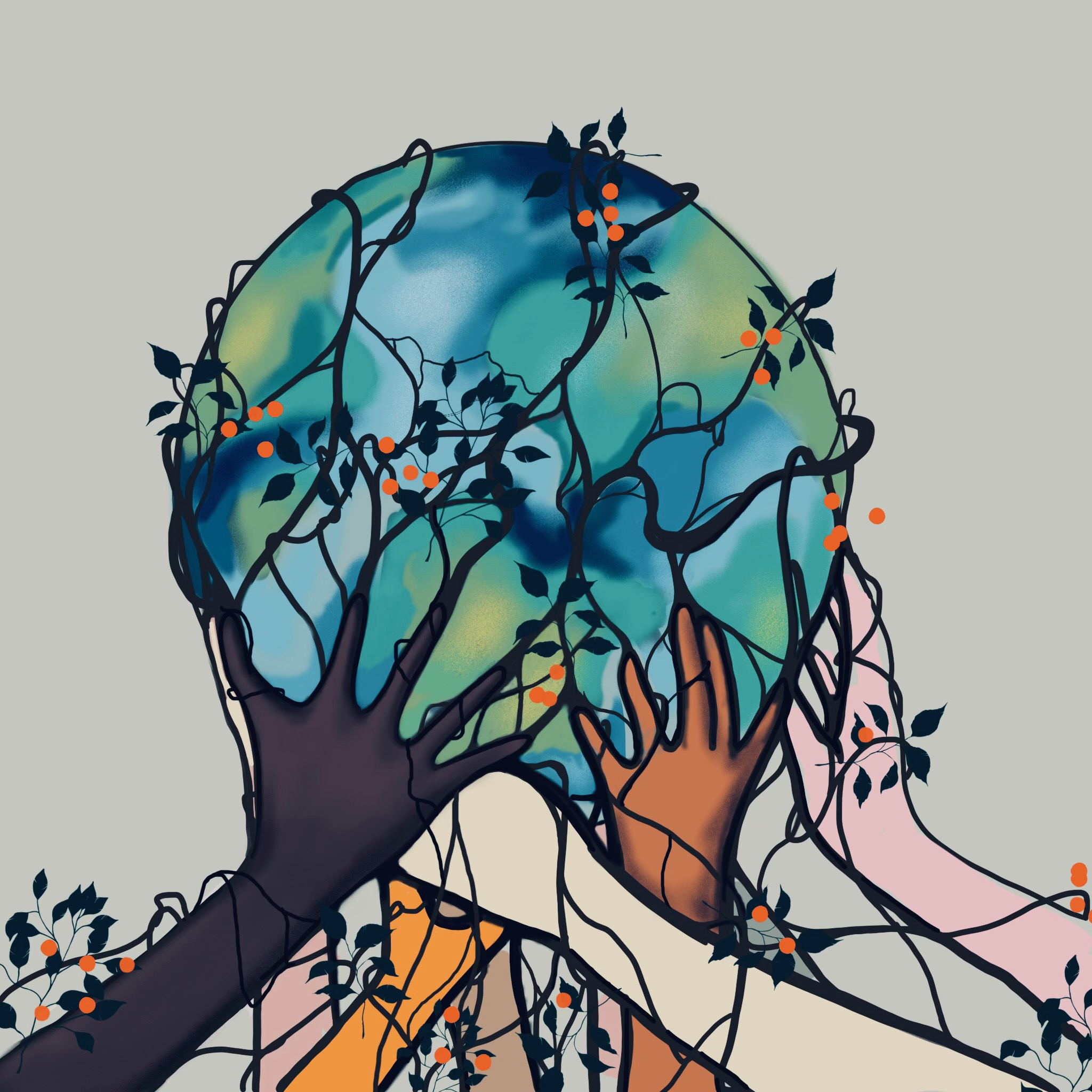
It is time to celebrate our interdependence!
“Interdependence” by Heike Blakley is licensed under CC BY-SA 4.0
The notion of disability in our society is underscored by a bizarre conception of “independence”.
The Myth of Independence: How The Social Model of Disability Exposes Society’s Double Standards » NeuroClastic
It is time to celebrate our interdependence!
Collaboration allows us to create genuinely safe spaces for autistic and otherwise neurodivergent people.
To face the challenges of the future, we’ll need the problem-solving abilities of different types of minds working together.
The Best Autism Books, recommended by Steve Silberman

We Are Woven Together
It is time to celebrate our interdependence!
The Myth of Independence: How The Social Model of Disability Exposes Society’s Double Standards » NeuroClastic
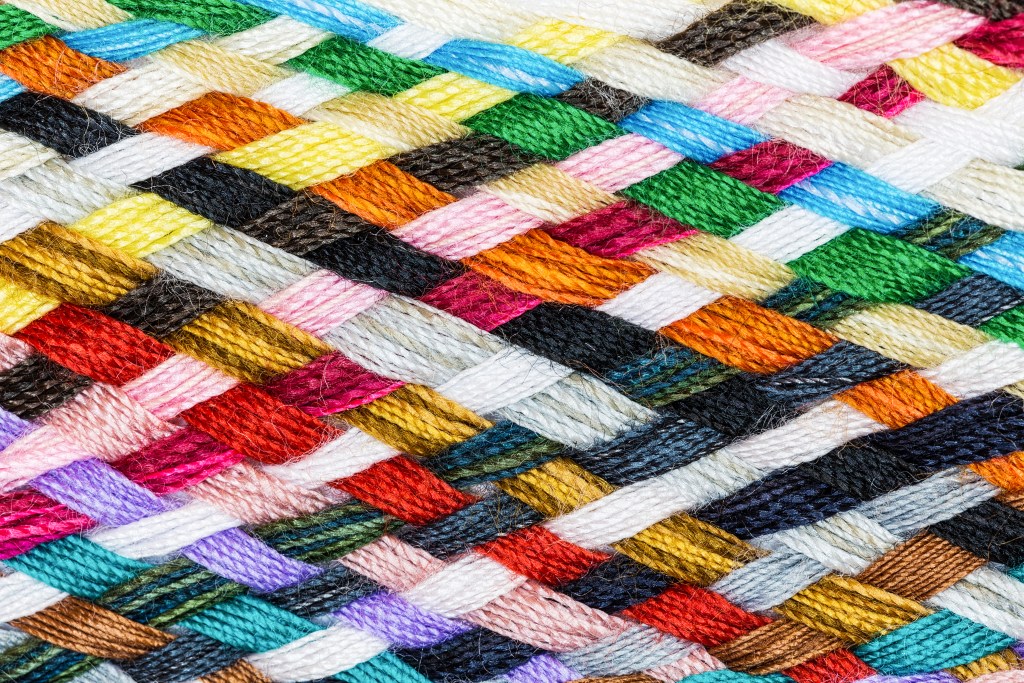
This swatch of rainbow woven cloth evokes our biopsychosocial complexity, our diversity, and our interdependence. It evokes the adaptive interdependence of body, mind, nature, and society.
evoke = to make someone remember something or feel an emotion
biopsychosocial = biological + psychological + social = to understand a person’s medical condition it is not simply the biological factors to consider, but also the psychological and social factors
interdependence = our survival is bound up together, we are interconnected, and what we do impacts others
Because we need stronger bonds – to hold each other together, and to keep the world from falling apart. Our mutual entwinement must be careful, spacious and supple, with no single knot tied too tight. In this macramé of loving design, we might find the wisdom, purpose and strength we need, to weave new worlds.
Rosa, Sophie K. Radical Intimacy (pp. 172-173). Pluto Press.
What would it mean to weave a colorful, durable cloth of individuals’ and communities’ relationships, knowledge and skills?
We take the analogy of weaving cloth to highlight the properties and valuable variations of effective educational systems.
PsyArXiv Preprints | Weaving a colorful cloth: Centering education on humans’ emergent developmental potentials
Envisioning humans and their contexts as mutually constitutive threads in a cloth, we ask, how can we most productively approach the interwoven micro- and macro-adaptations in the systems that make up the individual and context? How can we conceptualize and follow the humanistic threads and patterns that individuals and groups dynamically weave through educational environments and processes, in order to most strategically redesign educational systems to support the emergence of diverse human potentials and contributions? What would it mean to weave a colorful, durable cloth of individuals’ and communities’ relationships, knowledge and skills, designing educational systems that center equity and dignity, and attend to variability of experience? How could education systems be designed to enrich human capacities to invent and sustain vibrant and meaningful lives in a vibrant and healthy society?
PsyArXiv Preprints | Weaving a colorful cloth: Centering education on humans’ emergent developmental potentials
In this sense, examining learning and its contexts is like examining the weaving of a cloth—the twists and knots of different threads are interwoven, and distinct patterns, textures and colors are discernable depending on how the observer zooms in or looks from afar. At one distance, threads can represent people in community, holding each other in place in the weave; further magnified, threads could be composed of the fibers of an individual’s skills and experiences, twisted together across the threads of others as they extend through time. The fibers, patterns, and weaves of various cloths will vary substantially according to available resources, needs and aesthetics, from thick wool blankets or rugs, to flowing silk scarves, to sturdy nets or straps. Weaving itself is dynamic: it generates out of disparate parts a unified set of patterns, stronger together as a whole. Cloth also needs repair due to its day-to-day use as well as to unpredictable accidents and tears. Inevitably, new threads and new patterns will take hold. Thinking of education as supporting the weaving of fibers and also as tending to the condition of the whole cloth underscores the shared features of healthy learning communities with well- designed systems and structures, as well as the substantial and valuable variation that will emerge within and across contexts.
PsyArXiv Preprints | Weaving a colorful cloth: Centering education on humans’ emergent developmental potentials
Through their ideas and intentions as well as their actions, communities of individuals continually renew, together, the socio-cultural context in which they are living, including the beliefs, the norms, and the patterns of relationships that organize society’s social fabric—the cloth they are weaving.
PsyArXiv Preprints | Weaving a colorful cloth: Centering education on humans’ emergent developmental potentials
The cloth can be strengthened and enriched, new patterns can be collaboratively generated, and holes and tears repaired.
PsyArXiv Preprints | Weaving a colorful cloth: Centering education on humans’ emergent developmental potentials
Effective education does not simply produce a standardized, predetermined product. It is instead about weaving a colorful cloth that reflects community members’ rich skills and relationships, with generative patterns that integrate complex knowledge and ideas, and that can look different in different contexts.
PsyArXiv Preprints | Weaving a colorful cloth: Centering education on humans’ emergent developmental potentials
Pluralism is our reality.
- Embracing pluralism is good citizenship. Democracy demands equal accommodation.
- Fostering healthy pluralism, which democracy demands, means confronting intolerance.
- Pluralism is our reality.

I intended to represent ND as I made it. I wanted the colors to be the illuminates of the greater intricate whole crystal. I wanted to make something beautiful and detailed with the colors representing myself, and you, and all the people who would want to be those colored sections. Even though the homogeneous black sections are the majority, they are not the entire body. The entire bodymind includes us, with our wounds, our flaws and our sometimes uncharacterizable spiky profiles.
Adriel Jeremiah Wool
I am fighting for an interdependence that embraces need and tells the truth: no one does it on their own and the myth of independence is just that, a myth.
Interdependence acknowledges that our survival is bound up together, that we are interconnected and what you do impacts others. If this pandemic has done nothing else, it has illuminated how horrible our society is at valuing and practicing interdependence. Interdependence is the only way out of most of the most pressing issues we face today. If we do not understand that we are interdependent with the planet we as a species will not survive.
You Are Not Entitled To Our Deaths: COVID, Abled Supremacy & Interdependence
Abled culture teaches you to act as if you are independent, to buy into the myth of independence. Reject this. Embrace interdependence and know it is the only way we will be able to end this pandemic. Know that if we center disabled people, first and foremost those who are high risk, it will help everyone.
You Are Not Entitled To Our Deaths: COVID, Abled Supremacy & Interdependence
This work is about shifting how we understand access, moving away from the individualized and independence-framed notions of access put forth by the disability rights movement and, instead, working to view access as collective and interdependent.
With disability justice, we want to move away from the“myth of independence,” that everyone can and should be able to do everything on their own. I am not fighting for independence, as much of the disability rights movement rallies behind. I am fighting for an interdependence that embraces need and tells the truth: no one does it on their own and the myth of independence is just that, a myth.
Changing the Framework: Disability Justice | Leaving Evidence
It is from being disabled that I heave learned about the dangerous and privileged “myth of independence” and embraced the power of interdependence. The myth of independence being of course, that somehow we can and should be able to do everything on our own without any help from anyone. This requires such a high level of privilege and even then, it is still a myth. Whose oppression and exploitation must exist for your “independence?”
We believe and swallow ableist notions that people should be “independent,” that we would never want to have to have a nurse, or not be able to drive, or not be able to see, or hear. We believe that we should be able to do things on our own and push our selves (and the law) hard to ensure that we can. We believe ableist heteronormative ideas that families should function as independent little spheres. That I should just focus on MY family and make sure MY family is fed, clothed and provided for; that MY family inherits MY wealth; that families should not be dependent on the state or anyone else; that they should be “able-bodied,” essentially. We believe the ableist heteronormative racist classist myth that marriage, “independence” as sanctified through the state, is what we want because it allows us to be more “independent,” more “equal” to those who operate as if they are independent—That somehow, this makes us more “able.”
And to be clear, I do not desire independence, as much of the disability rights movement rallies behind. I am not fighting for independence. I desire community and movements that are collectively interdependent.
Interdependence (exerpts from several talks) | Leaving Evidence
Self-care is birthed by and through community care.
Self-care is birthed by and through community care.
Talila A. Lewis
What is mutual aid?
“Solidarity, not charity.”
Collective Community Care: Dreaming of Futures in Autistic Mutual Aid
- Interdependence, understanding and support
- Gives opportunity to help & care for other in on our own terms and within our own capacities
- Direct support in a community within a community
- It’s much easier to practice asking, offering, receiving, and declining among people who “get it”!
Moving from a rights-based perspective to a justice-based one necessitates a look at our care systems and re-envisioning how our communities function to ensure no one is left behind.
Collective Community Care: Dreaming of Futures in Autistic Mutual Aid, Autscape: 2020 Presentations
Interdependence, real interdependence can be the difference between making the best of a bad situation and spiraling into isolation, burnout and or mental illness. As such, the advice I tend to give new and prospective grad students is focus on building relationships, seek relationships, invest in relationships, lean on your relationships, because no matter how much you think you can just will yourself into focusing on your work, at some point the work is going to suck. Or maybe it won’t. I don’t know. Are you willing to bet your mental wellness?
Remember it’s interdependence, not just dependance. If you have the time and energy, see if you can pay it forward. It’s definitely a lot of work, but it can be a really rewarding to see yourself actually contribute to another person’s wellbeing. Try it sometime!
How to Survive Grad School (and Other Toxic Jobs) – YouTube
Multiple participants discussed how self-determination co-existed with meaningful relationships and partnerships, including family and parenting responsibilities. Although Kyle affirmed the value of freedom in making choices and decisions, he also acknowledged that interdependence is important because “having a group to lift you up or care for you is important for health and wellness.”
Frontiers | Toward understanding and enhancing self-determination: a qualitative exploration with autistic adults without co-occurring intellectual disability
Access intimacy is interdependence in action.
Access intimacy is one of the main ways that I have been building interdependence in my life. I have been pushing myself to grow it and not just subsist on the little I have been able to find, most significantly with my partner, as is the case for many disabled folks. Engaging in building any kind of interdependence will always be a risk, for everyone involved; and the risk will always be greater for those who are more oppressed and have less access to privilege. In an ableist world where disabled people are understood as disposable, it can be especially hard to build interdependence with people you need in order to survive, but who don’t need you in order to survive. In an ableist context, interdependence will always get framed as “burden,†and disability will always get framed as “inferior.†To actively work to build something that is thought of as undeniably undesirable and to try and reframe it to others as liberatory, is no small task.
Especially as disabled people, we know what it means to live interdependent lives and it does not always feel revolutionary or enjoyable.
The power of access intimacy is that it reorients our approach from one where disabled people are expected to squeeze into able bodied people’s world, and instead calls upon able bodied people to inhabit our world.
In my life, access intimacy continues to be a game-changer, a way to queer access into a tool we can use to get free. It has been a way to shift and queer how I and others understand disability and ableism. And because of the inherent interdependence of access intimacy—the “we†of access intimacy—it has transformed the kinds of conversations I am able to have with some of the able bodied people in my life.
Access Intimacy, Interdependence and Disability Justice | Leaving Evidence
Mia Mingus in Hamraie and Fritsch (2019) describe access intimacy as a “crip relational practice produced when interdependence informs the making of access” (p.14). As such, interdependent ways of languaging, like augmented speech, do not appeal to many abled people. For example, as Mackay’s (2003) work with aphasia patients showed, the patients were viewed as incompetent because of their voicelessness. Given an acceptance of interdependence and care work in languaging via crip time, the patients would be viewed as competent (Rossetti et al., 2008).
Unsettling Languages, Unruly Bodyminds: A Crip Linguistics Manifesto | Journal of Critical Study of Communication and Disability
Hamraie (2013) asks us to think about the politics of access through the framework of interdependence. Languaging, as an important site of access—to the world, to politics, to belonging, to citizenship—thus demands that we think about this through the lens of collective access and care. Rejecting monolingualism and mono-modality are two beginning steps. Embracing time, space, and material environments in meaning-making are also preliminary steps. Interdependence also asks us to think about our built environments and how that impacts access (Hamraie, 2013), and in our case, language. Hamraie (2017) also instigates us to consider how discrimination is built into the structures around us, the buildings, the foundations, the frameworks, and theories, and so on. When in the process of crippling linguistics, we question how modality chauvinism has been built into the various language focused fields and the perspectives of what language is and what is good languaging. Hamraie and Fritsch’s (2019) practices of “interdependence, access intimacy, and collective access can be understood as alternative political technologies through Crip technoscience” (p.13). Crip technoscience is “critique, alteration, and reinvention” (p.2). It is how disabled people alter and reinvent the world in order to make access happen. The relationship between science, technology, and language is such that the dismissal of disabled ways of languaging has resulted in inaccessible technologies.
Unsettling Languages, Unruly Bodyminds: A Crip Linguistics Manifesto | Journal of Critical Study of Communication and Disability
One lesson from crip languaging is the idea of interdependence and forms of access intimacy through the discourse process.
View of Unsettling Languages, Unruly Bodyminds: A Crip Linguistics Manifesto
These and other material practices describe a crip technoscientific sensibility wherein disabled interdependence also enables what Mingus (2017) calls “access intimacy,” a crip relational practice produced when interdependence informs the making of access.
Crip Technoscience Manifesto
If, as Kafer argues, disabled people have often uneasy or “ambivalent relationships to technology” (2013, p. 119), our practices of interdependence, access intimacy, and collective access can be understood as alternative political technologies: “disabled people,” she writes, “are not cyborgs…because of our bodies (e.g., our use of prosthetics, ventilators, or attendants), but because of our political practices” (p. 120). Crip technoscience offers interdependence as a central analytic for disability–technology relations, recognizing that in disability culture, community, and knower-maker practices, interdependence acts as a political technology for materializing better worlds.
Crip Technoscience Manifesto
Everyone is causally interconnected with, interdependent with, and fundamentally the same as all other humans.
…the eco-system arises from and responds to the multiple ways in which everyone is causally interconnected with, interdependent with, and fundamentally the same as all other humans, and literary representations of these various types of solidarity, their inherence in human nature, and their benefits to people who recognize and embrace them can help students incorporate these principles into their mental models of human nature and thus both recognize and enact them more productively in their personal, professional, and civic lives.
The most obviously systemic form of interconnectedness is existential: we all depend on other humans for our very existence and survival—that is, for the production and distribution of our food, clothing, and shelter, not to mention the complex technologies that we in the postindustrial world have come to rely on. We are dependent on the work of countless other individuals at every moment in our lives, and we simply could not exist without their direct and indirect contributions to our lives.
Literature, Social Wisdom, and Global Justice: Developing Systems Thinking
‘Rebellion’ is not enough. We need to build new systems from the ground up, right now.
Escaping extinction through paradigm shift
And it means grounding this effort in completely new frame of orientation, one in which human beings are inherently interconnected, and inter-embedded within the earth; where we are not atomistically separated from the reality in which we find ourselves as technocratic overlords, but are co-creators of that reality as individuated parts of a continuum of being.
We need a counterculture of care.
Putting care—not just care work, but care—at the center of our economy, our politics, is to orient ourselves around our interdependence.
The Year That Broke Care Work
The philosophers Joan Tronto and Berenice Fisher lay out five key elements of care…virtues to be developed if you wanted to APPLY an ethics of care to things in your life. Think of this as a sort of HOW TO manual for moral maturity UNDER an ethics of care. These virtues IN ORDER are:
Episode #168 – Introduction to an Ethics of Care — Philosophize This!
- Attentiveness
- Responsibility
- Competence
- Responsiveness
- Plurality
Episode #168 -Transcript — Philosophize This!
“An ethic of justice focuses on questions of fairness, equality, individual rights, abstract principles and the consistent application of them. An ethic of care focuses on attentiveness, trust, responsiveness to need, narrative nuance and cultivating caring relations.”
The Ethics of Care as Moral Theory | The Ethics of Care: Personal, Political, and Global | Oxford Academic
- Care work makes all other work possible.
- Putting care—not just care work, but care—at the center of our economy, our politics, is to orient ourselves around our interdependence.
- Care is an organizational structure needed to keep our nation running. It’s, by definition, infrastructure.
- Health is at the center of the human experience.
- We need a counterculture of care.
- I feel that that the fundamental property of humanness is to fill those spaces where humanity has been abandoned with love. Those who would change the system have to begin with love, and with the vision to build geographies of care built from that love.
- Reframing is self-care and social change.
- Those who are the most sensitive and traumatised and have not lost the ability to extend trust constitute an enormously rich and diverse repository of insights and hold many of the keys needed for co-creating ecologies of care.
- Create more anti-ableist spaces. Let’s act to hold ALL spaces accountable for providing care and access to disabled folks with all types of bodies and minds.
- We can start building more accessible, care-centered communities now. We can combat ableism now. We can lay the groundwork for a world that works better for all of us.
Care is not charity or kindness. Care is the deeply fraught, complex, abolitionist, political work of protecting one another and the planet, meeting everyone’s needs in balance with the collective good, and keeping our communities safe without the use of policing.
Freedom requires care because freedom is not just a right—it is also a responsibility. Freedom means getting to be our whole selves, in community with other whole selves, without any threat to or assault on our well-being. Freedom means an experience of daily life in which each of us is fully seen and affirmed, treated with unconditional dignity and care, and embraced as an invaluable person of immeasurable worth. Freedom, then, sets an incredibly high standard for community life. It requires that every member of the collective work toward the goals of protection, safety, and unconditional care for all people and for the natural world.
Are We Teaching Care or Control?
The activities that constitute care are crucial for human life. We defined care in this way: Care is “a species activity that includes everything that we do to maintain, continue, and repair our “world’ so that we can live in it as well as possible. That world includes our bodies, our selves, and our environment, all of which we seek to interweave in a complex, life-sustaining web” (Fisher and Tronto, 1990, p. 40).
Several aspects of this definition of care are noteworthy: First, we describe care as a “species activity,” a philosophical term we use because it suggests that how people care for one another is one of the features that make people human. Second, we describe care as an action, as a practice, not as a set of principles or rules. Third, our notion of care contains a standard, but a flexible one: We care so that we can live in the world as well as possible. The understanding of what will be good care depends upon the way of life, the set of values and conditions, of the people engaged in the caring practice.
Furthermore, caring is a process that can occur in a variety of institutions and settings.
Care is found in the household, in services and goods sold in the market, in the workings of bureaucratic organizations in contemporary life. Care is not restricted to the traditional realm of mother’s work, to welfare agencies, or to hired domestic servants but is found in all of these realms. Indeed, concerns about care permeate our daily lives, the institutions in the modern marketplace, the corridors of government. Because we tend to follow the traditional division of the world into public and private spheres and to think of caring as an aspect of private life, care is usually associated with activities of the household. As a result, caring is greatly undervalued in our culture- in the assumption that caring is somehow “women’s work,” in perceptions of caring occupations, in the wages and salaries paid to workers engaged in provision of care, in the assumption that care is menial. One of the central tasks for people interested in care is to change the overall public value associated with care. When our public values and priorities reflect the role that care actually plays in our lives, our world will be organized quite differently.
An Ethic of Care on JSTOR
Let's organize our lives around love and care
Let's write each other letters and call it prayer
Let's congregate in the place that isn't anywhere
At the temple of broken dreams
All the systems of oppression are woven together and our work to get free will only succeed when we are woven together.
find your place on deck
The parts we need to survive are scattered All amongst us.
Tinu Abayomi-Paul
For nothing is fixed,
forever, forever, forever,
it is not fixed;
the earth is always shifting,
the light is always changing,
the sea does not cease to grind down rock.
Generations do not cease to be born,
and we are responsible to them
because we are the only witnesses they have.
The sea rises, the light fails,
lovers cling to each other,
and children cling to us.
The moment we cease to hold each other,
the moment we break faith with one another,
the sea engulfs us and the light goes out.

James Baldwin
Interdependence acknowledges that our survival is bound up together, that we are interconnected and what you do impacts others. Interdependence is the only way out of most of the most pressing issues we face today. If we do not understand that we are interdependent with the planet we as a species will not survive.
You Are Not Entitled To Our Deaths: COVID, Abled Supremacy & Interdependence | Leaving Evidence
The great philosopher Ernst Bloch insisted that hope taps into our deepest experiences and that without it reason and justice cannot prevail.
Henry Giroux – Critical Pedagogy in a Time of Fascist Tyranny | Human Restoration Project | Podcast
In The Fire Next Time, James Baldwin, my favorite novelist, adds a call for compassion and social responsibility to this notion of hope, one that is indebted to those who follow us. He writes, “Generations do not cease to be born, and we are responsible to them. The moment we break with one another, the sea engulfs us and the lights go out.”
My friend, the late Howard Zinn, rightly insisted that hope is the willingness, “to sustain, even in times of pessimism, the possibility of surprise.” In addition to that eloquent appeal, I would say that history is open. It’s time to think differently in order to act differently.
If we do not now dare everything, the fulfillment of that prophecy, re-created from the Bible in song by a slave, is upon us: God gave Noah the rainbow sign, No more water, the fire next time!
And here we are, at the center of the arc, trapped in the gaudiest, most valuable, and most improbable water wheel the world has ever seen. Everything now, we must assume, is in our hands; we have no right to assume otherwise. If we—and now I mean the relatively conscious whites and the relatively conscious blacks, who must, like lovers, insist on, or create, the consciousness of the others—do not falter in our duty now, we may be able, handful that we are, to end the racial nightmare, and achieve our country, and change the history of the world. If we do not now dare everything, the fulfillment of that prophecy, re-created from the Bible in song by a slave, is upon us: God gave Noah the rainbow sign, No more water, the fire next time!
The Fire Next Time by James Baldwin
In order for this to happen, your entire frame of reference will have to change, and you will be forced to surrender many things that you now scarcely know you have.
The Fire Next Time by James Baldwin
The glorification of one race and the consequent debasement of another—or others—always has been and always will be a recipe for murder. There is no way around this. If one is permitted to treat any group of people with special disfavor because of their race or the color of their skin, there is no limit to what one will force them to endure, and, since the entire race has been mysteriously indicted, no reason not to attempt to destroy it root and branch. This is precisely what the Nazis attempted. Their only originality lay in the means they used.
The Fire Next Time by James Baldwin
Whoever de-bases others is debasing himself. That is not a mystical statement but a most realistic one, which is proved by the eyes of any Alabama sheriff.
The Fire Next Time by James Baldwin
Please try to remember that what they believe, as well as what they do and cause you to endure, does not testify to your inferiority but to their inhumanity and fear.
The Fire Next Time by James Baldwin
We are caught in an inescapable network of mutuality, tied in a single garment of destiny.
Letter from Birmingham Jail, Dr. Martin Luther King, Jr.
Do you know why we have the sunflowers?
Do you know why we have the sunflowers? It’s not because Vincent van Gogh suffered. It’s because Vincent van Gogh had a brother who loved him. Through all the pain, he had a tether, a connection to the world. And that is the focus of the story we need. Connection.
Hannah Gadsby: Nanette
“Love Is Everything (revisited)” by The Eddie Ray Band, featuring nonspeaking and minimally speaking singers, brings the feels and invites singing along, together.
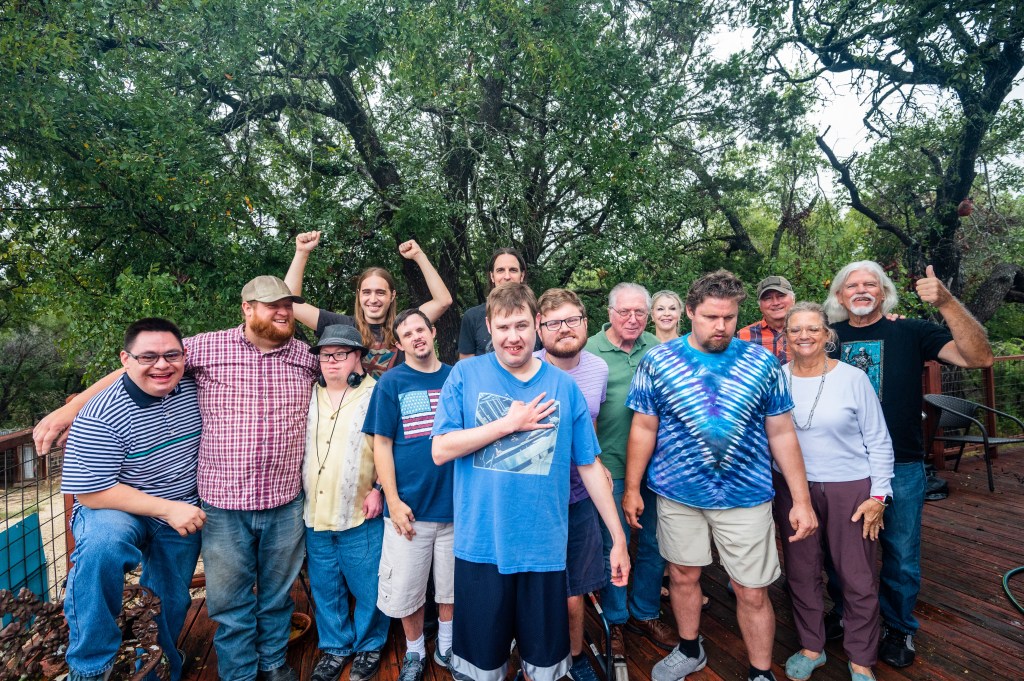
Love Is Everything (revisited) Lyrics
Yeah, Uh, Eddie Ray Band

Ooo ooo ooo ooo ooo
Ooo ooo ooo ooo ooo

Love is hugs, caring and sharing
Love makes me feel happy
Love takes a cloudy day
And makes it a sunny day
Love is everything

It's the sun in the sky
And the birds in the trees
Mama and I
And the ground beneath my feet
Love is everything
Ooo ooo ooo ooo ooo
Love is everything
Ooo ooo ooo ooo ooo
Love is everything

Well I can tell you this
Love is much more than
Just a kiss it's more to me
Love takes a heavy heart
And makes it light again
Love is everything

It's the sun in the sky
And the birds in the trees
Mama and I
And the ground beneath my feet
Love is everything
Ooo ooo ooo ooo ooo
Love is everything
Ooo ooo ooo ooo ooo
Love is everything

Whether neurodivergent, disabled, or an ally, being a Stimpunk means reframing.
We center the edges in service to all bodyminds.
Join us!
🫀🧠🖼 We Reframe

Challenge the norm and change the narrative by reframing.
Reframe these states of being that have been labelled deficiencies or pathologies as human differences.
Normal Sucks: Author Jonathan Mooney on How Schools Fail Kids with Learning Differences
Coming up on the next page:
- Challenge the norm and change the narrative by reframing.
- We reframe to live proudly.
- We reframe to be our real selves.
- We reframe to build community.
- We reframe to find our people.
- We reframe to demonstrate agency.
- Welcome to our nutrient-rich tide pool of like-minded misfits, with loud hands.
- Reframe with us.
- The First Rule of Punk: Be Yourself
- Our Second Rule of Punk: Reframe
- When we reframe, we perceive others such that they too can be themselves.
- When we reframe, we stop silencing ourselves and others.
- When we reframe, we enable ecologies of care.
- Reframing purposefully centers the edges.
- Because design is tested at the edges, and we are the original life hackers.
- We design from the edges to co-create ecologies of care.
- Reframing is self-care and social change.
- 🎶🌈 It Take a Joyful Sound: New Wave, New Phrase, Neurodiversity
- Get Happy Flappy
Reframe with Us
Next on our journey: “Reframe Disability and Difference: We’re Going to Rewrite the Narratives“
This post is also available in:


