
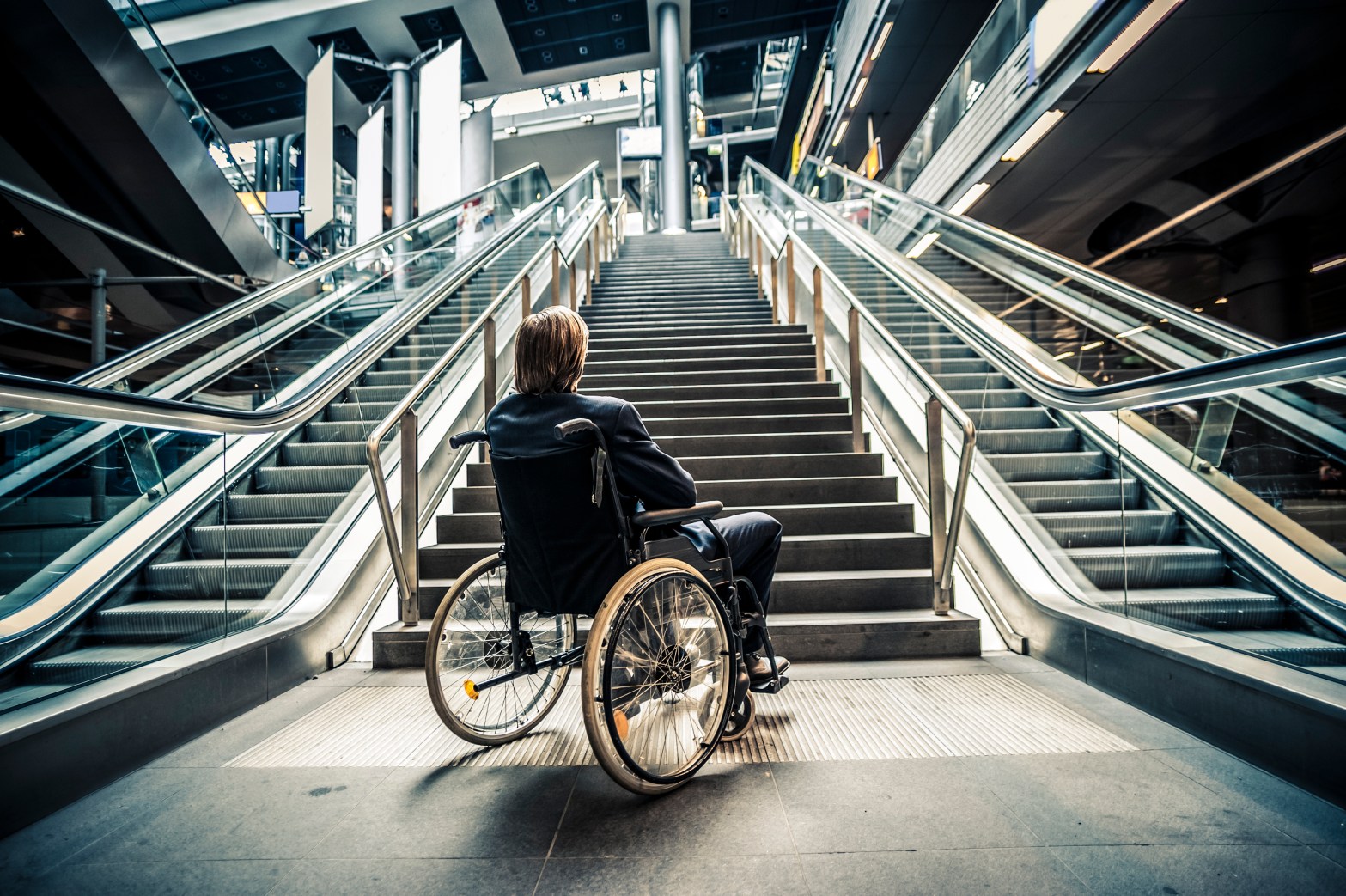
Many of these events are leaving disability off their “diversity statements” and they’re also failing to account for disabled people who might want to participate. We have a lot at stake in the coming years and we’re eager to join our fellow citizens. We’re also tired of repeatedly asking events to foreground accessibility, rather than treating it as an afterthought, or expecting us to come in and clean up their inaccessible mess.
How to Make Your Social Justice Events Accessible to the Disability Community: A Checklist – Rooted in Rights
Real inclusive organizing should at a minimum include: Incorporating disability into your values or action statements; having disabled people on the organizing committee or board; making accessibility a priority from day one; and listening to feedback from disabled people.
Access isn’t a checkbox. It isn’t a policy buried in fine print. It’s the condition of possibility — the difference between participation and erasure, survival and burnout, presence and disappearance.
At Stimpunks, access means shaping space, systems, and design so people don’t have to contort themselves to fit into environments that were never built for them. We understand that disabled and neurodivergent people don’t need “special favors”; we need contexts that work for human variation — sensory, cognitive, emotional, and social. That means designing with people, not for them; listening first, assuming competence, and adjusting practices in real time.
This page explores access not as an abstract ideal, but as everyday infrastructure: tools, patterns, and practices that reduce harm, support regulation, and invite full participation. We share what we mean by access, why it matters, and how it shows up in design choices big and small — from lily pads and Cavendish Space to language, pacing, and interpersonal norms.
Access is not something you earn by working harder.
Access is what makes work, care, learning, and belonging possible.
Table of Contents
- 🎸 Great Access Is Punk AF
- ✊ Enable Dignity
- 🤲 The Accommodations for Natural Human Variation Should Be Mutual
- 👏🧷🎁 Stimpunks Presents
- 🫀🧠🌍 Perceptual Worlds and Sensory Trauma
- 🌈🤲 Quick Low Cost Things to Make a Difference for Autistic People
- 🌈♿️🎪 How to Make Your Events Accessible to the Disability Community
- 🌏🏗 Universal Design
- 💨 Reducing Transmission of COVID-19 Through Improvements to Indoor Air Quality: A Checklist for Community Spaces
- ✅ Access Survey
- ☑ Other Accessibility Checklists
- ♿️ Standards and Guidelines
- 🫀🧠 Ways to Welcome All Bodyminds to Your Spaces and Events
- 💥 Neuroception and Sensory Load: Our Complex Sensory Experiences
🎸 Great Access Is Punk AF
✊ Enable Dignity
I and colleagues are working hard on some solutions for buildings that are too loud. Deafening noise prevents access to schooling, healthcare, and just about everything else, for too many autistic people. And it makes life unpleasant for everyone, autistic or not.
Ann Memmott
It’s always fascinating to watch a few people trying to mock those trying to find dignity in all of this.
Ann Memmott
Society needs to re-enable dignity, doesn’t it.
Because, without it, almost every single person will end their life in humiliation and mess.
So important to get it right.
Access is not just about entry.
It’s about dignity while you’re here.
Dignity means people don’t have to beg, perform, or explain their humanity in order to participate. It means support is offered without humiliation, and needs are met without punishment. A ramp that leads to a locked door isn’t dignity. Captions that exist but aren’t turned on aren’t dignity. “You can have access if you ask nicely enough” isn’t dignity.
To enable dignity is to build environments where people can show up as themselves — with their bodies, nervous systems, communication styles, and limits respected. It means designing so that no one has to trade authenticity for survival.
Enabling dignity looks like:
- Assuming competence instead of suspicion
- Multiple ways to participate instead of one correct mode
- Sensory safety instead of endurance tests
- Rest, pause, and return instead of constant output
- Clear expectations instead of hidden social rules
- Support that is standard instead of “special”
- Consent and choice instead of coercion
Dignity is not a vibe. It is infrastructure.
And it’s punk, because dignity refuses the idea that people must earn basic care by conforming. Enabling dignity means we stop asking disabled and neurodivergent people to contort themselves into harmful systems — and start reshaping systems to fit real human variation.
Access that doesn’t protect dignity is just another gate with nicer signage.
Access with dignity is belonging.
🤲 The Accommodations for Natural Human Variation Should Be Mutual
We are looking for ways to “enable dignity” for everyone in our community given our broad range of sensory, social, and support needs.
A few phrases we steer by are:
- “The accommodations for natural human variation should be mutual.” (@laurenancona)
- “Accessibility is a collective process!” (Riah Person)
- “Society needs to re-enable dignity.” (Ann Memmott)
With these in mind, we compiled an “Enable Dignity” series on creating accessible spaces.
- Enable Dignity: Accessible Systems, Spaces, & Events
- Education Access: We’ve Turned Classrooms Into a Hell for Neurodivergence
- Healthcare Access: They don’t take Disability Studies classes. They don’t socialize with us. They don’t listen to us.
- Interaction Access: Opportunity but Not Pressure
- Written Communication Is the Great Social Equalizer
- Our Technology: Open Source Communication and Indie Ed-Tech
Accommodation is often treated like a private exception:
a special request, a personal burden, a favor granted by the powerful.
We reject that framing.
Neurodivergent and disabled people do not have “special needs.”
We have human needs, expressed through natural variation in bodies, minds, attention, sensory processing, energy, and communication.
The question is not whether people are “too much.”
The question is whether environments are too narrow.
Mutual accommodation means we stop designing for a single default person and then patching everyone else in afterward. Instead, we build shared conditions that make participation possible for many kinds of humans at once.
Mutual accommodation looks like:
- Multiple ways to communicate, not one sanctioned style
- Flexible pacing, not a single enforced tempo
- Rest as normal, not a personal failure
- Sensory safety built in, not negotiated case-by-case
- Clear structure and gentle transitions, not constant surprise
- Options to engage, disengage, and return, without penalty
Mutuality also means access is not one-directional. It’s not disabled people asking to be included while everyone else stays unchanged. It’s everyone participating in the work of shaping conditions — collaborative niche construction, shared care, shared responsibility.
When accommodations are mutual:
- no one has to beg
- no one has to mask
- no one is singled out as the problem
- everyone benefits from a more humane environment
This is access as solidarity, not exception.
Accommodation should not isolate.
It should connect.
Because difference is ordinary.
And meeting human variation together is how we build a world that holds us.

Enable Dignity
Real inclusive organizing should at a minimum include: Incorporating disability into your values or action statements; having disabled people on the organizing committee or board; making accessibility a priority from day one; and listening to feedback from disabled people.
Education Access
We have turned classrooms into hell for neurodivergence. Students with conflicting sensory needs and accommodations are squished together with no access to cave, campfire, or watering hole zones. This sensory environment feeds the overwhelm-> meltdown -> burnout cycle. Feedback loops cascade.
Healthcare Access
They don’t take disability studies classes.
They don’t socialize with us.
They don’t listen to us.
Wanted: hospitals and doctors’ offices that…

Interaction Access
Color Communication Badges (aka Interaction Badges) are an accommodation to support social interaction for people with a variety of disabilities and communication needs.

Communication Access
“Written communication is the great social equalizer.” It allows us to participate and be a part of things bigger than ourselves.

Technology Access
Our multi-age learning community sets up and runs our organization. We don’t use learning management software. Instead, our learners use the professional tools of a modern, neurodiverse organization, without all the ed-tech surveillance baked in. We use technology to co-create paths to equity and access with our learners.
👏🧷🎁 Stimpunks Presents
Stimpunks Presents is where we share access-centered resources, talks, tools, and community offerings — work created by and for neurodivergent and disabled people. This isn’t polished performance from above. It’s lived knowledge, built in public, and shaped by real conditions.
We approach access the punk way: DIY, practical, iterative. We don’t just publish ideals — we build checklists, processes, and patterns that we actually use ourselves. In software terms, we dogfood our work: we test our own tools in our own spaces, run our own events through our own accessibility practices, and refine what doesn’t hold up.
Stimpunks Presents is a place for shared experiments in humane design — resources you can adapt, remix, and carry into your own communities as we keep building better conditions together.
Collected below are resources and checklists we use to help make venues and events more accessible.
But first, let’s learn about perceptual worlds.
🫀🧠🌍 Perceptual Worlds and Sensory Trauma

Understanding the sensing and perceptual world of autistic people is central to understanding autism.
Access begins with perception. Neurodivergent and disabled people often move through sensory worlds that are louder, sharper, brighter, harsher, or more chaotic than what others notice. Sensory trauma isn’t “being picky” — it’s what happens when environments repeatedly overwhelm nervous systems. This section names those realities and offers ways to design spaces that stop treating endurance as normal.
Understanding the sensing and perceptual world of autistic people is central to understanding autism.
Everyone has eight sensing systems: the first five being the familiar sight, hearing, smell, touch and taste. These five give us information about the world outside our bodies. Three internal sensing systems give us information from inside our bodies – our vestibular system (coordinating movement with balance), proprioception (awareness of position and movement of the body) and interoception (knowing our internal state including feelings, temperature, pain, hunger and thirst). Although not all the external senses are equally affected by the physical environment, we consider them all – as they collectively add to the ‘sensory load’ that many autistic people often experience. Any sensory input needs to be processed and can reduce the capacity to manage and process other things.
As many autistic people process one thing at a time, sensory stimulation can stack up. As the brain’s highways become congested, there are repercussions throughout the entire neural network. This can lead to headaches, nausea and the fight and flight response, this is what causes many meltdowns and shutdowns.
Considering and meeting the sensory needs of autistic people in housing | Local Government Association
Imagine having no choice but to zoom in on life.
Perpetual defense mode – the silent wave
Perpetual Sensory Crisis

Sensory Overload by Alexis Quinn
Considering and meeting the sensory needs of autistic people in housing | Local Government Association
If we are serious about enabling thriving in autistic lives, we must be serious about the sensory needs of autistic people, in every setting. The benefits of this extend well beyond the autistic communities; what helps autistic people will often help everyone else as well.
Considering and meeting the sensory needs of autistic people in housing | Local Government Association
Though autistic people live in the same physical world and deal with the same ‘raw material’, their perceptual world turns out to be strikingly different from that of non-autistic people.
Differences in perception lead to a different perceptual world that is inevitably interpreted differently. We have to be aware of these differences and help autistic individuals cope with painful sensitivities and develop their strengths (‘perceptual superabilities’) that are often unnoticed or ignored by non-autistic people.
Sensory Perceptual Issues in Autism and Asperger Syndrome: Different Sensory Experiences – Different Perceptual Worlds
The inability to filter foreground and background information can account for both strengths and weaknesses of autistic perception.
Sensory Perceptual Issues in Autism and Asperger Syndrome: Different Sensory Experiences – Different Perceptual Worlds
Sensory Perceptual Issues in Autism and Asperger Syndrome: Different Sensory Experiences – Different Perceptual Worlds
🌈🤲 Quick Low Cost Things to Make a Difference for Autistic People
Access doesn’t always require a budget or a committee. Small changes — lighting, pacing, clear communication, quiet options, permission to stim or step away — can radically reduce harm. This section collects practical, low-cost interventions that make life more livable right now, especially for Autistic people navigating spaces not built for them.

Our brains take in too much detail. We try very hard to avoid an overload of sensory or social situations. It’s not us being awkward; it’s a physical brain difference.
Welcoming and Including Autistic People in our Churches and Communities
Two Minutes to Spare? Just read this:
Quick Low Cost Things to Make a Difference for Autistic People.
Welcoming and Including Autistic People in our Churches and Communities
- Check the lights in each room. Avoid fluorescent or compact-fluorescent bulbs, if you can, as they appear to flicker like a strobe light, to autistic eyesight. Also, try to avoid bright spotlights.
- Noise levels. If an event is going to have a lot of background noise and chatting, is there a quieter space to get to, if it is too much? Conversation can be impossible to hear in crowds. What about loud hand drier machines in the loos? Any alternatives like hand towels?
- The building. Do we know what it looks like, and what the layout is like? Is there information on a simple website, perhaps? Photos?
- The Order of service – really clear instructions for us e.g. where to sit, when to stand and sit, what to say at each point? Either write it down, or get someone to be with us to quietly say what to do, please. (This also helps those new to church).
- We are very literal, and our minds may see pictures, not words. Please try to say what you mean.
- Physical events e.g. shaking hands? Water being splashed onto people in a ceremony? We may find this physically painful, as many are hypersensitive. Please warn us what will happen, and avoid physical contact unless we offer first.
- Rest area – somewhere quiet to go if we need to, please. Or don’t worry if we wander outside for a while, where safe to do so.
- Socialising. Be aware we find it difficult and exhausting as we cannot ‘see’ or hear you that well, especially in a crowd. Our body language can be different to yours, and we may not make eye contact. Please don’t think we’re rude. Sitting next to us to chat, somewhere quieter, is easier than facing us. Telling us to ‘try harder’ to make friends is not helpful; research shows that it’s non-autistic people who tend to refuse our offer of friendship, because of misunderstandings and myths.
- Be Clear and Accurate. If you say you’ll do something, please do it. Those on the autistic spectrum will be anxious if you promise to help but don’t do so, or promise to phone at a certain time and don’t. Or if you use expressions like, “I’ll be back in five minutes” when you mean, “I’ll be back some time in the next half an hour”. If you need to change arrangements, please just let us know. It’s about trying to maintain brain temperature and function, not about being controlling.
- Support: Find a calm and sensible person who is ready to lend a little assistance if we need it.
Source: Welcoming and Including Autistic People in our Churches and Communities
🌈♿️🎪 How to Make Your Events Accessible to the Disability Community

We’re also tired of repeatedly asking events to foreground accessibility, rather than treating it as an afterthought, or expecting us to come in and clean up their inaccessible mess.
A person in a wheelchair is at the bottom of a large set of stairs, looking up as we view them from behind.
Events are often designed around a single imagined attendee: energetic, neurotypical, non-disabled, and socially comfortable. We do not live in that world. This section is a guide to building events that welcome disabled people as full participants — with sensory safety, clear access information, multiple ways to engage, and dignity built into the structure.
🕸 Website Accessibility
- Use high contrast and consider using a tool to allow users to switch from dark-on-light to light-on-dark
- Don’t use flashing animations
- Use alt text
- Don’t use images to present text information
- Use skip navigation
- Offer a magnifying tool
- Caption and/or transcribe video and audio content
- Use descriptive link text (“find pictures of cute animals here” rather than “here”), as screenreader users may jump through links and need to know where they lead
- Include a website accessibility statement, like this one from Rooted in Rights’ parent organization, Disability Rights Washington
- Include event accessibility information prominently, with a clear access plan and contact information
Need help? Start with WebAIM and Section 508.
🚪 Creating an Access Plan
- Vet your facilities
- In buildings, look for: Ramps; accessible all gender restrooms; doorways of sufficient width for wheelchairs to enter; ample seating; reconfigurable spaces; bright, even light.
- On march and parade routes, look for: Even, smooth surfaces; sufficient seating for rest breaks; accessible nearby parking; accessible all gender toilets in easy reach; accessible ground transport; cover in the event of rain.
- Designate seating for disabled people in the front of the room or crowd and near the exits, marking space off so nondisabled attendees understand they should not sit there
- Provide sign language interpretation for all events
- Provide Communication Access Realtime Translation (CART), as not all people who have hearing loss or who are d/Deaf use sign language to communicate, and it can provide greater access for people with auditory processing disorders
- Consider providing loaner wheelchairs or scooters, possibly through a third party vendor who can assume liability
- Consider offering wheelchair-accessible shuttles
- Designate a service animal relief area
- Designate an access team who coordinate accessibility issues throughout planning and through to the end of the event, and provide them with readily recognizable markers like shirts, vests, or hats so they’re easy to find
- Develop a scent policy — going scent-free will enhance accessibility
- Consider designating a quiet space or room
- Use a public address (PA) system
- Ensure that anyone who is speaking, including audience members, use microphones
- Consider audio assistance, like hearing loops, for people who have hearing loss and rely on assistive technologies such as hearing aids
Need help? This ADA checklist can be a great resource, as can this guide on designing ADA-compliant events; the Autistic Self Advocacy Network is a good place to start with more inclusive access policies.
📕 Making Your Event Policies Disability-Friendly
- Include disabled people in your leadership, organization, scheduled speakers and panelists, imagery, and documentation
- Include disability in your anti-harassment, anti-discrimination, and diversity policies, recognizing disability as a social and political category
- Assume disabled people are in the room, even if they aren’t evident, and that they are stakeholders in your event
- Include a disability orientation for all volunteers and staff
- Include a space on your registration form for people to express access needs
- Document your accessibility policy and efforts and make them public
- Have a framework in place for responding to criticism and feedback from the disability community
- Be mindful of your language:
- Avoid words that use disability as an insult, like “crazy” or “hysterical”
- Avoid phrases such as “wheelchair-bound” or “suffers from”
- Pay disability consultants like you would other professionals who are providing services
Need help? Here are some examples of accessibility policies to draw upon: SXSW; NOLOSE; National Conference of State Legislatures website accessibility policy; and Convergence.
🌏🏗 Universal Design

Accessible event planning includes four steps. These four steps are universal design, physical accessibility, sensory accessibility, and cognitive accessibility.
Holding Inclusive Events: A Guide to Accessible Event Planning
Universal Design is the practice of designing from the start for human variation instead of retrofitting access later. It’s not about making one perfect experience for everyone — it’s about creating flexible, multiple pathways so more people can belong without special pleading. This section explores Universal Design as access infrastructure, not charity.
Accessible event planning includes four steps. These four steps are universal design, physical accessibility, sensory accessibility, and cognitive accessibility.
Here is what each of these steps means:
Holding Inclusive Events: A Guide to Accessible Event Planning
- Universal design means everyone can go and take part at an event. Physical accessibility, sensory accessibility, and cognitive accessibility must happen for everyone to take part.
- Physical Accessibility: The space has no problems for wheelchair users and people with vision disabilities
- Sensory Accessibility: The event is safe for people with allergies. There are accommodations for people who are Blind, Deaf, or hard of hearing.
- Cognitive Accessibility: Give clear information about the event. Provide all material in different formats and plain language. Let people know what to expect in advance.
- Accept and deal with accessibility needs that are different from yours.
Holding Inclusive Events: A Guide to Accessible Event Planning
🧱 Physical Accessibility
All physical space used for the event can be used by everybody. This includes hotels, elevators, and conference rooms.
Examples of physical accessibility include:
🚪 Doors/Entrances
- Signs with braille that say the names of buildings, room numbers, and where accessible entrances and elevators are
- Main entrances have wheelchair accessible ramps
- Working entrance buttons for wheelchair users
- Wide doors and hallways for wheelchair users
- Clear paths in and around your venue for blind people and wheelchair users
- Accessible elevators that work
Holding Inclusive Events: A Guide to Accessible Event Planning
📍 Surrounding Areas
- No hills around your conference buildings and transportation
- Check for curb ramps that accommodate both wheelchair users and people with vision disabilities (see image at right)
- Restaurants nearby (no more than 5 minutes walking distance)
- Weather: depending on your location, snow and ice during winter can prevent participants from attending your event. Try to schedule your events in the spring, summer, or early fall.
Holding Inclusive Events: A Guide to Accessible Event Planning
🪑 Seating
- Wheelchair accessible activity tables with room for snacks, medications, and session materials
- Chairs with high backs for people with balance issues
- Everyone can see the front of the room
- Accessible seating should be part of the room set up
- Do not separate accessible seating from the group
- Wheelchair accessible public bathrooms should be next to or near training session rooms
Holding Inclusive Events: A Guide to Accessible Event Planning
🛞 Transportation
- Accessible transportation near the location (no more than five minutes walking)
- Have a list of accessible transportation options
- Bus
- Taxis
- Subway
- Local non-emergency cabulance companies (businesses that offer wheelchair accessible transportation)
Holding Inclusive Events: A Guide to Accessible Event Planning
🏨 Overnight Lodging for Conferences
- Rooms with ADA automatic door opener
- Rooms with enough space for wheelchair users to move around comfortably
- Bathrooms have roll-in showers with a bench
- The beds are high enough for a hoyer lift but low enough for wheelchair users
Holding Inclusive Events: A Guide to Accessible Event Planning
🎧 Sensory Accessibility
There are two types of sensory accessibility:
1. Hearing and visual aids are available (sometimes overlaps with cognitive accessibility)
2. A safe place for people with chemical and light allergies and/or sensitivities.
Examples of hearing, visual, and tactile (sense of touch) accommodations
- Image descriptions for presentations and captioning for videos
- Sound devices for hard-of-hearing attendees
- Microphones
- CART and ASL interpretation
- Alternative formats: braille, digital, easy read (plain language with pictures), large print
Examples of accommodations for chemical and light sensitivities
- Fragrance free policies
- No flash photography policies
- ASL applause (or “flapplause”) instead of clapping
- Noise cancelling ear muffs
- Sensory free rooms
- Working air conditioning
Holding Inclusive Events: A Guide to Accessible Event Planning
For more, visit “Neuroception and Sensory Load: Our Complex Sensory Experiences“
🧠 Cognitive Accessibility
Everyone who comes to the event knows what to expect. Everyone knows:
- What the event is about.
- The schedule.
- Where the event is.
- What accommodations are available.
Examples of cognitive accessibility include:
📆 Detailed Schedules
- Make a schedule for your event available on your website or in emails.
- Send schedules to people in advance of your event.
- Conferences: send schedules that include airport arrival and departure times, training session names, speaker names, and breaks to participants and speakers at least a month in advance of your event. People who do not use email receive hard copy schedules.
- One-day events: send a completed schedule/agenda no later than 2 weeks in advance.
Holding Inclusive Events: A Guide to Accessible Event Planning
ℹ️ Information Packets (for Overnight Conferences)
- Accommodations form with a list of accommodations people can request
- Include two types of event schedules: An event schedule and daily schedules (see appendix for example)
- Include information about quiet spaces
- Provide the name, email, and phone number of main contact person for the event
- Provide a list of local medical equipment stores with rental fees
(for commodes, hoyer lifts, and other types of equipment event organizers cannot reserve)- Add a brief note about expectations for support people
- Note: information packets should be sent to confirmed participants 3 to 4 months before your conference.
Holding Inclusive Events: A Guide to Accessible Event Planning
🧠🎪 Cognitive Accessibility at the Venue
- Use nametags for everyone.
- Present sessions in different ways.(i.e. written and verbal instructions, visual aids such as photographs, drawings, and charts)
- Schedule many breaks throughout the day. Do not schedule sessions that go beyond an hour and a half.
- Allow people to move around to stim or pace.
- Provide and explain color communication badges.
- Make sure presentations are viewable from different angles.
Holding Inclusive Events: A Guide to Accessible Event Planning
Program Design
Program structure affects how Neurodivergent attendees manage attention and energy. Long, uninterrupted sessions can be overwhelming, so incorporating frequent breaks, shorter segments, and opportunities for movement enhances engagement and reduces cognitive overload. Additionally, for Neurotypical attendees, a recent study from the QEII Centre in London7 reported that the average attention span for attendees at live meetings and conferences is between 11 and 30 minutes.
- Presentations that run for longer than 30 minutes should include movement breaks.
- Research indicates the average attention span for an in-person event attendee who identifies as Neurotypical is between 11 and 30 minutes.
- For Neurodivergent individuals this can vary depending on individual differences and co-occurring conditions (e.g., ADHD), and the provision (or lack) of environmental supports such as spaces to stand/move, fidget items.
Communication
Effective communication strategies are vital for creating a welcoming event environment. Visual aids, plain language, and clear instructions reduce ambiguity and anxiety, enabling Neurodivergent individuals to participate confidently.
Use visual aids, clear signage, and plain language throughout the event.
For example, Neurodivergent people can experience higher levels of anxiety, and attending events can be overwhelming. Having a website, document or instructions that utilise visuals, not just the written instructions, about how to arrive, where to sign in, where the rooms are located, the location of a quiet/ sensory room, toilets, when to expect food/drinks, encouragement to come/leave as needed, provision of earphones, sensory toys etc – all of this can be communicated with visuals that are colour coded (for example) and then this is replicated using large signage in the actual event space.
Pre-arrival information
Clear, detailed pre-event communication alleviates anxiety and supports Neurodivergent attendees in navigating the event. Information on schedules, layouts, and sensory-friendly areas provides predictability and reduces uncertainty.
Providing clear pre-arrival information assists Neurodivergent individuals to have some certainty around their arrival and processes for engaging in the event. Knowing what to expect can help minimise anxiety. Consider the below when planning your communication prior to the event commencing:
- Offer detailed information about the event including:
- Layout
- Schedule
- Sensory-friendly areas
- Amenities beforehand
- Provide a virtual tour or map of the venue to help attendees familiarise themselves with the space.
- Liaise with your venue to understand how they support Neurodivergent and/or gender diverse individuals.
For example, does the venue have gender neutral bathroom facilities? If so, let attendees know this before arriving.
💨 Reducing Transmission of COVID-19 Through Improvements to Indoor Air Quality: A Checklist for Community Spaces
Air is access. Clean indoor air is disability justice. Many disabled and immunocompromised people are excluded when spaces treat airborne risk as inevitable. This checklist is practical guidance for making indoor environments safer through ventilation, filtration, and care-driven public health design.
MAP Centre for Urban Health Solutions offers “a plain language, step-by-step guide outlining how community spaces can use indoor air quality measures to help reduce transmission of COVID-19.”
Sharing practical information about indoor air quality with community spaces – MAP Centre for Urban Health Solutions
Sharing practical information about indoor air quality with community spaces – MAP Centre for Urban Health Solutions
- HVAC system is regularly maintained by an HVAC professional.
- HVAC system uses filters that have a Minimum Efficiency Reporting Value or “MERV” of 13 or higher (check with HVAC professional before upgrading filters).
- HVAC filters are surrounded by a good seal, so that no air by-passes them. Each room has a minimum of six total air changes per hour.
- Where you are not confident that your HVAC system provides six total air changes per hour, or where there is no HVAC system, each room has appropriately-sized portable air filters.
- HVAC system brings in some outdoor air and, at a minimum, meets ventilation standards.
- HVAC system provides ventilation and filtration at all times while building is in use.
- In higher-risk spaces, such as communal eating or sleeping areas, additional measures are used to achieve more than six total air changes an hour. For example, additional measures may include:
- If possible, HVAC system brings in 100 per cent outdoor air.
- Where room conditions such as ceiling height allow, a professional has installed upper-room ultraviolet disinfection.
- Bathrooms are equipped with appropriate-sized fans that exhaust to the outside.
- Room air is changed over at least three times between appointments or groups.
✅ Access Survey
This section provides practical surveys and checklists for assessing the accessibility of buildings, venues, and environments. These tools help identify common barriers across sensory, cognitive, mobility, and wayfinding needs — including lighting, sound, navigation, seating, signage, air quality, and rest spaces. Use them to evaluate conditions on the ground and make concrete improvements before people arrive.
We like this simple access survey for assessing venues from ATX Go.
We expand upon this with our own access survey and access Field Guide.
We all need to be able to pee, poop, eat, drink, sit down, and access quiet space and outdoor space.
Access Survey – Stimpunks Foundation
☑ Other Accessibility Checklists
Access is complex, and no single checklist covers every context. This section collects additional resources and practical guides for designing with care across sensory, cognitive, physical, and social dimensions. Use them as starting points, not finish lines — access is an ongoing practice.
- A guide to hosting a neuroinclusive event | APS
- Accessible Conference Guide | SIGACCESS
- Inclusive and welcoming events – Make WordPress Communities
- Accessibility for WordCamps – ryelle codes
- Accessibility Checklist for SFWA Spaces – SFWA
- Increasing Diversity at Your Conference | ashe dryden
- Increasing Neurodiversity in Disability and Social Justice Advocacy Groups
- How to Make Your Presentations and Meetings Accessible to All | Web Accessibility Initiative (WAI) | W3C
- Venue Accessibility Checklist – Make WordPress Community
- Creating Neuro-Inclusive Events – Do-IT Profiler
- Access Is Love Reading List
- Guide to Inclusive Meetings for People who are Blind or have low vision
- Accessible Syllabus: Accessible classroom resources promote student engagement and agency
- A Planning Guide for Making Temporary Events Accessible to People With Disabilities
- How to Make Your Virtual Meetings and Events Accessible to the Disability Community
- Disability Accessibility Event Checklist
- Outdoor accessibility guidance: supporting inclusive outdoor access in the UK
- Outdoor Accessibility Guidance in a nutshell, our two guiding principles
♿️ Standards and Guidelines
Standards can be useful, but compliance is not the same as care. This section links to established accessibility guidelines while holding a Stimpunks truth: real access is lived, contextual, and relational. We use standards as tools — and we go beyond them when community reality demands more.
The Access Board is an independent federal agency that promotes equality for people with disabilities through leadership in accessible design and the development of accessibility guidelines and standards. Created in 1973 to ensure access to federally funded facilities, the Board is now a leading source of information on accessible design. The Board develops and maintains design criteria for the built environment, transit vehicles, information and communication technology, and medical diagnostic equipment under the Americans with Disabilities Act of 1990 (ADA) and other laws. It also provides technical assistance and training on these requirements and on accessible design, and continues to enforce accessibility standards that apply to federally funded facilities under the Architectural Barriers Act of 1968 (ABA).
The Board is structured to function as a coordinating body among federal agencies and directly represent the public, particularly people with disabilities. Twelve of its members are representatives from most of the federal departments. Thirteen others, who are appointed by the President, are members of the public, and most of them must have a disability.
About the U.S. Access Board
The U.S. Access Board website is a useful resource for practical inclusive design that meets standards and law.
- ADA Accessibility Standards (enhanced single file version)
- About the ADA Guides
- Revised 508 Standards and 255 Guidelines
- Architectural Barriers Act ABA Standards (enhanced single file version)
🫀🧠 Ways to Welcome All Bodyminds to Your Spaces and Events
Welcoming is not a vibe. It’s conditions. It’s the difference between “you can come” and “you can actually be here safely.” This section offers concrete ways to build spaces that support many bodyminds: sensory needs, mobility needs, communication differences, immune vulnerability, and fluctuating capacity.
Here are “Five Ways to Welcome All Bodyminds to Your Learning Event” and enable dignity.
- Create real access pages. The logistics of disability and difference are overwhelming. Reduce that overwhelm with information. Provide an access page on the website for your venue/event that provides what disabled people need to know. This is one of the best things you can do to further accessibility. Just tell us what we’re up against, and be honest. So many access pages are nothing but “call this number for accessibility details”. When you call the number, you get someone who doesn’t know anything about accessibility. Over and over. We shouldn’t have to call, especially given that phones are inaccessible to many of us. Visit our access page for Stimpunks home base to see what we like in an access page.
- Create Cavendish Space. Cavendish Space is psychologically safeand sensory safe space suited to zone work, intermittent collaboration, and collaborative niche construction. Cavendish space provides caves, campfires, and watering holes so that dandelions, tulips, and orchids alike can learn, together and apart. Online and offline, provide individual spaces as well as community spaces so that learners can progressively socialize according to their interaction capacity. Our Cavendish Space page tells of Henry Cavendish, discoverer of Hydrogen, his autistic ways of being, and how he constructed social and sensory niches that allowed him to become one of the first true scientists, in the modern sense.
- Provide interaction badges. Interaction badges enable opportunity without pressure. Interaction badges facilitate intermittent collaboration, psychological safety, and sensory safety. Many of us Stimpunks, with our exposure anxiety and situational mutism, cannot and will not attend events that do no use interaction badges.
- Offer bodymind affirmations and provide outlets for stimming, pacing, fidgeting, and retreating. At Stimpunks, we use this bodymind affirmation before all meetings/gatherings: “We should all move in our space in whatever way is most comfortable for our bodyminds. Please use this space as you need or prefer. Sit in chairs or on the floor, pace, lie on the floor, rock, flap, spin, move around, come in and out of the room. This is an invitation for you to consider what your bodymind needs to be as comfortable as possible in this moment. This is an invitation to remind yourself to remember and to affirm that your bodymind has needs and that those needs deserve to be met, that your bodymind is valuable and worthy, that you deserve to be here, to belong.”
- “Ensure there is quiet space and outdoor space that people can access at any time. Many people find being outside and in nature very calming. Space to move away from other people, internal noises and distractions can be a good way to self-regulate. Easy access to a quiet space to de-stress can be an enormously helpful tool for people to be able to self-manage. Ideally, this room will be away from areas where there is heavy footfall or other outside noise. Many people find neutral spaces beneficial, with the option of lights and other sensory stimulus.” —It’s Not Rocket Science: Considering and meeting the sensory needs of autistic children and young people
Visit the access page for our home to see what we like in an access page.
Enable Dignity with Cavendish Space
Dignity is not a mood. It is not a favor. It is not something people earn by coping harder.
Dignity is what becomes possible when the environment stops demanding performance as the price of entry.
Cavendish Space is one way we build dignity into access. It names psychologically and sensory safe environments where people can focus, rest, regulate, and collaborate on their own terms. Cavendish Space rejects the idea that spaces are neutral and people should simply adapt. Instead, it treats access as something we design, maintain, and share.
Cavendish Space supports dignity through an ecosystem of human patterns:
- Caves for quiet, recovery, and nervous system safety
- Campfires for small-group learning, trust, and shared meaning
- Watering holes for open connection and mutual exchange
And it is held together by lily pads — landing points that reduce cognitive load, soften transitions, and make it safe to pause, return, and move at different paces.
When spaces include these conditions, people don’t have to beg, mask, or push through harm to belong. Participation becomes ordinary. Support becomes normal. Difference becomes expected.
Cavendish Space is access that enables dignity:
a built environment where neurodivergent and disabled people can show up as themselves — not as exceptions, but as humans.
💥 Neuroception and Sensory Load: Our Complex Sensory Experiences
Now that we’ve explored perceptual worlds, sensory trauma, and practical accessibility, let’s talk about designing for the complex sensory experiences of neurodivergent people.


