
Allies are people who support inclusion for a marginalised group that they do not belong to. For example, neurotypical people who support the inclusion of neurodivergent people in society. It is important for the NEST group that, when appropriate, allies can come along and learn from the experts (the young people themselves) about neurodivergence and about how they could be a positive support for their friends.
NEST (NEurodivergent peer Support Toolkit) | Salvesen Mindroom Research Centre
Here are ways to be an ally.
Table of Contents
- Reframe
- Provide a Buffer to the Trauma
- Provide Rest
- Be a Threat to Inequity
- Ask Yourself: How Can My Skills Help Others?
- Ask Yourself: What’s My Role in Social Change?
- Work Past the Guilt and Shame of Performative Allyship
- Deal with the Pain
- The moment we cease to hold each other, the moment we break faith with one another, the sea engulfs us and the light goes out.
- Further Reading
Reframe
What we really need you to do is consciously, consistently and intentionally unlearn your racism. That’s the one thing we can’t do for you.
Reid, Nova. The Good Ally (p. 46). HarperCollins Publishers.
As with racism, so too with ableism. We need allies to change their framing and their heuristics.
Reframe these states of being that have been labelled deficiencies or pathologies as human differences.
Normal Sucks: Author Jonathan Mooney on How Schools Fail Kids with Learning Differences
In order for this to happen, your entire frame of reference will have to change, and you will be forced to surrender many things that you now scarcely know you have.
The Fire Next Time by James Baldwin
Reframe yourself and others. This is hard and important work necessary to all other work. Change the narrative. Start reframing here.
Provide a Buffer to the Trauma
We exist as friction, and it’s exhausting. Allies, load-share our burden of existing as friction against structural ableism. “Staying alive is a lot of work for a disabled person in an ableist society.” Share some of that work and friction. We need respite from this wildly painful work.
I would like to ask for non-autistic people to start actually helping. I know we have allies, but we don’t just need allies. We need outspoken allies. We need a buffer to the trauma. We need a break.
I’m tired. We’re tired. Something has got to give so autistic people can get some rest when fighting for justice.
Consider 30 minutes a week of activism, or speaking up and platforming autistic voices, if your livelihood is benefited by autistic lives.
Because current and future autistic lives are on the line, whether you feel that way or not.
What Autistic Advocacy Really Means – Autistic Science Person
When allies ask me what they can do, I usually say “amplify us, nobody else does” and “pay us”. Stimpunks exists, in part, to amplify and pay the people who educated us.
I’m adding another level to my allyship list: “buffer the trauma”.
- Amplify
- Pay
- Buffer
In my previous gig on a DEI team, I experienced the relief of abled and neurotypical allies buffering the trauma. Respite is a great feeling.
Amplify us, pay us, and buffer our trauma. We’re fighting for justice for all at the edges and intersections. Our designs, our societies, and the boundaries of our compassion are tested at the edges, where the truths told are of bias, inequality, injustice, and thoughtlessness.
We are the canaries. We are “the fish that must fight the current to swim upstream.” Give us a break.
Allyship: Providing a Buffer to the Trauma – Stimpunks Foundation
Provide Rest
Don’t underestimate what a powerful tool rest is for activists and communities impacted by racism. White supremacy wants us to be worn down; rest re-resources and nourishes us and is another useful way to pay it forward.
Reid, Nova. The Good Ally (p. 359). HarperCollins Publishers.
Nothing in this culture wants us to have rest. Wants us to have ease. Wants us to have care. The softness was stolen. Our dreamspace has been stolen. Our space to just be has been stolen.
Tricia Hersey, founder of The Nap Ministry.
We urgently need a society that’s better at letting people get the rest they need.
Fergus Murray
Self-care is birthed by and through community care.
Talila A. Lewis
Be a Threat to Inequity
Be a threat to inequity in your spheres of influence.
With this in mind, my purpose is to argue that when it comes to issues surrounding poverty and economic justice the preparation of teachers must be first and foremost an ideological endeavour, focused on adjusting fundamental understandings not only about educational outcome disparities but also about poverty itself. I will argue that it is only through the cultivation of what I call a structural ideology of poverty and economic justice that teachers become equity literate (Gorski 2013), capable of imagining the sorts of solutions that pose a genuine threat to the existence of class inequity in their classrooms and schools.
Poverty and the ideological imperative: a call to unhook from deficit and grit ideology and to strive for structural ideology in teacher education
The Direct Confrontation Principle: The path to equity requires direct confrontations with inequity—with interpersonal, institutional, cultural and structural racism and other forms of oppression. “Equity” approaches that fail to directly identify and confront inequity play a significant role in sustaining inequity.
The Equity Ideology Principle: Equity is more than a list of practical strategies. It is a lens and an ideological commitment. There are no practical strategies that will help us develop equitable institutions if we are unwilling to deepen our understandings of equity and inequity and reject ideologies that are not compatible with equity.
The Prioritization Principle: In order to achieve equity we must prioritize the interests of the students and families whose interests historically have not been prioritized. Every policy, practice, and program decision should be considered through the question, “What impact is this going to have on the most marginalized students and families? How are we prioritizing their interests?”
The Redistribution Principle: Equity requires the redistribution of material, cultural, and social access and opportunity. We do this by changing inequitable policies, eliminating oppressive aspects of institutional culture, and examining how practices and programs might advantage some students over others. If we cannot explain how our equity initiatives redistribute access and opportunity, we should reconsider them.
The “Fix Injustice, Not Kids” Principle: Educational outcome disparities are not the result of deficiencies in marginalized communities’ cultures, mindsets, or grittiness, but rather of inequities. Equity initiatives focus, not on “fixing” students and families who are marginalized, but on transforming the conditions that marginalize students and families.
The One Size Fits Few Principle: No individual identity group shares a single mindset, value system, learning style, or communication style. Identity-specific equity frameworks (like group- level “learning styles”) almost always are based on simplicity and stereotypes, not equity.
The Evidence-Informed Equity Principle: Equity approaches should be based on evidence for what works rather than trendiness. “Evidence” can mean quantitative research, but it can also mean the stories and experiences of people who are marginalized in your institution.
Basic Principles for Equity Literacy
Ask Yourself: How Can My Skills Help Others?
Here’s where you can get creative – how can your skills help others directly and indirectly, online or in person? What’s going on in and around your local community?
Grassroots movements and social justice activists are hugely overworked and often grossly underfunded, ending up burned out, in debt, or both. That, of course, has a direct effect on our ability to impact social change and pay for the staff and resources so desperately needed to make the work more impactful.
This is where paying it forward becomes a superpower. Can you volunteer a number of hours per month to help race justice workers? Having skilful and trustworthy volunteers who care about impacting change can be an absolute godsend, I can attest to that. It puts your allyship in action, and takes the pressure off those who need it most, so that they can concentrate on what they do best – activism, not admin.
Reid, Nova. The Good Ally (p. 357). HarperCollins Publishers.
Stimpunks and other communities in the rhizome are building competency networks. Join us. Help us.
All healthy and resilient institutions have a well-functioning competency network (Laloux 2014; Wilson 2015). A good way to understand competency networks is via the notion of trustworthiness and the nurturing and maintenance of trusted relationships (Bettin and Elliffe 2016). A competency network can be formalised as a directed graph of experience-based pair-wise trustworthiness ratings in relation to various domains between the members of a group. You can think of it as the gifts that people bring to life by relating to each other.
The Beauty of Collaboration at Human Scale: Timeless patterns of human limitations
Ask Yourself: What’s My Role in Social Change?
In our lives and as part of organizations, workplaces and movements, many of us play different roles in pursuit of equity, shared liberation, inclusion, and justice. And yet, we often get overwhelmed, lost, and burned out. Some of us are newcomers to ongoing social change efforts and don’t know where to start. Still others are catalyzed into action in the midst of a crisis in our community.
The Social Change Ecosystem Map (2020)
The Social Change Ecosystem Map is a framework that can help individuals, networks, and organizations align with social change values, individual roles, and the broader ecosystem.
The Social Change Ecosystem Map (2020)
- Weavers: I see the through-lines of connectivity between people, places, organizations, ideas, and movements.
- Experimenters: I innovate, pioneer, and invent. I take risks and course-correct as needed.
- Frontline Responders: I address community crises by marshaling and organizing resources, networks, and messages.
- Visionaries: I imagine and generate our boldest possibilities, hopes and dreams, and remind us of our direction.
- Builders: I develop, organize, and implement ideas, practices, people, and resources in service of a collective vision.
- Caregivers: I nurture and nourish the people around me by creating and sustaining a community of care, joy, and connection.
- Disruptors: I take uncomfortable and risky actions to shake up the status quo, to raise awareness, and to build power.
- Healers: I recognize and tend to the generational and current traumas caused by oppressive systems, institutions, policies, and practices.
- Storytellers: I craft and share our community stories, cultures, experiences, histories, and possibilities through art, music, media, and movement.
- Guides: I teach, counsel, and advise, using my gifts of well-earned discernment and wisdom.
Work Past the Guilt and Shame of Performative Allyship
Guilt and shame are common and normal responses to people who care about tackling racism. But you staying stuck in guilt and shame is no good to any of us and certainly isn’t solid grounds for allyship.
Reid, Nova. The Good Ally (p. 22). HarperCollins Publishers.
Performative allyship actually has very little to do with reducing harm to Black folk and ending systems of oppression and more to do with white supremacy. It happens when you are not doing the work properly; when you want to skip and get to the end bit where you can demonstrate you’re one of the ‘good white people’. Performative allyship happens when you have leapt from half-listening, straight into action. This action is always impulsive, often linked to avoidance of feeling shame, which ends up being reactive. This can look like feeling an urgent need to ‘prove’ you aren’t racist. In summer 2020, with so many public declarations of allyship, I recall a number of people, oddly, tagging me in social media posts, letting their followers know they signed up to my online anti-racism course and never actually signing up. This is not allyship; this is a stage performance, to manage your perception, so your ego can feel better about all that’s wrong in the world, distance yourself from those ‘other’ white people and soothe your own guilt or shame about not acting sooner.
Reid, Nova. The Good Ally (pp. 46-47). HarperCollins Publishers.
That’s not allyship. That’s your ego wanting you to be the hero of the story and feel like you’re doing something to alleviate your guilt. Performative allyship provides a very seductive vessel to trick you into thinking it’s coming from a place of authenticity. It’s not. Performative allyship is not allyship, it is a by-product of racism and it is being governed by your ego.
Reid, Nova. The Good Ally (p. 48). HarperCollins Publishers.
Deal with the Pain
‘I imagine one of the reasons people cling to their hates so stubbornly is because they sense, once hate is gone, they will be forced to deal with pain.’
James Baldwin
James Baldwin…deserves flowers everyday, most of all, because he was willing to discuss things that were painful, hard to look at, hard to see, hard to accept.
Meshell Ndegeocello
James Baldwin…deserves flowers everyday, most of all, because he was willing to discuss things that were painful, hard to look at, hard to see, hard to accept.
Meshell Ndegeocello
The glorification of one race and the consequent debasement of another—or others—always has been and always will be a recipe for murder. There is no way around this. If one is permitted to treat any group of people with special disfavor because of their race or the color of their skin, there is no limit to what one will force them to endure, and, since the entire race has been mysteriously indicted, no reason not to attempt to destroy it root and branch.
The Fire Next Time
The moment we cease to hold each other, the moment we break faith with one another, the sea engulfs us and the light goes out.
For nothing is fixed,
forever, forever, forever,
it is not fixed;
the earth is always shifting,
the light is always changing,
the sea does not cease to grind down rock.
Generations do not cease to be born,
and we are responsible to them
because we are the only witnesses they have.
The sea rises, the light fails,
lovers cling to each other,
and children cling to us.
The moment we cease to hold each other,
the moment we break faith with one another,
the sea engulfs us and the light goes out.

James Baldwin
The great philosopher Ernst Bloch insisted that hope taps into our deepest experiences and that without it reason and justice cannot prevail.
Henry Giroux – Critical Pedagogy in a Time of Fascist Tyranny | Human Restoration Project | Podcast
In The Fire Next Time, James Baldwin, my favorite novelist, adds a call for compassion and social responsibility to this notion of hope, one that is indebted to those who follow us. He writes, “Generations do not cease to be born, and we are responsible to them. The moment we break with one another, the sea engulfs us and the lights go out.”
My friend, the late Howard Zinn, rightly insisted that hope is the willingness, “to sustain, even in times of pessimism, the possibility of surprise.” In addition to that eloquent appeal, I would say that history is open. It’s time to think differently in order to act differently.
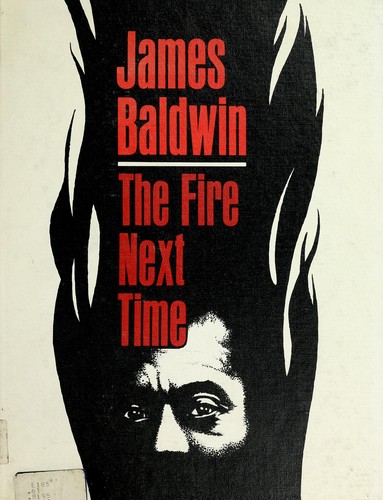
If we do not now dare everything, the fulfillment of that prophecy, re-created from the Bible in song by a slave, is upon us: God gave Noah the rainbow sign, No more water, the fire next time!
And here we are, at the center of the arc, trapped in the gaudiest, most valuable, and most improbable water wheel the world has ever seen. Everything now, we must assume, is in our hands; we have no right to assume otherwise. If we—and now I mean the relatively conscious whites and the relatively conscious blacks, who must, like lovers, insist on, or create, the consciousness of the others—do not falter in our duty now, we may be able, handful that we are, to end the racial nightmare, and achieve our country, and change the history of the world. If we do not now dare everything, the fulfillment of that prophecy, re-created from the Bible in song by a slave, is upon us: God gave Noah the rainbow sign, No more water, the fire next time!
The Fire Next Time by James Baldwin
In order for this to happen, your entire frame of reference will have to change, and you will be forced to surrender many things that you now scarcely know you have.
The Fire Next Time by James Baldwin
The glorification of one race and the consequent debasement of another—or others—always has been and always will be a recipe for murder. There is no way around this. If one is permitted to treat any group of people with special disfavor because of their race or the color of their skin, there is no limit to what one will force them to endure, and, since the entire race has been mysteriously indicted, no reason not to attempt to destroy it root and branch. This is precisely what the Nazis attempted. Their only originality lay in the means they used.
The Fire Next Time by James Baldwin
Whoever de-bases others is debasing himself. That is not a mystical statement but a most realistic one, which is proved by the eyes of any Alabama sheriff.
The Fire Next Time by James Baldwin
Please try to remember that what they believe, as well as what they do and cause you to endure, does not testify to your inferiority but to their inhumanity and fear.
The Fire Next Time by James Baldwin


