There is no one size fits all when it comes to accessibility. Instead of choosing who to prioritize and counting tradeoffs for certain choices like universal high contrast mode, the obvious solution would be to let the user choose.
Similar approach can be taken with any accessibility work at a large scale. There is no blanket ‘accessibility mode’ or ‘accessibility setting’ (save for basic compliance) that will fit everyone’s needs. Giving the user full control to set up what works best for them is always the better choice.
The varied and dynamic nature of learning environments – too many variables to isolate one out, the way norm-referencing is leveraged to discount outliers, and the lack of applicable research on neurodiverse students – necessitates a more flexible and holistic approach.
Education in the home environment provides the freedom and flexibility to create a physical space and family culture that liberates the child (and the whole family) from neuro- and heteronormative expectations of what children ‘should’ be doing and encourages authentic self-expression.
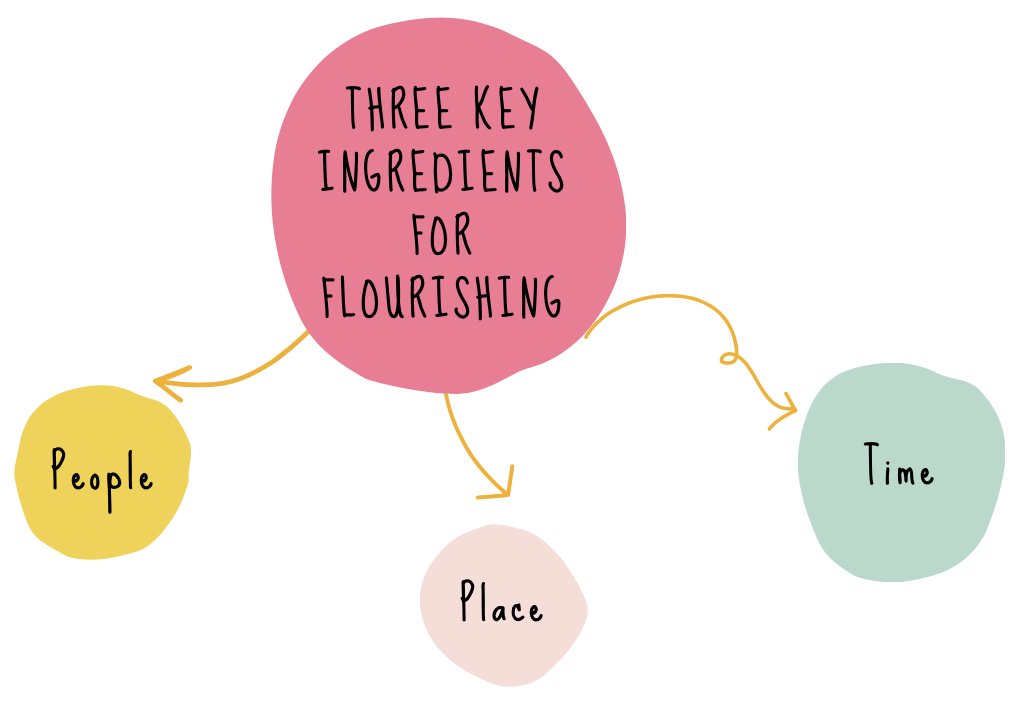
…many autistic children reported flourishing at home both educationally and personally. For these children and families, we identified three key ingredients essential to this flourishing, including: (i) the importance of connected, trusting relationships (‘people’); (ii) the sensory and social safety of home (‘place’); and (iii) the flexibility to pace and structure learning to suit the individual child (‘time’).
One young person summed it up: “It [remote learning] just fits my needs better. It’s more of a relaxed environment and I don’t have to be in a loud place with loud people all the time… The resources are more available. I can wear whatever I want without being judged”
They need strong, trusting relationships with their teachers and peers; a learning environment that suits their needs; and some flexibility and control over their time and rhythm of their learning
Students’ passions and strengths are integrated into various school activities, such as classroom themes, teaching, games, or visual supports. The harnessing of passions and strengths fosters the participation of autistic students, notably by contributing to engagement in academic activities, initiative-taking, autonomy, positive interactions with peers, the development of self-esteem, and the construction of a positive identity (Bolourian et al., Citation2021; Carrington et al., Citation2020; Gunn & Delafield-Butt, Citation2016; Hodges et al., Citation2020; Koegel et al., Citation2012; Kryzak et al., Citation2013; Lindsay et al., Citation2014; Oliver-Kerrigan et al., Citation2021; Stokes et al., Citation2017; Watling & Spitzer, Citation2018; Wood, Citation2021). School staff will therefore take the time to get to know students’ passions and strengths in order to offer them multiple and varied opportunities to participate in activities that connect with these. Passions can be integrated into themes for class work, in the choice of responsibilities, or in the offer of extracurricular activities. Neurodivergent students can also be encouraged to help their peers in areas where they have strengths and be offered opportunities to share their passions with others.
Activities offer a variety of options, enabling students to make choices about how to carry out activities according to their abilities, needs, and interests. Offering choices and using flexible tasks adapted to the needs of neurodivergent students can reduce frustration, improve autonomy, and facilitate new learning (Gunn & Delafield-Butt, Citation2016; Lindsay et al., Citation2014; Meindl et al., Citation2020; Reutebuch et al., Citation2015; Stokes et al., Citation2017; Watling & Spitzer, Citation2018). This is also in line with the recommendations to offer various means of engagement, representation, expression, and action in the universal design of learning, in order to reach a broader range of learners (CAST, Citation2018). Thus, it is possible to offer choices regarding the equipment or technological tools to be used for an activity, such as electronic tablets, interactive whiteboards, a cell phone, or a computer (Becker et al., Citation2016; Carrington et al., Citation2020; M. Clark et al., Citation2020; Grynszpan et al., Citation2014; Hodges et al., Citation2020; Hughes et al., Citation2019; Martin, Citation2016; Oliver-Kerrigan et al., Citation2021; Sansosti et al., Citation2015; Stokes et al., Citation2017). Flexibility can also be offered in terms of the assessments to be carried out (e.g., demonstrating their learning orally or in writing), deadlines, or the allotted time offered to complete an activity (Becker et al., Citation2016; Grynszpan et al., Citation2014; Hughes et al., Citation2019; C. S. Martin, Citation2016; Oliver-Kerrigan et al., Citation2021; Sansosti et al., Citation2015; Stokes et al., Citation2017). This flexibility can help provide the just-right challenge to all students, so that activities are not too easy, nor too difficult.
School activities include stimulating or restorative activities such as physical activities and rest periods to allow students to recharge their batteries and be more available for other activities. These activities can be incorporated at different times, depending on students’ needs, including within learning activities, at the beginning or end of the day, during recess, or at lunchtime. The provision of stimulating and restorative activities contributes to the well-being, task engagement, and academic learning of autistic students (Carrington et al., Citation2020; Ferreira et al., Citation2019; Hartley et al., Citation2019; Katz et al., Citation2020; Koenig et al., Citation2012; Lang et al., Citation2010; Nicholson et al., Citation2011; Oliver-Kerrigan et al., Citation2021; Oriel et al., Citation2011; Petrus et al., Citation2008; Sowa & Meulenbroek, Citation2012; Stokes et al., Citation2017; Tanner et al., Citation2015; Warren et al., Citation2021; Watling & Spitzer, Citation2018). Different activities can be offered, such as short sessions of intense physical activity in the classroom, mindfulness activities, stationary cycling, yoga postures, or by making favorite materials available. Flexibility is key to respecting each individual’s unique needs in terms of when, where, and how to self-regulate. For example, at recess, some students might benefit from the option of doing nothing or pursuing their interests alone to enable them to be more available for learning later on.
Our results also show that it is important for the physical environment to be free from excessive stimuli, to provide appropriate visual support and clearly defined spaces. In addition, our results suggest that school activities should harness strengths and passions, offer diverse options, be predictable and structured, and include both stimulating and restorative activities.
The authors recognize, however, that there is no single solution that suits all school contexts and all students, given their varied needs and strengths. Thus, the features of activities and environments do not prescribe or impose a particular action, but rather support the analysis and choice of strategies consistent with the unique needs of school teams, students, and families. This flexibility is conducive to transformations in school practices, as it enables adaptation to each environment for greater consistency with its culture, needs, and practices (Desimone, Citation2009).
Flexibility, especially the flexibility gained from working from home, avoids a lot of forced intimacy. It avoids a lot of the accommodations grind. That’s a boon to disabled and neurodivergent workers, and to everyone.
Many disabled workers become self-employed because it’s so difficult to find employers who are willing to accommodate remote work, flexible schedules, and other needs someone might have. “There were so many times in the past when I asked to be able to work remotely more often and was denied, which is one reason why I went freelance,” said Elly Belle, a full-time freelance journalist and writer who has several disabilities, including autism, a heart condition, ADHD, and C-PTSD. “For me, a regular 9-5 schedule that requires me to be in an office every single day doesn’t work.”
Emily Ladau, author of Demystifying Disability and a disability rights activist, also became self-employed mostly due to her Larsen syndrome. Some of the flexibility she values has been lost to the nature of the pandemic and its stay-at-home orders, and she misses traveling for work. “As soon as the pandemic hit, I realized that I just liked the feeling of knowing I had the option of leaving my house,” she said. “It’s not just remote work that I value, it’s flexible work that I value and I don’t really have that now in terms of location.”
Unispace found that nearly half (42%) of companies with return-to-office mandates witnessed a higher level of employee attrition than they had anticipated. And almost a third (29%) of companies enforcing office returns are struggling with recruitment. In other words, employers knew the mandates would cause some attrition, but they weren’t ready for the serious problems that would result.
Meanwhile, a staggering 76% of employees stand ready to jump ship if their companies decide to pull the plug on flexible work schedules, according to the Greenhouse report. Moreover, employees from historically underrepresented groups are 22% more likely to consider other options if flexibility comes to an end.
In the SHED survey, the gravity of this situation becomes more evident. The survey equates the displeasure of shifting from a flexible work model to a traditional one to that of experiencing a 2% to 3% pay cut.
Flexible work policies have emerged as the ultimate edge in talent acquisition and retention. The Greenhouse, SHED, and Unispace reports, when viewed together, provide compelling evidence to back this assertion.
Greenhouse finds that 42% of candidates would outright reject roles that lack flexibility. In turn, the SHED survey affirms that employees who work from home a few days a week greatly treasure the arrangement.
In line with the Greenhouse report’s findings, most employees would actively seek a new job if flexible work policies were retracted. The underrepresented groups were even more prone to leave, making the situation more daunting.
Upon running an internal survey, managers realized that aside from better compensation and career advancement opportunities, employees were seeking better flexible work policies. This aligned with the Greenhouse and SHED findings, which ranked flexible work policies as a crucial factor influencing job changes.
The company worked with me to introduce flexible work policies, and the result was almost immediate: Managers noticed a sharp decrease in employee turnover and an uptick in job applications. Their story echoes the collective message from all three reports: Companies must adapt to flexible work policies or risk being outcompeted by other employers.
Embrace the flexibility and autonomy of a distributed team.
Allow team members to work on their schedules and decide how they complete their tasks. This promotes a sense of ownership and trust within the team, increasing motivation and productivity.
One of the most important things which adults and young people tell me about is the process of working out how to make a situation work for them. It’s a process of knowing yourself and how you work best, and then finding the flexibilities in your environment which you can use.
The more flexible an environment is, the more possible this becomes. The better a person knows themselves, the more they can do it. As they practice, they are able to see the possibilities, to work out where the flex is – and therefore, the better they can find a way to do the things which are important to them.
They find the flex, and often they feel bad about it. Other adults tell them that they are spoiling their child, or coddling them, and they’ll never learn to cope if someone is always there to help. They say that they are avoiding, and they’ll get more anxious as result. We see conforming to the expectations of the environment as something to aim for. We think that the environment should be rigid and the child flexible, and we blame them if they aren’t.
Our children can learn to find the flex, but only if we make it possible for them. It’s a skill which needs practice. Just as parents learn how to do it when their children require it, children learn by seeing that it’s possible.
They learn when we give them lots of opportunities to be in flexible environments, where they can make decisions which matter. Lots of chances to say no, and then to dip a toe in and say ‘maybe yes’. Lots of opportunities to sit on the side lines until they want to join in (or decide it’s not for them). And places where knowing that you need a break is valued just as much as driving yourself on.
Knowing themselves is the most valuable gift we can give our children. Knowing their strengths and what makes them tick, and knowing how to see the flex in a situation. Finding the ways in which it will work for them, and feeling good about doing so.
Crip time emerges here as a wry reference to the disability-related events that always seem to start late or to the disabled people who never seem to arrive anywhere on time. As one slang dictionary puts it, “crip time” means both “a flexible standard for punctuality” and “the extra time needed to arrive or accomplish something.” This need for “extra” time might result from a slower gait, a dependency on attendants (who might themselves be running late), malfunctioning equipment (from wheelchairs to hearing aids), a bus driver who refuses to stop for a disabled passenger, or an ableist encounter with a stranger that throws one off schedule. Operating on crip time, then, might be not only about a slower speed of movement but also about ableist barriers over which one has little to no control; in either case, crip time involves an awareness that disabled people might need more time to accomplish something or to arrive somewhere.
Exploring disability in time also includes speculation on temporalities of disability: how might disability affect one’s orientation to time? Irv Zola and Carol Gill were perhaps the first disability studies scholars to mention the temporal orientation of “crip time,” describing it as an essential component of disability culture and community. Tellingly, neither one of them defined the term but rather focused on its frequent appearance in disability communities; they wrote as if the concept would be already familiar to their readers. For Zola, discussing “the intricacies of crip time” was an important act of political reclamation for disabled people; Gill reports feeling pleasure and surprise at discovering “the common usage and understanding” of crip time among the diverse groups of disabled people she encountered. By locating crip time in disabled people’s in-group conversations, Gill and Zola center community-based temporalities, ones which they equate with disability culture and resistance.
Recognizing some people’s need for “more” time is probably the manifestation of crip time most familiar to those of us in the academy. Disabled students (or at least those with approved paperwork) are permitted more time on exams, for example, or granted extended reading periods. But “crip time” means more than this kind of blanket extension; it is, rather, a reorientation to time. As Margaret Price explains, “[A]dhering to crip time…might mean recognizing that people will arrive at various intervals, and designing [events] accordingly; and it might also mean recognizing that [people] are processing language at various rates and adjusting the pace of a conversation. It is this notion of flexibility (not just ‘extra’ time)” that matters.9 Crip time is flex time not just expanded but exploded; it requires reimagining our notions of what can and should happen in time, or recognizing how expectations of “how long things take” are based on very particular minds and bodies. We can then understand the flexibility of crip time as being not only an accommodation to those who need “more” time but also, and perhaps especially, a challenge to normative and normalizing expectations of pace and scheduling. Rather than bend disabled bodies and minds to meet the clock, crip time bends the clock to meet disabled bodies and minds.
‘Crip time for me is reflected in the ways that many normative milestones in my life were delayed or missed out altogether. The opportunity to ‘bend’ time meant that I was able to go to university later in life and graduate with a PhD. Crip time aligns with the flexibility associated with being self-employed and allows me to cultivate my work around my interests.’ (Team member, Cripping Breath)
“Sure,” they say, “with enough humiliation we can allow you to do things differently, as long as you understand that we’ll never consider you an equal part of the school.”
Provide multiple options for expression and control.
Provide multiple options for engagement and motivation. and these remain essential, but I want to add a fourth which must apply to them all:
That these representations and options be available to all students on the basis of understood needs and/or informed preference, without the need for diagnosis.
And here is my example – which, again, I have used before:
I often hand out reading assignments to students. When I do I always deliver those digitally. They arrive as accessible text documents, delivered to their computer. Many students, as many as half of the students, print these documents out onto paper. They do this because they prefer it that way. Whether because of their eyesight, or their cultural training, or where they want to read, or how they want to take notes or highlight things, they prefer ink-on-paper.
That’s fine. I have never once said, “You can not do that. You must read that on the computer, or listen to it using text-to-speech software.”
But if I, as a dyslexic student, want to take my ink-on-paper textbook and convert it into digital accessible text, this gets difficult. I have to “prove” my disability to some campus bureaucrat. I have to beg for the accommodation. I need lots of time, special software and perhaps hardware, and sometimes special permission to bring that book into class (see all those profs who ban laptops or mobiles). I may need a copyright exemption. And look out if I want to carry that digital text into an exam!
This is not just privileging one media form over another, this is elevating the “how” over the “what” to an extreme extent. It not only humiliates those labelled with “disabilities,” it refuses to accommodate the very legitimate choices of all students. Choices which might significantly improve the comfort, attention capabilities, and learning opportunities for that 60%-65% who currently fall far behind, and might even help those already doing well to achieve their full potential.
UDL says scrap that system. Under UDL content would be fully flexible in delivery. Want that book on paper – here it is. Want it as an audio file – there you go. Want it as digital text – that’s easy – seen a book lately that did not begin as a digital file? Need it in some other form – pictures or braille or whatever? No problem – as long as the content can be delivered.
UDL should really go further – especially in recognizing that not all students benefit from following the same path to skills and knowledge. Any system which applies the same pedagogy to all students is clearly not a universal design (in my mind it is not even moral). Insisting on everyone using the same textbook, or doing the exact same assignments, or following the same schedule – those are all industrial practices which are based in the belief that students are a raw material which can be shaped by repeated stampings. Any claims to some kind of rational meritocracy within that “same requirements” argument are simply a mask for the essential anti-humaness of the system.
She didn’t give him an opportunity to choose what intervention would work best for him. She chose it, she gave it to him, and then he felt shamed. When we make decisions for another human being, when we tell them you need this, when we say your deficit is this so i’m going to assign you this, then there’s that shame. There is a guilt that comes in, there is a message that is sent to the learner over and over again, that I’m not good enough, that i can’t learn like everyone else, and I don’t belong here.
We can’t always prescribe the intervention or the support, but we have to have a menu that every learner understands that they can choose from it to see exactly what they need.
We think ahead for the predicted supports that would be needed and then we allow learners to pick and choose what they need.
And we would be surprised. I know I’m often surprised when I give a menu of support, and I think that some of my students would choose one, maybe. They choose three, where I would only think one would work for them. Maybe they go through all of the resources, when I would think that they would gravitate towards one kind.
And so that’s the beauty of a universally designed learning environment that thinks ahead to what would be the barriers for learners. And, as we learn them, as we listen to their voices, we learn more about what they need, and then we make those supports available to all the learners in the environment.
UDL can be likened to a learning expressway with multiple means of representation, engagement and expression serving as on-ramps, traffic patterns and off-ramps. When teachers provide multiple means of representation, they introduce information in a variety of ways. They may use visual aids, graphic organizers, videos and audio to make information easier for students to understand. “The information that students are supposed to be taking in or learning needs an on ramp,” said Fritzgerald. “It needs something to connect from where you are to where it is that you want to go.” Teachers may offer options for different modes of expression, such as written assignments, oral presentations or art projects and allow students to choose the materials they use to present information. Multiple means of expression are off-ramps, said Fritzgerald: “That’s when I am ready to show you what I know so that I can arrive at the destination that I’ve chosen and then move on to the next destination.”
There are so many ways to honor our students and our learning community with the work that we do. We can lift our students with the honor that is embedded in the UDL framework, which recognizes and celebrates our differences and the need for flexible learning environments. If we are brave enough to call out the barriers in our system, fight actively to dismantle our system, and commit to being antiracist, we have the power to take action to design something better, something just, something that honors every child as the brilliant scholar they are.
Toolbelt Theory is based in the concept that students must learn to assemble their own readily available collection of life solutions. They must learn to choose and use these solutions appropriately, based in the task to be performed, the environment in which they find themselves, their skills and capabilities at that time, and the ever-changing universe of high and low-tech solutions and supports.
No student will have mechanical limitations in access to either information or communication — whether through disability, inability at this moment, or even just discomfort. Learning is our goal, and we make it accessible.
We hand our students real laptops with real capabilities, and we fill them with software, apps, and bookmarks.
We want our children to discover how to choose effectively for their own needs. To do that, they need choices, and so we believe in Toolbelt Theory.