
Everything that was normally supposed to be hidden was brought to the front.
Punk subculture – Wikipedia
Table of Contents
- Our Rules of Punk
- What is punk?
- Punk Was Created by All of Us
- Punk Rock and the Dream of the Accepting Community
- The Island of Misfit Toys
- ❤️🫀 Translate Your Love Into Action
- ☀️ Standing Up for the Rights, Like the True Light!
- 🏗️ We Rebuild What You Destroy
- In a world that values neuronormativity, kindness is punk.
- Further Reading
Our Rules of Punk
The First Rule of Punk: Be Yourself
Our Second Rule of Punk: Reframe

When we reframe, we perceive others such that they too can be themselves.
framing = mental structures that shape the way we see the world
Autistic ways of being are human neurological variants that can not be understood without the social model of disability.
A communal definition of Autistic ways of being
I make the right mistakes
And I say what I mean

Spare me from the mold
Reframe these states of being that have been labelled deficiencies or pathologies as human differences.
Normal Sucks: Author Jonathan Mooney on How Schools Fail Kids with Learning Differences
Tell the truth in such a way that you’re allowing others to tell their truths, too.
Design for Real Life
Our Third Rule of Punk: Live Your Truth
Our Fourth Rule of Punk: Shred Some Gnar
Live Your Truth; Shred some Gnar
NOBRO
Livin’ my truth (I gotta live my truth!) while shredding some gnar!
…mass neurodivergent disablement and constant, widespread anxiety, panic, depression, and mental illness, combined with systemic discrimination of neurodivergent people, is a problem specific to the current historical era. Hegemonic neuronormative domination, in other words, is a key problem of our time.
Empire of Normality: Neurodiversity and Capitalism by Robert Chapman
Because we′re standing in the way of control
We will live our lives
In line with a disability justice approach, one of the more positive recent developments is the theory and praxis of neuroqueering. Stemming from the work of Nick Walker and Remi Yergeau, neuroqueering focuses on embracing weird potentials within one’s neurocognitive space, and turning everyday comportment and behaviour into forms of resistance. This has provided a new tool for combatting neuronormativity from within the constraints imposed by history and current material conditions. By queering the social world, new possibilities are carved out for the future, helping us not just challenge aspects of the current order but to start collectively imagining what a different world could be like.
Empire of Normality: Neurodiversity and Capitalism by Robert Chapman
Hey girlfriend
I got a proposition, goes something like this
Dare ya to do what you want
Dare ya to be who you will
Dare ya to cry right out loud
"You get so emotional, baby"

Double dare ya, double dare ya

Double Dare Ya by Bikini Kill
The forces of neuronormativity feel overwhelming in this age of mass behaviorism and unvarnished eugenics.
Against that tide, we embrace our weird potentials. We neuroqueer the social world.
We bring the hidden to the front.
And we’re punk rock about it.
Just be punk rock about it. That’s what I say.
Patty Schemel
We make room for all of us when we embrace our rules of punk.
Our rules of punk:
- Be yourself.
- Reframe, so that you perceive others such that they too can be themselves.
- Live your truth.
- Shred some gnar.
What is punk?
The definition of punk is to subvert the dominant paradigm, through art or culture, through music.
Queercore: How to Punk a Revolution
Punk could be defined as a philosophy of disagreement, derailment, constructive deviation, and relentless rebellion against habitually or timidly accepted social norms.” Being in fundamental conflict with imposed social structures is a prerequisite for seeing your failures acutely.
Vuk Uskokovic, 2016
…the central tension of punk rock: it was built on individualism and an anti-hero ethos, yet expressed itself as a community. The motivation for punk was individualistic artistic expression, but the glue for the subculture was the experience of finding like-minded misfits.
We accept you, one of us?: punk rock, community, and individualism in an uncertain era, 1974-1985
What is punk?
- Making friends and having fun.
- Eating cookies.
- Doing it yourself.
- Supporting your scene.
What does punk mean to you?
The Linda Lindas – “Why” – YouTube
- Going for it without being perfect.
- Describing about how you feel, and describing your emotions.
- It means persisting to me.
- I think punk means being free.
Keith Morris: The word “punk” has all of its connotations. We didn’t care about any of that. We were just doing it.
Alice Bag: It was not just a musical genre. It was really a way to question your way of living.
Gary Lachman: It’s a spirit of DIY. If you’re creative and take the risks involved, you can do it yourself.
Louis Jacinto: It’s the philosophy that we just get to do this, period.
Penelope Spheeris: Punk rock was anti-establishment, and the
minute we stop questioning the norm, then we’re stuck.
John Doe: Punk rock is just freedom.
Chinatown Punk Wars | Artbound | Season 14, Episode 1 | KCET – YouTube
What is a punk band, after all, but an affinity group with guitars?
CrimethInc. : Punk—Dangerous Utopia : Revisiting the Relationship between Punk and Anarchism
-

Punk Is Autistic
The culture of punk is, at its core, authenticity without apology—and that’s exactly what autistic people desire: spaces and cultures where they can be their…
-
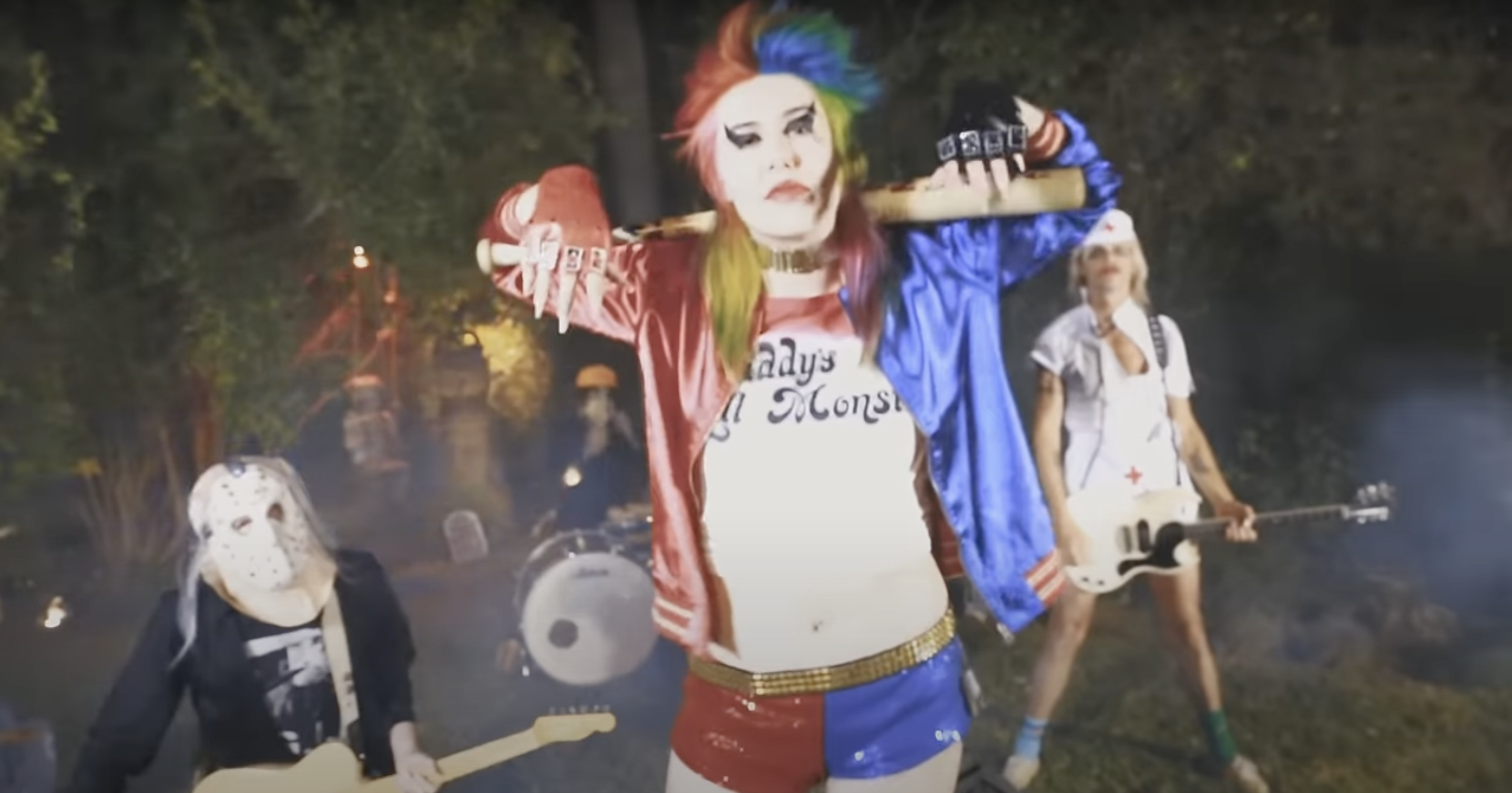
Gather ‘Round Creeps: Happy Halloween from the Black Leather Lagoon
Ask your parents how to make a monster. Death, divergence, and whimsy. Enjoy this punky Halloween playlist full of weird pride.
-
Design Challenge: Neurodiversity Punk Hedgehog Mascot Inspired by Wapuu
Community artists, let’s make some Neurodiversity Hedgehog Mascots Inspired by Wapuu.
-
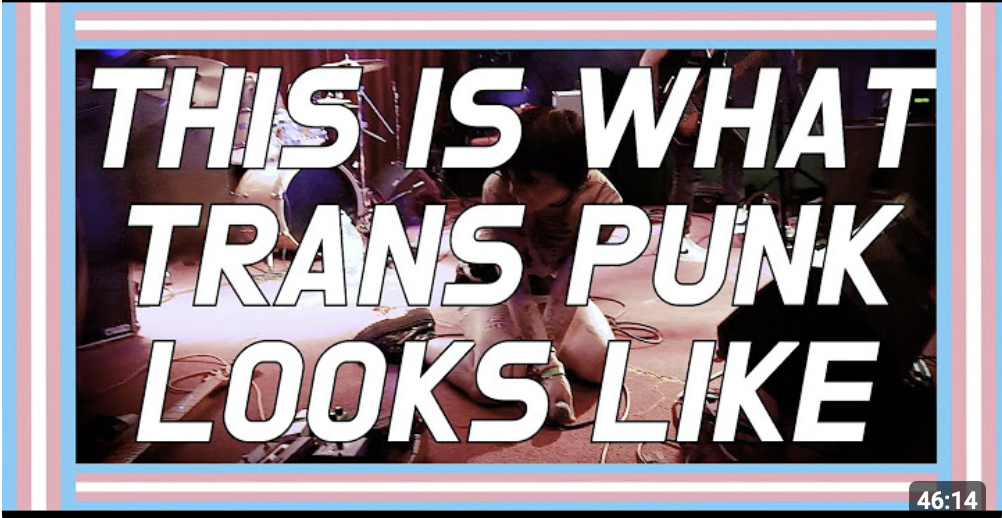
A Vivifying Overlap: This Is What Trans Punk Looks Like
To be a queer person is inherently a very punk thing. I think to be a punk person is also inherently a queer thing. There’s…
-

Community: The Story of East Bay Punk
I love punk documentaries. Community comes together to build inclusive spaces. Community rebounds after losing spaces. Community fights off skinheads with bats and pipes to…
-
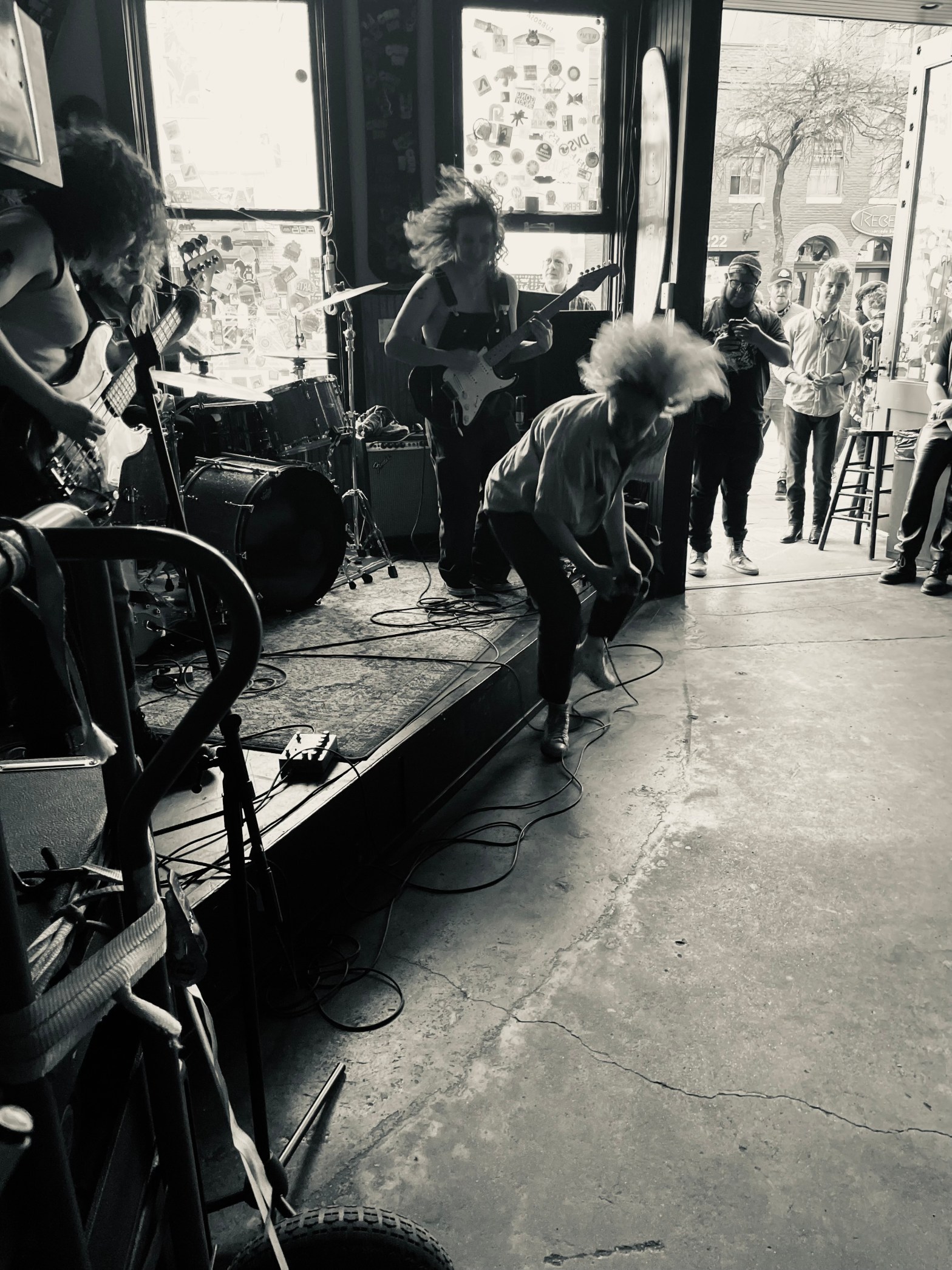
This is punk rock time. This is what Joe Strummer trained you for.
This is not a time to be dismayed. This is punk rock time, this is what Joe Strummer trained you for. It is now time…
This is a call to open arms
Lay down your guard, lay down your guardA call to arms is what you need
Call to Arms, The Attack
I’m calling on you to sing along with me
Punk Was Created by All of Us
Punk music is alive because there’s a need to belong and to not be marginalized.
Jessica Schwartz, Chinatown Punk Wars | Artbound | Season 14, Episode 1 | KCET – YouTube
Punk was created by women, people of color, and queers. And without all of us, it would be nothing.
Alice Bag
Maybe that is the punkness of being a woman.
Marina Muhlfriedel
There have always been, like, women in it, and queer people, and people of color.
That community is also something really cool about punk.
Eloise Wong of The Linda Lindas
When you’re black, you’re punk rock all the time, you’re a target all the time.
Sacha Jenkins
We have been pushed to the margins, but we create in those margins. It doesn’t get more punk than that.
Shawna Shawnté
People, incorrectly, view punk as this angry, white, urban male genre. Black culture is really the source of punk, and a lot of people don’t recognize it – or don’t want to recognize it.
Kenny Gordon
In the early aughts of punk, queerness was actually inherently tied to the movement.
The Story of Trans Punk Pioneer Jayne County – YouTube
But before all of them, was a man who inhabited punk in all its definitions. A queer, Black man, who played his music loud and fast and with a defiantly masterful un-polish. Little Richard set the stage for everything that punk would become while inhabiting every sense of the word with pride. John Waters once declared Little Richard “was the first punk.”
QUEER PUNK HISTORY: 1575 – PRESENT
“I went through a lot when I was a boy. They called me sissy, punk, freak…”
Little Richard
Punk has never not been queer.
QUEER PUNK HISTORY: 1575 – PRESENT
I was gay. It’s nice to be happy. I was happy, and I wanted the world to know I was happy. And I wasn’t ashamed. I had been that way all my life, and I didn’t know nothing else but that. And so I told everybody that: I am gay.
“I told everybody I am GAY” Little Richard 1932-2020
He was certainly queer in all of the senses of what that term means.
Jason King, “Little Richard: I Am Everything”
Jimmy Alvarado: Punk rock has been represented by the media as a straight, white, male thing, and that was never the case.
From the very beginning, there were people of different ethnicities, of different ideologies.
Punk rock was always an inclusive kind of thing.
Louis Jacinto: The punk scene reflected the city of Los Angeles, which is extremely diverse, so everybody was there.
Penelope Spheeris: It also changed what women were allowed and expected to do. All of a sudden, women could shave their head, put on some combat boots, drink a lot of beer, and swear with the dudes.
Alice Bag: In the early punk scene, there was diversity of gender, also sexuality. So many people bringing in different flavors from different communities really kept it fresh and quirky.
Jacinto: Back then, to see Nervous Gender was really putting to the fans that, “We’re queer, and we’re punk, and we’re singing about being queer and being punk.”
Jessica Schwartz: Punk music is alive because there’s a need to belong and to not be marginalized.
Chinatown Punk Wars | Artbound | Season 14, Episode 1 | KCET – YouTube
Rock and Roll History and Queer History Are Intrinsically Entwined
Swipe for my dissertation on the intersection between rock and roll history and queer history…
This is a hyperfixation of mine just so you know ty 🤘 🌈
@sammyraemusic, This year’s Pride passion-project, and tbh all I talk about at the bar 🍸 Pride Month is for learning, rock and roll is for everyone. 🤘 🌈… | Instagram
THESIS STATEMENT: Rock and roll history and queer history are intrinsically entwined.
As a counterculture movement in popular music, rock and roll has always screamed at (and for) angsty and misunderstood young people. Its bedrock is “come as you are”, “it’s cool to be anti-establishment”, and “don’t tell me what to do.”
The conventional image of a rockstar’s lot in life is making noise, creating art, and being fabulous. (Sounds pretty queer)
Rock as a lifestyle and music genre was pioneered by many brave, queer artists and iconic allys, who did the heavy lifting of expressing their most authentic selves through their artistic expression. They inspired the youth to break molds, push barriers, and be themselves.
Rock was born of the blues very much in thanks to Black trailblazers, including Black queer folks. Gay pop and disco have early roots in rock and roll, very much thanks to queer (primarily femme) artists, who declared that you could still be anti-establishment… even if you covered everything in glitter.
Rock and roll is pretty camp, and camp is pretty rock and roll.
In the average All-American, God-fearing household of the 1960s and 1970s, the first drag that lots of people saw was on the covers of rock and roll vinyls in record shops.
Lots of public-facing, heterosexual rockstars have also been important voices in the fight for LGBTQIA rights, especially during the United States AIDS epidemic. (Tina Turner, Frank Zappa, Whitney Houston…) They used their songwriting and press relationships to advocate for the LGBTQIA community. That’s called allyship!
Straight identifying members of rock’s legacy also did a great deal of normalizing the de-gendering of clothing and costume.
(Glam rock is about as gay as it gets, but that never bothered Ozzy.
@sammyraemusic, This year’s Pride passion-project, and tbh all I talk about at the bar 🍸 Pride Month is for learning, rock and roll is for everyone. 🤘 🌈… | Instagram
Punk’s for everybody. No matter what age you are.
Punk’s, you know, it’s part and parcel of… no racism, no sexism, no homophobia at the club. It’s all ages. It’s because… it belongs to everybody.
Paul Curran, Turn It Around: The Story of East Bay Punk – YouTube
To be a queer person is inherently a very punk thing. I think to be a punk person is also inherently a queer thing.
Lorne, THIS IS WHAT TRANS PUNK LOOKS LIKE (full documentary) – YouTube
There’s a lot of really vivifying overlap there between those two things for me.
Punk Rock and the Dream of the Accepting Community
I feel like people who gravitate towards punk are looking for that sense of community.
Paul Curran, Turn It Around: The Story of East Bay Punk – YouTube
The lyrics referred to the way many people viewed fans of punk rock (who often endured stares, slurs and assaults at the time), but they could just have easily been about people diagnosed with mental illnesses, who are frequently looked down upon as crazy, violent and unintelligent.
Punk Rock and the Dream of the Accepting Community | Psychology Today
A Safe Retreat
No violence, drugs, or alcohol
“Gilman Street” by The Mr. T Experience, Turn It Around: The Story of East Bay Punk – YouTube
Just maximum rock and roll
At Gilman Street
It's a safe retreat
For a zillion punk rock bands

At Gilman Street
It's democracy
It's just one big family
It's a bunch of geeks
It's a load of freaks
It's a club, it's a place, it's a thing
It's Gilman Street
Gilman Street
This subculture has to be inclusive—and not just in the superficial sense associated with the liberal politics of representation. Rather than just preaching to the converted, it should draw in people from a wide range of backgrounds and politics. We want to reach the same young folks who are going to be targeted by military recruiters, and we want to reach them first. Sure, that will mean rubbing shoulders with a lot of people who are not anarchists—it will mean a big messy stew of different politics and conflicts and contradictions—but the goal is to spread anarchism, not to hide out in it. Get everyone together in a space premised on horizontality, decentralization, self-determination, reproducible models, being ungovernable, and so on and let them discover the advantages for themselves.
The most important thing is the participation of those who are poor, volatile, and angry. Not out of any misguided notion of charity, but rather because the so-called dangerous classes are usually the motor force of change from below. The self-satisfied and well-behaved lack the risk tolerance essential for making history and reinventing culture.
Picture a self-education society without instructors, ranks, or lesson plans. Teenagers will teach themselves to play drums by watching other teenagers play drums. They won’t learn about politics in dusty tomes, but by publishing zines about their own experiences and corresponding with people on the other side of the planet. Every time well-known musicians perform, musicians who are just getting started will perform, too. Learning won’t be a distinct sphere of activity, but an organic component of every aspect of the community.
CrimethInc. : Punk—Dangerous Utopia : Revisiting the Relationship between Punk and Anarchism
We need to keep building community with one another and supporting each other, because without community, we’re fucked.
THIS IS WHAT TRANS PUNK LOOKS LIKE (full documentary) – YouTube
We need to make it dangerous to oppress us.
Stand Together
If there was ever a time
To stand together
If there was ever a time
Its tonight
If there was ever a time
To hold your brothers and your sisters
Then the time is right
The Armstrongs – If There Was Ever a Time Lyrics
A community making decisions, not just one person. Man, that is a beautiful thing.
Tim Armstrong, Turn It Around: The Story of East Bay Punk – YouTube
You gotta find your peeps.
THIS IS WHAT TRANS PUNK LOOKS LIKE (full documentary) – YouTube
The Island of Misfit Toys
I don’t give a damn ’bout my reputation
Bad Reputation, Joan Jett
Never been afraid of any deviation
And I don’t really care if you think I’m strange
I ain’t gonna change
It’s about weird, lost people coming to some place and finding themselves.
Bille Joe Armstrong, Turn It Around: The Story of East Bay Punk – YouTube
Let Your Flag Unfold
There's a trouble in the air, a rumble in the streets
A "going out of business" sale and a race to bankruptcy
It's not one to ninety-nine, it's ninety-nine to one
A common cause and a call to arms for the health of our daughters and our sons

It's ninety-nine revolutions tonight
Ninety-nine revolutions tonight
Ninety-nine revolutions tonight
Ninety-nine revolutions tonight

There's a rat in the company, a bailout on easy street
How the fuck did the working stiff become so obsolete?
Hit the lights and bang the drum and let your flag unfold
'Cause history will prove itself in the halls of justice and lost souls

It's ninety-nine revolutions tonight
Ninety-nine revolutions tonight
Ninety-nine revolutions tonight
Ninety-nine revolutions tonight
Green Day – 99 Revolutions Lyrics
As soon as I said, “Hello, this is exactly who I am”, I found the most beautiful community of people.
yungblud
DIY or DIE: Punk Rock Is a Living Thing
The most important message I got from punk, was the DIY ethos. The DIY ethic. It’s inherently part of surviving.
Don Letts, SHOWstudio: Stussy – Talking Punk with Don Letts and John Ingham
Jane Wiedlin of the Go-Go’s described the early Masque scene: “Everyone was kind of into the whole homemade thing, ‘cause … you couldn’t buy real punk clothes like they could in London.”
“We Accept You, One of Us?”: Punk Rock, Community, and Individualism in an Uncertain Era, 1974-1985
Next in a punk sensibility was its love affair with pastiche. As the true postmoderns they were, punks drew freely from highbrow culture, lowbrow culture, and places in between, picking and choosing as they went, bound by no formal ideology.
In practice, however, punks consciously or unconsciously drew on previous youth cultures, with methodologies and ideologies marked by pastiche and bricolage. In other words, punks borrowed freely from previous youth cultures and dominant society, melding these elements into a new form of expression.
“We Accept You, One of Us?”: Punk Rock, Community, and Individualism in an Uncertain Era, 1974-1985
…punks viewed the pedestrian actions of everyday life as potential expressions of art and ideology.
The vast majority of the time, however, female punks took a pastiche approach, drawing inspiration from many areas of popular culture. According to journalist Kristine McKenna, “punks rejected the Academy and drew instead from ‘low’ sources: graffiti, underground comics, advertising, car culture, the tarot, blaxpoitation, bondage and pornography, surf culture, fifties industrial films, Mad magazine, and the universe of American detritus that winds up in thrift stores. It all got tossed in the blender.” As this quote suggests, there was no single, agreed-upon guise in early punk. Jane Wiedlin of the Go-Go’s described the early Masque scene: “Everyone was kind of into the whole homemade thing, ‘cause … you couldn’t buy real punk clothes like they could in London.”
“We Accept You, One of Us?”: Punk Rock, Community, and Individualism in an Uncertain Era, 1974-1985
I mean, we’re 13 to 16 years old, with this music that we made, in our basements or garages, without any parents, without any teachers. That was a profound thing that happened to us, at a young age, cause it made us realize that anything was possible, if you just do it yourself.
Tim Armstrong, Turn It Around: The Story of East Bay Punk – YouTube
Kids stopped waiting for the show they wanted to see, and did it themselves.
Music and art was something they could do, right now.
And it gave the freaks in each town a reason to stick together.
Turn It Around: The Story of East Bay Punk – YouTube
I mean, being in a band isn’t just about playing punk or playing what you want. It’s actually about getting together with a group of people and learning how to do something together.
And it didn’t have to turn out good. A lot of times it turns out ugly, but, you know, it still has a good feeling.
Sure, it’s a better feeling when you make something ugly with a bunch of people, than it is when you make something ugly by yourself.
Dave Mello, Turn It Around: The Story of East Bay Punk – YouTube
Oh bondage, up yours
Oh bondage, no more
Oh bondage, up yours
Oh bondage, no more
The punks wore clothes which were the sartorial equivalent of swear words, and they swore as they dressed–with calculated effect, lacing obscenities into record notes and publicity releases, interviews and love songs. Clothed in chaos, they produced Noise in the calmly orchestrated Crisis of everyday life in the late 1970s–a noise which made (no) sense in exactly the same way and to exactly the same extent as a piece of avant-garde music. If we were to write an epitaph for the punk subculture, we could do no better than repeat Poly Styrene’s famous dictum: ‘Oh Bondage, Up Yours!’, or somewhat more concisely: the forbidden is permitted, but by the same token, nothing, not even these forbidden signifiers (bondage, safety pins, chains, hair-dye, etc.) is sacred and fixed.
Subculture: The Meaning of Style
Punk rock is a living thing.
It’s about turning problems into assets.
Don Letts, Rebel Dread
Survival is not an academic skill. It is learning how to stand alone, unpopular and sometimes reviled, and how to make common cause with those others identified as outside the structures in order to define and seek a world in which we can all flourish. It is learning how to take our differences and make them strengths.
Audre Lorde, The Master’s Tools Will Never Dismantle the Master’s House
That Could Be Me: Inspiring Constructionism
Whatever you do just go for it. Do it. Don’t wait to be perfect. Don’t wait to like have mastered it. When we started, we were terrible.
Eloise Wong of The Linda Lindas, The Linda Lindas: KCRW Live from HQ – YouTube
For her 19th Birthday, she took a chance on seeing a London band with a provocative name.
That band was the Sex Pistols.
At the time, The Pistols were merely support for obscure Welsh metal outfit Budgie, they were mostly playing ramshackle rock’n’roll covers and there was barely anyone there.
They were just a bunch of kids playing music with no pretensions of professionalism.
But that was key: Like many others after first seeing the Sex Pistols, Elliot was hooked and realised that she could do this too. “That’s why I formed X-Ray Spex.”
Before Riot Grrrl: X-Ray Spex & “Oh Bondage Up Yours!” | New British Canon – YouTube
Pretty much immediately Poly Styrene and X-Ray Spex’s influence was felt. Just like seeing the Sex Pistols had convinced Styrene that getting onstage without much musical grounding was possible, a generation of punk and new wave women saw X-Ray Spex and thought “That could be me.” Her left of centre look also helped in that, not being the traditional male fantasy of many other women that had appeared on Top of the Pops. “The idea that just anyone could (start a band) was really big to me. That people in your neighbourhood could start a cassette label or a record label, that you could see people who were making records walking down the street. And they didn’t necessarily have to be in a glossy magazine, and they didn’t have to weigh 90 pounds and have blonde hair down to their ankles or whatever was the fashion of the day.”
Before Riot Grrrl: X-Ray Spex & “Oh Bondage Up Yours!” | New British Canon – YouTube
I would argue that the ability young women and girls now have to embrace the DIY approach to music would not be as prevalent as it is now had Riot Grrrl not busted down the door back in the 90s.
The 90s DIY feminist art punk scene in the Pacific Northwest gave us Kurt Cobain, Ian MacKaye, and Sleater Kinney. And the list of bands in the Riot Grrrl legacy goes on.
Riot Grrrl: The Story of Feminist DIY Punk
I can fix my bike up (Do it yourself)
I can grow a salad (Do it yourself)
I can start a punk band (Do it yourself)
Do it, Do it, Do it, Do it, Do it yourself
I can make peanut butter (Do it yourself)
I can walk myself home (Do it yourself)
I can make the rain come (Do it yourself)
Do it, Do it, Do it, Do it, Do it yourself

Do it do it yeah x3
I can make the first move (Do it yourself)
I can fight my own corner (Do it yourself)
I can put it back together (Do it yourself)
Do it, Do it, Do it, Do it, Do it yourself
I can put shelves up (Do it yourself)
I can give a hair cut (Do it yourself)
I can heal a broken heart (Do it yourself)
Do it, Do it, Do it, Do it, Do it yourself

Do it do it yeah x6

You are good enough (Do it yourself)
You are strong enough (Do it yourself)
You are smart enough (Do it, Do it, Do it, Do it, Do it yourself)  x3

You are good enough (Do it, do it, do it)
You are strong enough (Do it, do it, do it)
You are smart enough (Do it, do it, do it)  x2

Do it yourself
DIY by Dream Nails
Appropriate Space
The spaces where we belong do not exist.
Gayatri Sethi, Unbelonging
We build them with radical love and revolutionary liberation.
Two of the most important developments that began in the 1990s, and continue to thrive today, are the staging of house shows and the establishment of volunteer-run community spaces. Both materialize DIY in important ways, but each has a unique historical trajectory.
In the face of such struggles, the creation of house spaces, volunteer-run spaces, and other punk- specific locations truly materialize DIY in powerful ways that also model what it means and feels like to do DIY together.
The emergence of the house as a DIY venue explicitly and implicitly challenges conceptions of the home as cut off from public life. Houses are transformed from somewhat isolated private spheres to pseudo-public spaces when punks decide to host shows in their homes. House show spaces are now standard locations for punk shows and are considered important options for DIY punk bands touring the U.S.; however, this contemporary awareness among punks that houses can function as venues did not develop uniformly. The contemporary DIY touring network is very much a product of efforts made in the 1980s but shifted and changed throughout the 1990s because of some limitations with the more common spaces used for shows during the ‘80s. Punk bands have played at houses since the music began.
Underground: The Subterranean Culture of DIY Punk Shows | Microcosm Publishing
There is, however, a major difference between these other uses of the home for collective music experiences and punk house shows. The people who live in the house and book the shows are enacting a DIY philosophy and politics, as are the bands that play and many of the people in attendance. The home space has in effect been appropriated to shift from a container for standard domestic practices to a pseudo-public place that offers an alternative venue option for many DIY punk bands that are often excluded from more official (or legitimate) live music venues.
Underground: The Subterranean Culture of DIY Punk Shows | Microcosm Publishing
There’s space for you.
Bela Salazar of The Linda Lindas, The Linda Lindas: KCRW Live from HQ – YouTube
Do you ever feel unsafe?
Do you wanna take up space?

Do you (Take up space)
Wanna? (Take up space)
Do you
Oh, do you wanna?
Ooh, ooh
Ooh, ooh
Sha-la-la-la-la

--Take Up Space by Dream Nails
I think the key here is space.
“It’s Not Rocket Science” – NDTi
The Denny’s Grand Slam
Few concerts have captured the imagination of the internet more than the Denny’s Grand Slam.
There were so many kids there. It was so much fun.
“The real thing that people like about this is the whole DIY aspect of throwing your own show wherever the fuck you want to do it.”
When Denny’s Became A Mosh Pit – What Was The Denny’s Grand Slam? – YouTube
🎶🌈 It Take a Joyful Sound: New Wave, New Phrase, Neurodiversity
It take a joyful sound
To make a world go around
Come with your heart and soul
Come on come and rock your boat
“Punks are outcasts from society. So are the Rastas. So they are bound to defend what we defend,” Marley concluded. Shortly thereafter, they began recording the single Punky Reggae Party, and by naming an underground social phenomenon, helped further it.
Culture Clash: Bob Marley, Joe Strummer and the punky reggae party | Reggae | The Guardian
New wave, new phrase
New wave, new craze

It take a joyful sound
To make a world go around
Come with your heart and soul
Come on come and rock your boat
Because it's a punky reggae party
And it's tonight
It's a punky reggae party
And it's alright

Rejected by society
(do re mi fa)
Treated with impunity
(so la te do)
Protected by my dignity
(do re mi fa)
I search for reality
(So La te Do)

--Punky Reggae Party by Bob Marley & The Wailers
New wave, new phrase
New wave, new craze
Neurodiversity
What Neurodiversity Means to Me
Neurodiversity, to me, means both a fabulous celebration of all kinds of individual minds, and a serious, holistic acknowledgment of the necessity of diversity in order for society to survive, thrive, and innovate. It means identity, belonging, and community. It means I am not broken, not alone, and neither are my siblings standing with me beneath that huge, multi-colored neurodiversity umbrella: we the autistic, the mad, the weirdly-wired, the queer, the crippled, and the labeled with neurodivergent diagnoses like flowers that glorify our beautiful bodies and minds.
Autistic Community and the Neurodiversity Movement: Stories from the Frontline
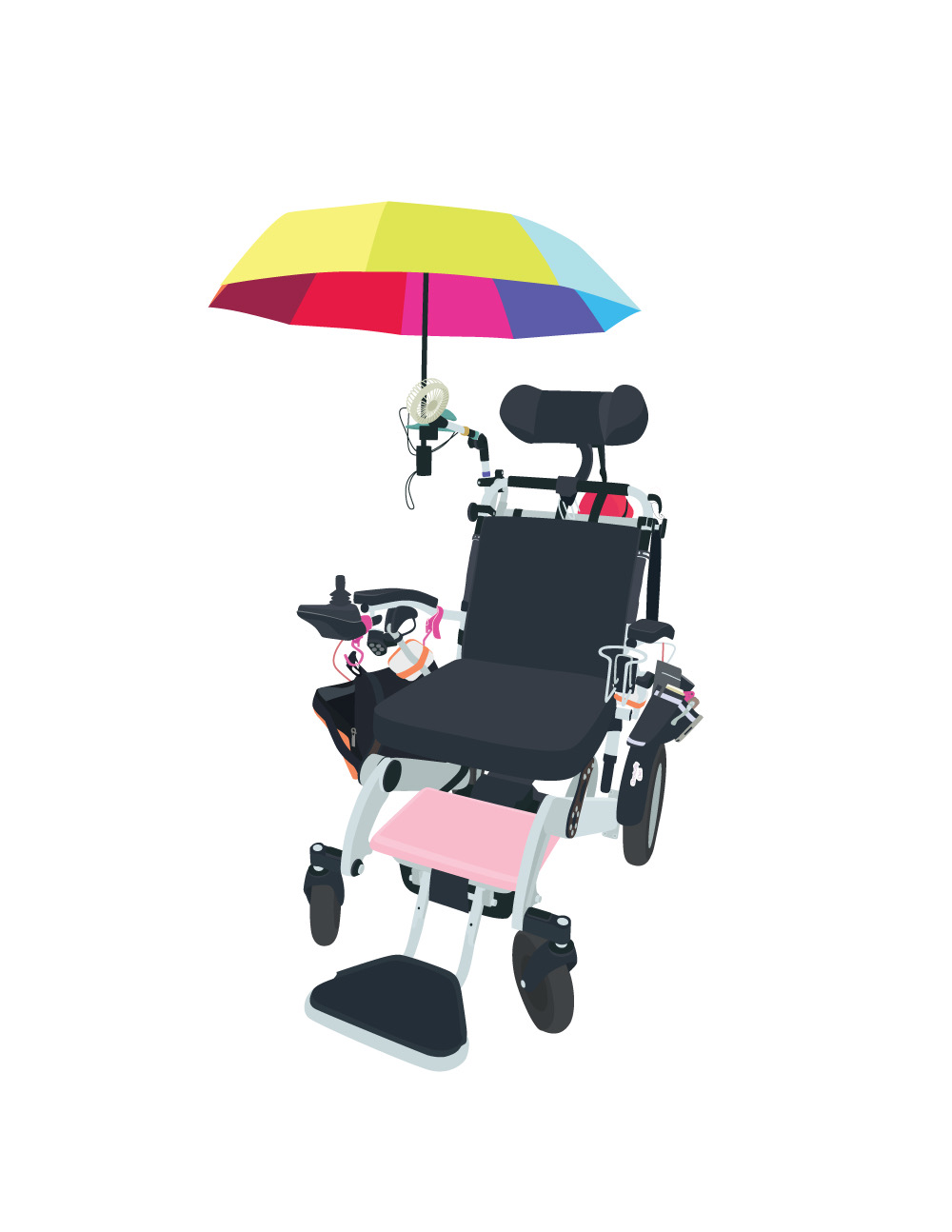
Neurodiversity is one of the most powerful ideas in human history.
It take a joyful sound. Reframe.
❤️🫀 Translate Your Love Into Action
I wasted my twenties in submission
I thought I was outside the system
I was rolling over for wealth and power
As if they really cared about me
The kids are just getting started
They only just learned how to howl
And most of them throw in the towel
Bout the time that they turn twenty three
You've got the taste for transcendence
That translates your love into action
And participate in the fight now
For a creed you can truly believe
Furman penned the second new single “Evening Prayer” as a “rallying cry” for her fan base. “We music fans go to shows for transcendence; it’s like being called to prayer,” she says. “But as Abraham Heschel said, ‘Prayer is meaningless unless it is subversive, unless it seeks to overthrow and to ruin the pyramids of callousness, hatred, opportunism and falsehood.’ I want all our fans to become activists. We punk fans have so much energy to give to the fight against injustice, i.e. the abuse of the poor by the rich, i.e. climate change. So this is one to get you in the mood.”
Ezra Furman’s Summer of Pride Mix: Listen | Billboard
It is time for the evening prayer
Time to do justice for the poor
It is time for the evening prayer
Time to do justice for the poor

Tonight you've got fire in your bloodstream
Your frail human heart is still pumping
And make this one night you'll remember
A note you'll deliver by hand
And when you get up in the morning
Let no man return it to sender
Pour gasoline on the embers
Give yourself a physical record
Deliver that fire in the real world
And tell them that E Furman sent ya
☀️ Standing Up for the Rights, Like the True Light!
…punk and reggae are assumed to go together. The chocolate and peanut butter of the music world. But in the late 70’s, the decision to combine them at all—to attempt to create musical solidarity between Britain’s working class whites and the new Caribbean immigrant population—was a revolution in itself.
punk rock and reggae: a love story in 2 acts | AFROPUNK
Reggae music is still here
As the voice of the people everywhere
Whenever there is injustice and tyranny
Reggae music is there
Standing up for the rights, like the true light!

Reggae music gonna make me feel good
Reggae music gonna make me feel alright now
Reggae music gonna make me feel good
Reggae music gonna make me feel alright now
(Reggae, reggae, reggae gonna make me feel good!)
Reggae music gonna make me feel alright now
Reggae music gonna make me feel good
Reggae music gonna make me feel alright now

--Reggae Music by Jimmy Cliff
New wave, new phrase
New wave, new craze

--Punky Reggae Party by Bob Marley & The Wailers
Song recorded by Lee Perry. The alliance of punk rockers and Jamaican immigrants including Rastaman during the rock against racism festival (where punks and reggae bands played together against the British National Front) the Brixton riot’s soundtrack. This is an alternative version alternating dub and vocals.
punky reggae party perry sessions 1977-BOB MARLEY & LEE PERRY
🏗️ We Rebuild What You Destroy
What is Riot Grrrl?
BECAUSE we are interested in creating non-hierarchical ways of being AND making music, friends, and scenes based on communication + understanding, instead of competition + good/bad categorizations.
RIOT GRRRL MANIFESTO
BECAUSE doing/reading/seeing/hearing cool things that validate and challenge us can help us gain the strength and sense of community that we need in order to figure out how bullshit like racism, able-bodieism, ageism, speciesism, classism, thinism, sexism, anti-semitism and heterosexism figures in our own lives.
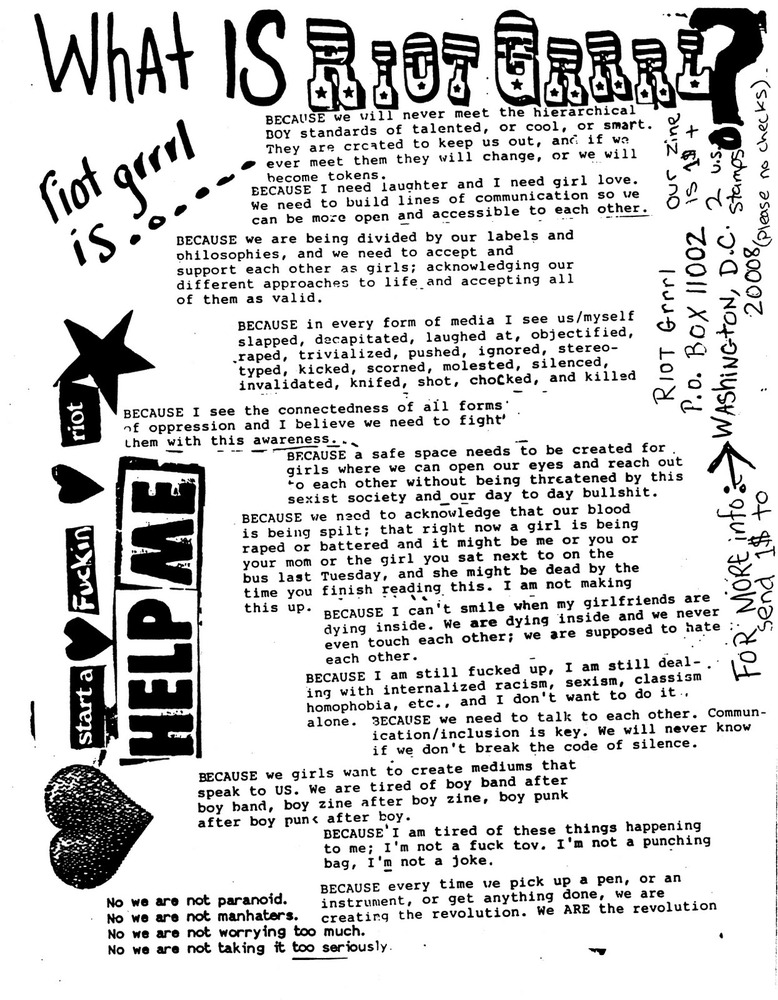
band Bikini Kill and lead singer Kathleen Hanna.The riot grrrl manifesto
was published 1991 in the BIKINI KILL ZINE 2.
What is Riot Grrrl?
BECAUSE us girls crave records and books and fanzines that speak to US that WE feel included in and can understand in our own ways.
BECAUSE we wanna make it easier for girls to see/hear each other’s work so that we can share strategies and criticize-applaud each other.
BECAUSE we must take over the means of production in order to create our own meanings.
BECAUSE viewing our work as being connected to our girlfriends-politics-real lives is essential if we are gonna figure out how we are doing impacts, reflects, perpetuates, or DISRUPTS the status quo.
BECAUSE we recognize fantasies of Instant Macho Gun Revolution as impractical lies meant to keep us simply dreaming instead of becoming our dreams AND THUS seek to create revolution in our own lives every single day by envisioning and creating alternatives to the bullshit christian capitalist way of doing things.
BECAUSE we want and need to encourage and be encouraged in the face of all our own insecurities, in the face of beergutboyrock that tells us we can’t play our instruments, in the face of “authorities” who say our bands/zines/etc are the worst in the US and
BECAUSE we don’t wanna assimilate to someone else’s (boy) standards of what is or isn’t.
BECAUSE we are unwilling to falter under claims that we are reactionary “reverse sexists” AND NOT THE TRUEPUNKROCKSOULCRUSADERS THAT WE KNOW we really are.
BECAUSE we know that life is much more than physical survival and are patently aware that the punk rock “you can do anything” idea is crucial to the coming angry grrrl rock revolution which seeks to save the psychic and cultural lives of girls and women everywhere, according to their own terms, not ours.
BECAUSE we are interested in creating non-heirarchical ways of being AND making music, friends, and scenes based on communication + understanding, instead of competition + good/bad categorizations.
BECAUSE doing/reading/seeing/hearing cool things that validate and challenge us can help us gain the strength and sense of community that we need in order to figure out how bullshit like racism, able-bodieism, ageism, speciesism, classism, thinism, sexism, anti-semitism and heterosexism figures in our own lives.
BECAUSE we see fostering and supporting girl scenes and girl artists of all kinds as integral to this process.
BECAUSE we hate capitalism in all its forms and see our main goal as sharing information and staying alive, instead of making profits of being cool according to traditional standards.
BECAUSE we are angry at a society that tells us Girl = Dumb, Girl = Bad, Girl = Weak.
BECAUSE we are unwilling to let our real and valid anger be diffused and/or turned against us via the internalization of sexism as witnessed in girl/girl jealousism and self defeating girltype behaviors.
BECAUSE I believe with my wholeheartmindbody that girls constitute a revolutionary soul force that can, and will change the world for real.
We rebuild what you destroy.

We can take turns taking the reins
Lean on each other when we need some extra strength
We’ll never cave or we’ll never waver
And we’ll always become braver and braver

We’ll dance like nobody’s there
Wе’ll dance without any cares
We’ll talk 'bout problеms we share
We’ll talk 'bout things that ain’t fair
We’ll sing 'bout things we don’t know
We’ll sing to people and show
What it means to be young and growing up

Growing Up by The Linda Lindas
In a world that values neuronormativity, kindness is punk.

By Helen Edgar, Autistic Realms


