
Designing environments for neurodivergent people is not about fixing individuals. It is about shaping environments so that different nervous systems can function, communicate, and thrive.
The Stimpunks Design Field Guide collects the ideas, patterns, and tools used across this site to help people design environments that work with neurological diversity instead of against it.
This guide connects four major parts of the Stimpunks framework:
Patterns
↓
Design
↓
Environments
↓
Systems
Understanding this progression makes the rest of the site easier to use.
Start With Patterns
Design begins with understanding the recurring structures of neurodivergent life.
Explore the Pattern Language of Neurodivergent Life:
Patterns explain why certain environments create friction, overload, burnout, or masking pressure.
Examples include:
Understanding these patterns is the foundation of neurodivergent design.
Design Principles
Once patterns are understood, the next step is learning the principles that guide design.
Explore:
These pages describe the core ideas behind neurodivergent-friendly environments, including:
- designing for attention autonomy
- reducing sensory overload
- supporting regulation
- collaborative niche construction
- environments that adapt to people rather than forcing people to adapt to environments
Pattern Recipes
Pattern recipes translate design principles into concrete strategies.
Explore:
- Pattern Recipes
- Designing a Neurodivergent Classroom
- Designing Inclusive Meetings
- Preventing Autistic Burnout
Recipes show how patterns interact in real-world situations and offer practical ways to redesign environments.
Environments
Design becomes real in environments where people actually live, learn, and work.
Explore:
- Designing Neurodivergent Environments
- Neurodivergent Classrooms
- Neurodivergent Workplaces
- Inclusive Meetings
These pages describe how patterns and design principles appear in different contexts.
Regulation and Coping
Many environments today were not designed with neurological diversity in mind. Until systems change, people still need ways to navigate them.
Explore:
These resources focus on regulation, burnout prevention, and survival strategies in difficult environments.
Diagnostics
Design only works if environments can be evaluated and improved.
The diagnostics framework helps identify where environments create friction for neurodivergent people and how they can be redesigned.
Standards
When design ideas scale, they influence institutions.
Explore:
These pages describe how design principles can become organizational practices and shared standards.
The Big Picture
The Stimpunks Design Field Guide connects the practical design ecosystem across the site.
Experiences
↓
Patterns
↓
Design
↓
Recipes
↓
Environments
↓
Systems
Instead of trying to change individuals, this approach focuses on designing environments and systems that support neurological diversity.
The Design Pattern Ladder
The Stimpunks ecosystem connects lived experience, recurring patterns, design principles, and real-world environments. This ladder shows how those layers build on each other.
6. Systems & Standards
Scaling neurodivergent design across institutions.
5. Environments
Where design actually happens.
4. Pattern Recipes
Concrete strategies that apply patterns to real situations.
- Pattern Recipes
- Designing a Neurodivergent Classroom
- Designing Inclusive Meetings
- Preventing Autistic Burnout
3. Design Principles
The ideas that guide neurodivergent-friendly environments.
2. Core Patterns
Recurring structures of neurodivergent life.
1. Lived Experiences
The realities neurodivergent people navigate every day.
Design starts with understanding experience and patterns, then builds upward toward environments and systems.
🧭 The Stimpunks Design Method: ARLES
A field guide for understanding and changing neurodivergent environments.
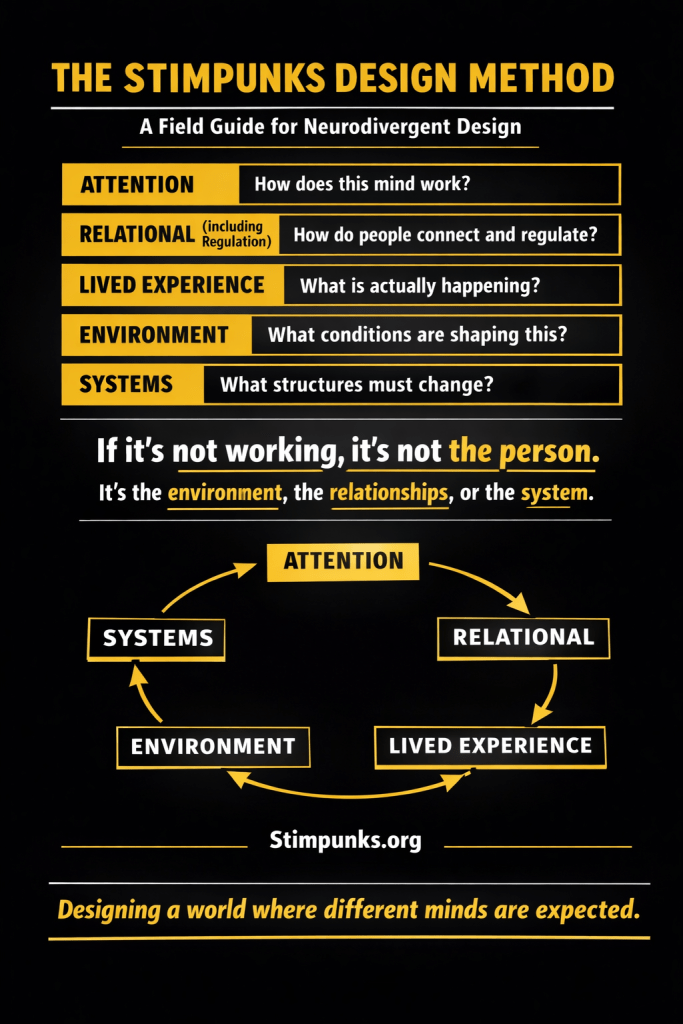
The Five Questions
Attention
How does this mind work?
→ Where does attention flow or break?
Relational
How do people connect and regulate?
→ Is there safety, consent, and co-regulation?
Lived Experience
What is actually happening?
→ What does this feel like in real conditions?
Environment
What conditions are shaping this?
→ What can be changed right now?
Systems
What structures must change?
→ What would prevent this from happening again?
Better questions change what we design—and what becomes possible.
The Flow
Attention → Relational (incl. Regulation) → Lived Experience → Environment → Systems → Repeat
The Practice Loop
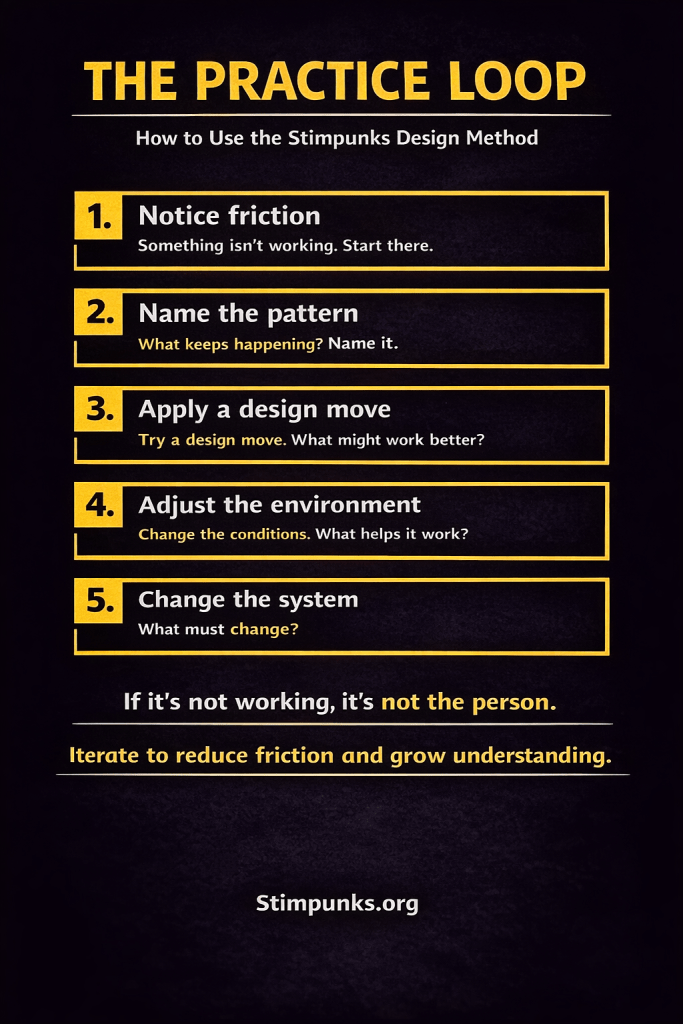
- Notice friction
- Name the pattern
- Apply a design move
- Adjust the environment
- Change the system
The Practice Loop is Design Questioning in action.
Use This When
- Someone is overwhelmed
- A system isn’t working
- A space feels unsafe
- Participation breaks down
- Burnout is happening
Core Principle
If it’s not working, it’s not the person.
It’s the environment, the relationships, or the system.
Start Here
- Patterns → /patterns/library/
- Recipes → /patterns/recipes/
- Environments → /environments/
- Design → /design/
Stimpunks.org
Designing a world where different minds are expected.
⚡ Use This Method
When something isn’t working, move through these questions.
- Attention
How does this mind work?
→ Where does attention flow or break? - Relational
How do people connect and regulate?
→ Is there co-regulation, or pressure to perform? - Lived Experience
What is actually happening?
→ What does it feel like in real conditions? - Environment
What conditions are shaping this?
→ What can be changed right now? - Systems
What structures must change?
→ What would prevent this from happening again?
Then:
- Identify friction
- Select patterns
- Apply design recipes
- Adapt the environment
- Scale through systems
Friction → Patterns → Design → Environment → Systems → Iterate
If You’re New
If you’re new to Stimpunks, you may also want to start with:
The Stimpunks Design Field Guide gathers the patterns, principles, recipes, and tools needed to design environments where more kinds of minds can thrive.


