
CW: pain, agony, suicidal ideation
Stiff person syndrome (SPS) is a rare acquired neurological disorder that most often causes progressive muscle stiffness (rigidity) and repeated episodes of painful muscle spasms.
Stiff Person Syndrome – Symptoms, Causes, Treatment | NORD
Like Céline Dion, I have Stiff Person Syndrome. It’s excruciating and especially affects the muscles in your torso. Those with SPS tend to have low blood oxygen because taking too deep a breath can trigger agonizing cramps. I have torn rib muscles and cracked rib bones many times.
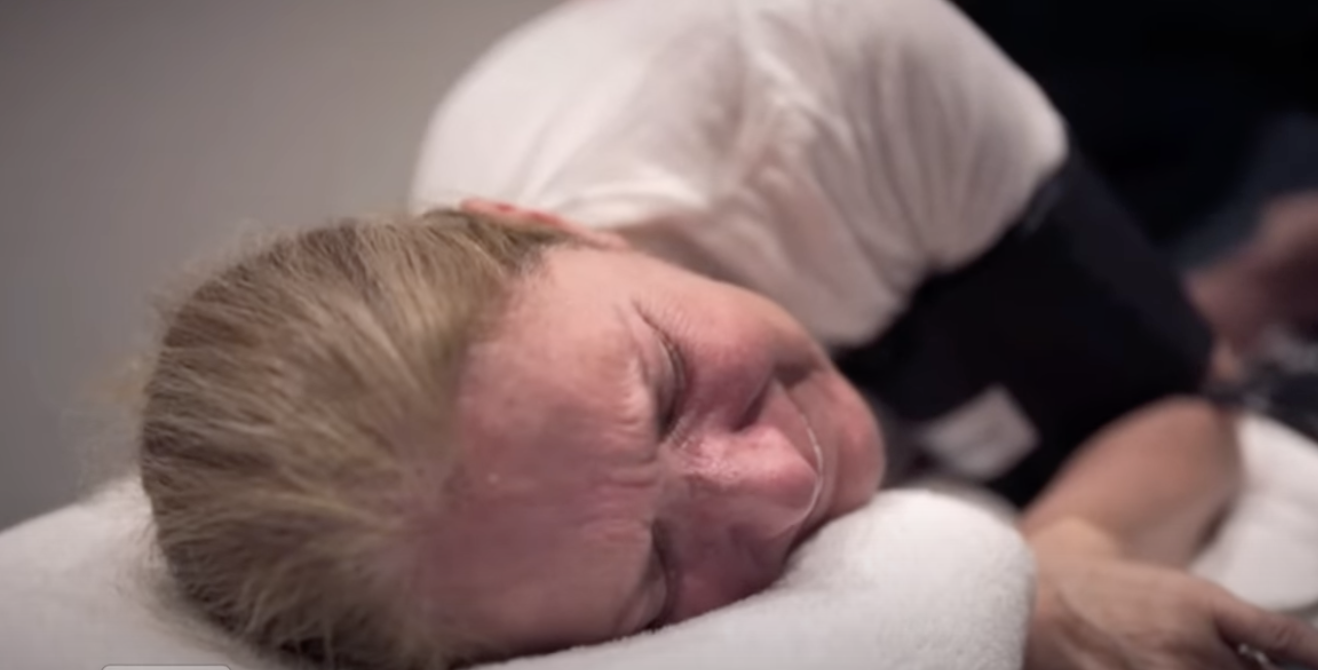
Céline describes her strangled throat, rigor-locked hands, and broken ribs in this interview.
Céline’s Olympics performance is a feat. I hope she didn’t pay too hard for it afterwards. The costs for such an effort can include every voluntary muscle in your body (from feet to face, tongue, and jaw) contracting in mind-bending, inescapable pain.
I’m very curious how she prepared for the event. It’s not possible for me to take enough skeletal muscle relaxers to allow me to stand and sing, especially in an environment as stimulating as the opening ceremonies.
SPS is very sensitive to stress and overstimulation. When I’m overstimulated, loud noises trigger wildfire muscle cramps throughout my body. Someone just breathing on me or lightly touching me triggers cramps.
Spasms may occur randomly or can be triggered by a variety of different events or circumstances including a sudden noise, light physical contact or when exposed to cold.
Stiff Person Syndrome – Symptoms, Causes, Treatment | NORD
In the recent Celine Dion documentary, the scene where she’s spasming and crying and moaning as her care team tries to help her had me crying my face off (which induces spasms). Most of the time, there is no help. You’re alone, locked in agonizing rigor, wishing for the release of death.
Céline’s doctors talking to her after an intense episode reminds me how little vocabulary most people, even experts, have for this stuff. The experts don’t take disability studies classes or socialize with chronically ill people. Their advice isn’t all that insightful or helpful. It’s steeped in platitudes and tropes, as is all of the media coverage.
Non-disabled people in my life don’t know how to love me like disabled people do. I’m so thankful for all my disabled friends who know how to provide care, rest, support and love. Disabled love is critically different from my other interactions with the world.
I really wish non-disabled people could learn to love in the same caring modalities.
Nicole Lee Schroeder, PhD (@Nicole_Lee_Sch) on April 15, 2022.
Toss out the supercrip narratives, the overcoming disability narratives, the “it will get better” narratives, the “win the battle” narratives, the comeback narratives. Celine achieved a helluva thing with her Olympics performance, but there is no end in sight for her and most chronic illness sufferers. Our societies are ill-equipped to accept folks who never get better yet keep on living, resulting in a gauntlet of ableism as we navigate our systems.
At least she has healthcare and a care team and some shred of hope, something most don’t have.
Since it is so rare, SPS is a “diagnosis by exclusion” disease that can take over a decade to diagnose. Meanwhile, you will be invalidated and gaslit and dismissed. Diagnosis is a grind, and it is inaccessible to most. It takes a lot of time and money and tests to get diagnosed. Few can afford it.
I’m very glad Céline has gone public with her struggles. It helps me tell my own story. Maybe it will mean less gaslighting, less invalidation, and more acceptance for SPS folks and all zebras with rare diseases.
Our societies are ill-equipped to accept folks who never get better yet keep on living.
Validation
After so much invalidation on my 12 year diagnosis by exclusion healthcare journey, this piece is a validation letter to myself.
Céline Dion’s journey and mine share many touchstones. Her documentary made me feel seen and validated. I cried a lot.
I’ve included videos of Céline relating those touchtones of SPS and chronically ill life.
It’s hard to watch and hard to read. I appreciate anyone who reads my words and watches Céline’s testimony.
The full realization of how much I’ve been needing validation of my journey is setting in hard. I want people to understand what I’ve been going through, what so many chronically ill people go through.
Thanks for your time and your heart.
SPS Life
Some things I can’t do without triggering a cramp cascade:
- Laugh
- Cry
- Yawn
- Cough
- Sneeze
- Stretch
- Reach
- Look over my shoulder
- Turn over in bed
- Take a deep breath
- Take a big bite
- Vomit (this triggers unbearable full body cramping)
- Wipe my butt
Every movement must be slow, cautious, and deliberate.


Leave a Reply