
When I found the autistic community, it was like finally coming home after 23 long years at sea. Often you don’t realize how lonely and frightened you’ve been the whole time, until you find your people.
Community As Home – Portraits – Disability Visibility Project

Image Credit: Ashanti Fortson, Community As Home – Portraits – Disability Visibility Project
Autistic people have built many niche communities from the ground up—both out of necessity and because our interests and modes of being are, well, weird.
Unmasking Autism: Discovering the New Faces of Neurodiversity (p. 218)

ANI launched its online list, ANI-L, in 1994. Like a specialized ecological niche, ANI-L had acted as an incubator for Autistic culture, accelerating its evolution. In 1996, a computer programmer in the Netherlands named Martijn Dekker set up a list called Independent Living on the Autism Spectrum, or InLv. People with dyslexia, ADHD, dyscalculia, and a myriad of other conditions (christened “cousins” in the early days of ANI) were also welcome to join the list. InLv was another nutrient-rich tide pool that accelerated the evolution of autistic culture. The collective ethos of InLv, said writer and list member Harvey Blume in the New York Times in 1997, was “neurological pluralism.” He was the first mainstream journalist to pick up on the significance of online communities for people with neurological differences. “The impact of the Internet on autistics,” Blume predicted, “may one day be compared in magnitude to the spread of sign language among the deaf.”
The neurodiversity movement: Autism is a minority group. NeuroTribes excerpt.
Autistic kids need access to autistic communities. They need access to autistic mentors. They need to know that the problems they go through are actually common for many of us! They need to know they are not alone. They need to know that they matter and people care about them. They need to see autistic adults out in the world being accommodated and understood and respected. They need to learn how to understand their own alexithymia and their own emotions. They need to be able to recognize themselves in others. They need to be able to breathe.
AutisticSciencePerson
Until one day… you find a whole world of people who understand.
The internet has allowed autistic people- who might be shut in their homes, unable to speak aloud, or unable to travel independently- to mingle with each other, share experiences, and talk about our lives to people who feel the same way.
We were no longer alone.
7 Cool Aspects of Autistic Culture » NeuroClastic

…the central tension of punk rock: it was built on individualism and an anti-hero ethos, yet expressed itself as a community. The motivation for punk was individualistic artistic expression, but the glue for the subculture was the experience of finding like-minded misfits.
We accept you, one of us?: punk rock, community, and individualism in an uncertain era, 1974-1985
Find Your People
Did you ever feel
That you don't quite belong
Just hold on
And go find your people

Find your people

Opening doors has become my calling

Welcome to this house
All Hail Open Doors by Swamburger and Scarlet Monk of Mugs and Pockets
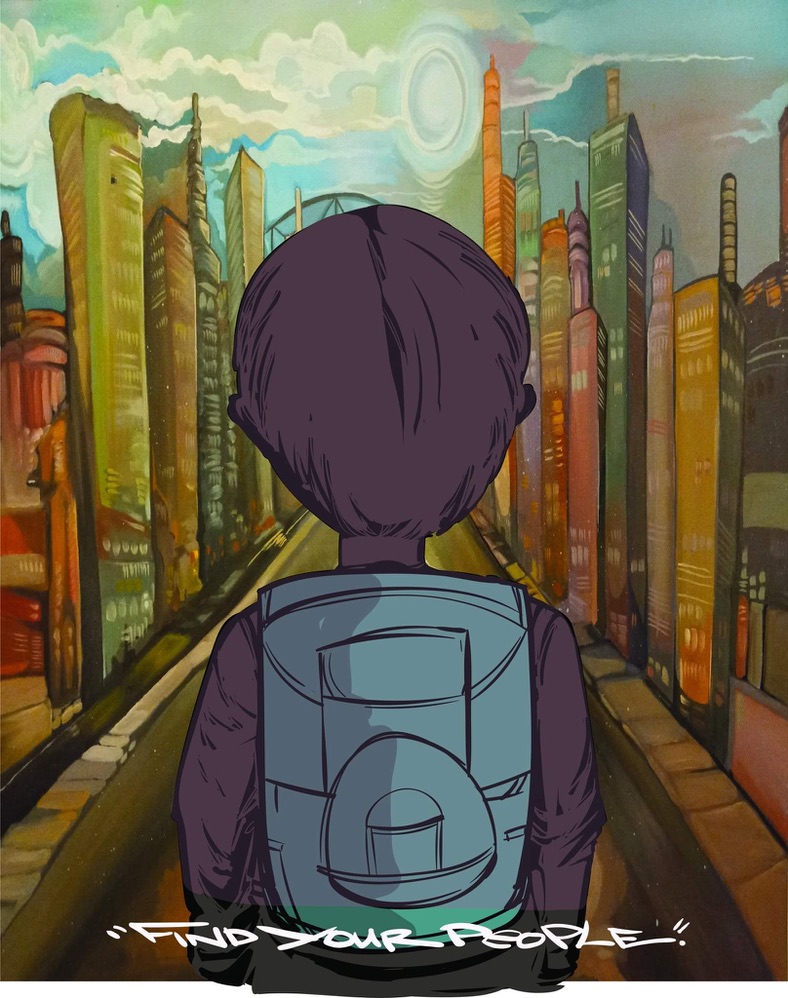
Image Credit: Swamburger and Scarlet Monk
I believe all persons with Autism need the opportunity to become friends with other Autistic people. Without this contact we feel alien to this world. We feel lonely. Feeling like an alien is a slow death. It’s sadness, self-hate, it’s continuously striving to be someone we’re not. It’s waking up each day and functioning in falsehood (French, 1993).
Loud Hands: Autistic People, Speaking
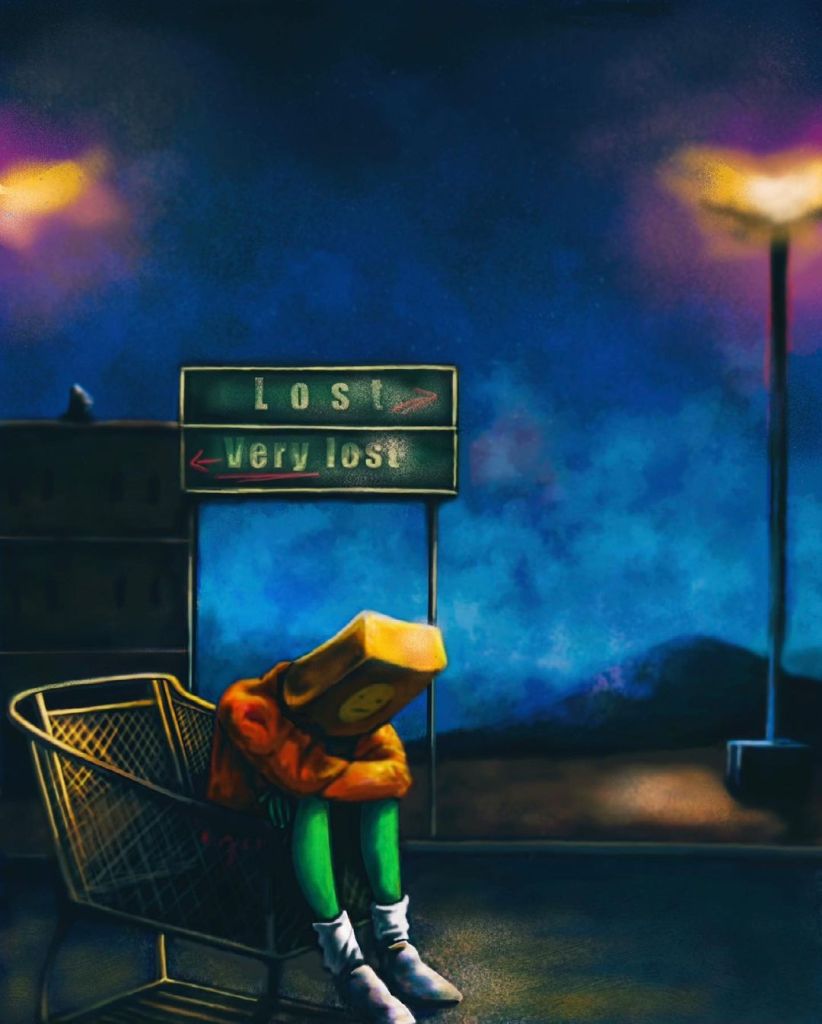
How can we cultivate spaces where everyone has that soaring sense of inclusion, where we can have difficult and meaningful conversations?
“The Beauty of Spaces Created for and by Disabled People” by s.e. smith in “Disability Visibility: First Person Stories from the 21st Century“
Because everyone deserves the shelter and embrace of crip space, to find their people and set down roots in a place they can call home.
Omega hai foleet
Are you awake or are you sleeping?
Are you afraid? We've been waiting for this meeting

We have come here for you, and we're coming in peace
Mothership will take you on higher, higher
This world you live in is not a place for someone like you
Come on, let us take you home

It's time to go, you are infected
Come as you are, don't be scared of us, you'll be protected
(Protected, protected)
I guess you are a different kind of human
I guess you are a different kind of human

Omega hai foleet, Omega hai foleet

There is a flaw in man-made matters
But you are pure, and we have to get you out of here

A Different Kind of Human by AURORA
“Don’t be scared, you’re okay, you can come with us and you’ll be safe, you’ve spent time on this planet but it’s not the place for you, you have a better place where you will feel more at home, we will take you there.”
AURORA on Twitter: “Track number 8: A Different Kind Of Human.”
Omega hai foleet
Just like in her song “Forgotten Love” from her previous album Infections of a Different Kind (Step I), AURORA has once again made-up an imaginary language for the title track of her third album and it’s probably the language from the afterlife place she has created specially for this track, as she explained:
“It’s a new place I created […] what if those people [the dead ones] came to a different planet, like a safe place, and they were collected by these aliens that came to the world and kind of took them with them, and they said:
“Don’t be scared, you’re okay, you can come with us and you’ll be safe, you’ve spent time on this planet but it’s not the place for you, you have a better place where you will feel more at home, we will take you there.”
And then, they’ll go up to this different place where all those people can live together”.
AURORA has also included the last letter of the Greek alphabet, “Omega”. The Omega symbol has a lot of symbolism behind it, and it’s typically used to denote the end of something.
AURORA – A Different Kind of Human Lyrics | Genius Lyrics
“When I was young, I used to always feel like an alien in this world,” says AURORA. “I never really felt like a girl. I felt out of my own body and on the outside of my friends in the school system. But as I’ve grown [with] the help of my fans around the world, and through playing concerts, it pulled me back to Earth and helped me reconnect and fall in love with humankind again.”
Aurora Explores the Disconnect with Humankind’s Most Vital Organ on ‘What Happened To The Heart?’ – American Songwriter
“It’s a new place I created […] what if those people came to a different planet, like a safe place, and they were collected by these aliens that came to the world and kind of took them with them, and they said:
“Don’t be scared, you’re okay, you can come with us and you’ll be safe. You’ve spent time on this planet but it’s not the place for you. You have a better place where you will feel more at home, we will take you there.”
And then, they’ll go up to this different place where all those people can live together”.
AURORA on Twitter

In Te Reo Māori the word for Autistic ways of being is Takiwātanga, which means “in their own space and time”. Most Autists are not born into healthy Autistic families. We have to co-create our Autistic families in our own space and time.
A communal definition of Autistic ways of being
It takes a village.
Whānau = extended family, family group, a familiar term of address to a number of people – the primary economic unit of traditional Māori society. In the modern context the term is sometimes used to include friends who may not have any kinship ties to other members.
There is the saying that “It takes a village to raise a child.” The Autistic translation of this saying is “For an Autistic person it takes an Autistic whānau to feel loved and alive.” Without the support of an Autistic whānau, Autistic life feels like a life in continuous emergency mode.
Whānau : extended family, family group, a familiar term of address to a number of people – the primary economic unit of traditional Māori society. In the modern context the term is sometimes used to include friends who may not have any kinship ties to other members.
Whānau are not powered by adrenalin but by love and mutual care. Most Autists are not born into healthy Autistic whānau.
Takiwātanga : Autistic ways of being, takiwātanga literally means “in their own space and time.”
Whānau is much more than the Western notion of “family”. It is a deep connection, a bond that you are born into that no one can take away from you.
Whakawhanaungatanga : process of establishing relationships, relating well to others.
Whakapapa : the “genealogical descent of all living things from God to the present time. “Since all living things including rocks and mountains are believed to possess whakapapa, it is further defined as “a basis for the organisation of knowledge in the respect of the creation and development of all things”. Hence, whakapapa also implies a deep connection to land and the roots of one’s ancestry. In order to trace one’s whakapapa it is essential to identify the location where one’s ancestral heritage began; “you can’t trace it back any further”. “Whakapapa links all people back to the land and sea and sky and outer universe, therefore, the obligations of whanaungatanga extend to the physical world and all being in it”.
In a healthy culture Autistic children are assisted in co-creating their unique Autistic whānau, but in our “civilisation” this cultural knowledge has been lost and is suppressed. In mainstream society people don’t understand how Autistic people support each other, love each other, and care for each other in ways that go far beyond the culturally impaired neuronormative imagination.
Autists depend on assistance from others in ways that differ from the cultural norm – and that is pathologised in hypernormative societies. However, the many ways in which non-autistic people depend on others is considered “normal”. The endless chains of trauma must be broken.
There is the saying that “It takes a village to raise a child.” The Autistic translation of this saying is “For an Autistic person it takes an Autistic whānau to feel loved and alive.”
The foundation of our whakapapa is the ocean and the mountains. Via Autistic trauma peer support we are embarking on the journey of co-creating healthy Autistic whānau and Autistic culture all over the world.
Depowered feral Autistic relationships | Autistic Collaboration
A NeurodiVenture is an inclusive non-hierarchical organisation operated by neurodivergent people that provides a safe and nurturing environment for divergent thinking, creativity, exploration, and collaborative niche construction.
In Te Reo Māori the NeurodiVenture concept translates to Neurodivergent whānau. Indigenous languages like Te Reo Māori have important words for concepts that have been suppressed by colonialism.
Without the support of an Autistic whānau, Autistic life feels like a life in continuous emergency mode.
Autistic people – The cultural immune system of human societies
Many Artistic & Autistic people are unemployable by organisations that operate hierarchical structures. There is an urgent need to catalyse and co-create NeurodiVentures (worker co-ops) and healthy A♾tistic whānau all over the world.
Many Artistic & Autistic people are unemployable by organisations that operate hierarchical structures. There is an urgent need to catalyse and co-create NeurodiVentures (worker co-ops) and healthy A♾tistic whānau all over the world. A♾tists depend on assistance from others in ways that differ from the cultural norm – and that is pathologised in hypernormative societies. However, the many ways in which non-a♾tistic people depend on others is considered “normal”. The endless chains of trauma must be broken.
The ecological niche of A♾tistic peoples | Autistic Collaboration
The technologies we develop and use tend to reflect the level of collaboration and competitiveness within our culture. In our role as conscious designers of technology, humans have the potential to influence the level of collaboration in our culture in profound ways, especially in a highly networked digital world.
The NeurodiVenture operating model not only raises neurodiversity as a top level concern for good company but by imposing a hard limit on group size (in the case of S23M enforced by our company constitution) it also ensures that every member of the team has spare cognitive capacity for building and maintaining trusted relationships with the outside world, whilst at the same time encouraging creative collaboration for life.
Organising for neurodivergent collaboration | Autistic Collaboration
Beyond eliminating formal hierarchical structures the NeurodiVenture model also removes all incentives for the emergence of informal “power-over” structures via transparency of all individual competency networks for the benefit of everyone within the company. This is perhaps the most radical idea within the NeurodiVenture model.
Transparency of individual competency networks enables meta knowledge (who has which knowledge and who entrusts whom with questions or needs in relation to specific domains of knowledge) to flow freely within an organisation.
The conceptualisation of meta knowledge flows via individual competency networks assists the coordination of activities via the advice process outlined above and via regular Open Space workshops, and it acts as an effective dampener on the informal hierarchies that can easily come to plague hierarchical and “non-hierarchical” organisations.
Organising for neurodivergent collaboration | Autistic Collaboration
NeurodiVentures are a concrete example of an emerging cultural species that provides safe and nurturing environments for divergent thinking, creativity, exploration, and collaborative niche construction.
The Beauty of Collaboration at Human Scale: Timeless patterns of human limitations
- Visibly extend trust to people, to release the handbrake to collaboration.
- Unlock the tacit knowledge within the group.
- Provide a space for creative freedom.
- Help repair frayed relationships.
- Replace fear with courage.
By focusing on the human scale outside the theatre we can reconnect with the physical and ecological niche that supports our human needs. The more collaborative, egalitarian, and accomodating of cultural diversity, the surrounding cultural environment becomes, the less NeurodiVentures will be perceived as unusual, and the more neurodivergent people will be able to spend significant time outside the protective islands of safety provided by a NeurodiVenture without getting overwhelmed.
The Beauty of Collaboration at Human Scale: Timeless patterns of human limitations
The open source NeurodiVenture operating model for employee owned companies primarily consists of a set of first principles that can be adapted to the unique needs of a specific team of neurodivergent people. There is no need to be prescriptive about how to go about forming and operating a NeurodiVenture, because there is no right way or best way.
Autistic people with complementary talents and skills are ideally positioned to jointly design, develop, and offer highly unique products and services, without any need for external capital, and without any need for an employer or manager.
The Beauty of Collaboration at Human Scale: Timeless patterns of human limitations
The Beauty of Collaboration at Human Scale: Timeless patterns of human limitations
Digital communication and collaboration technologies enable NeurodiVentures to act as a catalyst for trusted collaboration between groups.
The Beauty of Collaboration at Human Scale: Timeless patterns of human limitations
Chosen families are nonbiological kinship bonds, whether legally recognized or not, deliberately chosen for the purpose of mutual support and love.
According to the SAGE Encyclopedia of Marriage, Family, and Couples Counseling, “chosen families are nonbiological kinship bonds, whether legally recognized or not, deliberately chosen for the purpose of mutual support and love.” The term originated within the LGBTQ community and was used to describe early queer gatherings like the Harlem Drag Balls of the late nineteenth century.
The circumstances surrounding the birth of the first “chosen families”—intense loneliness and isolation faced by those rejected by their biological kin—continue today. Nearly 40 percent of today’s homeless youth identify as queer, and a recent study found that roughly 64 percent of LGBTQ baby boomers have built, and continue to rely on, chosen families.
“Chosen families,” though, can form as a result of any person’s experience with their biological family that leaves needs unmet. Friends who become your family of choice may provide you with a healthier family environment than the one in which you were raised, or their proximity may allow you to rely on them when your biological family isn’t located nearby. A chosen family can be part of a person’s growing network, and can help construct a wide foundation of support that continues to grow with time.
Finding Connection Through “Chosen Family” | Psychology Today
So many people around the world are not accepted by their parents or their family for who they are.
Rina Sawayama: Tiny Desk (Home) Concert
Here’s a heart-strumming rendition of “Chosen Family” from Rina Sawayama (starting at 8:29).
Settle down, put your bags down
Rina Sawayama – Chosen Family
You’re alright now
Tell me your story and I'll tell you mine
I'm all ears, take your time, we've got all night
Show me the rivers crossed, the mountains scaled
Show me who made you walk all the way here
Family of choice might seem like a contradiction but your ‘chosen’ family consists of those who accept you for who you are and they want the best for you. They support you in your chosen ventures, help you when you need to make decisions and tell you when you might be going down the wrong track! As in any other family, you might have your differences, but they are always there for you. If you can find yourself among a unit of supporters who love you unconditionally, will offer a place to you that allows you to be yourself, safely and without barriers, you might have found your ‘chosen’ family. This family might not be all in one place.
The Autistic Trans Guide to Life
There is something very special about forming relationships with people who understand and accept you for who you are. You may hear the phrase ‘chosen family’ used by LGBTQIA+ people to describe these relationships – people they have met, formed bonds with, and chosen to have as their family separately to their ‘real’ family.
Queerly Autistic: The Ultimate Guide For LGBTQIA+ Teens On The Spectrum
These types of relationships are especially important to LGBTQIA+ people. There is a long history of us being isolated from our ‘official’ family and friends due to our sexuality and gender, and so the idea of ‘found’ or ‘chosen’ family has a strong emotional meaning in the community. There are still people today whose family react badly to them coming out (as we discussed in the chapter on coming out), so relationships with other people in the LGBTQIA+ community are just as important as they ever were.
Even if your family is accepting and loving, relationships within the community can still be very important. They certainly have been for me.
Queerly Autistic: The Ultimate Guide For LGBTQIA+ Teens On The Spectrum
I will also say this: I have never, not even for one single second, regretted it. I have never regretted doing the right thing or fighting for the health and wholeness of others even when it causes me pain and puts me at significant personal risk. I have lost nothing that I needed, because I had it all inside me. And the people that have now become my precious, chosen family are people I would never have met if I hadn’t been walking this path.
#ChurchToo: How Purity Culture Upholds Abuse and How to Find Healing
“In my phone contacts, I put emojis by their names. I put strawberries next to people who were super loving. I put seedling emojis by folks who taught me things that made me think or grow.”
Within a year of his making these changes in his life, many of Samuel’s “strawberry people” had become members of his found family. They had his back as he worked through therapy for PTSD and eating disorder recovery. The strawberry people even became friends with one another—Samuel writes that they all talk in a single group chat.
Unmasking Autism: Discovering the New Faces of Neurodiversity
Exile and Pride: Disability, Queerness, and Liberation
Where do I belong?
Intro to song starts at 8:29
Where do I belong?
Tell me your story and I'll tell you mine
I'm all ears, take your time, we got all night
Show me the rivers crossed, the mountains scaled
Show me who made you walk all the way here

Settle down, put your bags down
(Ooh) You're alright now

We don't need to be related to relate
We don't need to share genes or a surname
You are
You are
My chosen
Chosen family
So what if we don't look the same?
We been going through the same thing
You are
You are
My chosen
Chosen family
When I walk back to the booth where I was sat
With my transformation hidden ‘neath my hat
That’s when suddenly it strikes me
All the lonely pilgrims like me
Form a tribe of travelers scattered ‘cross the map

So let’s defy the distance here to there
Let’s write each other postcards and call that prayer
Let’s congregate in a place that isn’t anywhere
At the temple of broken dreams

--Temple of Broken Dreams by Ezra Furman


