
Mutuality is a feeling, an action, and a relationship based on shared benefit between individuals and groups in a society. It materialises in many, many ways and is arguably a universal constant of our human nature. We rely on mutuality to survive and progress through our day to day life.
When systems of power fail, it is mutuality—neighbours helping neighbours—that holds communities together.
As American anthropologist James C. Scott understood, mutuality is ubiquitous.
Historically, most communities functioned largely thanks to informal, transient networks of coordination without hierarchy, not top-down directives by the powers that be.
Far from being a speculative vision of a future society, [mutuality] is a description of a mode of human experience of everyday life, which operates side-by-side with, and in spite of, the dominant authoritarian trends of our society.
Colin Ward
Through free association, people will find those of mutual interests in every sphere of life to form groups on the basis of their affinity. But whether these various groups meet and coordinate their activity in workshops, gardens, or other spaces of encounter and whether they are invested in maintaining energy systems, growing food forests, or building homes, such a society cannot last without mutual responsibility.
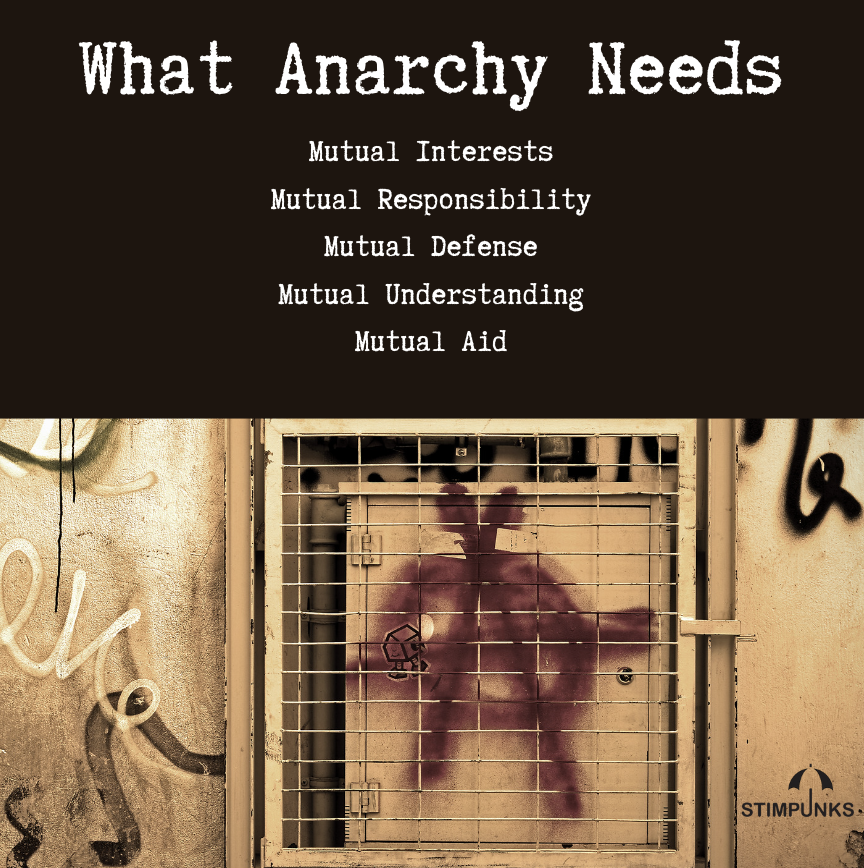
- Mutual Interests
- Mutual Responsibility
- Mutual Defense
- Mutual Understanding
- Mutual Aid
Ask yourself: What can I do right now to bring mutuality into my community?
What Anarchy Needs – YouTube


