
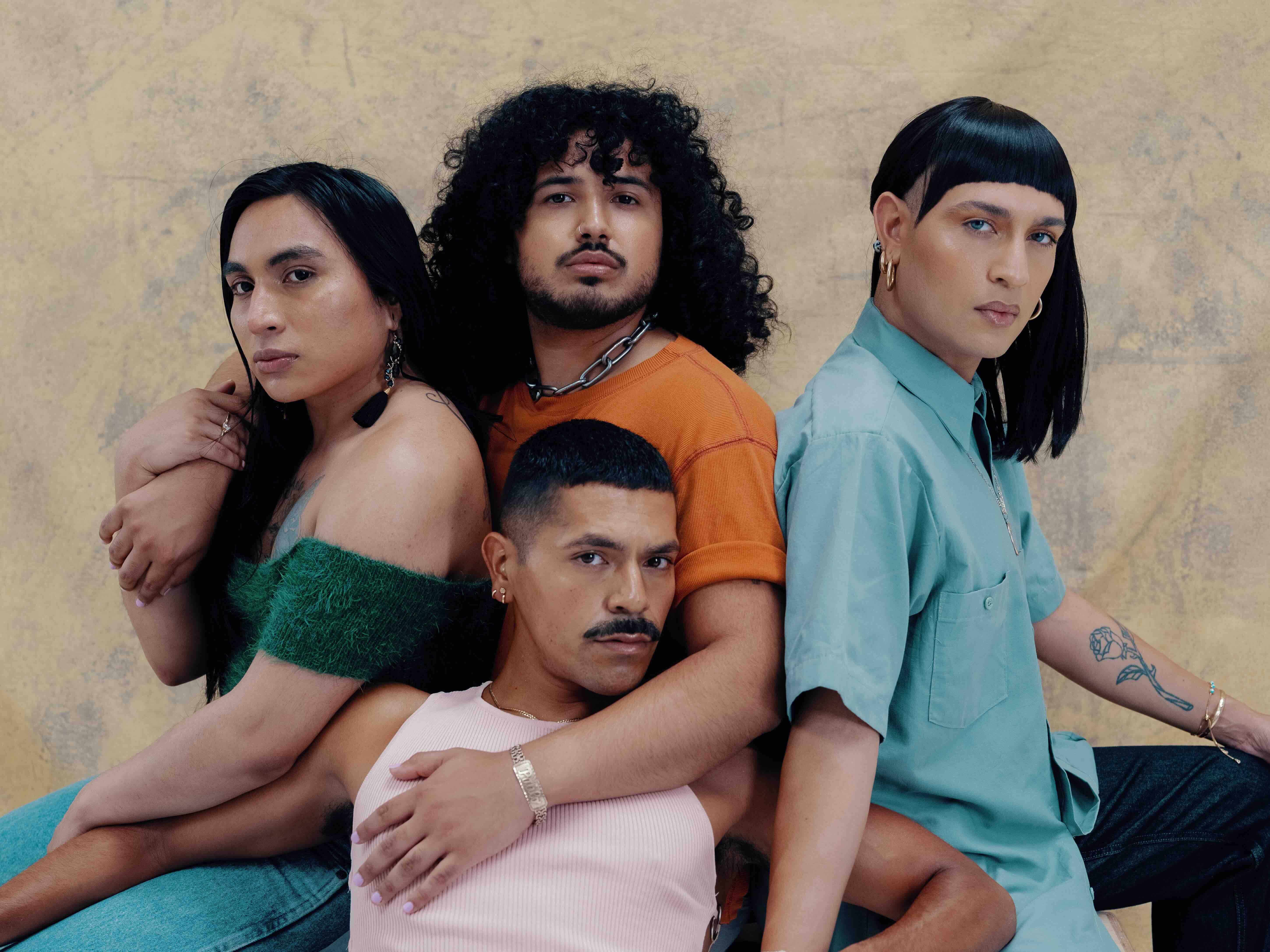
Today, many individuals find themselves navigating uncharted waters as they try to reconcile shaky relationships with blood relatives while simultaneously creating what’s commonly referred to as a “chosen family.”
According to the SAGE Encyclopedia of Marriage, Family, and Couples Counseling, “chosen families are nonbiological kinship bonds, whether legally recognized or not, deliberately chosen for the purpose of mutual support and love.” The term originated within the LGBTQ community and was used to describe early queer gatherings like the Harlem Drag Balls of the late nineteenth century.
The circumstances surrounding the birth of the first “chosen families”—intense loneliness and isolation faced by those rejected by their biological kin—continue today. Nearly 40 percent of today’s homeless youth identify as queer, and a recent study found that roughly 64 percent of LGBTQ baby boomers have built, and continue to rely on, chosen families.
“Chosen families,” though, can form as a result of any person’s experience with their biological family that leaves needs unmet. Friends who become your family of choice may provide you with a healthier family environment than the one in which you were raised, or their proximity may allow you to rely on them when your biological family isn’t located nearby. A chosen family can be part of a person’s growing network, and can help construct a wide foundation of support that continues to grow with time.
Finding Connection Through “Chosen Family” | Psychology Today
So many people around the world are not accepted by their parents or their family for who they are.
Rina Sawayama: Tiny Desk (Home) Concert
I also realized that a big part of me is still afraid of coming out of my shell.
I need to find and assemble my Chosen Family. This journey has been lonely, and I need the support of people who understand me and I understand.
I didn’t realize how important that was to me until I broke out in tears reading the lyrics to Chosen Family.
I don’t know what to do or where to go next, but I know that I need to have folks in my corner.
I want to do great things, and I just need someone to take a chance on me.
Found and Chosen: A Family of Choice
Here’s a heart-strumming rendition of “Chosen Family” from Rina Sawayama (starting at 8:29).
Settle down, put your bags down
Rina Sawayama – Chosen Family
You’re alright now
Tell me your story and I'll tell you mine
I'm all ears, take your time, we've got all night
Show me the rivers crossed, the mountains scaled
Show me who made you walk all the way here
Our unchosen family are the rivers crossed and the mountains scaled. They are who made us not just walk, but trudge, all the way here. They chose a bigoted vertical morality and rejected horizontal morality, moral autonomy, and us.
We collected chosen family along the way, better family by far.
We don't need to be related to relate
We don't need to share genes or a surname
You are, you are
My chosen, chosen family
So what if we don't look the same?
We been going through the same pain, yeah
You are, you are
My chosen, chosen family
Family of choice might seem like a contradiction but your ‘chosen’ family consists of those who accept you for who you are and they want the best for you. They support you in your chosen ventures, help you when you need to make decisions and tell you when you might be going down the wrong track! As in any other family, you might have your differences, but they are always there for you. If you can find yourself among a unit of supporters who love you unconditionally, will offer a place to you that allows you to be yourself, safely and without barriers, you might have found your ‘chosen’ family. This family might not be all in one place.
The Autistic Trans Guide to Life
To all those stuck with or cast out by unchosen family, wondering where they belong.
There is something very special about forming relationships with people who understand and accept you for who you are. You may hear the phrase ‘chosen family’ used by LGBTQIA+ people to describe these relationships – people they have met, formed bonds with, and chosen to have as their family separately to their ‘real’ family.
Queerly Autistic: The Ultimate Guide For LGBTQIA+ Teens On The Spectrum
These types of relationships are especially important to LGBTQIA+ people. There is a long history of us being isolated from our ‘official’ family and friends due to our sexuality and gender, and so the idea of ‘found’ or ‘chosen’ family has a strong emotional meaning in the community. There are still people today whose family react badly to them coming out (as we discussed in the chapter on coming out), so relationships with other people in the LGBTQIA+ community are just as important as they ever were.
Even if your family is accepting and loving, relationships within the community can still be very important. They certainly have been for me.
Queerly Autistic: The Ultimate Guide For LGBTQIA+ Teens On The Spectrum
Whānau
Whānau : extended family, family group, a familiar term of address to a number of people – the primary economic unit of traditional Māori society. In the modern context the term is sometimes used to include friends who may not have any kinship ties to other members.
Whānau are not powered by adrenalin but by love and mutual care. Most Autists are not born into healthy Autistic whānau.
Takiwātanga : Autistic ways of being, takiwātanga literally means “in their own space and time.”
We have to co-create our whānau in our own space and time. In many indigenous cultures children with unique qualities are recognised, are given adult mentors with similarly unique qualities, and grow up to fulfil unique roles in their local community, connected to others with unique knowledge and insights, perhaps even in other communities. If we are embedded in an ecology of care, we can thrive and share the pain and the joy of life.
Whānau is much more than the Western notion of “family”. It is a deep connection, a bond that you are born into that no one can take away from you.
An Autistic whānau could be conceptualised as a soul tribe, it is not an amorphous global Autistic community, but rather a human scale ecology of care, consisting of Autistic relationships between soul mates that are bonded through shared experiences and working together.
Closely related concepts:
Whanaungatanga : relationship, kinship, sense of family connection – a relationship through shared experiences and working together which provides people with a sense of belonging. It develops as a result of kinship rights and obligations, which also serve to strengthen each member of the kin group. It also extends to others to whom one develops a close familial, friendship or reciprocal relationship.
Whakawhanaungatanga : process of establishing relationships, relating well to others.
Whakapapa : the “genealogical descent of all living things from God to the present time. “Since all living things including rocks and mountains are believed to possess whakapapa, it is further defined as “a basis for the organisation of knowledge in the respect of the creation and development of all things”. Hence, whakapapa also implies a deep connection to land and the roots of one’s ancestry. In order to trace one’s whakapapa it is essential to identify the location where one’s ancestral heritage began; “you can’t trace it back any further”. “Whakapapa links all people back to the land and sea and sky and outer universe, therefore, the obligations of whanaungatanga extend to the physical world and all being in it”.
In a healthy culture Autistic children are assisted in co-creating their unique Autistic whānau, but in our “civilisation” this cultural knowledge has been lost and is suppressed. In mainstream society people don’t understand how Autistic people support each other, love each other, and care for each other in ways that go far beyond the culturally impaired neuronormative imagination.
Autists depend on assistance from others in ways that differ from the cultural norm – and that is pathologised in hypernormative societies. However, the many ways in which non-autistic people depend on others is considered “normal”. The endless chains of trauma must be broken.
There is the saying that “It takes a village to raise a child.” The Autistic translation of this saying is “For an Autistic person it takes an Autistic whānau to feel loved and alive.”
The foundation of our whakapapa is the ocean and the mountains. Via Autistic trauma peer support we are embarking on the journey of co-creating healthy Autistic whānau and Autistic culture all over the world.
Depowered feral Autistic relationships | Autistic Collaboration
A NeurodiVenture is an inclusive non-hierarchical organisation operated by neurodivergent people that provides a safe and nurturing environment for divergent thinking, creativity, exploration, and collaborative niche construction.
In Te Reo Māori the NeurodiVenture concept translates to Neurodivergent whānau. Indigenous languages like Te Reo Māori have important words for concepts that have been suppressed by colonialism.
Without the support of an Autistic whānau, Autistic life feels like a life in continuous emergency mode.
Autistic people – The cultural immune system of human societies
Strawberry People
“In my phone contacts, I put emojis by their names. I put strawberries next to people who were super loving. I put seedling emojis by folks who taught me things that made me think or grow.”
Within a year of his making these changes in his life, many of Samuel’s “strawberry people” had become members of his found family. They had his back as he worked through therapy for PTSD and eating disorder recovery. The strawberry people even became friends with one another—Samuel writes that they all talk in a single group chat.
Unmasking Autism: Discovering the New Faces of Neurodiversity
Shared Passion, Imagination, and Values
I finally realized that I was a dyke and had been for years. Since then, I have lived among dykes and created chosen families and homes, not rooted in geography, but in shared passion, imagination, and values.
Exile and Pride: Disability, Queerness, and Liberation
Queering Kinship
My mom says she loves me
But i know it's not yes yes yes she does
Cause she doesn't treat me
Like you treat someone you love
You love

But I can choose my own family
I'll take one Uncle Phranc
She's seen what it is to feel and be called crazy
I love my Uncle Phranc
“Chosen family” is a term employed within queer and transgender (Q/T) communities to describe family groups constructed by choice rather than by biological or legal (bio-legal) ties. Chosen family implies an alternative formulation that subverts, rejects, or overrides bio-legal classifications assumed to be definitive within an American paradigm of kinship [1]. The provenance of the term “chosen family” in social science discourse derives from anthropologist Kath Weston’s Families We Choose: Lesbians, Gays, Kinship [2]. In this watershed project, Weston describes the central role that close friends played in the lives of sexual minorities who often experienced distance or rejection from their families of origin [3]. Using ethnographic and autoethnographic methodologies, Weston takes up kinship as the lens through which to understand “how lesbians and gay men experience otherness and negotiate their relationship to the outside world” ([4], p. 976). In her efforts to investigate what “family” means and has meant to lesbians and gay men in the United States, Weston deliberately treats family “not so much as an institution, but as a contested concept, implicated in relations of power that permeate societies” ([4], p. 3). Weston’s argument about families of choice is undergirded by a contentious relationship with Schneider’s classic anthropological study on “American kinship” [1]. Schneider proposed that symbolics grounded in the division between the order of nature (i.e., shared biogenetic substances) and the order of law (i.e., code for conduct) define family relations in a United States (US) based context. Queer relationships—which are neither grounded in biology nor procreation, and often operate outside the legal domain—cut across these categories, complicating Schneider’s fundamental claim that family ties are reckoned between poles of blood and law. As such, queering kinship obligates critical engagement with “the family’s” traditionally ascribed organization and authority across the social landscape ([5], p. 3).
“We Just Take Care of Each Other”: Navigating ‘Chosen Family’ in the Context of Health, Illness, and the Mutual Provision of Care amongst Queer and Transgender Young Adults – PMC
Hand me a pen and I'll rewrite the pain
When you're ready, we'll turn the page together
Open a bottle, it's time we celebrate
Who you were, who you are
We're one and the same, yeah, yeah
The nuclear family is a scab
The nuclear family is a scab
A scab in two senses: an injury crusted over by blood, and counter-revolutionary.
In what ways is the nuclear family counter-revolutionary, and how could doing things differently, in turn, support revolutionary struggles? The family is a small unit of people, motivated by genetic loyalty, private property and inward-looking priorities. Whilst bio-familial solidarity can be a vital and profound experience, it is generally unconducive to building wider ranging intimacies and comradeship. As Gleeson writes: ‘We call for abolishing the family not as a means of disregarding the tireless efforts made by proletarians to preserve the well-being of their relatives, but in awareness that these personal struggles alone will never serve to emancipate us as a class.’60 Effective political action towards a better world requires us to build meaningful constellations of non-biological kinship, too. As Silvia Federici has said: ‘The denuclearisation of the family is the path to the construction of communities of resistance.’61
Leanne Betasamosake Simpson explains that the radical resurgent Indigenous struggle against ‘dispossession and settler colonialism and the violence of capitalism, heteropatriarchy, white supremacy, and anti-Blackness that maintains them’62 requires family: ‘not the nuclear family that has been normalized in settler society, but big, beautiful, diverse, extended multiracial families of relatives and friends that care very deeply for each other’.63 Such ‘families’ demonstrate the symbiotic relationship between intimate life and political action. Indeed, when non-nuclear kinship has been so beleaguered by Empire, as independent scholar carla bergman and the organiser and writer Nick Montgomery argue, it is not a destination, but a political struggle in and of itself: ‘Creating intergenerational webs of intimacy and support is a radical act in a world that has privatized child-rearing, housing, subsistence, and decision making.’64
Rosa, Sophie K. Radical Intimacy (p. 105 – 106). Pluto Press.
Belonging
Chosen families and communal living were key sources of affirmation and support for participants, highlighting how belonging for TGD autistic people can be shaped through intersecting structural, social, and interpersonal factors.
Transgender and gender diverse autistic adults’ experiences of (un)belonging | PLOS One
Most participants were happily living in non-traditional households or family structures, including living alone, living with animals or living with a partner and their “fur baby” (their cat). Trans and queer people frequently establish family connections outside of their biological families, often as a result of estrangement following their coming out or because they do not conform to traditional concepts of the ‘nuclear family’ [74]. Communal living and creating a chosen family were an aspiration of Derek, Micky and Toby. Toby spoke about their understanding of family: “Not having a typical family structure is something I want to work towards […] Friends are the centre of my relational world in a lot of ways.” They shared that they had started to create their own chosen family with their queer platonic “life partner” but wished that others, including their biological family, would appreciate the importance of these connections. Toby had a keen sense of belonging with their friends and believed that their experience of friendship was different from that of most people.
Derek showed an interest in adopting or fostering children: “I’d quite like to have kids. It’s something that I had to think about before medically transitioning due to the fertility issues that come along with testosterone”. Derek spoke about the choices of fertility provisions, including whether to freeze his eggs, due to infertility issues which can occur while taking hormones. He explained that he may adopt or foster children in the future, but he did not want to carry or birth a child. Micky aspired to have a chosen family: “When I’m older, I would like to be able to foster and adopt kids.” Fertility preservation is an important choice for transgender and non-binary individuals undergoing hormone replacement therapy and/or gender-affirming surgeries. At present, there is limited information regarding the effects of testosterone therapy on future fertility, leading to the absence of a well-defined optimal period for pursuing fertility preservation [75]. Additionally, research on live birth rates associated with preserved eggs is scarce, and the procedure for egg retrieval is invasive, potentially leading to emotional distress for patients [75,76].
Transgender and gender diverse autistic adults’ experiences of (un)belonging | PLOS One
For many transgender and gender diverse individuals, the formation of chosen family – networks of friends, partners, and allies who provide mutual care and validation – represents a vital practice of belonging, care, and resistance against heteronormative kinship structures [87]. Such families function as dynamic, intentional communities that reimagine kinship through reciprocity and shared understanding [87]. Chosen families can encompass communal living arrangements, which six participants in the current study reflected would be beneficial for them. These participants indicated that communal living, where members collaborate by sharing resources, knowledge, and skills, could enhance feelings of belonging and connection. Communal living and mutual aid foster a stronger sense of belonging [88] and may particularly benefit TGD autistic individuals who often face increased isolation, abuse, and harm [70,89]. Such networks can mitigate the effects of minority stress, reduce social isolation, and promote resilience and well-being.
Furthermore, digital platforms have increased the opportunities for establishing and maintaining chosen families, enabling geographically dispersed TGD individuals to foster closeness, solidarity, and belonging online [90]. As a result, chosen families not only validate TGD identities but also challenge traditional notions of family and community, promoting flexible, inclusive forms of belonging that emphasise authenticity and self-definition. Ronnie found belonging with other TGD autistic people online due to a lack of support from their biological family – vitally, traditional family structures may not always provide acceptance or affirmation of gender identity [10,11]. Ronnie shared that their family chose religion “over [me]”, which exemplifies the connective nature of macro-level organised religions with micro-level relationships, and how these connections can foster experiences of unbelonging. Similarly, Derek’s micro-level desire to have children was affected by macro-level fertility healthcare policy. Through these stories, we can see that these levels are dynamic and often overlap.
Transgender and gender diverse autistic adults’ experiences of (un)belonging | PLOS One
Online communities and shared interests similarly appeared as important sources of belonging. At the micro level, chosen families and alternative kinship structures were central to participants’ sense of belonging. This study indicates that communal living and mutual aid could enhance connectedness and mitigate isolation for TGD autistic individuals, demonstrating that belonging is shaped through dynamic interactions between structural conditions, community spaces, and interpersonal relationships.
Transgender and gender diverse autistic adults’ experiences of (un)belonging | PLOS One
Autistic Kinship Imaginaries
As I explored in relation to the work of Stimpunks and AutCollab, new media, in particular, provide public spaces that allow for discussions of the limitations of existing family structures when confronted with disability. Autistic-authored autobiographies can be seen not only as a development out of new online communities developed specifically by and for autistic people, but also in terms of these broader counter-normative social contexts that allow reinterpretation of concepts such as care and interdependence. Kinship imaginaries also support the development of counter-discourses about autism and other ‘severe’ neurological conditions which are not based on a reductive neuro-determinism.
Ginsburg and Rapp’s work on the ‘unnatural histories’ of families with disabled children may also be applied to life writing by autistic people themselves insofar as these stories question the desirability of existing family structures and the developmental milestones they embody. Like the family narratives considered by Ginsburg and Rapp, autistic-authored texts show not only the practical need for ‘acceptance of difference’ to make life livable within a domestic space, but also the ‘embrace of relatedness’ beyond the family and to other forms of life, and it is this imaginative space that ‘such models of inclusion present to the body politic that makes these spaces potentially radical in their implications’ (2001: 551). This form of kinship based on ‘doing’ and ‘becoming’ rather than ‘being’, as alluded to earlier (McKinnon 2016), resembles the idea of neuroqueering (Yergeau 2017; Walker 2021) as a social practice of resistance through new interpretative structures.
This kinship may center on both stories and the making of objects, such as blog posts, films, or longer form narratives, which simultaneously represent and produce new cultural understandings of what it means to experience connection within a community. Real families are often the source of ideas about what it means to be autistic, for instance, as late-diagnosed parents (or even grandparents) consider the sense of their likeness to their children or other, more distant, relatives (Lilley et al. 2022). Friendships with non-consanguineal autistic adults can afford the opportunity for positive self-reinterpretation akin to the experiences of LGBTQ+ individuals navigating the ‘coming out’ process (Bertilsdotter-Rosqvist 2012a and 2012b). Since such fictive kinship as ‘doing’ is future-oriented and mobile, rather than retrospective and bounded within a specific geographic location, its models of relatedness are often progressive and intersectional (Ginsburg and Rapp 2011). Insofar as Povinelli’s trope of the ‘genealogical subject’ defined by inescapable inheritances operates to reaffirm the value and aspirations of the settler-colonial subject (Povinelli 2016), fictive kinship networks provide imaginative freedom to reconsider modes and practices of relation.
A “house” is the people you “walk” with.
A queer home might be stable or transitory. It might mean communal domesticity, or simply a place that evokes affinity. A good party – where people feel free and nurtured – can feel like home-as-joyful-defiance. Queer nightlife during the AIDS pandemic not only offered pleasurable escape, but formed part of a community care strategy; Notting Hill Carnival was borne of Black resistance to racist violence during the 1950s. The New York ballroom scene – with its opulent events where people ‘walk’ in competitions, and its chosen family ‘houses’ – provides, as Judith Butler once suggested in an interview, ‘a great subversive rearticulation of houseness’, in that ‘A “house” is the people you “walk” with.’
I will also say this: I have never, not even for one single second, regretted it. I have never regretted doing the right thing or fighting for the health and wholeness of others even when it causes me pain and puts me at significant personal risk. I have lost nothing that I needed, because I had it all inside me. And the people that have now become my precious, chosen family are people I would never have met if I hadn’t been walking this path.
#ChurchToo: How Purity Culture Upholds Abuse and How to Find Healing
Main Takeaways
- So many people around the world are not accepted by their parents or their family for who they are.
- Chosen families are nonbiological kinship bonds, whether legally recognized or not, deliberately chosen for the purpose of mutual support and love.
- “Chosen family” is a term employed within queer and transgender (Q/T) communities to describe family groups constructed by choice rather than by biological or legal (bio-legal) ties.
- The circumstances surrounding the birth of the first “chosen families”—intense loneliness and isolation faced by those rejected by their biological kin—continue today.
- Chosen families can form as a result of any person’s experience with their biological family that leaves needs unmet.
- Nearly 40 percent of today’s homeless youth identify as queer, and a recent study found that roughly 64 percent of LGBTQ baby boomers have built, and continue to rely on, chosen families.
- A chosen family can be part of a person’s growing network, and can help construct a wide foundation of support that continues to grow with time.
- Your ‘chosen’ family consists of those who accept you for who you are and they want the best for you.
- If you can find yourself among a unit of supporters who love you unconditionally, will offer a place to you that allows you to be yourself, safely and without barriers, you might have found your ‘chosen’ family.
- This family might not be all in one place.
- The idea of ‘found’ or ‘chosen’ family has a strong emotional meaning in the community.
- A NeurodiVenture is an inclusive non-hierarchical organisation operated by neurodivergent people that provides a safe and nurturing environment for divergent thinking, creativity, exploration, and collaborative niche construction.
- Without the support of an Autistic whānau, Autistic life feels like a life in continuous emergency mode.
- Chosen families are homes, not rooted in geography, but in shared passion, imagination, and values.


