

Mutual aid is not charity. It is not a handout or an act of pity. It is a profound, ongoing, messy practice of loving each other into the future.
Mutual Aid: How We Survive, How We Transform – A Mind Unstrange
Staying alive is a lot of work for a disabled person in an ableist society.
Disability Visibility: First Person Stories from the 21st Century
![[left] Book jacket designed by Angela Carlino of DISABILITY VISIBILITY: 17 First-Person Stories for Today adapted for young readers edited by Alice Wong. The cover has thin vertical gray lines with overlapping geometric shapes in green, blue, magenta, yellow and purple. [right] 3 images in a row of a book titled ‘Disability Visibility: First Person Stories from the 21st Century Edited by Alice Wong’ the book cover has overlapping triangles in a variety of bright colors with black text overlaying them and an off-white background. Book cover by Madeline Partner.](https://stimpunks.org/wp-content/uploads/2024/01/2-anthologies.png-1024x576.webp)
These essays are the heart, the bones, and the blood of Disability Rights.
Gaelynn Lea, musician and activist
Remember to
breathe, Love.
For you are alive.
Mutual aid begins wherever two or more people decide to show up for each other.
Mutual Aid: How We Survive, How We Transform – A Mind Unstrange
Mutual aid is defined by the construction of structures and systems of support existing outside the official channels. It’s notably different from charity in that charity remains hierarchical, whereas mutual aid is lateral, dependent on community-building and interconnection rather than disconnected benefactors. Its goal is operation independent of the (often oppressive) structures of the status quo.
Spaces and Structures, Part One: The Hope | Human Restoration Project | Mal Radagast
We pay neurodivergent and disabled people to work and live. We pay expenses like rent and medical bills as well as buy medical equipment or other necessities. Unlike most foundations, we support organizations and individuals directly, maximizing our impact in neurodivergent and disabled people’s lives and communities. Individual grantees do not have to go through third-party organizations or government agencies to access support. According to the Human Rights Funders Network in 2021, “One in seven persons in the world has a disability. Yet, grants for persons with disabilities constitute just 2% of all human rights funding.” Further, accessing these grant funds is challenging and many application processes present barriers to entry for individuals who need to apply for assistance.
We believe that direct support to individuals is the most effective approach to alleviating the barriers and challenges that prevent neurodivergent and disabled people from thriving in neurotypical and ableist environments. Our application process is simple and our direct payments have the potential to transform how neurodivergent and disabled people access philanthropic capital.
$750 a month, no questions asked, improved the lives of homeless people.
- $750 a month, no questions asked, improved the lives of homeless people – Los Angeles Times
- Denver Basic Income Project’s cash has saved lives, homeless participants say
- Thanks to $500 a month of basic income for six months, homelessness reduced by two-thirds
- Providing $7500 each to 50 homeless people resulted in a savings of $8100 per person according to new unconditional cash grant experiment
- Robust COVID Relief Achieved Historic Gains Against Poverty and Hardship, Bolstered Economy | Center on Budget and Policy Priorities
More receipts: Direct support to individuals works.
The more information organizations require of their clients, the more people they deter from participating.
What Data Should We Ask of Food Pantry Clients? – Reintroducing justice and dignity to the fight to end hunger
With “solidarity, not charity” as their guiding principle, these mutual aid groups aimed to lighten that burden and fill the gap in services left by the government
‘Solidarity, not charity’: Mutual aid groups are filling gaps in Texas’ crisis response | Grist
Table of Contents
- 🦼 Becoming us is a lot easier than you think it is.
- ☣️ Surviving the Onslaught, Together
- 💸 Disability systems rely on artificial economies of scarcity.
- 💀 You Are Not Entitled to Our Deaths
- 🌱 They tried to bury us, they didn’t know we were seeds.
- 🗄 Temporal Lotteries: We Don’t Have Any Time for Writing These 200-Page Long, Detailed Grant Reports
- 🏩 Collective Community Care
🦼 Becoming us is a lot easier than you think it is.
Their analysis of the Census’s 2020 Supplemental Poverty Measure suggests people with disabilities experience poverty at double the rate of nondisabled people. They earn on average 74 cents on the dollar compared with nondisabled workers. And they experience food insecurity at three times the rate of nondisabled people.
As many as 61 million, or one in four, adults live with some form of disability, according to the Centers for Disease Control and Prevention. Those numbers are being bolstered by between 7 and 23 million long haulers – including a million who can no longer work – according to recent government estimates.
Long covid could change the way we think about disability – The Washington Post
The best estimates suggest that 61 million, or one in four U.S. adults, live with disabilities-numbers that are rapidly rising due to the COVID-19 pandemic, which has been a mass disabling event.
In 2020, nearly 18 percent of working-age disabled people lived in poverty under the SPM, compared with roughly 8 percent of nondisabled working-age people.
Economic Justice Is Disability Justice
The instant, almost the very instant, you become disabled, you cease to be seen as a reliable narrator of your own story to literally everybody else, except for disabled people.
Every single ableist stereotype that you’ve heard for your entire life that you’ve never evaluated, that will be the lens through which other people see you, including people that know you.
This is one of the many reasons why people need to do anti-ableism work. Because every single thing you hate about us, you will hate about yourself. And becoming us is a lot easier than you think it is.
Imani Barbarin, MAGC | Crutches&Spice
Disability justice (and disability itself) has the potential to fundamentally transform everything we think about quality of life, purpose, work, relationships, belonging.
DISABILITY VISIBILITY: FIRST-PERSON STORIES FROM THE TWENTY-FIRST CENTURY
☣️ Surviving the Onslaught, Together

I would like to honour all the autistic people who survive the care system somehow.
ANN MEMMOTT PGC🌈 ON TWITTER
All those who survive extreme ‘therapy’.
All those who are brought to their knees, reading hellish descriptions of their loved people.
And all who did not survive this onslaught.
To all our neurodivergent and disabled friends and chosen family who didn’t survive the onslaught.
RIP Greg Alton
RIP Cody Adams
The women who manage the network say that because the project is based on mutual aid, and because they’re working as private citizens and not as part of any organization, this allows them to work more dynamically and creatively in response to the changing needs.
The need that led them to interrupt their lives and devote themselves to volunteer work – and the fact that now they can’t stop without neglecting thousands of people – is an indictment of sorts against the welfare system and the government’s order of priorities.
They just wanted to help a few hungry Israelis. They ended up replacing Israel’s welfare system – Israel News – Haaretz.com
Heartless by Swamburger and Scarlet Monk
…she realized for the first time that there is no address for these problems. “I heard about a family from the Congo that hadn’t eaten for five days. Four people heard about them before me, and nobody stopped for a moment to buy food for them. Everyone thought there was someone whose job it is to take care of such cases. Everyone thought that there’s a welfare state here that supports its weak communities.”
Like Cantor, Beck also slowly internalized the fact there was nowhere to transfer the responsibility. “I realized that we have no ‘mother’ and ‘father’ to depend on, that responsibility for the survival of entire communities lies with us, the citizens,” she relays. “I didn’t come from this background, and this period has taught me a very important lesson about the welfare systems that devastate entire populations.”
They just wanted to help a few hungry Israelis. They ended up replacing Israel’s welfare system – Israel News – Haaretz.com
Responsibility for the survival of entire communities lies with us, the citizens.

“Mutual aid is recognizing first of all our neighbors and the root problems in our communities,” Cantor says. “It’s about openly opposing the systems of racism, class discrimination and large retailers. Mutual aid requires that we look at those among us who are privileged and those who aren’t, and to ask how we achieve control of the resources and distribute them so as to advance justice in our communities. What makes our actions acts of resistance is that we’re operating in the direction of dismantling oppressive mechanisms by means of showing radical empathy. It’s political.”
They just wanted to help a few hungry Israelis. They ended up replacing Israel’s welfare system – Israel News – Haaretz.com
Cantor says: “Today, we’re demonstrating and creating a mutual aid alternative by ourselves. Everyone is excited about how people come together to help each other – to the point that we fail to understand that these difficulties shouldn’t even exist. We favor mutual help, but also target the root causes that brought about the lack of equality to begin with.” She adds that helping one another is “not just a matter of packing and handing out food.”
They just wanted to help a few hungry Israelis. They ended up replacing Israel’s welfare system – Israel News – Haaretz.com
Alice Wong taught us that disabled people don’t just leave memories behind—they leave infrastructure. Lineages of care. Methods of collectivity, survival. She named the connective tissue that holds our communities together, even across death, even across the losses that come too fast and too often.
The real gift any person can give is a web of connective tissue. If we love fiercely, our ancestors live among and speak to us through these incandescent filaments glowing from the warmth of memories.
Alice Wong
💸 Disability systems rely on artificial economies of scarcity.
Texas has multiple waiting lists for different types of care, including six for Medicaid waiver programs — which use state and federal funds to get people care in the community instead of in an institution — and one for safety net services provided locally. As of March, nearly 170,000 people were waiting for care through a Medicaid waiver program — a 115 percent increase since 2010. State data shows that some residents have been waiting for nearly 20 years to receive help.
Nearly 200K disabled Texans are waiting for help, some for a decade
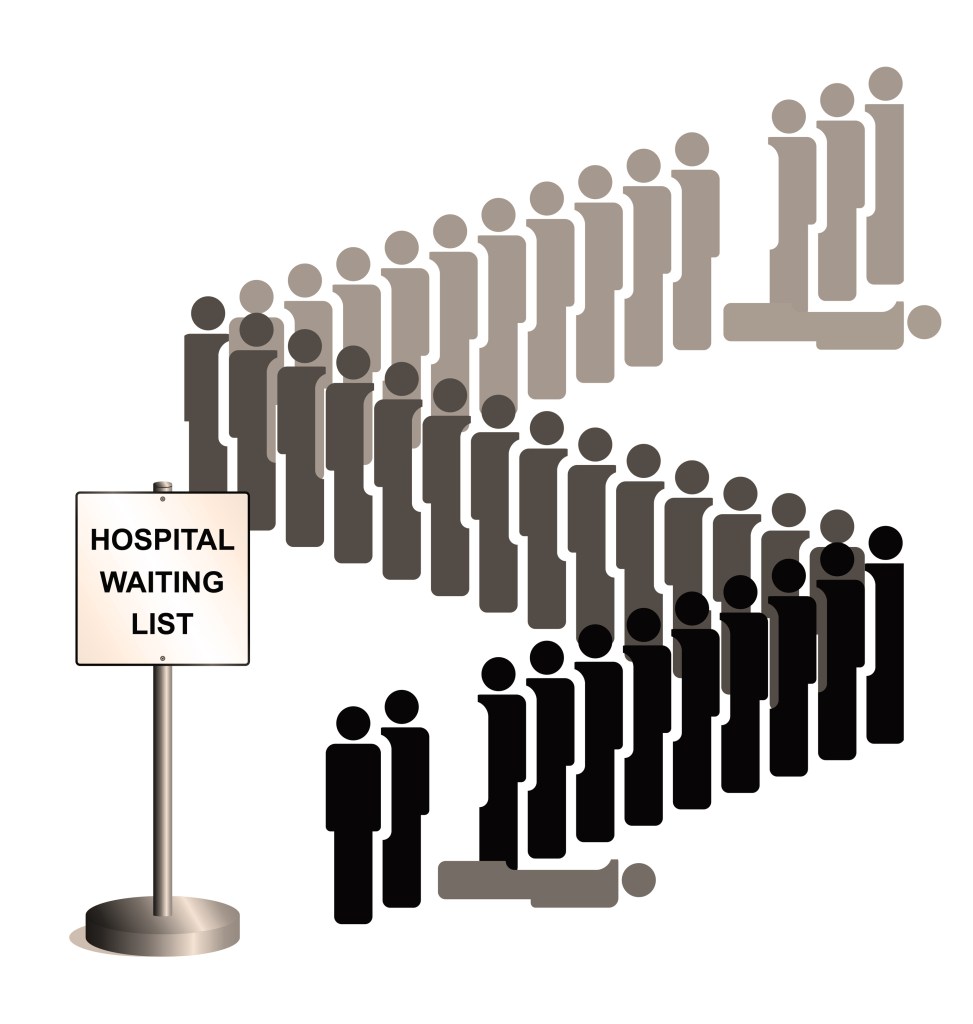
State lawmakers have invested some money into the Medicaid waiver programs in recent years to alleviate the waitlist, but the safety net services, meant to serve as a stop gap for individuals waiting for Medicaid waiver programs, were decimated by a 2011 budget cut from the Legislature. Experts say they’ve never recovered.
As of March, about 18,300 people were on that list — up 1,200 percent since 2012. And the state does not track how long people are forced to wait.
This isn’t just a Texas problem. A Kaiser Family Foundation survey published in March found that 39 states have a waiting list for at least one of their Medicaid waiver programs, with more than 665,000 people on such a list nationally in fiscal year 2020. Texas’ waitlist made up about 25 percent of that figure.
Nearly 200K disabled Texans are waiting for help, some for a decade
Texas’ mental health system is strained beyond capacity, with waitlists for hospital beds that stretch on for sometimes up to a year. The state’s lack of oversight is so extreme that officials were unable to say which private hospitals received state funds for bed space to help reduce the waitlist. The state just started collecting that information in September.
The state’s 10 public mental hospitals are supposed to be a kind of last safety net for the ill and indigent, but many of them are chaotic and dangerous places, where police visit up to 14 times a day. And that’s for people lucky enough to find a bed.
Advocates say states should have 50 public psychiatric hospital beds per 100,000 population, but Texas has fewer than 8 per 100,000. The waitlist for a state bed in Texas grew nearly 600 percent from 2012 until the start of the COVID-19 pandemic, which has only exacerbated the shortages.
In Crisis, Part 1: How Texas fails the mentally ill – Houston Chronicle
With a 200k person waitlist, families are counseled to put their loved ones with intellectual and developmental disabilities on all 6 Medicaid waiver lists. What they’re not counseled for coming to the top of lists and being denied again and again
“Why do we have the parents going through (this)? You’re creating all this extra churn and stressing the heck out of the most vulnerable people.”
Disabled Texans face arduous process waiting for the state’s help
It took 14 years of waiting and several false starts.
“Meanwhile, people who have never been able to work or haven’t worked ‘enough’ are given ONLY SSI, which leaves them in inescapable poverty for potentially the rest of their lives,” endever star said over e-mail. “This is a very blatant expression of the way society views access to supports—there’s an idea that we have to earn our supports or prove that we’re worthwhile human beings in order to access them.”
We’re Not Broken: Changing the Autism Conversation
To add another layer of difficulty, the process for obtaining SSI benefits is baffling and as discouraging as possible.
We’re Not Broken: Changing the Autism Conversation
The complexity of the system isn’t a bug of the design. Folks like Jen have every reason to believe it’s a feature, one designed to limit use and usefulness.
Jen: I believe it is. They’ve made it intentionally difficult and not user friendly.
“Falling Through the Cracks” | DUAL: The True Cost of Care (S1E2) – YouTube
Far, far more public money is lost to wealthy people dodging tax than to disabled people faking illness.
The SHOCKING Truth About Disability Benefits (They Don’t Want You To Know!) – YouTube
In July, the @HoustonChron published an investigation that found there were nearly 200,000 Texans waiting for intellectual and developmental #disability services. The wait can last up to 20 years for some. How is this pro-life, gov.?
Disability systems rely on artificial economies of scarcity. Programs are underfunded, so caregivers, teachers, social workers, and disabled people themselves are all pushed to project their needs as necessary and virtuous.
I SHOULDN’T HAVE TO DEHUMANIZE MY SON TO GET HIM SUPPORT
Thus the government claimed to care about people’s well-being whilst simultaneously inflicting mental torture via neoliberal economic policies.
According to recent research, procedures for out-of-work benefit claims became more ‘institutionally violent’ between 2010 and 2015, with ‘psychological harm [used] as a technique’ to deter claimants and avoid paying them. Carrying out in-depth interviews with frontline workers and managers in public and contracted employment services, the researchers uncovered ‘an array of policy tools and hidden managerial methods used during the coalition administration, [which] encouraged frontline staff to deliver services in ways that led to a range of harmful outcomes for benefit claimants’ in the attempt to coerce them into work. People claiming benefits during this time reported mental illness being precipitated or exacerbated by such a regime, and nothing has improved since. The benefits system overall is still shaped by reforms introduced from 2010. Indeed, since welfare tends to become more punitive in periods following a major crisis, such as a pandemic-induced recession, the system of state ‘support’ will continue inflicting – likely increasing – harm.
You have the right to food money
Providing of course you
Don't mind a little
Investigation, humiliation
And if you cross your fingers
Rehabilitation

Know your rights
These are your rights

-- Know Your Rights by The Clash
This is a public service announcement… with guitar!
Know Your Rights by The Clash
💀 You Are Not Entitled to Our Deaths
We will not trade disabled deaths for abled life. We will not allow disabled people to be disposable or the necessary collateral damage for the status quo. We will not look away from the mass illness and death that surrounds us or from a state machine that is more committed to churning out profit and privileged comfort with eugenic abandonment.
We know the state has failed us. We are currently witnessing the pandemic state-sanctioned violence of murder, eugenics, abuse and bone-chilling neglect in the face of mass suffering, illness and death. We are the richest nation in the world and we continue to choose greed and comfort over people and life. The state is driving the knife of suffering deeper into the gut of those already collapsed on the ground. The cruelty is sweeping and unapologetic.
You Are Not Entitled To Our Deaths: COVID, Abled Supremacy & Interdependence
What do we call the feeling of witnessing our most powerful institutions tacitly cooperate to maintain eugenics while outwardly claiming just the opposite?
Crip News v.40 – by Kevin Gotkin – Crip News
Every issue in our news cycle today – gender affirming care, access to abortions, COVID-19 policies (or rather lack thereof), and racist hate crimes – are intimately tied to the history of the eugenics movement. These are intertwined stories.
The system of eugenics and its resulting platform is inherently racist, sexist, transphobic, ableist, etc. at its core. It’s designed to protect systems of white, cis male privilege, while entrenching systems of oppression into place. And it has a long history.
Our news headlines reflect what oppressed people have long known – eugenics is still alive and well. From the rhetoric used in the recent hate crime in Buffalo, to that coming out of the Supreme Court, to the daily statements of the CDC, eugenics is there at the core.
Nicole Lee Schroeder, PhD on Twitter
Bodies ride the waves
Somebody's gonna have to pay
Bodies, living on the shore in their sandcastles
Bodies, sea is getting rough and the walls rattle
Bodies, come with the tide
Nowhere left to hide
Bodies
Bodies
A thousand thoughts ride the waves
Can't save nobody, I'm too late
Bodies, no one cares about the coming last battle
Bodies, wavеs crashing down and the ocean swallows
Bodies
Whеre you gonna hide the bodies?
Bodies
Hey-oh-hey-oh

On the shore living in sandcastles
No one cares about the coming last battle
Sea is getting rough and the walls rattle
Waves crashing down and the ocean swallows
Bodies
Bodies

--Bodies by Rabbit Junk
“Vulnerable” has become a key word in the pandemic lexicon, but it is one that has often done more harm than good. It implies that the mass deaths of disabled and old people were inevitable, and conveniently exonerates the state from responsibility.
During Covid, to be ‘vulnerable’ is to be told your life doesn’t matter | Frances Ryan | The Guardian
Everyone needs to get aboard the solidarity against ableism train, yesterday.
Gwen Snyder on Twitter
We are in an era of unvarnished eugenics.
🌱 They tried to bury us, they didn’t know we were seeds.
It is a lot of work to be poor and disabled. In a country where health care is not a right, the Medicaid redeterminations reinforce the precarious state of marginalized communities in relationship to the state. When I go through this process, I am angered as I think of all the people who need assistance trying to understand the form, collecting information, and physically completing it on time. The administrative burden, access barriers, and emotional toll it takes to jump through these hoops for survival is cruel and counterproductive.
Medicaid expansion saves lives. … If we don’t fight back, the “great unwinding” could become the great unraveling of the safety net as we know it.
I have faith, though, that people will save Medicaid once again, as they have with past efforts to repeal the Affordable Care Act. When the odds seem overwhelmingly stacked against us, I recall the phrase, “They tried to bury us, they didn’t know we were seeds.” We will rise again.
The ‘Unwinding’ of Medicaid Coverage Will Be Difficult for Disabled Americans, Leave More People Uninsured | Teen Vogue
🗄 Temporal Lotteries: We Don’t Have Any Time for Writing These 200-Page Long, Detailed Grant Reports
We are literally just trying to take care of each other in our communities and we don’t have any fucking time for writing these 200-page long, detailed grant reports to prove that we’re really being honest because you know who doesn’t have to prove that?
Generationally wealthy people and extremely well-resourced organizations don’t have to worry about where their money is coming from. They don’t have to worry about who they’re asking for money from. And so they have the privilege to be able to not care, whereas we have to be a hundred times more scrupulous.
We are both shamed and guilted for asking for “handouts”, and yet we’re also expected to beg.
And that is why the vast majority of philanthropical resources continue to go to the same well-resourced, established organizations that are largely not accountable to directly impacted communities and to the people who have the most to lose, whereas organizations that are doing work on the front lines directly from community are infinitely less likely to be able to access even a fraction of the same funding pools and even in the space, especially in the space of disability philanthropy.
Lydia X.Z. Brown Powerfully Addresses Philanthropy’s Ableist Practices
The David Prize claims that the submission process “should take no more than 30 minutes. Yes, 30 minutes.” At first glance, the application seems straightforward: ten questions, with a maximum of 280-1,500 characters per answer. But it is a process that will disproportionately impact many chronically unwell and racialized individuals, as well as non cis men, who will recontextualize their ideas to appeal to a billionaire philanthropist. Alex and I spent roughly 80 hours over the course of two weeks to complete the written application. This sort of request for proposals, Alex pointed out, creates temporal lotteries, in which the buy-in isn’t money, but time.
Philanthropic Gentrification. How The David Prize turns activists… | by Liz Jackson | Medium
I have been forced to think about everything I do. Do you know how many spoons people waste everyday? I don’t have room for wasted time, or wasted “spoons” and I chose to spend this time with you.
The Spoon Theory
Everything costs time everything
Everything costs time yes it does

Costs time getting out of bed
Doctor says you got your head in the fog
Got to cook and eat your food
Costs time to walk your dog

Costs time no matter what you do
Take a shower and get in the pool
Drive a car hang out with your friends
Go back in time or forward again

Some things take a lot of time
And some things don’t take too long
Just depends on what you do
Write a letter or sing this song, sing along

--Cost Time by Josephmooon
Our movement, however, needs nothing of respectability politics. Accepting — conceding, surrendering, submitting to — that will only erode our movement until it crumbles entirely. Respectability politics is what’s gotten us into reliance on foundations and nonprofits, and elected officials and bureaucrats, and policies and programs that only benefit the most privileged and resourced members of our communities at the direct expense of the most marginalized. Radical, militant anger — and radical, militant hope, and radical, wild dreams, and radical, active love — that’s what’ll get us past the death machines of ableism and capitalism and white supremacy and laws and institutions working overtime to kill us.
Autistic Hoya — A blog by Lydia X. Z. Brown: The neurodiversity movements needs its shoes off, and fists up.
It's just me and my MPC
Questing out to meet my tribe unique
Keep it funky for the followers eager to speak
The same dialect is on when we greet in the street, fam
Why would my sound be tampered?
Or better yet, watered down and then pampered?
Cater to who, I influence the standard
Check it… we 'bout to change some manners

Talent MAP Mix by Mugs and Pockets
Philanthropy so often claims to be addressing inequity and inequality while reinforcing, perpetuating, and exacerbating it.
Lydia X.Z. Brown Powerfully Addresses Philanthropy’s Ableist Practices
🏩 Collective Community Care
Increasingly, autistic communities have been exposed to ideas of disability justice, interdependence, access intimacy, collective/community care, and mutual aid. Care collectives, spoon shares, and other community care groups by and for disabled people, racialized people, LGBTQ2IA+ people (and people at this intersection) are growing in number. Is there a future for autistic spaces to also act as spaces of intentional mutual aid?
Collective Community Care: Dreaming of Futures in Autistic Mutual Aid, Autscape: 2020 Presentations
Moving from a rights-based perspective to a justice-based one necessitates a look at our care systems and re-envisioning how our communities function to ensure no one is left behind.
The story continues with, “Community Care”. This is how we survive the onslaught.
This post is also available in:


