
Real Help Against the Onslaught
We, Stimpunks
We exist for the direct support and mutual aid of neurodivergent and disabled people.
We exist to build infrastructure that supports disabled and neurodivergent people where other systems fail.
Stimpunks builds accessible infrastructure and public tools that support disabled and neurodivergent people to live with dignity, challenge dehumanizing systems, and design environments that honor difference as strength.
We, Stimpunks
Stimpunks is created by and for neurodivergent and disabled people.
We, Stimpunks
We provide mutual aid, creator grants, learning opportunities, human-centered research, and living wages for our community.
We presume competence.
We believe in self-determination.
Staying alive is a lot of work for a disabled person in an ableist society. (Wong, 2020)
We, Stimpunks
We provide real help against the onslaught.
We believe that direct support to individuals is the most effective approach to alleviating the barriers and challenges that prevent neurodivergent and disabled people from thriving.
What does that mean?
Easy Read Version of Our Mission Statements
- Stimpunks is a community created by and for neurodivergent and disabled people.
- We offer support and assistance to each other.
- We provide grants to creators within our community.
- We offer opportunities for learning and growth.
- We conduct research that focuses on the needs and experiences of neurodivergent and disabled people.
- We pay fair wages to members of our community.
- We believe in the abilities and potential of all individuals.
- We believe in the right to make decisions for oneself.
- Being disabled in a society that favors able-bodied individuals is challenging.
- We provide real help to combat these challenges.
- We believe that providing direct support to individuals is the best way to help neurodivergent and disabled people overcome barriers and thrive.
AI Disclosure: The summary above was created with the help of Elephas AI Assistant.
The above is an “accordion”. It expands when you click or tap it. Try it out now to read our mission statements in an easy read format with one idea presented per line.
What is “mutual aid”?
Put simply, mutual aid is a form of political participation in which people take responsibility for caring for one another and changing political conditions by building relationships, networks of reciprocity, and communal autonomy from the state. Mutual aid may involve work to support people impacted by harmful systems and work to create alternative infrastructure. It can take the form of ride sharing, disaster response, food distribution, and much more, as you’ll soon see.
However, those engaging in mutual aid must ask themselves if their actions are providing material relief, avoiding legitimising oppressive systems, mobilising people for ongoing struggle, and accomodating marginalised groups. Mutual aid is not meant to be charity. It must actively cultivate liberatory skills, practices, and solidarity.
How We Can Change The World – YouTube
- Mutual aid is a form of political participation where people care for each other and work to change political conditions.
- It involves building relationships, networks of reciprocity, and autonomy from the state.
- Mutual aid can include things like ride sharing, disaster response, and food distribution.
- It is not charity, but rather an active cultivation of liberatory skills, practices, and solidarity.
- Mutual aid projects meet survival needs and build shared understanding.
- They mobilize people, expand solidarity, and build movements.
- Mutual aid projects are participatory and solve problems through collective action.
- Autistic communities are embracing ideas of mutual aid and collective care.
- Mutual aid groups aim to fill gaps in services left by the government.
- Disabled love and care is different from non-disabled interactions.
- Mutual aid is based on a sense of human solidarity and the recognition of the force borrowed from practicing mutual aid.
- Kropotkin’s ideas on mutual aid are relevant and being rediscovered by new generations of social movements.
- Mutual aid should be a foundational concept in social revolutionary projects.
Mutual aid is collective coordination to meet each other’s needs, usually from an awareness that the systems we have in place are not going to meet them. Those systems, in fact, have often created the crisis, or are making things worse.
We see examples of mutual aid in every single social movement, whether it’s people raising money for workers on strike, setting up a ridesharing system during the Montgomery Bus Boycott, putting drinking water in the desert for migrants crossing the border, training each other in emergency medicine because ambulance response time in poor neighborhoods is too slow, raising money to pay for abortions for those who can’t afford them, or coordinating letter-writing to prisoners. These are mutual aid projects. They directly meet people’s survival needs, and are based on a shared understanding that the conditions in which we are made to live are unjust.
Three Key Elements of Mutual Aid
Mutual Aid (Oct 27, 2020 edition) | Open Library
- Mutual aid projects work to meet survival needs and build shared understanding about why people do not have what they need.
- Mutual aid projects mobilize people, expand solidarity, and build movements.
- Mutual aid projects are participatory, solving problems through collective action rather than waiting for saviors.
What is mutual aid?
“Solidarity, not charity.”
Collective Community Care: Dreaming of Futures in Autistic Mutual Aid
- Interdependence, understanding and support
- Gives opportunity to help & care for other in on our own terms and within our own capacities
- Direct support in a community within a community
- It’s much easier to practice asking, offering, receiving, and declining among people who “get it”!
Increasingly, autistic communities have been exposed to ideas of disability justice, interdependence, access intimacy, collective/community care, and mutual aid. Care collectives, spoon shares, and other community care groups by and for disabled people, racialized people, LGBTQ2IA+ people (and people at this intersection) are growing in number. Is there a future for autistic spaces to also act as spaces of intentional mutual aid?
Moving from a rights-based perspective to a justice-based one necessitates a look at our care systems and re-envisioning how our communities function to ensure no one is left behind.
Collective Community Care: Dreaming of Futures in Autistic Mutual Aid, Autscape: 2020 Presentations
With “solidarity, not charity” as their guiding principle, these mutual aid groups aimed to lighten that burden and fill the gap in services left by the government
‘Solidarity, not charity’: Mutual aid groups are filling gaps in Texas’ crisis response | Grist
Non-disabled people in my life don’t know how to love me like disabled people do. I’m so thankful for all my disabled friends who know how to provide care, rest, support and love. Disabled love is critically different from my other interactions with the world. 1/4
I really wish non-disabled people could learn to love in the same caring modalities. Love looks like remembering my food intolerances. Love looks like saying “that sucks” when I complain. Love looks like calling to check in and telling me stories. 2/4
Love looks like someone bustling around at home doing everyday things that wanted to call just to be with me across time and space. Love looks like not trying to fix everything and just allowing bad days to be bad. Love looks accepting my need to isolate as much as possible. 3/4
Love looks like spaces for shared grief. Love looks like celebrating our mere existence and survival in a world so set on eradicating us. Love is everywhere in disabled communities. 4/4
Originally tweeted by Nicole Lee Schroeder, PhD (@Nicole_Lee_Sch) on April 15, 2022.
It is not love, and not even sympathy (understood in its proper sense) which induces a herd of ruminants or of horses to form a ring in order to resist an attack of wolves; not love which induces wolves to form a pack for hunting; not love which induces kittens or lambs to play, or a dozen of species of young birds to spend their days together in the autumn; and it is neither love nor personal sympathy which induces many thousand fallow-deer scattered over a territory as large as France to form into a score of separate herds, all marching towards a given spot, in order to cross there a river. It is a feeling infinitely wider than love or personal sympathy—an instinct that has been slowly developed among animals and men in the course of an extremely long evolution, and which has taught animals and men alike the force they can borrow from the practice of mutual aid and support, and the joys they can find in social life. . . . It is not love and not even sympathy upon which Society is based in mankind. It is the conscience—be it only at the stage of an instinct—of human solidarity. It is the unconscious recognition of the force that is borrowed by each man from the practice of mutual aid; of the close dependence of every one’s happiness upon the happiness of all; and of the sense of justice, or equity which brings the individual to consider the rights of every other individual as equal to his own. Upon this broad and necessary foundation the still higher moral feelings are developed.
Mutual aid, a factor of evolution (1903 edition) | Open Library
Is Kropotkin relevant again? Well, obviously, Kropotkin was always relevant, but this book is being released in the belief that there is a new, radicalized generation, many of whom have never been exposed to these ideas directly, but who show all signs of being able to make a more clear-minded assessment of the global situation than their parents and grandparents, if only because they know that if they don’t, the world in store for them will soon become an absolute hellscape.
It’s already beginning to happen. The political relevance of ideas first espoused in Mutual Aid is being rediscovered by the new generations of social movements across the planet. The ongoing social revolution in Democratic Federation of Northeast Syria (Rojava) has been profoundly influenced by Kropotkin’s writings about social ecology and cooperative federalism, in part via the works of Murray Bookchin, in part by going back to the source, in large part too by drawing on their own Kurdish traditions and revolutionary experience.
Introduction to Mutual Aid | The Anarchist Library
Mutual aid must be a foundational concept in any social revolutionary project.
How We Can Change The World – YouTube
What is “human-centered learning”?
Stimpunks Learning Space offers community and space for passion-based, human-centered learning with purpose. Our learners collaborate on distributed, multi-age, cross-disciplinary teams with a neurodiverse array of creatives doing work that impacts community. Via equity, access, empathy, and inclusivity, we create anti-ableist space compatible with neurodiversity, the social model of disability, and all types of bodyminds. We create space for the neurodivergent and disabled people most ill-served by “empty pedagogy, behaviorism, and the rejection of equity“.
Stimpunks was forged in the quest for survival and educational inclusion. We had to roll our own education, because even the “all means all” of public education failed to include us. We’ve learned a lot along the way and present to you Stimpunks Space as the synthesis of our forced interdisciplinary learning. That learning connected us with neurodiversity communities, disability communities, educators, doctors, nurses, autism researchers, sociologists, tech workers, care workers, social workers, and a long list of others. We wove together the aspects of these disciplines that were compatible with our community of neurodivergent and disabled people into a human-centered pedagogy and philosophy. We left out the stuff incompatible with and harmful to us, such as all forms of behaviorism. We built a learning space that works for us using a zero-based design approach.
A human-centered education:
- Cultivates Purpose-Driven Classrooms
- Ends Dehumanizing Practices
- Demands Social Justice
- Builds a Human-Centered World
Build human-centered classrooms around four values:
What is the Human Restoration Project?
- Learning is rooted in purpose-finding and community relevance.
- Social justice is the cornerstone to educational success.
- Dehumanizing practices do not belong in schools.
- Learners are respectful toward each others innate human worth.
Cultivate purpose-driven classrooms by promoting experiential learning & community connection.
Research supports what teachers intuitively understand: that students ask fewer questions the longer they remain in school and engagement steadily declines over time.
“Promoting curiosity in children, especially those from environments of economic disadvantage, may be an important, underrecognized way to address the achievement gap. Promoting curiosity is a foundation for early learning that we should be emphasizing more when we look at academic achievement.”
At the same time, rates of depression and anxiety have steadily increased to become among the most diagnosed mental health disorders in children. Kids who feel isolated from school and their community frequently drop out turn to self-harm and self-medication through alcohol and drugs.
Purpose-finding, on the other hand, has been linked to prosocial outcomes and healthier lifestyles, and is inherently tied to positive identity and self-worth. By directly participating in building a better society and reflecting on the experience, students gain valuable insight into their identity in relation to the world around them.
A Human-Centered Education: Cultivates Purpose-Driven Classrooms – YouTube
End dehumanizing classroom practices by lessening & removing grades, homework, and behaviorism.
Assigning a grade instead of purely focusing on feedback leads to decreased motivation and understanding, lower academic achievement, and increased rates of cheating. We may not ever be able to get rid of grades entirely, but diminishing the salience of grades and grading is necessary if we desire to shift from a teacher-centered language of grading to a student-driven language of learning in the classroom.
Where behaviorism fails to foster agency it simultaneously creates a framework for excluding neurodivergent and disabled students while enabling the policing of students from non-dominant cultural, linguistic, and racial backgrounds.
A Human-Centered Education: Ends Dehumanizing Practices – YouTube
Demand social justice as a key toward educational equity and inclusive, critical pedagogy.
Inclusive classrooms are more than a legal obligation. Inclusion means instruction and assessment are created with a universal design in mind, one that draws from perspectives and ways of understanding beyond white, middle-class heteronormative and neurotypical perspectives and supports students in varied means of acting on and expressing their learning.
Nearly every nation on earth has been impacted by a history of colonization. In the United States in particular, we must also contend with the legacy of genocide, slavery, segregation, and inequity built into the foundation of our country. This history manifests today in part through the racialized outcomes of the prison-industrial complex and dehumanizing culture of policing imposed on all of our institutions, including school.
A Human-Centered Education: Demands Social Justice – YouTube
Build a human-centered world: focus on collaboration over competition & ensure a thriving public education system.
While schools exist as a microcosm of society, schools also exist in dialogue with society and as a multiplier of its generative and destructive traits. When societies adopt the language of the market that rewards competition over collaboration, conflict over solidarity, and short-term individual gain over long-term mutual sustainability, it should not surprise us when school policies and practices reflect the same.
Think of how we describe academic achievement in schools through the language of scarcity – achievement gaps, No Child Left Behind, Race to the Top, good schools vs failing schools, student loan debt, GPAs and class rank – the socioeconomic context of any of these metrics is inseparable from what they purport to measure and reward. And what they communicate is clear: that children who grow up in proximity to wealth reap the academic and socioeconomic benefits.
A Human-Centered Education: Builds a Human-Centered World – YouTube
What is “human-centered research”?
“The best way to get it right is to listen to us.”
‘The best way to get it right is to listen to us’ — autistic people argue for a stronger voice in research
The most salient characteristic of activist research is the belief that it must go farther than knowledge production; it must create transformative action.
From Theorizing in the Ivory Tower to Creating Change with the People: Activist Research as a Framework for Collaborative Action
It turns out that there is an emerging research framework—activist research—that is inclusive of multiple disciplines including educational research (Cushman, 1999; DeMeulenaere & Cann, 2013; Fine & Vanderslice, 1992; Knight, 2000; Malone, 2006; Nygreen, 2006), anthropology (Hale, 2006; Speed, 2006; Urla, & Helepololei, 2014) social movements and other social science research fields (Chatterton, Fuller, & Routledge, 2007; Choudry, 2014). A review of the theoretical frameworks, methodologies, findings, ethical issues, and challenges has allowed me to identify three characteristics that delineate activist researcher from other types of research: (1) combination of knowledge production and transformative action; (2) systematic multi-level collaboration; and (3) challenges to power.
The most salient characteristic of activist research is the belief that it must go farther than knowledge production; it must create transformative action. Knowledge production is the epitome of all research, even for studies that seek to expose inequities and call out oppressive systems and structures, but activist research goes further by committing to bringing about change with and for the participants (DeMulenaere & Cann, 2013; Hale, 2001, Fine & Vanderslice, 1992; Nygreen, 2006). Who is changed and how they are changed is a key aspect of activist research. DeMulenaere and Cann note that critical research is not necessarily activist research if it fails to include social transformative change, “at the spaces and sites of research…” (p. 557, 2013). They stress that if the only change that takes place is through reading of the published findings, then the study would not be considered activist research.
Hale contends that researchers who engage in cultural critique are committed to the research institution while activist researchers have dual commitments to the people and their political struggle and the academy (2006, p. 100). And it is this dual commitment that transforms the methodology beginning with the research topic and ending with the production of knowledge that is not only useful but transformative (Hale, 2001). Thus, activist research is an emerging research framework that shifts the focus from traditional knowledge production to commitment to working with others to produce transformative change. Traditional research methods such as ethnography, action research, and feminist research are situated within an activist research framework, leaving the means intact, but striving to change the ends.
From Theorizing in the Ivory Tower to Creating Change with the People: Activist Research as a Framework for Collaborative Action
Activist research in education does not seek to transform the participant but to work with the participants to bring about transformative change in education policy, practices, structures, and institutions.
From Theorizing in the Ivory Tower to Creating Change with the People: Activist Research as a Framework for Collaborative Action
An activist research framework dismisses the idea that education research can or should be neutral but instead assumes that it is inherently political.
From Theorizing in the Ivory Tower to Creating Change with the People: Activist Research as a Framework for Collaborative Action
Activist research embraces collaboration at every step of the research process.
From Theorizing in the Ivory Tower to Creating Change with the People: Activist Research as a Framework for Collaborative Action
In activist research the participants actively engage in data collection, interpretation and analysis.
From Theorizing in the Ivory Tower to Creating Change with the People: Activist Research as a Framework for Collaborative Action
The use of systematic multi-level collaboration was instrumental in creating the conditions needed to make restructuring the school a valid possibility.
From Theorizing in the Ivory Tower to Creating Change with the People: Activist Research as a Framework for Collaborative Action
Empowerment requires the appropriation of power for participants beyond knowledge of the source of their disempowerment.
Environmental education researchers as environmental activists
To summarize, I have reviewed three salient characteristics of activist research: transformative action, systematic multi-level collaboration, and challenges to power.
From Theorizing in the Ivory Tower to Creating Change with the People: Activist Research as a Framework for Collaborative Action
Research that produces knowledge and awareness about oppression will not change the lived reality of the oppressed.
From Theorizing in the Ivory Tower to Creating Change with the People: Activist Research as a Framework for Collaborative Action
activist research provides a framework of possibilities for taking research out of halls of academia and into the hands and hopes of the people.
From Theorizing in the Ivory Tower to Creating Change with the People: Activist Research as a Framework for Collaborative Action
Perhaps the most important message arising from the emancipatory approach is the freedom of expression it offered to its participants.
“I Don’t Feel Like a Gender, I Feel Like Myself”: Autistic Individuals Raised as Girls Exploring Gender Identity
an emancipatory approach refers to the inclusion of the participants within the research process in such a way that they benefit from it and it expresses their opinions and experiences.
Doing it differently: emancipatory autism studies within a neurodiverse academic space
We believe that participatory research should always be the baseline of any autism research project, whoever it is led by. We agree that it is important to value the voice of the ‘other’ as a primary source of knowledge production rather than a secondary source within the context of power structures around epistemology.
Doing it differently: emancipatory autism studies within a neurodiverse academic space
For research to be considered emancipatory, it is not sufficient that the research process and production are emancipatory, but dissemination of the research findings should also fulfil this function. Considering the dissemination of research findings, and that the findings themselves are produced in an ‘accessible’ format, should be a concern of any researcher who is doing emancipatory research.
Doing it differently: emancipatory autism studies within a neurodiverse academic space
Concerns have also been raised about the quality and rigour of autism research. For example, researchers have highlighted key omissions in the reporting of research, such as failures to declare conflicts of interest (Bottema-Beutel & Crowley, 2021) or the presence of adverse events (Bottema-Beutel et al., 2021). Concerns have also extended to the low standards underlying evidence-based practice (Bottema-Beutel, 2023) as well as replication failures (Gernsbacher & Yergeau, 2019). As Dawson and Fletcher-Watson (2021, p.1) note, the standards of research quality and ethics have not been applied to autism research to the extent that they should, which has “profoundly impacted how autistics are regarded and treated”.
Two potential solutions have been proposed in relation to these aforementioned issues. The first solution regards greater involvement of the autistic and broader autism communities in research: in identifying research priorities, in deciding the design and conduct of research, in analysing and interpreting research findings, and in disseminating research more broadly (e.g., Pellicano et al., 2014). In essence, this solution involves shifting the traditional power balance in research from autism researchers to the autistic and broader autism communities. Participatory approaches such as these are thought to lead to better quality research that is more easily translated into practice (Balazs & Morello-Frosch, 2013; Forsythe et al., 2019).
The second solution regards greater openness and transparency in the reporting of research (Hobson, Poole, Pearson & Fletcher-Watson, 2022). Open research is an umbrella term for several practices, underpinned by a desire for the products and processes of research to be accessible to those outside of the original research team (Munafo et al., 2017). Open scientific practices are closely aligned with efforts to improve research reproducibility, and reduce the risk of grey research practices, such as hypothesising after results are known (HARKing; Kerr, 1998), and over-analysing data (“p-hacking”; Simmons et al., 2011).
In this paper, we discuss how combining participatory and open research practices may go some way toward addressing key issues inherent within autism research. First, we define both open research and participatory research. Then, we outline three key principles for autism researchers striving to make their work more open and participatory: (1) the need for adequate expertise and infrastructure to facilitate high quality research, (2) the need for a greater degree of accessibility at all stages of the research process, and (3) the need to foster trusting relationships between the autistic and research communities. Throughout this paper, we draw on examples from literature both within and outside the autism research field, and we conclude with reflections on how this may foster an autism research culture that better serves the autistic and broader autism communities.
PsyArXiv Preprints | Towards Reproducible and Respectful Autism Research: Combining Open and Participatory Autism Research Practices
Accordions labelled “What is…” provide definitions, context, and further reading.
We exist
We exist for the direct support and mutual aid of neurodivergent and disabled people.
Stimpunks Foundation challenges the typical approach to helping people who are neurodivergent or disabled. We know what it is like to live with barriers and what it means to not fit in and have to forge our own community. Stimpunks knows that neurodivergent and disabled people have human needs. We offer a humane approach to help our community thrive.

We pay
We pay neurodivergent and disabled people and amplify them to our clients and throughout society.
We offer creator grants and mutual aid. We pay neurodivergent and disabled people to work and live. We pay expenses like rent and medical bills as well as buy medical equipment or other necessities. We hire our community members as consultants. Client services are how we live our mission to employ neurodivergent and disabled people as well as how we raise capital for grantmaking.
We believe
We believe that direct support to individuals is the most effective approach to alleviating the barriers and challenges that prevent neurodivergent and disabled people from thriving in neurotypical and ableist environments.
Unlike most foundations, we support individuals directly, maximizing our impact in neurodivergent and disabled people’s lives and communities.
We create
We create learning space designed for our community. We create space for those most ill-served by “empty pedagogy, behaviorism, and the rejection of equity“. We create paths to equity and access for our learners so they can collaborate on distributed, multi-age, cross-disciplinary teams with a neurodiverse array of creatives doing work that impacts community.

We enable
We enable the weird, feral, chaotic, and magical people.

We serve
We serve our loved people so we can keep on living through the onslaught.
Mission Compass
We steer by this. If a decision moves us away from dignity, access, and lived experience, we correct course.
⬆️ North: Dignity
We build for human needs, not “special needs.” Dignity is the baseline.
⬅️ West: Care Infrastructure
Care isn’t overhead. Care is the work. We fund the conditions that make participation possible.
🧭 True North: Our Mission
Stimpunks builds accessible infrastructure and public tools that enable disabled and neurodivergent people to live with dignity.
We challenge systems that dehumanize in the name of efficiency, normalcy, and control.
➡️ East: Open Public Resources
We publish what we learn—free, life-changing, and available to everyone.
⬇️ South: Systems Change
We name power, reject compliance culture, and design for range—not for averages.
If it reduces dignity, it’s not our work. If it expands access, we’re in.
Our “Moment of Obligation”
Stimpunks was created to forge the way for educational inclusion and to give our community the means to thrive. We as a disabled and neurodivergent run organization had to roll our own education, because even the “all means all” of public education failed to include us and those we serve. We had to create our own care systems, because “we realized that the only people who care enough about us to work consistently for our liberation are us.” “Responsibility for the survival of entire communities lies with us.”
Staying alive is a lot of work for a disabled person in an ableist society…
Disability Visibility: First Person Stories from the 21st Century
Please stay alive
Please stay alive
Please stay alive
Please survive
Please survive

-- Old Friend (Stay Alive)
Through Stimpunks Foundation, we:
- Offer financial and mutual aid;
- Hire our community members as consultants;
- Provide a learning space designed for our community; and
- Support our community’s open research efforts.
One in four U.S. adults have a disability. However, our community receives only 2% of US grant funding, and only 19% of us are employed. We can’t just let that be the truth. We have to challenge the norm and change the narrative around people who are neurodivergent or disabled.
Disability justice (and disability itself) has the potential to fundamentally transform everything we think about quality of life, purpose, work, relationships, belonging.
DISABILITY VISIBILITY: FIRST-PERSON STORIES FROM THE TWENTY-FIRST CENTURY
Neurodiversity and Disability Justice, taken together, are indeed celebrations of who we are and how we exist in the world. They are also movements rooted in lived experience, which ask us to understand and engage with the many ways we relate to our bodies and brains, inside our own minds, and in social context.
Autistic Hoya — A blog by Lydia X. Z. Brown: The neurodiversity movements needs its shoes off, and fists up.
Keep on Livin’
We serve our loved people so we can keep on living through the onslaught.
I would like to honour all the autistic people who survive the care system somehow.
Ann Memmott PGC🌈 on Twitter
All those who survive extreme ‘therapy’.
All those who are brought to their knees, reading hellish descriptions of their loved people.
And all who did not survive this onslaught.
Look up to the sky, sky, sky
Take back your own tonight
You'll find more than you see
It's time now, now, get ready
This is your time, this is your life and
This is your time, this is your life and
This is your time, this is your life and
This is your time, this is your life and
You gotta keep on (Keep on livin!)
Gotta keep on (Keep on livin!)
You gotta keep on (Keep on livin!)
Gotta keep on (Keep on livin!)
You gotta keep on (Keep on livin!)
Gotta keep on (Keep on livin!)
You gotta keep on (Keep on livin!)
Gotta keep on (Keep on livin!)

Keep On Livin' by Le Tigre
A safe place to rest and rebuild in between moments of stress is essential for autonomic nervous system balance.
THE VAGUS NERVE & CHRONIC ILLNESS — TRAUMA GEEK
Wear it out (The way a three-year-old would do)
Melt it down (You're gonna have to eventually anyway)
The fire trucks are comin' up around the bend
You live, you learn
You love, you learn
You cry, you learn
You lose, you learn
You bleed, you learn
You scream, you learn
You grieve, you learn
You choke, you learn
You laugh, you learn
You choose, you learn
You pray, you learn
You ask, you learn
You live, you learn
You Learn
We urgently need to bring to our communities the limitless capacity to love, serve, and create for and with each other.
The Next American Revolution:
Sustainable Activism for the Twenty-First Century.
Dive in, don't you roll over
Don’t you promise your lungs to the fights
Starving, hardly knew Mozart
Don't you know he was never quite right

He used to see craters, in her head
He used to be darling and cheap
But no one believed him
When he said he lost his strength

I am moved by fancies that are curled
Around these images and cling
The notion of some infinitely gentle
Infinitely suffering thing

Zombie eyes are promising
Crooked teeth are sweet
Don't leave me gravity
Don’t leave me gravity
He used to see craters, in her head
He used to be darling and cheap
But no one believed him
When he said he lost his strength

I always believed him
When he said he couldn't find his feet
I always believed him
When he said it didn't feel complete

I always believed
I always believed
Breathe
Breathe
I always believed him
'til he made it back to our beat
-- Don’t Leave Me Gravity, Skating Polly
Peer-run warm lines – staffed by people who have lived mental health experience – have been shown to reduce loneliness and participants’ use of mental health crisis services. Additionally, a review of several studies found that digital forms of peer support improve the lives of people with serious mental illness by “enhancing participants’ functioning, reducing symptoms and improving program utilization.”
WARM LINE GIVES PEER MENTAL HEALTH SUPPORT – NC HEALTH NEWS
I watch you dancin' and
I watch you cry
I watch you look up and
Scream out why
Oh now my dear you got
So much to give
I heard them talkin' and
You're gonna live
So hold me closer and
Hold me tight
A little closer till we're
Into the night
Cause you and I we've got
So much to give
I heard them talkin' and
We're gonna live
That's right
It's alright

— Last Song, The Bobby Lees
Everyone who works at Afiya (as with the rest of our community) identifies as having ‘been there’ in some way. Experiences of various team members range from histories of psychiatric hospitalization to trauma to living in residential programs to living without a home to dealing with addiction and so on. No clinical supports are offered, but people who stay at the house have free access to the community where they can keep (or get) connected to clinical supports as desired.
Afiya House (full version) – YouTube
What if I say to you it's alright, we're alright
And if you say you need me too, I'll be up all
night, It's alright
The shadows only last 'til sunrise, it's alright,
you'll be alright
'Cause you were born in the sunlight, in the
sunlight and it's very bright
(Hey) Can you feel it, waking with the
morning sun
What a feeling, we're living in the morning
sun

Sometimes all you need is darkness to see
the light, we'll see the light
We get high in the sunshine and the moon
light and it's alright
(Hey) Can you feel it waking with the morning
sun
What a feeling, we're living in the morning
sun (Yeah)

Ah ah ah ah ah ah
Flower in the sun (Ohhh no no)
Ah ah ah ah ah ah
Flower in the sun (Ha ah hah)
Ah ah ah ah ah ah (Yea yea yea yeah)
Flower in the sun (Flower in the sunshine)
Ah ah ah ah ah ah (shine on me)
Flower in the sun (Come come come come
come come on let it shine)
Ah ah ah ah ah ah (Yeah, yea yea yea yea)
Flower in the sun
Ah ah ah ah ah ah
Flower in the sun
Ah ah ah ah ah ah (Whoa oh oh oh)
Flower in the sun

--Flower Song by New Sol
This song is for anyone who has had to brave a long and lonesome road. For those of us who have had to be “cowboys” at one time or another.
Aubrey Hays
And I know it's been a while,
Since you've traveled here and smiled,
If there's something on your mind,
I can promise to be kind,
Maybe I can ease the load.

Cause even cowboys can cry,
Shed a tear from time to time,
You ain't falling out of line,
If you fall and start your cryin'
You don't have to tell me why.

Cause even cowboys can cry,
Shed a tear from time to time,
Cause I'd rather see you cry,
Then have you tell a lie,
Cause sometimes even cowboys cry.
of all the sounds i’ve ever heard
i wandered, lost: poems by Kristina Brooke Daniele
death is the loudest
Be Our Real Selves

There is room for all of us to play our part. And whatever we do, however we do it, we can do it with ‘loud hands’ and ‘loud voices,’ and loud whatever else we need, in whatever way that works for us individually or collectively. Let us be our real autistic selves, loud and proud, and show the world what we truly are.
Loud Hands: Autistic People, Speaking (p. 125). Autistic Self Advocacy Network

True colors are beautiful
Like a rainbow
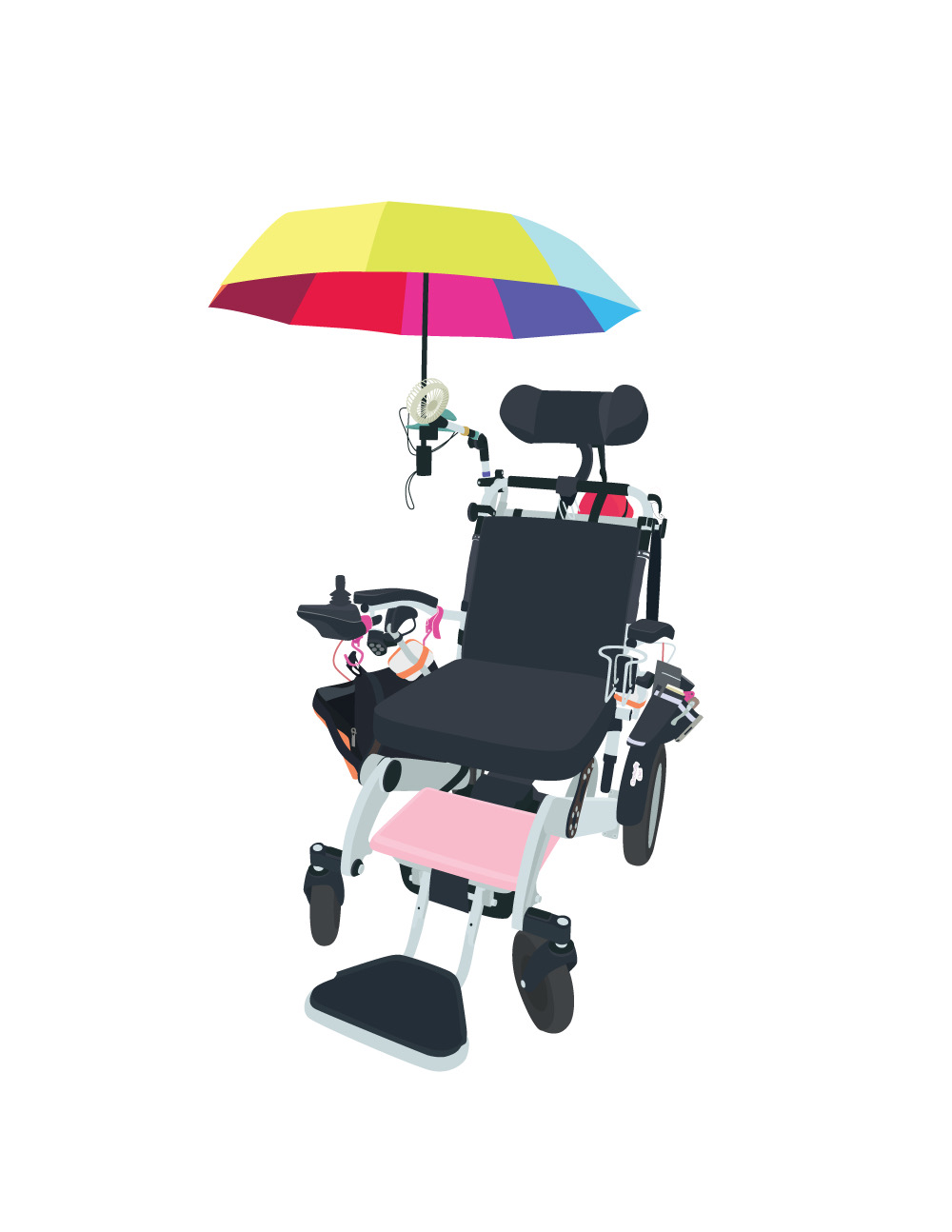
Members of the neurodiversity movement adopt a position of diversity that encompasses a kaleidoscope of identities that intersects with the LGBTQIA+ kaleidoscope by recognising neurodivergent traits – including but not limited to ADHD, Autism, Dyscalculia, Dyslexia, Dyspraxia, Synesthesia, Tourette’s Syndrome – as natural variations of cognition, motivations, and patterns of behaviour within the human species.
The Beauty of Collaboration at Human Scale: Timeless patterns of human limitations
“Queer,” in any case, does not designate a class of already objectified pathologies or perversions; rather, it describes a horizon of possibility whose precise extent and heterogeneous scope cannot in principle be delimited in advance.
Saint Foucault: Towards a Gay Hagiography
She is our miscreant
She is our detox
She is our dagger in the dark
She is the knot mess
She is the undressed
She is the boy borne in my heart

While you sit on the fence I will burn in hell
Be Good, Be Loud,
Be Feisty, Be Friction,
Be Different, Be Proud,
Belong

This isn’t just a story that disabled children will love; it’s a story about what is possible when we fight for ourselves and each other. It is a story about how tenacity, strength, the power of community, and the willingness to fight for what matters can start a revolution.
ROLLING WARRIOR: THE INCREDIBLE, SOMETIMES AWKWARD, TRUE STORY OF A REBEL GIRL ON WHEELS WHO HELPED SPARK A REVOLUTION
Be Good, Be Loud
In time the fever that's kept you weak
Will have full on taken its toll
It's taken away and it's taken its shape
In the illusion that you still hold

Nothing's okay
Nothing has changed and it's all too familiar
So we curl up and hide from all that's outside
Closed shades and locked up doors

It's true, it's loud, it's hard and it’s all I know
I can't take anymore
I just want out right now
I had assumed I would have been gone by now
But the ship has weathered the storm
And the feeling of defeat
That lies underneath is still alive and on its course

I'm destroyed, weak
I have nothing but to speak of the truth as I see fit
I have nothing to lose, I have nothing to gain
I'm at the whim of what I've retained

Be good, be loud
Hands up to the sky and shout
At the top of your lungs 'til the floor falls out

--Be Good by Off with Their Heads
I have loud hands. I must, since I use my hands to communicate. I type what I want to say. But that’s not the only reason why I have loud hands. It is because I finally learned that I cannot be silenced, I will not be silenced.
Loud Hands: I Speak Up With My Fingers
Be Feisty
I wanna see a feisty group of disabled people around the world…if you don’t respect yourself and if you don’t demand what you believe in for yourself, you’re not gonna get it.
Judith Heumann

One more, one more, one more, one more

I got one more song I must sing
Ting-a-ling
Freedom ring
I got one more song I must sing
Simple song, so sing along

One more, one more, one more, one more
All we got
One more life to live
One more love to give
One more cliff to climb
One more
It's my time

--One More by Jimmy Cliff
Be Friction
We, Stimpunks
We exist as friction. The work that we do; it’s wildly painful.
On “Haitian Fight Song”, Mingus said “It has a folk spirit, the kind of folk music I’ve always heard anyway. My solo in it it’s a deeply concentrated one. I can’t play it right unless I’m thinking about prejudice and persecution, and how unfair it is.
There’s sadness and cries in it, but also determination. And it usually ends with my feeling ‘I told them! I hope somebody heard me!’“.
Wiki – Haitian Fight Song — Charles Mingus
We have protests to stage, driven by the fuel of our righteous anger. We have speeches to make, written from the soaring pleas of our individual and collective trauma, and our wildest dreams of joy and freedom and love. We have cultural narratives to rewrite because they really do hate us and they really will kill us, and if we’re going to rewrite the narratives, then there’s no reason to hold ourselves back from our most radical and defiant rewritings. We have autistic children who need us to support them as architects of their own liberation against the schools and clinicians and institutions and police and prosecutors who would crush and destroy them.
Autistic Hoya — A blog by Lydia X. Z. Brown: The neurodiversity movements needs its shoes off, and fists up.
We’re going to need our anger and our public celebrations of stimming and our complicated, imperfect, messy selves for this long and hard road, because we need all of us, and all of our tactics and strategies, to keep a movement going and ultimately, to win.
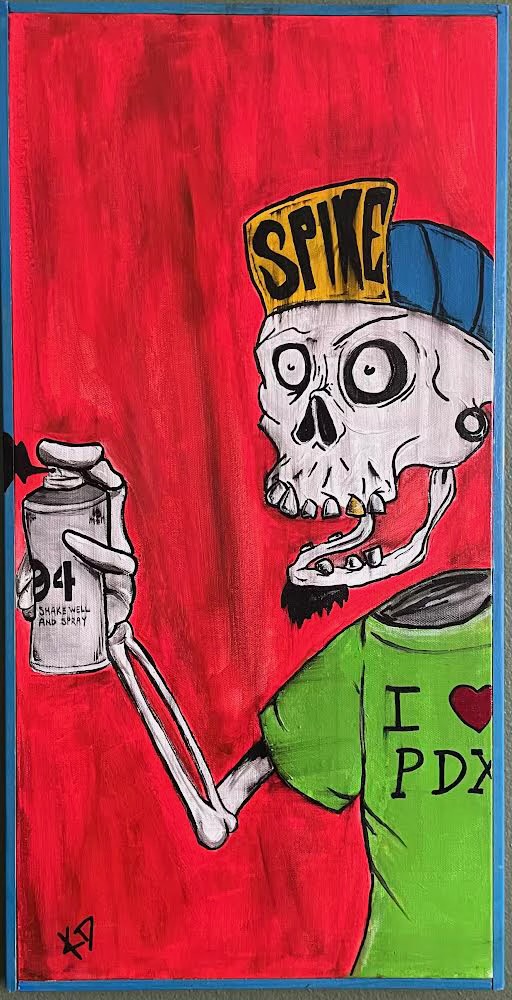
Be Different
To be imperfect is perfect to me.
YUNGBLUD
Got called an alien for bein' myself
I ain't got the patience to be someone else

--hope for the underrated youth by yungblud
I'm just a fleabag, nobody loves me
Send me to rehab, somebody touch me

I wanna turn back time
I wanna fix the way I was designed
Crawl behind my eyes
And kill my stale state of mind
I fade and fade
And every time I try to change, to change
I stop

'Cause I'm just a fleabag, nobody loves me
Send me to rehab, somebody touch me
I'm not your monkey
I'm not your puppy
I'm just a fleabag, nobody loves me at all
I dance 'round the truth
I'll be a ballerina boy for you
No matter what I do
You twist my words and get confused

So I fade and I fade
And every time I try to change, to change
I stop
'Cause I'm just a fleabag, nobody loves me
Send me to rehab, somebody touch me
I'm not your monkey
I'm not your puppy
I'm just a fleabag, nobody loves me at all

--Fleabag by YUNGBLUD




Be Proud
I want you to know that I see you.
I think about you all, and I am with you every single
day.Yungblud is about all of us.
It’s about a generation that will come together to enact positive change in this world.
And the people who try to hold onto an old ideology that will hold us back will inevitably fail.
Because we’ll all outgrow them all.
Never ever be ashamed to be who you are.
I promise you we’re winning, even if they don’t see it yet.
Never ever change who you are.
Be proud of who you are.
YUNGBLUD
Belong
You are with us.
Look at the people around you.
You finally belong somewhere.
yungblud
But, do you know what?
I found you!
I love you.
I love all of you out there.
And this is why I’m so proud to belong here.
Because this family is about spreading love.
yungblud
As soon as I said, “Hello, this is exactly who I am”, I found the most beautiful community of people.
yungblud

It’s about rejecting pity, inspiration porn, & all other forms of ableism. It rejects the “good cripple” mythos. Cripple Punk is here for the bitter cripple, the uninspirational cripple, the smoking cripple, the drinking cripple, the addict cripple, the cripple who hasn’t “tried everything”. Cripple Punk fights internalized ableism & fully supports those struggling with it. It respects intersections of race, culture, gender, sexual/romantic orientation, size, intersex status, mental illness/neuroatypical status, survivor status, etc. Cripple Punk does not pander to the able bodied.
what are the principles of cripple punk? Are there any rules?
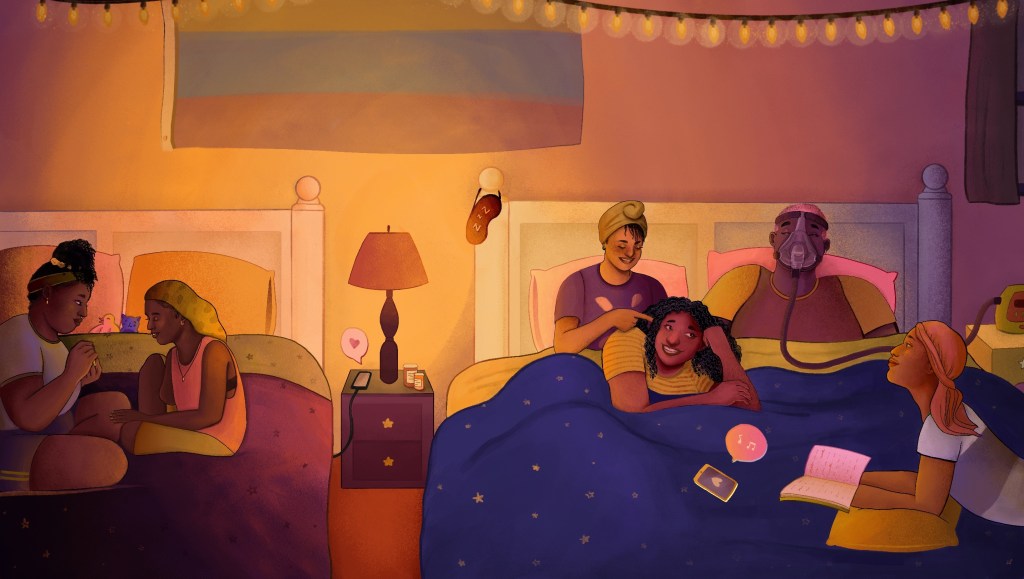
Let’s organize our lives around love and care.
Mission
We exist for the direct support and mutual aid of neurodivergent and disabled people.
We serve our loved people so we can keep on living through the onslaught.

Creed
I center the marginalized and the different. I center edge cases, because edge cases are stress cases and design is tested at the edges. I center neurodivergent and disabled experience in service to all bodyminds.

Covenant
We pledge to act and interact in ways that contribute to an open, welcoming, diverse, inclusive, and healthy community.
Philosophy
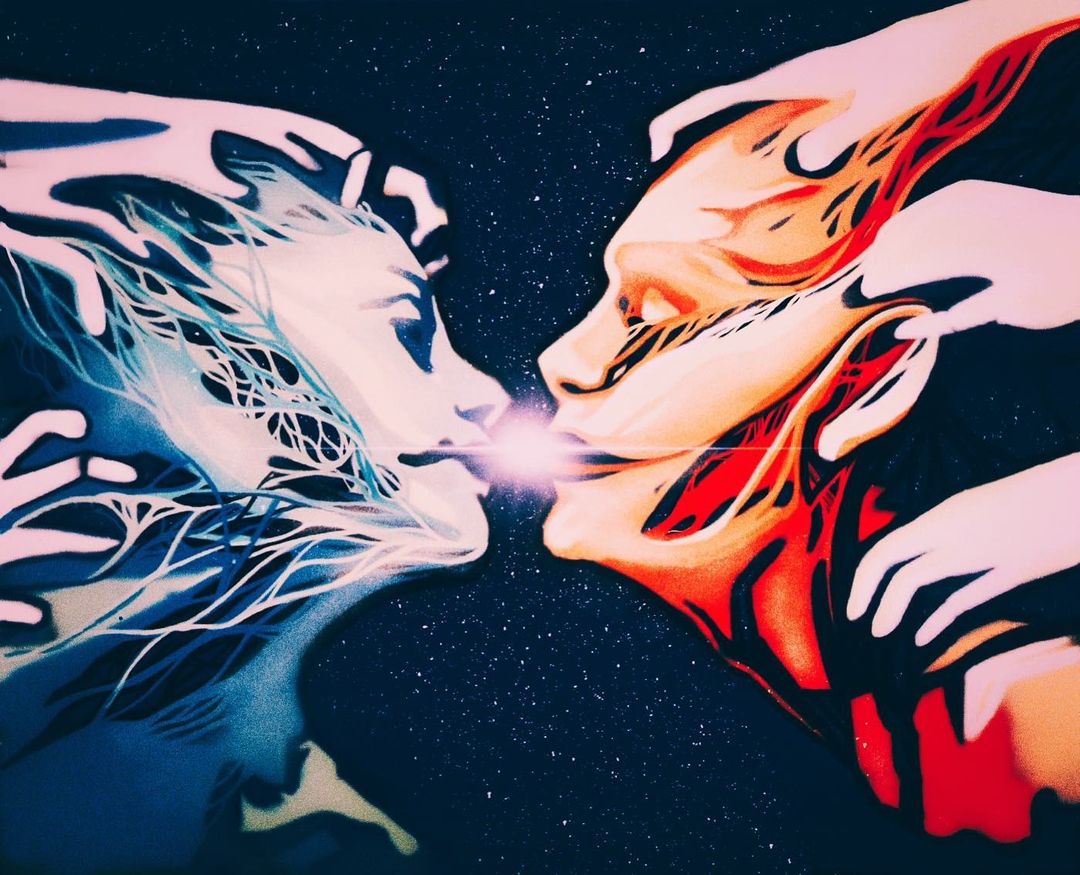
We steer by these acquired phrases. They are compasses and stars that align us on our mission.

Interdependence
It is time to celebrate our interdependence. Interdependence acknowledges that our survival is bound up together, that we are interconnected and what you do impacts others. Interdependence is the only way out of most of the most pressing issues we face today.

Edges
Our designs, our societies, and the boundaries of our compassion are tested at the edges, where the truths told are of bias, inequality, injustice, and thoughtlessness.

Manifesto
This is a manifesto that begins but will never end. This is a translation of my world into yours. This is a protest of the notion that there is any correct way to live. We reject neuronormativity and demand the right to learn and live differently.
Love and Care
Let's organize our lives around love and care
Let's write each other letters and call it prayer
Let's congregate in the place that isn't anywhere
At the temple of broken dreams
This post is also available in:


