
Category: Education
-

The Road to Neuronormative Domination: Thorndike won, Dewey lost. Skinner won, Papert lost.
Thorndike won, and Dewey lost. I don’t think you can understand the history of education technology without realizing this either. And I’d propose an addendum to this too: you cannot understand the history of education technology in the United States during the twentieth century – and on into the twenty-first – unless you realize that Seymour…
-

An Open Framework For Neuroqueer Learning Spaces
In Neuroqueer Heresies, Nick Walker (2021) describes embracing neuroqueering as a verb. When considering Neuroqueer Learning Spaces, we need to reinterpret, rethink, redefine, and reimagine what those spaces may look like and the journey required to be able to facilitate them. We are considering whether we can use the template Walker created for designing autism courses as a template for…
-
A Short Rumination on Our Journey to Neuroqueer Learning Spaces
We fought for the right to learn differently, and lost. The journey was instructive. We found ourselves along the way. We found community among other neurodivergent and disabled people. We found vocabulary, vocabulary like “neurodiversity”, “neurodivergent”, “neurotypical”, and, more recently, “neuroqueer”. …intentionally liberating oneself from the culturally ingrained and enforced performance of neuronormativity can be…
-
The Path to Equity Begins with Neuroqueer-Sensitive Learning Spaces
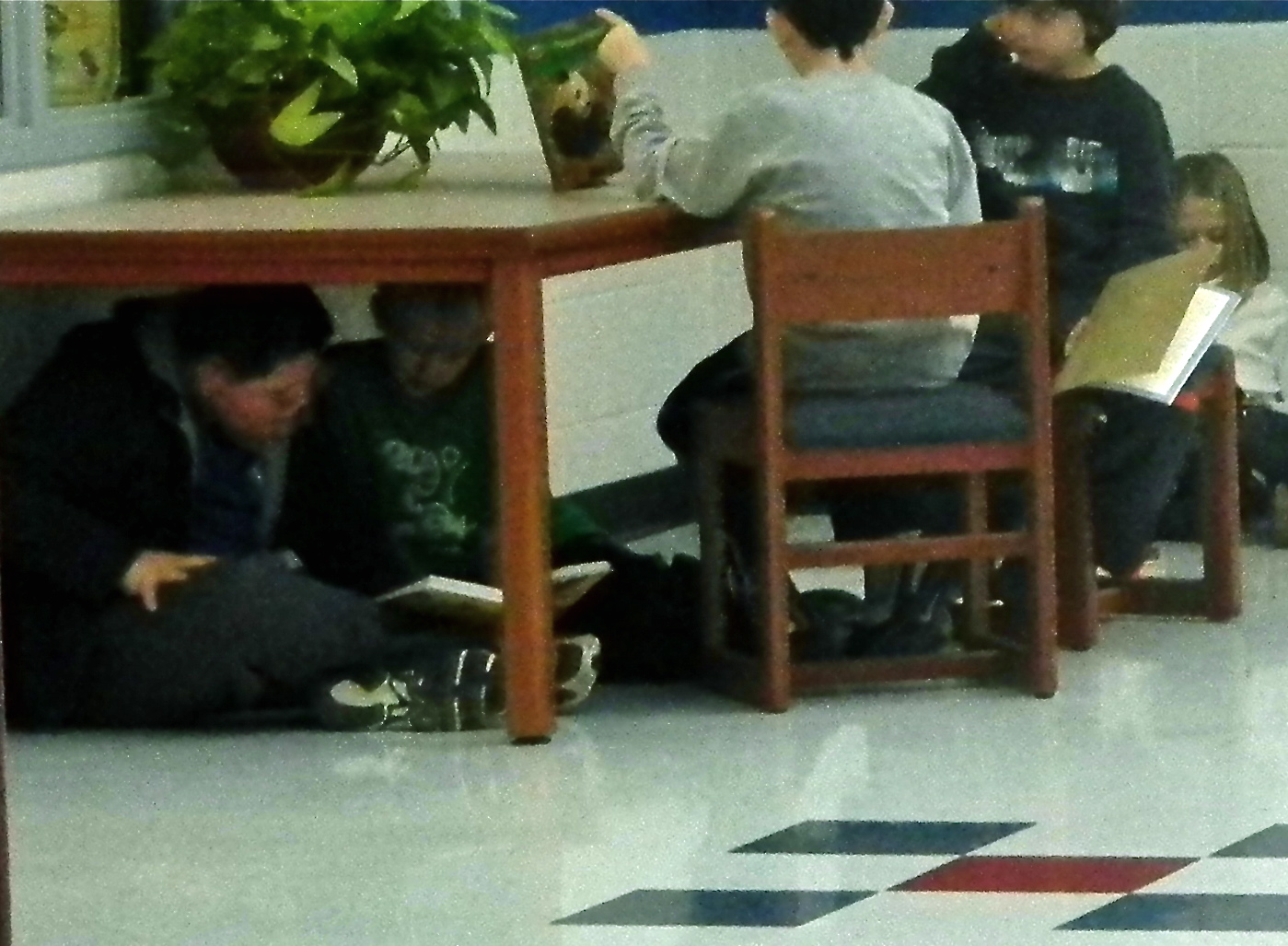
If you tell me where or how to sit, I’m unlikely to do either. If you tell me that I can’t leave a room, I will leave – absent serious restraints – and I won’t come back. If you cover up the windows, or if there are no windows, I will leave and not come…
-

Neuroqueering Education at Home
Zoe Williams is a late identified autistic parent, who writes about autistic identity and culture. Find her on Medium and Mastodon. Home education lends itself particularly well to neuroqueering, as learning at home allows parents to create a bespoke education that is tailored to the child. However, most adults have themselves been through the school…
-
Neuroqueering Learning Spaces: An Exploration
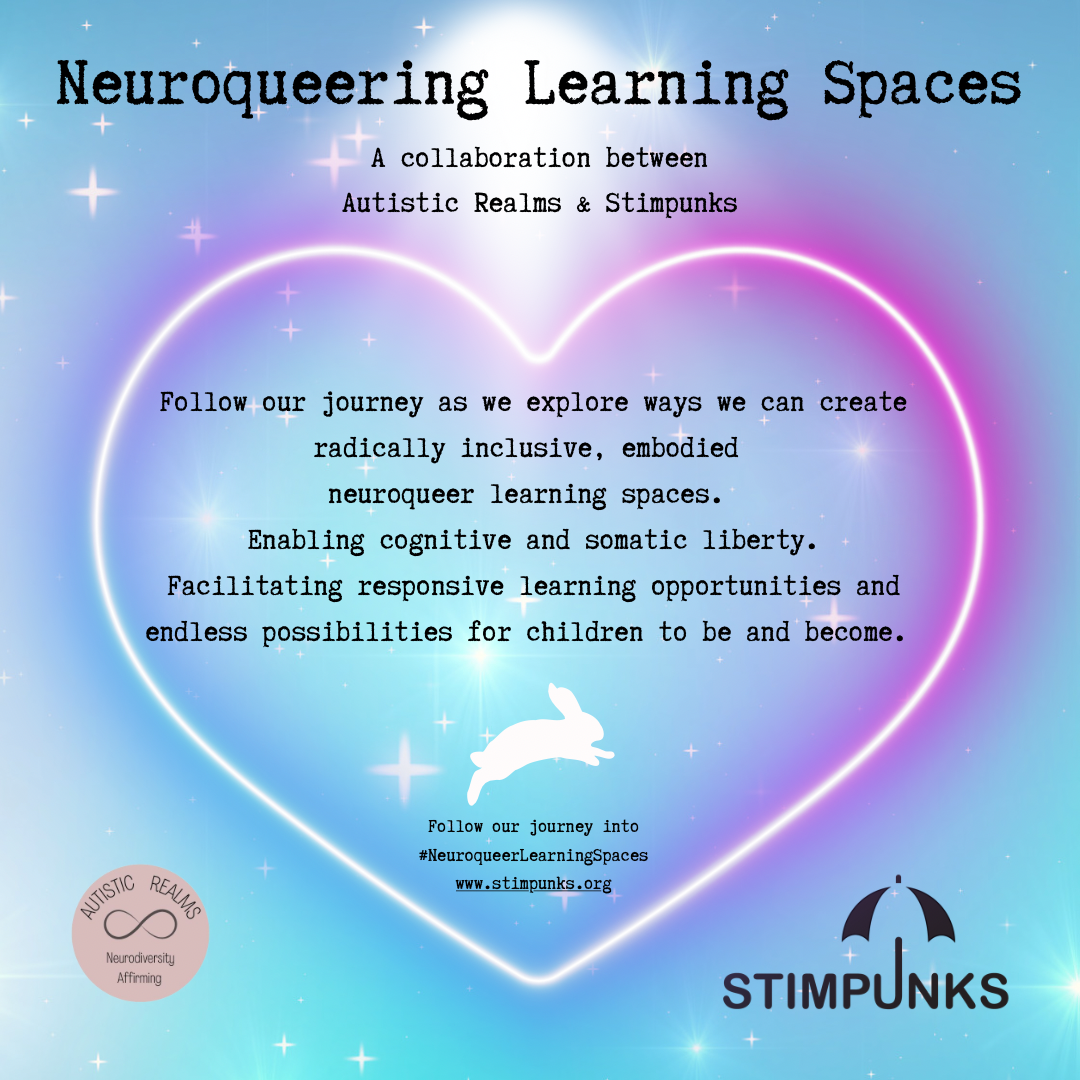
This piece is by Helen Edgar of Autistic Realms. “Intentionally liberating oneself from the culturally ingrained and enforced performance of neuronormativity can be thought of as neuroqueering” Walker, 2021 neuronormativity = a set of norms, standards, expectations and ideals that centre a particular way of functioning as the ‘right way’ to be neuroqueer = subvert, defy, disrupt,…
-
Call for Submissions: Neuroqueer Learning Spaces
Open Invite: Neuroqueer Learning Spaces We’re requesting community writing and art about neuroqueering education, play, and learning spaces. Ryan of Stimpunks and Helen of Autistic Realms are collaborating on a project. Any community work will be shared on the Stimpunks website and some work may be included in our chapter submission for Nick Walker’s new…
-

Creating Cavendish Space on a Budget
Design for nervous systems, not aesthetics. What Is Cavendish Space? Cavendish Space: psychologically and sensory safe spaces suited to zone work, flow states, intermittent collaboration, and collaborative niche construction. Cavendish Space – Stimpunks Foundation Cavendish Space is a regulation-centered learning environment built around three spatial archetypes: Our advocacy for Cavendish Space and caves, campfires, and…
-

Contextual Computing, Workflow Thinking, and the Future of Text
I consider text to be an indispensable part of our societies, no matter where situated on our planet. The potential permanence of the written record is vital to our recall of the past and to our ability to communicate with the future. Vinton G. Cerf, Foreword, The Future of Text We need to become better…
-

Seven Principles for Valuing, Prioritising and Enabling Autistic Children’s Autonomy
““Shut your face!”; Prioritising, Valuing and Enabling Autistic Children’s Autonomy.” by Play Radical is excellent. It’s well-organized, well-paced, and nicely illustrated. I really like the “Seven Principles for Valuing, Prioritising and Enabling Autistic Children’s Autonomy”. These are spot on. Seven Principles for Valuing, Prioritising and Enabling Autistic Children’s Autonomy A Playful Manifesto Also from Play…
-

The Four Stages of Loving Mistakes
I like “The Four Stages of Loving Mistakes” from our friends at Floop: Those align with my experience of iterative engineering cultures, where blameless post-mortems are practiced. The four stages are compatible with learner safety. Try using them in your learning space. Learner safety and iterative cultures go great together. Further reading:
-
Agile and Scrum in Education
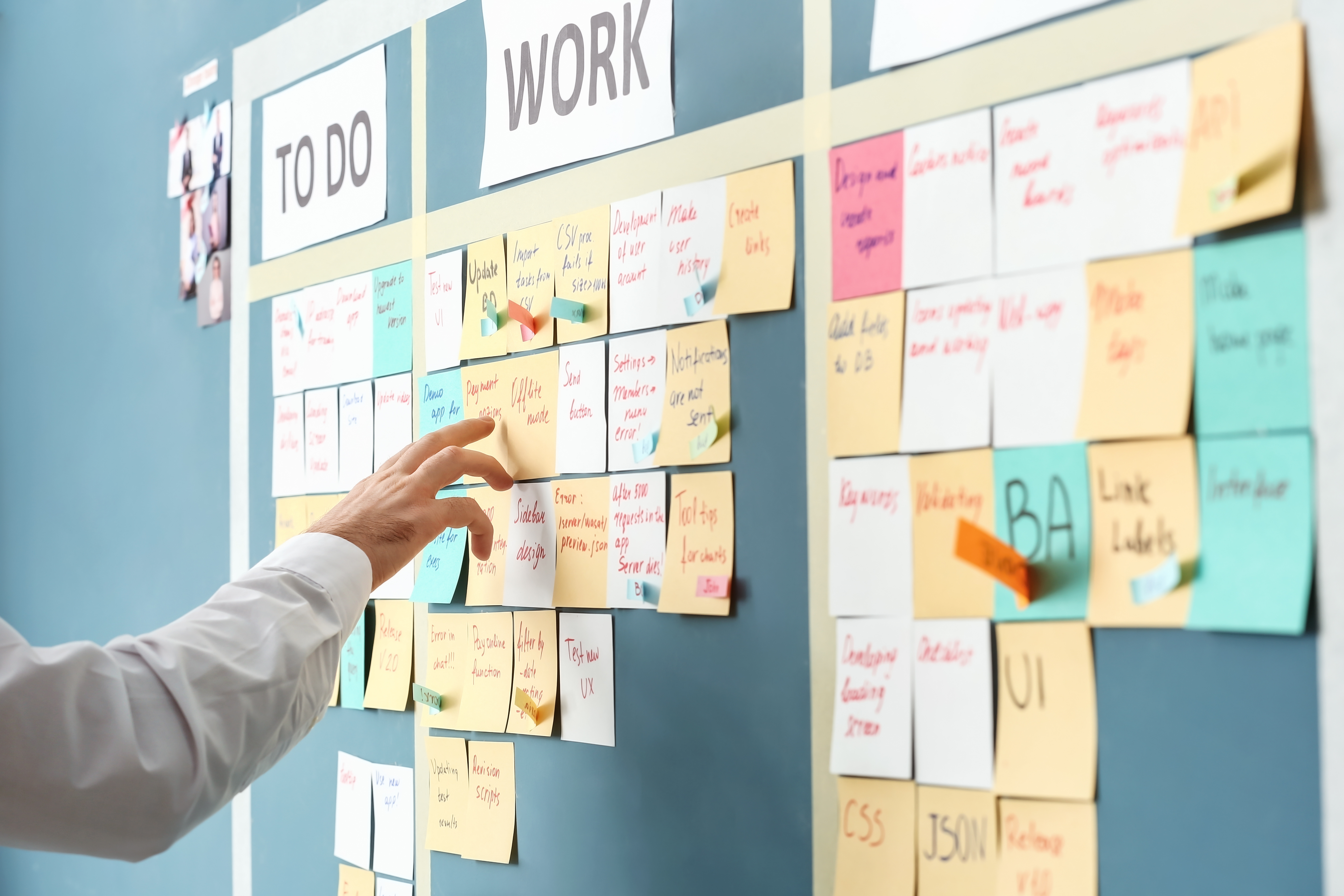
Scrum is an iterative and incremental agile software development framework for managing product development. Scrum (software development) – Wikipedia, the free encyclopedia Agile software development describes a set of principles for software development under which requirements and solutions evolve through the collaborative effort of self-organizing cross-functional teams. Agile software development – Wikipedia, the free encyclopedia…