
If you tell me where or how to sit, I’m unlikely to do either. If you tell me that I can’t leave a room, I will leave – absent serious restraints – and I won’t come back. If you cover up the windows, or if there are no windows, I will leave and not come back. If the lighting is bad, or flickering (old fluorescents), or too harsh. I will be focused on only that and not hear a word you say. If you insist that I not have my technology – which for me means that mobile phone – you’ve taken all the most important learning tools I have away from me, and that loss is all I will focus on, and not hear a word you say. If all the walls are covered with stuff – the way so many elementary teachers love to decorate – I will get crazy, then angry, and if you’re lucky, I will leave and not come back. If there are lots of people behind my back, I will get scared, then frustrated, and if you’re lucky, I will leave and not come back.
This has always been my life battle with terrible learning spaces. It was true in first grade. It was true in grad school. It remains true as I walk classrooms today.
I’m not sure that I should need to apologize because the structure, environment, and culture that you have chosen to impose literally makes me sick. Nor am I sure that my inability to exist in the spaces you have personally created should force me to bear any of your insulting labels. I am who I am. I do not want to be fixed. I do not want to “learn to deal with it.” I believe that if you call yourself an educator, you need to respect my needs and the needs of all the others who want to learn but are not “just like you.”
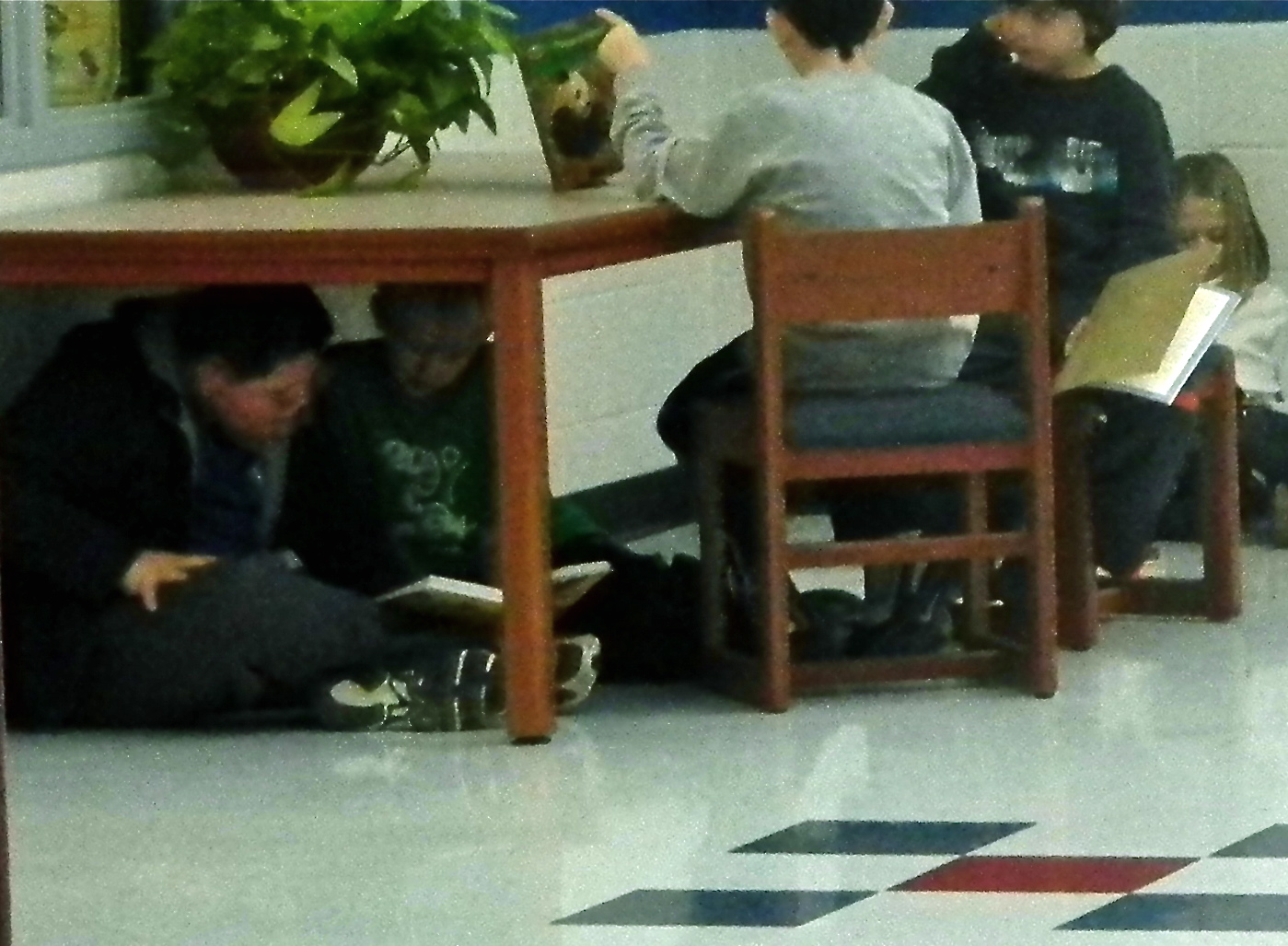
And the fact is, it’s easy. I’ve watched teachers create classrooms where every learner can get fully comfortable. They choose where, how, or if to sit. They lie on the floor and sit on the window sills, dangling their feet. They sit on couches. They have phones and often earbuds or headphones. The lighting is provided by thrift store task lighting. There are views out the windows and at least one blank wall that doesn’t assault learners’ vision. They’re not painted white (the medical field learned in the 1970s that white spaces increased pain perception for most patients). Learners can get up and walk out to a water fountain, to the toilet, just to walk, without anyone’s permission. They can eat, drink, fidget, and change positions. They can find something very close to privacy. In other words, everyone in the room can be a real human.
All my life… at least since school began, I’ve tried to get people to understand that I’m fully human, with all the rights to live my life that others have. I learned that there were spaces I could be comfortable in – theater, the visual arts, much of architecture school, oddly – you may not believe this, but the New York City Police Department was great. So, I know it’s possible. In my work life in education, I’ve fought for all the kids who don’t have those safe spaces, because unless your spaces are safe, you are making children (and adults) unsafe. And making people unsafe is just not OK.
This piece is by Ira Socol: Neurodivergent educational provocateur, and believer that schools can be great learning spaces, if those in power would open their eyes.
License: CC BY-SA 4.0
Comments
One response to “The Path to Equity Begins with Neuroqueer-Sensitive Learning Spaces”
So frustrating that children are still being sent home from school for autistic responses to their environment