
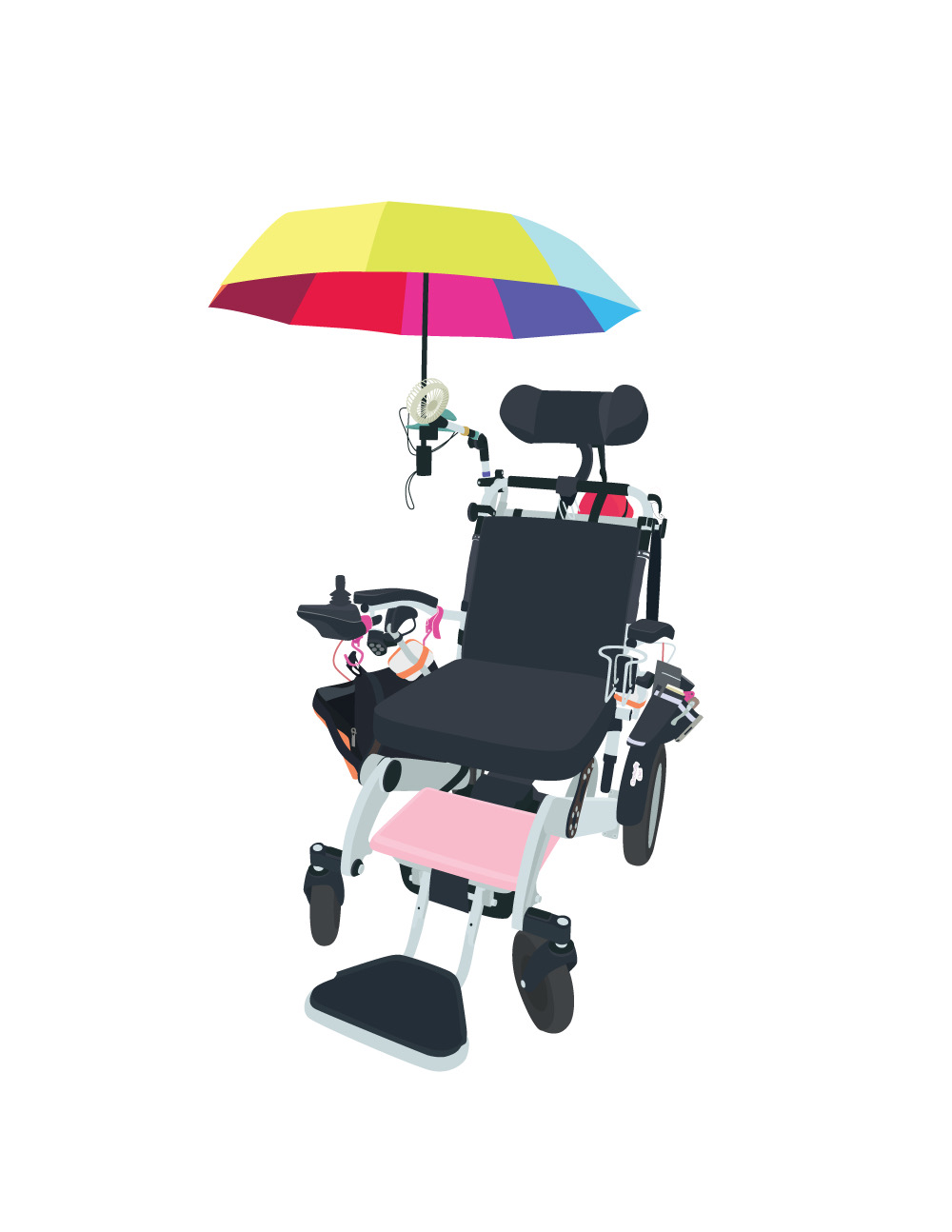
Stimpunks was forged in the quest for survival and inclusion. We are a 501(c)(3) nonprofit built by and for neurodivergent and disabled people. Stimpunks was founded in December of 2021. We are a community affair. We’re Autistic, ADHD, OCD, PTSD, Tourettes, schizophrenic, bipolar, apraxic, dyslexic, dyspraxic, dyscalculic, non-speaking, and more. We’ve collectively experienced rare diseases, organ transplants, various cancers, many surgeries and therapies, and lots of ableism and SpEd. We’ve experienced #MedicalAbleism, #MedicalMisogyny, #MedicalRacism, #MedicalTrauma, and #MedicalGaslighting. We understand chronic pain, chronic illness, and the #NEISvoid “No End In Sight Void”. We know what it’s like to be disabled and different in our systems. We know what it is like to live with barriers and what it means to not fit in and have to forge our own community. Disabled and neurodivergent people are always edge cases, and edge cases are stress cases. We can help you design for the edges, because we live at the edges. We are the canaries. We are “the fish that must fight the current to swim upstream.“

All we did was refuse to believe that we were the problem.
Rolling Warrior: The Incredible, Sometimes Awkward, True Story of a Rebel Girl on Wheels Who Helped Spark a Revolution
Have you ever taken flack from the bullies on attack
Cause you're different

They laugh and call you names
But that ain't no badge of shame
Just cause you're different

People gonna stare, you unsettle them and scare ’em
Cause we're different
Walking down the street
When you pass they
Take a peek
There's something different

Live your life outside the box
Blow off all the empty talk
They focus on the things you're not
Just walk your walk
And roll your roll

Table of Contents
- 🔔 Our “Moment of Obligation”
- Administrivia
- Directors and Board Members
- Ryan Boren ( he / they ), Co-Founder, Co-Creative Director, Board Chair
- Chelsea Adams ( she/her ), Executive Director
- Norah Hobbs, ( she/her ), Program Director
- Helen Edgar ( she/her ), Co-Creative Director
- Betsy Selvam ( she/her ), Board Vice Chair
- Becky Hicks ( she/her ), Board Member
- Kristina Brooke Daniele ( she/her ), Board Member
- Volunteers
- Emeritus
- What makes us different, makes all the difference in the world.
- ✊ We’re a Feisty Group of Neurodivergent and Disabled People
- We…
🔔 Our “Moment of Obligation”
Stimpunks was created to forge the way for educational inclusion and to give our community the means to thrive. We as a disabled and neurodivergent run organization had to roll our own education, because even the “all means all” of public education failed to include us and those we serve. We had to create our own care systems, because “we realized that the only people who care enough about us to work consistently for our liberation are us.” “Responsibility for the survival of entire communities lies with us.”
In other words…
One Idea Per Line
- Stimpunks was created to advocate for educational inclusion and empower our community.
- As a disabled and neurodivergent organization, we had to create our own education because public and private education did not include us.
- We had to establish our own care systems because we recognized that the only ones who consistently work for our liberation are ourselves.
- We believe that responsibility for the survival of entire communities lies with us.
One Paragraph Summary
Stimpunks is a disabled and neurodivergent-run organization that was created to address the lack of educational inclusion and support for their community. They have developed their own educational programs and care systems to ensure that the needs of disabled and neurodivergent individuals are met. Inspired by the Combahee River Collective, Stimpunks emphasizes the importance of self-care and self-determination, recognizing that the responsibility for the well-being and liberation of their community lies with the community itself. Their goal is to empower their community to thrive and advocate for their rights and inclusion in society.
Five Paragraph Summary
Stimpunks is an organization that was created with the aim of promoting educational inclusion and providing support for the disabled and neurodivergent community. The founders of Stimpunks, who are themselves disabled and neurodivergent, recognized the lack of inclusivity in public and private education systems and decided to take matters into their own hands.
One of the ways Stimpunks addresses this issue is by offering their own educational programs. They have developed courses that cater to the specific needs and learning styles of disabled and neurodivergent individuals. By creating their own education, Stimpunks ensures that the content is accessible and relevant to their community.
In addition to education, Stimpunks also focuses on creating care systems that meet the needs of their community. They understand that the responsibility for the well-being and liberation of the disabled and neurodivergent community lies with the community itself. They have taken inspiration from the Combahee River Collective, a Black feminist organization, which emphasized the importance of self-care and self-determination.
Stimpunks recognizes that traditional systems often fail to adequately support marginalized communities, and they have taken it upon themselves to fill this gap. By creating their own education and care systems, they are empowering their community to thrive and take control of their own destinies.
Stimpunks’ approach is not limited to education and care alone. They also advocate for the rights and inclusion of disabled and neurodivergent individuals in society at large. Through their work, Stimpunks aims to challenge the existing systems and create a more inclusive and equitable world for all.
AI Disclosure: The summaries above were created with the help of Elephas AI Assistant.
Accordions labelled “In other words…” explain things in different ways, including

I wanna see a feisty group of disabled people around the world…if you don’t respect yourself and if you don’t demand what you believe in for yourself, you’re not gonna get it.
Judith Heumann
The world doesn’t want us around and wants us dead. We live with that reality, so there’s always gonna be, uh, ‘Am I gonna survive? Am I gonna push back? Am I gonna fight to be here?’ that’s always true. So, if you wanna call that anger, I call it kind of drive. You know, you have to be willing to thrive or you’re not going to make it.
Corbett O’Toole

Administrivia
Before we get feisty, here are a few administrative about pages.
- Brand Identity: Logos, Symbols, and Visual Storytelling
- License: Everything Is a Remix
- QR
- Supporters
- Disclosures
- Equity Statement
- Accessibility Statement
- Testimonials
- Frequently Requested Information
- Emeritus
- We…
Okay, feisty time.
Directors and Board Members
Ryan Boren (he/they), Co-Founder, Co-Creative Director, Board Chair
Ryan is a former WordPress lead developer who retired from tech in 2021 after 15 years at Automattic, the distributed company he helped start. He finished his time at Automattic working on the Diversity, Equity, and Inclusion team and helping create and run the Neurodiversity Employee Resource Group. Building a community, a company, a platform, and an ERG was an intense ride full of mistakes and learning that Ryan distills into Stimpunks.


Chelsea Adams (she/her), Executive Director

As the Executive Director of Stimpunks Foundation, Chelsea is deeply committed to advancing disability and neurodiversity justice through advocacy, empowerment, and community-building. With over 4 years of experience in the non-profit sector, Chelsea is passionate about creating an inclusive world where all individuals—regardless of ability—have access to the resources, opportunities, and support they deserve.
Chelsea’s journey began in middle school when she volunteered for a special needs basketball team. Her experience with being AuDHD while in the US Army also opened her eyes to the broken systems we live in. She saw the need for inclusion and accessibility at a young age, and her passion for disability justice grew from there. This sparked her dedication to dismantling systemic barriers and creating positive change for individuals with disabilities and neurodivergent communities. Throughout her career, she has worked closely with individuals, families, and stakeholders to foster understanding and build meaningful partnerships aimed at promoting social equity and respect for all people.
At Stimpunks Foundation, We provide mutual aid, creator grants, learning opportunities, human-centered research, and living wages for our community., and under Chelseas leadership, we strive to ensure that the voices of people with disabilities and neurodivergent individuals are heard, valued, and respected. We believe in the power of collaboration and the importance of centering the lived experiences of those most affected by injustice, ensuring that our work is driven by inclusivity, compassion, and integrity.
Norah Hobbs, (she/her), Program Director

Norah has always had a heart tuned to the quiet voices of the world—the overlooked, the underserved, the underdogs. Whether in bustling hospitals or quiet shelters, she has made it her mission to reach into chaos and pull out kindness.
With a solid foundation in direct patient care and a Bachelor’s Degree in Occupational Safety & Health, Norah brings both skill and soul to every space she enters. Her work and life experience being AuDHD and raising two neurodivergent children bridges clinical understanding with a deeper calling: to create environments where kindness, inclusion, and accessibility aren’t just goals—they’re givens.
Like Alice stepping through the looking-glass, Norah sees beyond the surface. She notices what others miss. She understands that true safety isn’t just physical—it’s emotional, cultural, and deeply human.
“It would be so nice if something made sense for a change,” said Alice. In a world that often doesn’t, Norah is one of the few working to build spaces that do make sense—where people of all backgrounds and abilities can thrive, not just survive.
But her compassion doesn’t clock out. In her spare time, she is a quiet but fierce rescuer of the “underdogs”—animals or individuals whose stories may have begun in hardship but find, through her, a new chapter of care and dignity. With every creature she saves, she rewrites a little more of the world in the image she believes in: fair, gentle, and welcoming.


Her life is a patchwork of small wonders and big purpose. She quotes Carroll not just for whimsy, but because she lives the spirit of those words:
“The best way to explain it is to do it.”
And so, she does—quietly, fiercely, daily. She isn’t interested in being the center of attention. She’s far more concerned with making sure no one else is left out. If you ask her why, she might offer a crooked grin and say, “We’re all mad here.”
Then she’d hand you a leash, a clipboard, or a cup of tea—and invite you to join her in making the world a little softer for someone else.
🐇 …when suddenly a White Rabbit with pink eyes ran close by…
Helen Edgar (she/her), Co-Creative Director
Helen is late diagnosed autistic and a parent to two neurodivergent children.
Helen studied History of Art and English Lit before gaining her teaching qualification in the UK.
She has 20 years of experience supporting those with profound and multiple learning disabilities as an early years / primary teacher.
Helen set up Autistic Realms in 2022 and now specialises in autism, education and mental health advocacy.
She is a published writer and creates resources for young people and their families, and for the people supporting them.
Current focus: Monotropism, Autistic Burnout and Neuroqueer Theory.
Passions: Sensory dens, woodland/moss/water, images and thoughts with circle and spiral patterns. Soundscape music and Aurora.
Collector of theory, research, words and faery-related things

Betsy Selvam (she/her), Board Vice Chair
Betsy Selvam is an artist from Vellore, south India. Currently, she is a PhD candidate interested in autistic life writing. Betsy has had a lifelong passion for art and literature. Her creative work may be found in Mulberry Literary, Anti-Heroin Chic and Samjoko, among other places. As a neurodivergent artist, Betsy hopes to use her art and writing for positive change.

Becky Hicks (she/her), Board Member
Becky Hicks is an Art Director at HM Advertising. She has almost 30 years experience in advertising, designing for print, web and styling and directing photo shoots. In her free time she runs the Algiers Point Free lil Pantry and entertains her pet pig, Coco Chanel.


Coco’s Setlist
Kristina Brooke Daniele (she/her), Board Member

Kristina enjoys reading speculative fiction, write tales of romance, build homes and design apartments in The Sims 4, peacefully commune with ancient lands in Age of Empires, dabble in various arts and crafts, and spend time with her family.
Volunteers
Adriel Jeremiah Wool (he/him), Artist, Writer

Adriel Jeremiah is an computer programmer with a deep background in origami and folding.
This artwork is an extension of a world view involving folding; often involving higher dimensional spaces.
Many of these designs contain the mathematical magic of the transcendental numbers of nature, and all of them are the extension of the provisions of space itself; to be both physically folded, and conceptually folded, circularily (sic) and across many levels of expression.
Emeritus
Here are past staff and volunteers who helped us build this thing.
- Kristina Brooke Daniele ( she/her )
- Brandi Cerna ( she/her )
- Heike Blakley ( she/her )
- Kyle Duce ( he/him )
What makes us different, makes all the difference in the world.

Our friends at Randimals have a saying,
What makes us different, makes all the difference in the world.
Randimals
We agree.
Many years ago, a friend dubbed Ryan “Bearmouse”, intuiting a part of his neurodivergent spiky profile.

There is consensus regarding some neurodevelopmental conditions being classed as neurominorities, with a ‘spiky profile’ of executive functions difficulties juxtaposed against neurocognitive strengths as a defining characteristic.
Neurominorities, Spiky Profiles, and the Biopsychosocial Model at Work
Inna decided on Bunnybadger and Chelsea decided on Pandillo. Their Randimals also hint at their neurodivergent profiles.


Image credit: Becky Hicks
Our Randimals capture our exposure anxiety, social anxiety, rejection sensitive dysphoria, emotional sunburn, very grand emotions, justice sensitivity, and other neurodivergent traits.
Read about Randimals, spiky profiles, learning terroir, neurological pluralism and Weird Pride on our “Different” page.
Nobody’s a nobody and everybody is weird like you and me!
The Amazing World of Gumball – Nobody’s A Nobody
Our divergent bodyminds aren’t all that’s different about us. We’re different than most autism and disability organizations because we are led by autistic and disabled people. We use different language, different framing, and have little patience for respectability.
Respectability politics didn’t save me then, and they won’t save our community or movement now or in the future either.
Our movement, however, needs nothing of respectability politics. Accepting — conceding, surrendering, submitting to — that will only erode our movement until it crumbles entirely. Respectability politics is what’s gotten us into reliance on foundations and nonprofits, and elected officials and bureaucrats, and policies and programs that only benefit the most privileged and resourced members of our communities at the direct expense of the most marginalized. Radical, militant anger — and radical, militant hope, and radical, wild dreams, and radical, active love — that’s what’ll get us past the death machines of ableism and capitalism and white supremacy and laws and institutions working overtime to kill us.
Autistic Hoya — A blog by Lydia X. Z. Brown: The neurodiversity movements needs its shoes off, and fists up.
✊ We’re a Feisty Group of Neurodivergent and Disabled People

This photo was taken by Chona Kasinger.
Disabled outrage is necessary and liberatory; it reveals the fissures in society and the consequences of structural oppression. It comes from a place of hurt and injustice. It is resistance against erasure.
Disabled Outrage and #PodSaveJon – Disability Visibility Project
The neurodiversity movements needs its shoes off, and fists up.
We have protests to stage, driven by the fuel of our righteous anger. We have speeches to make, written from the soaring pleas of our individual and collective trauma, and our wildest dreams of joy and freedom and love. We have cultural narratives to rewrite because they really do hate us and they really will kill us, and if we’re going to rewrite the narratives, then there’s no reason to hold ourselves back from our most radical and defiant rewritings. We have autistic children who need us to support them as architects of their own liberation against the schools and clinicians and institutions and police and prosecutors who would crush and destroy them.
We’re going to need our anger and our public celebrations of stimming and our complicated, imperfect, messy selves for this long and hard road, because we need all of us, and all of our tactics and strategies, to keep a movement going and ultimately, to win.
Autistic Hoya — A blog by Lydia X. Z. Brown: The neurodiversity movements needs its shoes off, and fists up.
My kids have been kicked out of many, many places for being different—just like I was.
Catapult | The World Doesn’t Bend for Disabled Kids (or Disabled Parents)
The question is simple: Is there room for disabled kids at a piano school? On a swim team? In most classrooms?
The answer, right now, seems to be no.
I, Victoria Lin Tanner, am just one of many people who discovered, after a lifetime of struggle, that I am autistic. This book is about my journey of self-discovery. It is also a scream into the cold, black void where no help is to be found for people like me. Autistic children become autistic adults, so why is there no support for us? I am here to shine a glaring spotlight on the ways that society has failed autistic adults. For many of the 5 million+ autistic Americans, and ~75 million worldwide, life would be made far more manageable and frankly, happier, if our struggles were supported in meaningful ways rather than through #autismawareness retweets and puzzle piece merchandise.
We are here, we are angry, and we are only going to get louder.
Autistic adults are not okay.
Autistic Adults Are Not Okay – Victoria Lin Tanner, Autistic Adults Not Okay, Autistic Visibility Project
Autistic Adults Are Not Okay – by Lin Tanner, Victoria
Because every single thing you hate about us, you will hate about yourself. And becoming us is a lot easier than you think it is.
The instant, almost the very instant, you become disabled, you cease to be seen as a reliable narrator of your own story to literally everybody else, except for disabled people.
Every single ableist stereotype that you’ve heard for your entire life that you’ve never evaluated, that will be the lens through which other people see you, including people that know you.
This is one of the many reasons why people need to do anti-ableism work. Because every single thing you hate about us, you will hate about yourself. And becoming us is a lot easier than you think it is.
Imani Barbarin, MAGC | Crutches&Spice
This is what disability advocates have said all along, not that it usually sinks in: The able and the disabled aren’t two different kinds of people but the same people at different times.
This is what disability advocates have said all along, not that it usually sinks in: The able and the disabled aren’t two different kinds of people but the same people at different times.
Tom Scocca’s Medical Mystery: The Year My Body Fell Apart
We are the only minority community that anyone can join at any time.
11 Disability Rights Activists on Where the Fight for Justice Stands | Teen Vogue
Disability always has been and always will be a natural part of the human condition.
Simply a form of human variation, disability is universally present across racial, gender, age and socioeconomic lines. Moreover, disability represents the only minority group that anyone can join at any time and, when all human impairments are taken into account, people with disabilities by far encompass the largest minority group in the United States.
Elements and Essentials of the ADA
They don’t take Disability Studies classes. They don’t socialize with us. They don’t listen to us.
CW: medical trauma, medical ableism
I remember laying there, remembering that this experience I’m having is like the other times that I almost died.
And I can feel my life slipping away.
Is it worth it for me to call out and have someone save me?
That’s how traumatized that I’ve been by being in hospitals and in medical settings.
And I need for doctors and healthcare professionals to understand that many of us are traumatized like that.
It’s not abnormal for people like myself who have chronic illnesses, who have cancer, and have high touch and high interactions with medical professionals, to feel traumatized, to feel, is it worth it for me to go and get help for this experience that I’m having, for the possibility that something major is wrong?
Because for some of us waiting to see is worth the risk of possibly dying.
That’s how much we are no longer emotionally prepared to go to the hospital.
That’s how bad a physical experience it is for some of us.
Tinu Abayomi-Paul – YouTube
During the hospital experience, I dealt with racism, I dealt with sexism.
The first doctor I had was fantastic, but they rotated him out.
And the rest of my experience, I had to fight every single day to be heard and understood and to get better care.
I didn’t have my chronic illnesses properly addressed, I didn’t have any of my neurodiversities taken into consideration at all, nor my comfort.
It was a hellish experience towards the end.
And I finally decided I just need to get out of there.
Tinu Abayomi-Paul – YouTube
Karrie Higgins
Which means THEY actually reduce us to “nothing but our conditions” far more than we do. #MedTwitter But hey, wouldn’t want to tell the good doctors they’re ignorant.
Karrie Higgins
The people society says are the most qualified to help are the people least equipped to understand.
How Autistic Mentors Can Help “Problematic” Autistic Students Succeed In School — THINKING PERSON’S GUIDE TO AUTISM
Our entire medical system from the rooter to the tooter is eugenics.
Imani Barbarin on Instagram: “The sad part is…I’m not even a little bit wrong. #ushealthcare #childfree #disability”
Bodies ride the waves
Somebody's gonna have to pay
Bodies, living on the shore in their sandcastles
Bodies, sea is getting rough and the walls rattle
Bodies, come with the tide
Nowhere left to hide
Bodies
Bodies

A thousand thoughts ride the waves
Can't save nobody, I'm too late
Bodies, no one cares about the coming last battle
Bodies, wavеs crashing down and the ocean swallows
Bodies
Whеre you gonna hide the bodies?
Bodies
Hey-oh-hey-oh
On the shore living in sandcastles
No one cares about the coming last battle
Sea is getting rough and the walls rattle
Waves crashing down and the ocean swallows
Bodies
Bodies

--Bodies by Rabbit Junk
Our movement needs nothing of respectability politics.
Respectability politics didn’t save me then, and they won’t save our community or movement now or in the future either.
Our movement, however, needs nothing of respectability politics. Accepting — conceding, surrendering, submitting to — that will only erode our movement until it crumbles entirely. Respectability politics is what’s gotten us into reliance on foundations and nonprofits, and elected officials and bureaucrats, and policies and programs that only benefit the most privileged and resourced members of our communities at the direct expense of the most marginalized. Radical, militant anger — and radical, militant hope, and radical, wild dreams, and radical, active love — that’s what’ll get us past the death machines of ableism and capitalism and white supremacy and laws and institutions working overtime to kill us.
Autistic Hoya — A blog by Lydia X. Z. Brown: The neurodiversity movements needs its shoes off, and fists up.
I wanna see a feisty group of disabled people around the world…if you don’t respect yourself and if you don’t demand what you believe in for yourself, you’re not gonna get it.
Judith Heumann
The world doesn’t want us around and wants us dead. We live with that reality, so there’s always gonna be, uh, ‘Am I gonna survive? Am I gonna push back? Am I gonna fight to be here?’ that’s always true. So, if you wanna call that anger, I call it kind of drive. You know, you have to be willing to thrive or you’re not going to make it.
Corbett O’Toole

I wanted to be part of the world but I didn’t see anyone like me in it.
Jimmy Lebrecht
This isn’t just a story that disabled children will love; it’s a story about what is possible when we fight for ourselves and each other. It is a story about how tenacity, strength, the power of community, and the willingness to fight for what matters can start a revolution.
ROLLING WARRIOR: THE INCREDIBLE, SOMETIMES AWKWARD, TRUE STORY OF A REBEL GIRL ON WHEELS WHO HELPED SPARK A REVOLUTION
More quotes from the movie “Crip Camp: A Disability Revolution”
Crip Camp starts in 1971 at Camp Jened, a summer camp in New York described as a “loose, free-spirited camp designed for teens with disabilities”. Starring Larry Allison, Judith Heumann, James LeBrecht, Denise Sherer Jacobson, and Stephen Hofmann, the film focuses on those campers who turned themselves into activists for the disability rights movement and follows their fight for accessibility legislation.
Crip Camp – Wikipedia
What we saw at that camp was that our lives could be better. The fact of the matter is that you don’t have anything to strive for if you don’t know that it exists.
Jimmy Lebrecht

I had to try to adapt. I had to fit into this world that wasn’t built for me.
Jimmy Lebrecht

If I have to feel thankful about an accessible bathroom, when am I ever gonna be equal in the community?
Judith Heumann

Watch Crip Camp.
Dear Problem Patients
Dear Problem Patients: An open letter to anyone who’s ever felt dismissed by their doctor – No End In Sight
- We believe you.
- You’re not alone.
- The wellness industry is gaslighting you.
- It’s not your fault.
- You are worthy of compassion.
- Medical bias is real.
- The way we see medicine practiced on television is a fantasy.
- We believe that you have a problem.
- We are angry and grieving too.
- Talking to other people who know what this feels like has changed everything for us.
- It’s okay to feel joy when your body is hurting.
- Feeling joy doesn’t undermine how much you are struggling.
- It’s okay if you haven’t found any joy in your struggle at all.
- Your story doesn’t need a neat and tidy ending.
- Somebody out there is yearning for a story just like yours that is honest about pain or maybe joy and that ends in an uncertain and messy place.
- Your story matters.
- We want to know your story.
- We want to help you find the stories you’ve been yearning for.
We…
Learn more about who we are and what we do on our “We…” page.
- We are.
- We ain’t.
- We do.
- We prefer.
- We rebuild.
- We serve.
- We’re here.
This post is also available in: Deutsch (German) Español (Spanish) Français (French) עברית (Hebrew) हिन्दी (Hindi) Svenska (Swedish)


