
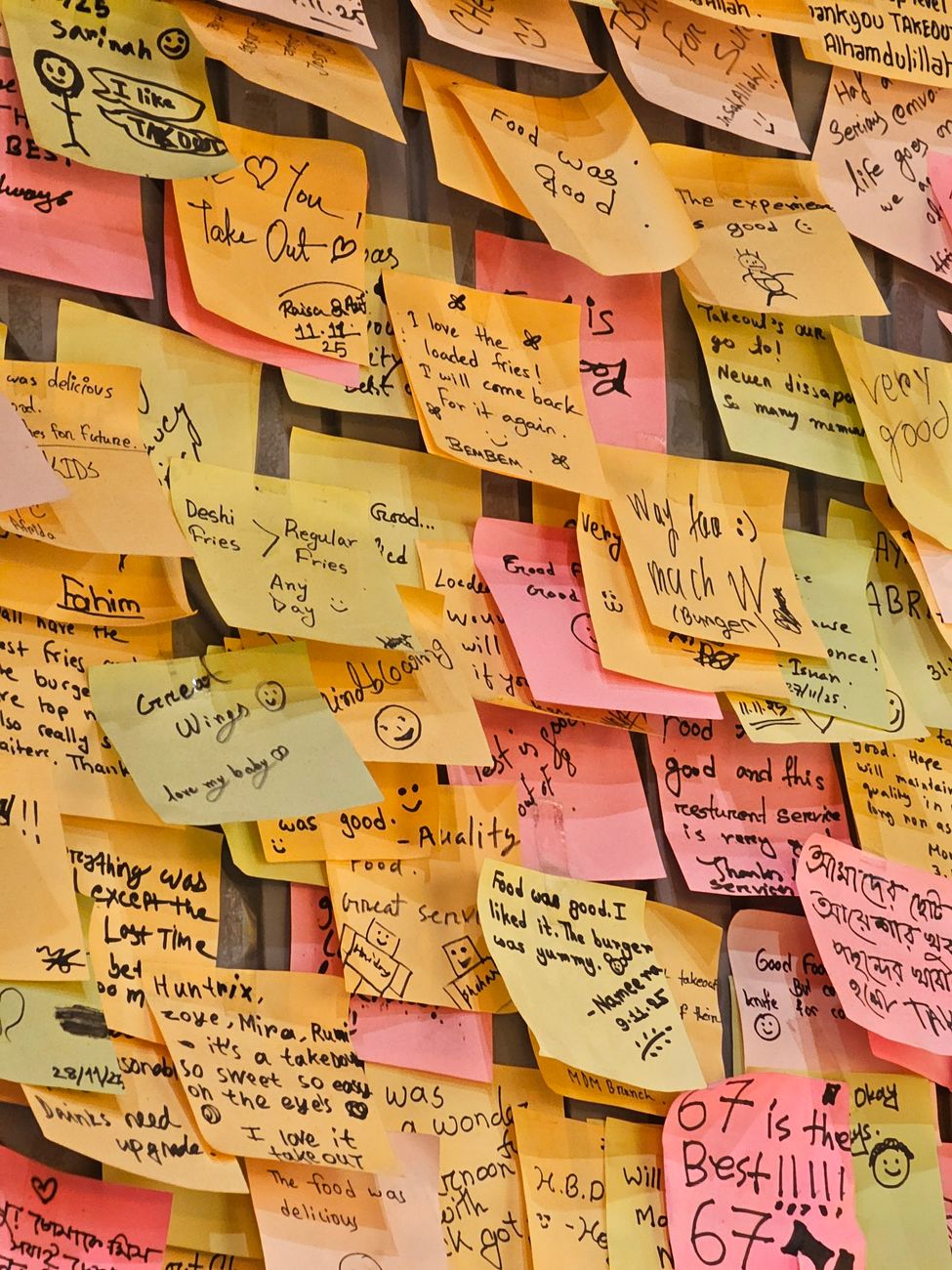
A knowledge base that only works when one person is at full strength isn’t a knowledge base — it’s a hostage situation.
Students must learn to assemble their own readily available collection of life solutions.
Ira David Socol, A Toolbelt for a Lifetime, by way of Toolbelt Theory
Every one of us is running a system we invented ourselves. The alarm labeled with a whole sentence because the word “meds” wasn’t enough. The one drawer where the important things go so they can’t be anywhere else. The spreadsheet nobody else could parse. The playlist that means it is time to start now. The specific mug. The note-taking setup you have rebuilt four times. The rule about not answering the phone. Most of these were built quietly, under pressure, without anyone calling them systems — and most of us have never had a room ask to see them.
Tonight we’re asking. Ryan opens with ten minutes on the Stimpunks Knowledge System — the thing we built so that our research library and our organizational memory don’t live in one head. Then the floor is yours for the rest of the hour. What systems have you created to help you work, live, and cope? What routines get you through the day?
No expertise required. No polish required. A sticky note on a laptop lid is a system, and it belongs on this mic next to anything else.
Date and Time: Thursday, August 6 at 7PM Central
What We’re Showing
Ten minutes, one walkthrough, then out of the way.
The Stimpunks Knowledge System is a folder of files, a Python script, Markdown, and git — deliberately boring technology where it counts. It holds our research library of 354 originals, every published post, page, and glossary term from our website mirrored as plain text, 12,878 highlights from books and articles, and a decade of working notes. Twenty-one small named tools maintain it. Three scheduled routines run it without anyone watching.
The demo covers the parts that generalize:
- The one rule everything hangs on. Original files are never edited, renamed, or cleaned up. Every summary, index, and category lives somewhere else and points back. That single split buys most of the resilience.
- An index of ideas, not just filenames. A filename index tells you what you own. A second index keyed to our glossary — 445 terms we already maintain in public — started telling us what we understand, and then told us what we were missing.
- What it found that we didn’t want to hear. Deficit ideology is load-bearing across our writing, and we filed almost nothing on it. We publish more than we hold. Now something says so out loud.
- The honest limits. Six of 355 concept pages have anything written on them. The generated index mis-files things. The search index goes quietly stale. Documenting the gaps is part of the job.
If you want the version you can actually run, there’s Start Your Own Knowledge Garden — five steps that degrade gracefully, the first needing no software at all.
Then we stop talking about ours.
The Stimpunks Frame
Everyone has a different toolbelt
Toolbelt Theory says people assemble their own collection of life solutions, and choose among them based on the task, the environment, and their capabilities at that time — which change. Ira David Socol wrote it about students and classrooms. It describes the rest of life exactly as well.
The important word in that definition is their own. There is no correct toolbelt. There is no system that works for everyone, and a system that works for you in March may be useless to you in November, because you are not a fixed machine and neither is your week. Sameness-based fairness would hand us all the identical planner and call it equitable. Needs-based access hands each of us the thing that actually works and doesn’t ask us to justify why it’s different.
So tonight is not a best-practices session. Nobody is going to leave with the one true method. You’ll leave with other people’s inventions, which is better.
Bus factor 1 is a design failure — at home, too
We built the Knowledge System around a blunt question: what happens to everything we know when the person holding it is unavailable? Almost nobody gets hit by a bus. People burn out. People have flares. People take leave, grieve, move, or need six weeks where reading a PDF is simply not going to happen. That is normal human variation, not a failure of character — and a system that treats it as an exception is badly designed.
That standard doesn’t stop at the organization. Most of the personal systems people have built are exactly this: a bet against your own future bad week. The freezer meal. The written-down phone tree. The document that tells someone else how to feed the cat, refill the prescription, log into the account. The note you left yourself because you knew Future You would not remember and would not be well enough to reconstruct it.
Designing for your own absence is not pessimism. It’s interdependence taken seriously — the assumption that capacity is real, finite, and variable, built in from the start instead of bolted on as a contingency.
This is not a productivity system
We want to be blunt about this, because the genre is full of the opposite. Nothing in what we built counts your output or asks you to keep a streak. No dashboard turns red. No urgency cues, no time limits, no gamified guilt. Those are hostile design in anything meant to hold knowledge for people with variable capacity, and they’re hostile design in your kitchen too.
We’re also wary of techno-solutionism and technoableism, and we’re not going to pretend a folder structure fixed anything structural. A system doesn’t create capacity. At best it stops you wasting the capacity you have on finding things you already had.
The systems we’re asking about tonight are survival infrastructure, not optimization. The pill organizer counts. The samefood rotation counts. The script for phone calls counts. The rule about not scheduling anything before noon counts. If it gets you through the day, it’s on topic.
Show us the low-tech one
There’s a pull in a session like this toward whoever has the most elaborate setup, and we’d like to name it so it doesn’t take over the hour. The most useful thing anybody shares tonight will probably cost nothing and take ten seconds to explain.
A sticky note in the right place is a system. Leaving the thing by the door is a system. A body double on a video call while you do the dreaded task is a system, and it’s one of the most effective ones we know. A competency network — knowing who to ask about what — is a system, and it lives entirely between people.
Bring the unglamorous one. It’s the one someone else can actually use tomorrow.
Join Us
Infodumplings happens every Thursday at 7PM Central in the Stimpunks Learning Space.
Bring your system. A workflow, a routine, an app, a physical object, a rule you made for yourself, a hack you’re a little embarrassed by. Bring the one that failed and what you learned from it — that counts too. Or bring nothing and come collect other people’s; lurking is a real and honored way to show up.
- Cameras optional. Chat-only participation fully valid.
- Stims, movement, and fidget tools encouraged.
- No one will be called on. Silence is participation.
- Screen sharing available if you want to show rather than describe.
Want to curate a future session? Get in touch →
How the Hour Goes
| Time | What’s happening |
|---|---|
| 7:00 PM | 👋 Welcome & housekeeping — set the theme: the systems we build to get through |
| 7:05 PM | 🌱 Ten-minute demo — the Stimpunks Knowledge System, and the ideas in it that transfer |
| ~7:15 PM | 💬 Questions — about the system, or about what you’re building |
| ~7:30 PM | 🧠 Bodymind break — 5 minutes, do whatever you need |
| ~7:35 PM | 🎤 Open mic: show and tell your own system |
| 8:00 PM | ✨ Cozy overflow + next week’s reveal |
Sessions run approximately one hour with cozy overflow after. Camera optional, chat always open, safe foods and stimming always welcome.
Related Glossary Entries
- Toolbelt Theory
- Digital Gardening
- Commonplace Book
- Competency Network
- Interdependence
- Mutual Aid
- Niche Construction
- Monotropism
- Executive Function
- Working Memory
- Spoon Theory
- Burnout
- Accommodation
- Body Doubling
- Techno-Solutionism
- Technoableism
Reflection Questions
On the system you already have
- What’s the system you built without ever calling it one? How long had it been running before you noticed it was a system?
- Which of your routines would be hardest to explain to someone else — and would still be the first thing you’d defend if someone tried to take it away?
- What did you build after a bad time, specifically so the next bad time would be survivable?
On absence and capacity
- If you were unavailable for six weeks, what would fall over first? What would it take to make that not true?
- Where in your life do you still expect yourself to run at peak capacity, and design as if that’s the normal case?
- Who holds the knowledge you’d need in an emergency — and do they know they hold it?
On the room
- Whose system are you hoping to steal tonight?
- What’s the smallest, least impressive thing you do that works reliably? Can you bring that one instead of the impressive one?
Resources
- The Stimpunks Knowledge System — the full write-up: why we built it, how it works, and its honest limits
- Start Your Own Knowledge Garden — the on-ramp, plus the template repository
- The Stimpunks Knowledge System as Curriculum — what this has to do with learning
- Toolbelt Theory — Ira David Socol’s frame, in our glossary
- Digital Gardening — the notebook-blog hybrid this grew out of
- Backup and Passwords — the 3-2-1 rule, and the least glamorous system that matters most
- Markdown — plain text outlives every app you’ll use to read it
- llm-wiki — Andrej Karpathy’s idea file, where our raw-plus-index pattern comes from
- qmd — Tobias Lütke’s on-device search engine for Markdown, no vendor and no network
- Bodymind Break
Part of Stimpunks Recurring Events. See also: Solidarity Sesh and Watering Hole Hangs.