
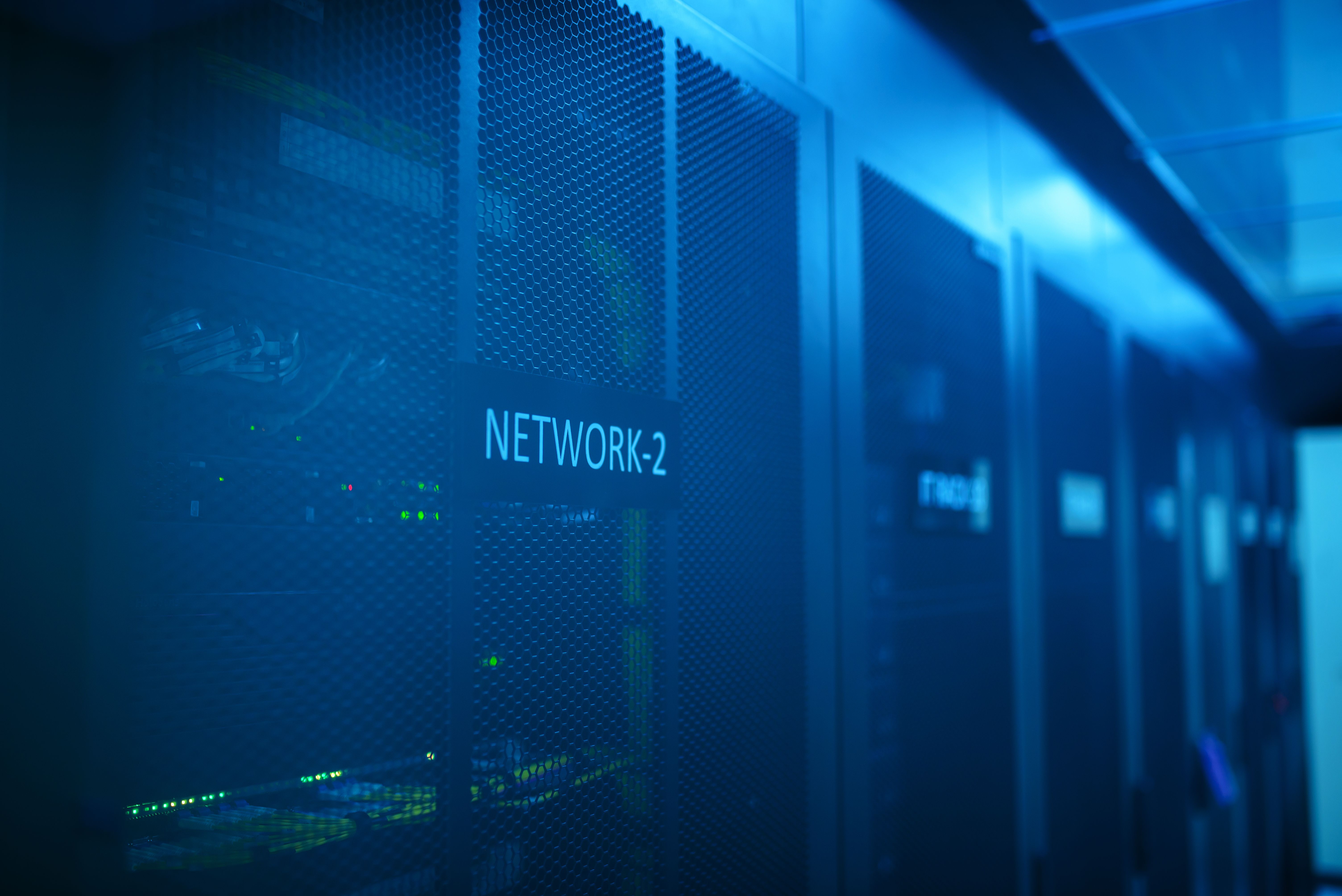
When people think of the cloud, they think of the beautiful blue sky and it’s actually much more physical than that.
— Steph Speirs, in Can the AI Power Problem Lead to a Cleaner Future? (with Steph Speirs)
That is possible. We just haven’t demanded it.
— Steph Speirs, in Can the AI Power Problem Lead to a Cleaner Future? (with Steph Speirs)
For our Sunday, November 8, 2026 at 10AM CT, 4PM UK Campfire Learn Together, we are watching and discussing Can the AI Power Problem Lead to a Cleaner Future? (with Steph Speirs), a conversation from Elle Cordova’s YouTube channel. Cordova talks with Steph Speirs, a clean energy entrepreneur, a professor of climate entrepreneurship at Yale, and the mind behind the Future in Bloom video series, about AI data centers, the electricity grid, and whether this boom can be bent toward something better.
The video opens on doom, and names it. AI and climate change, Cordova says, are “the twin existential threats inextricably linked,” and people facing problems that big “start using this language of inevitability.” It starts to feel like a runaway train. Then she says the thing the whole conversation is built to prove: “I don’t actually think we are on a runaway train.”
Speirs spends forty minutes making that case with numbers, design fixes, and a venue most of us have never heard of. She refuses to blame people for using AI. She refuses to trust companies’ promises. She says the biggest failure is cost shifting — companies take the upside, neighbors take the downside — and she ends on four questions anyone can ask about any infrastructure built near them. The first one is the title of this Campfire: who’s paying for it?
We have been here before. Our AI Collaboration page says we use these tools and “acknowledge the energy and water costs and sit with that tension.” Our Campfire on How to (Anti) AI Better asked about data centers sited in already-burdened neighborhoods. This week a climate-tech optimist answers some of our questions and quietly disagrees with others. So we’ll read her closely, grant what she earns, and then ask the question her hopeful ending leaves open: who gets to say no?
We watch. We reflect. We bring our whole bodyminds — including the ones that feel every heat wave first.
Videos
We’ll watch it together — subtitles on, sound up, cameras optional. No need to have watched ahead.
Can the AI Power Problem Lead to a Cleaner Future? (with Steph Speirs) — Elle Cordova, posted October 6, 2026. About forty minutes, in six chapters: Doom, Future in Bloom, A litmus test for data centers, The grid’s brittle reality, Engineering solutions for waste, and Actionable steps we (regular people) can take.
It was recorded over Zoom, and Cordova warns up front that the default settings “betrayed me.” The audio is rough in places. Subtitles help more than usual this week.
One question for the session: who’s paying for it — and who gets to say no?
Table of Contents
- Videos
- The Cloud Is Not the Sky
- The Biggest Failure Is Cost Shifting
- Waste Is a Design Problem
- The Can Rolls Downhill
- No System Built on Voluntary Commitments
- Put the Burden Where It Belongs
- The Supreme Court of Energy
- The Stimpunks Synthesis
- Join Us
- Main Takeaways
- Related Glossary Entries
- Reflection Questions
- Resources
The Cloud Is Not the Sky
When you think of AI data centers, they need land, they need electricity, they need cooling, they need connectivity to fiber optics, and need grid infrastructure like transmission, and all of those components of physicality are real life impacts that our AI usage is having on the planet, and people don’t think of these things.
Cordova starts by asking Speirs to make it physical for us, and Speirs does. The word cloud was always a good piece of marketing. It points up, at something weightless and blue. A data center points down, at land, water, wires, and the people who live next to all three.
Speirs brings numbers. She cites the Lawrence Berkeley National Laboratory for data centers using about 4.4% of US electricity as of 2023, with newer estimates closer to 5%. She cites Cushman & Wakefield for the average data center land deal in the last year: 224 acres, which she puts at roughly 170 football fields. And she splits water into two footprints. The direct water — mostly for cooling — was about 17 billion gallons in 2023. The indirect water, used by the power plants that feed the data center, was something like 211 billion gallons. Twelve times as much, and, she says, barely measured.
That last number is the one to sit with. The visible cost is the small one. The large one is a step removed, in somebody else’s cooling tower, in somebody else’s watershed. That is the shape of the whole conversation in miniature. The harm is real, and it is somewhere you are not looking.
Our AI and Disability Justice page borrows Alondra Nelson’s phrase for that reach — the “full AI stack” — and traces it “from mineral extraction and data center energy demands, to the labor conditions under which training data is sorted and filtered.” Then it says the plain part: “No part of it is neutral. No part of it is finished.”
The Biggest Failure Is Cost Shifting
When you’re thinking about how companies capture the upside of building an AI data center, but communities are often dealing with the downside of those environmental impacts on a hyper local level, of course they’re rational in being concerned about new infrastructure in their backyard.
Cordova lays out the litmus test Speirs proposed on her Substack, and adds to it. Data centers shouldn’t deplete water. They shouldn’t pollute it either. They shouldn’t raise residents’ bills. They should strengthen the grid, and they should benefit the community. Speirs calls these tenets of data centers “designed to contribute to communities as opposed to extracting from them,” and her reason for writing them down is the sentence the video keeps coming back to: “It doesn’t need to be this way.”
Then she names the biggest failure in two words. Cost shifting. She points to a Google data center in Oregon that takes up a third of a town’s water supply. She notes that most hyperscalers have now signed a ratepayer pledge not to raise their neighbors’ electricity rates, and that Virginia passed a law putting large electricity users like data centers on a different utility rate. “That is an innovation that needs to be replicated in other states.”
We have a glossary word for this move, and it is older than AI. Our collective risk shift entry describes “the ‘great risk shift’” that “transfers corporate responsibilities to workers and families.” Company pensions eroded. Job training became the student’s debt. And now a grid upgrade for a server farm becomes a line on your power bill. Cost shifting is not a side effect of the business model. It is the business model.
Speirs is careful not to let AI take all the blame, and she is right to be. Rates were rising anyway, because the grid is old. Data centers are expected to drive more than half of electricity growth through 2030, she says, but electrification, industry, onshored manufacturing, and “hotter summers making people use more AC” are driving it too. So banning data centers alone won’t fix rates: “It’s not a durable solution.”
Her ten-second history of the grid is the clearest thing in the video:
It’s built like a radio pushing out information. It’s built to serve centralized generation of energy being pushed out. It’s not built like the internet.
A grid built to broadcast from a few big plants can’t easily take in power from a million rooftops. And while the upgrades take years, the gap gets filled with gas. “Natural gas is locking us into fossil fuels for the life of the plant, and these plants are amortized for 40 years.” A server rack might last five. The pipe it justified will outlive most of the people at this Campfire.
One more thing about that line on AC. In our community, air conditioning is not a comfort item. A paper in our library, Silent Signals: Autism, Disability, and Heat Vulnerability in a Warming World, puts it this way: “heat risk for autistic and disabled people emerges through the interaction of embodied difference and structural exclusion.” When the grid strains on the hottest day, it is not strain in the abstract. It lands on particular bodyminds first.
Waste Is a Design Problem
Ultimately humans created the problem and humans can fix it. It doesn’t need to be this way.
Cordova quotes Speirs back to herself — waste and pollution are design problems — and calls it hopeful. If it is a design problem, people can design their way out.
Speirs walks through the fixes. Liquid cooling instead of air, with new designs that don’t trade water savings for more electricity. Heat reuse: in Finland, data center waste heat is piped into district heating systems that warm tens or hundreds of thousands of homes, and she says cold places with district heating, like Minnesota, could do the same. And siting — two thirds of the data centers in the pipeline, she says, are being built in water-stressed areas. Her line on water is the most unguarded moment in the video: “They’re ultimately sacred. Water is life.”
The fix she clearly loves most is grid flexibility. The grid is overbuilt for a few peak hours a year — a heat wave, every AC on at once — and sits partly idle the rest of the time. Software can now shift some demand away from those peaks. If data centers shifted some of their load, she says, the existing grid could support about 100 gigawatts more computing without building 100 gigawatts more supply. Her question is a good one for any system, not just the grid:
How do we get more out of the grid we already have?
Use the headroom you already have before you build more is a principle we could put on the wall of any school, too.
Then she says the catch, plainly. These fixes are real, “but they’re in pilot form. They’re not actually getting the regulatory or the investment support to make it the industry standard.”
We like design problem as a frame. It is a cousin of the one we use everywhere: broken systems, not broken people. Our page on Solarpunk and Neurodivergent Civilization makes the same bet about the future: “A sustainable civilization is not only an ecological project. It is also a cognitive and social design project.”
But a design problem always has a second question folded inside it. Designed by whom? Speirs’s answer, in this section, is entrepreneurs: “one thing that I think Americans can get behind is the ingenuity of entrepreneurs.” Hold that thought for the Synthesis. A design problem solved by the people who profit from the design is still a design problem.
The Can Rolls Downhill
Data centers are built where land is cheap, power is cheap, water is cheap.
Cheap land is often rural. Rural land is often dry. And, Speirs adds, in states like Texas, data centers are also sited in places with “higher environmental justice burdens” — more air pollution, more poverty. Then she makes the argument that runs against a lot of current organizing, including some of ours:
You just have to think of Cancer Alley in Louisiana to know that often low-income marginalized communities bear the brunt of infrastructure that gets kicked out of higher income communities.
When a wealthy place bans a data center, she says, “that community got what it wanted, but that data center is going to go somewhere else.” So a ban kicks the can. “It really isn’t solving the problem to ban them.”
This is the place where a friend disagrees with us out loud, and it is worth naming. When we watched Dr. Fatima’s How to (Anti) AI Better, the first of her four collective actions was to organize locally against data centers. Speirs is saying: careful. A ban protects one backyard and moves the burden downhill, to whoever has the least power to fight it.
She is right about the downhill part. History backs her, and so does our own writing. Our AI and Disability Justice page names “the environmental racism of XAI’s Colossus supercomputer poisoning a historically Black neighborhood in Memphis with unpermitted methane turbines,” harm that is “enormous and localized in ways no carbon offset can address.” Speirs names the same facility a few minutes later as one that “should never get built to that extent.”
What we are less sure of is the conclusion. Bans move the burden is true. So don’t ban does not follow from it. We’ll come back to this — it is the first push in the Synthesis.
No System Built on Voluntary Commitments
We can’t build a system based on voluntary commitments.
This is the sentence that made us want to watch this video together. Speirs is a climate-tech optimist and, she says, an entrepreneur and business owner. She still says it flat out: “it’s a governance problem.” When a big company promises to be a good neighbor, that is “a voluntary action because they know that they can’t get their data centers built without community buy-in.” And plenty of builders are not big companies at all. “There’s a ton of data center developers that are like four guys in a pickup truck, honestly.”
Cordova brings up the secrecy — deals done behind closed doors, with nondisclosure agreements — and asks the obvious question. If these projects bring jobs and benefits, why hide them? Speirs doesn’t defend it. She widens the lens:
At the heart of the issue is that there’s a severe lack of trust in our public institutions, and corporations, and government.
Saying not in my backyard, in that climate, “is rational.” That matters. She doesn’t treat the people protesting data centers as the problem. She treats them as people reading their situation correctly.
Our version of no voluntary commitments is POSIWID — the purpose of a system is what it does. Our AI Collaboration page says we evaluate tools “by what they do, not by what they claim to do.” A ratepayer pledge is a claim. A rate class written into state law is a thing that does.
Late in the video, Cordova asks about the billionaire sound bite that AI will solve its own energy problems. Speirs answers:
AI is a tool and it can harm and hurt and it can help and be useful. It is both those things. And whether it harms and whether it helps is really dependent on us.
It can help with materials science, forecasting, finding methane leaks, and balancing the grid, she says — “but not if we don’t govern it.” And then: “we’re not those people that say technology will save us because we save ourselves or not.” That is a line we would happily borrow. We will also argue with the word tool in a minute.
Put the Burden Where It Belongs
There’s a lot of unhelpful media talking about the environmental impact of a single gen AI prompt. And that puts the burden on the individual to feel guilty if they use tools.
Cordova closes by asking what a regular person can actually do. Speirs starts by saying what not to do. Don’t make it about guilt over one prompt. Some people’s jobs require these tools. Some uses really help. Her favorite example is translation — her Korean aunties use AI to translate. And she draws the climate parallel:
We’re expecting people to solve climate change by recycling or composting or other individual actions, which is a real distraction from the greater systemic changes that need to be implemented.
Our community has had this exact argument before, about straws. When cities banned plastic straws, Disabled people pointed out that a bendy plastic straw is assistive technology. Our straws entry gathers that fight, and it quotes Pacific Standard on what to do instead: “Want to reduce plastics in the ocean? Make the producers pay for their waste.” And: “Let’s put our efforts where the money is, rather than shaming disabled consumers who just want an accessible drink of water.”
Swap straw for prompt, and that is Speirs’s argument. Our AI and Disability Justice page says it in our own words: conflating the small footprint of individual queries with a facility like Colossus “doesn’t sharpen critique — it launders the industry’s worst actors through individual guilt.”
Translation isn’t a small example for us either. Our AI Collaboration guardrails say that “for many non-speaking and AAC-using community members, generative AI is part of their voice — not a replacement for it.” That is why our position is harm reduction, not abstinence — and why our toolbelt theory work, on our At What Cost? alignment, “resists two failures, not one: coercive adoption and coercive prohibition.”
Speirs gets to the same place from the energy side. Make the producers pay, not the person holding the straw.
The Supreme Court of Energy
We have to show up locally.
So what can a person do? Speirs’s answer is unglamorous and specific. Bring the energy people bring to fighting data centers into the rooms where the rules are made: permitting meetings, zoning meetings, and public utility commission meetings.
Cordova stops her there, and it is the most honest moment in the video: “This is what I actually most want to know, because I’m the person I’m talking about. I just post on social media. Like, I don’t know what else to do.”
So Speirs explains. Many people get their power from investor-owned utilities, which are regulated by a public utility commission. And those utilities have a particular incentive:
Investor-owned utilities make money by building infrastructure and then getting a guaranteed rate of return on their infrastructure.
That is why they are slow to adopt software, batteries, demand response, and grid flexibility — none of those earn the return a new plant does. The commissioners can change the rules. “Do you know who your public utility commissioner is in your backyard? Most people don’t.” She says they are sometimes called “the Supreme Court of Energy because they’re so powerful and nobody knows who they are.” And at pro-clean-energy permitting meetings, “often there’s one person that shows up or nobody that shows up.”
Our power entry has a line from the political scientist Karl Deutsch, by way of Nick Walker: “Power is the ability not to have to learn.” A commission nobody can name never has to learn the town it rules on. Unknown power is the most comfortable kind there is.
Then come the four questions Speirs says to ask about any infrastructure built near you:
Who’s paying for it? … What’s happening to the local water supplies? How is it being powered? Is the community benefiting legally binding?
She says it is economically possible for a hyperscale data center to tell its neighbors they will never get an electricity bill again, or to buy batteries for local backup power. Then the line we put at the top of this page: “We just haven’t demanded it.” Right now, she says, “we’re just at the level of how do you stop harm?” The next level is asking how these places help.
She also says what makes it hard: it “requires us to imagine an ecosystem that exists beyond our relationship to the data center,” because “our water and electricity resources are governed by rules that sometimes were dictated over a century ago and we can change those rules.” That is community organizing by its textbook definition: “bringing affected people together to use their collective power to win improvements in their community and change the power structure.”
The Stimpunks Synthesis
The following is a Stimpunks synthesis — our own extension and critique, not a claim made by the video, Elle Cordova, or Steph Speirs.
Grant it all first, because it earns it. This is a climate-tech optimist who says outright that voluntary commitments are not enough. She refuses to blame individual users. She names Cancer Alley and Memphis by name. She calls distrust of institutions rational instead of treating protesters as the problem. And instead of ending on a vibe, she hands people a venue, four questions, and a demand. Cordova, for her part, admits on camera that she is “the person I’m talking about.” That is a gift to a room like ours. Here is where we would push — and the last push is aimed at us.
First: the runaway train came back in through the side door. The video opens by refusing “this language of inevitability.” Twenty minutes later, Cordova says “this boom is happening whether we want it to or not. It’s going to happen somewhere,” and splits the world into “the shut it all down camp” and “the camp of this is happening.” Speirs’s whole menu — better cooling, better siting, flexibility, binding benefits — accepts the size of the demand and argues only about how to meet it. That is choosing the track and accepting the train. Our AI Collaboration page names this move with Vertesi, boyd, Taylor, and Shestakofsky’s list of five decoys. One of them is inevitability: “AI is coming regardless.” Our techno-solutionism entry quotes the Stanford Social Innovation Review on why that matters: “Communities impacted by technology must be able to resist and refuse its incursions if and as they experience harm. If refusal is not an option, then we are still trapped in a vision of the future created by a small sliver of humanity.” Speirs is right that a ban moves the burden downhill. But her own ending depends on refusal. A demand you cannot back with a no is a request. No town gets a legally binding benefit agreement from a company that knows the town can’t say no. The same page carries Astra Taylor and Saul Levin’s point in our own words: pushback against AI infrastructure is not a rejection of technology. It is a rejection of anti-democratic practices that have bypassed the public sphere. A moratorium is not only a can kicked down the road. Sometimes it is the only leverage a town has.
Second: a tool built to concentrate power is not neutral. “AI is a tool,” Speirs says, and whether it helps or harms “is really dependent on us.” Our AI Collaboration page starts from the opposite claim, quoting Ali Alkhatib: AI is “a political artifact through and through,” “an ideological project to shift authority and autonomy away from individuals, towards centralized structures of power.” Speirs half-sees this. She notes that AI will “increasingly … do its own bidding.” And she sees structure clearly when it’s a utility: an investor-owned utility builds plants because its guaranteed rate of return rewards building plants. Apply the same lens to the AI companies. A company valued on growth will want more compute the way a utility wants more plants. Better incentives can bend that. Better design cannot remove it. Whether it helps is up to us is true only to the degree that us has any power over the people who own it.
Third: buy-in is not consent. Speirs says the big companies make promises because “they can’t get their data centers built without community buy-in.” That is honest, and it is also a warning. When buy-in is a business strategy, community input becomes a step to get through. Our AI Political Economy alignment calls this the participatory design decoy: stakeholder engagement “conscripted into inevitability,” functioning as “ritual that upholds the Project’s march rather than contesting it.” The design justice principles offer the alternative: “We center the voices of those who are directly impacted by the outcomes of the design process,” and “We work towards sustainable, community-led and -controlled outcomes.” Cancer Alley is not a siting mistake that better siting would have fixed. It is what happens when the people at the bottom of the hill are consulted and not obeyed. Who writes the litmus test? Who decides what counts as benefiting the community? Nothing about us without us applies to a substation, too.
Fourth: show up — to a room built for whom? “We have to show up locally” is the right answer, and it assumes a body that can get there. A weekday hearing, in person, hours long, with no agenda in advance, unpredictable timing, timed public comment, and fluorescent lights is not a neutral room. It filters out many Disabled, chronically ill, Autistic, and working people — some of the same people who feel a strained grid first. “Often there’s one person that shows up” — and the question is which person can. Our Inclusive Meetings page lists the fixes, and none of them are exotic: “send agendas, questions, and context in advance,” “allow written input before, during, and after the meeting.” Remote testimony and written comment are not favors. They decide who governs. And there is a second half to this. An essay in our highlights, Disability Is Load-Bearing, argues that fighting an administrative system takes “Appeals infrastructure. Documentation practice. … The ability to keep a base intact through a two-year procedural grind with no news coverage,” and that “the disability field has been doing exactly this for forty years.” A utility commission is exactly that kind of room. Don’t just make room for Disabled people at the hearing. Follow the people who already know how to win there.
Fifth, and aimed at ourselves: who’s paying for our use? We agree with Speirs on guilt and on straws, and we have said so for years. But don’t shame the individual is only half a position. The other half is: then the organization owes the accounting. We run a site search powered by Claude, and a Spider in the Garden that answers questions about our own pages. Our AI Collaboration page says we “sit with that tension while practicing harm reduction and restraint.” Sitting with tension is a feeling, not a practice. By the video’s own test, the questions come back to us. How is it being powered? Do we know which grid answers our Spider’s questions? Do we publish what we use? Harm reduction was built by communities to keep each other alive, and it was never meant to be an alibi. If we tell individuals to put the burden on producers, we have to be willing to be counted as one.
None of which makes Speirs wrong. It makes her an argument in progress, which is the best kind to bring to a campfire — especially one where the question on the table is who gets to decide.
Join Us
Campfire Learn Together happens every Sunday at 10AM Central in the Events Room in Stimpunks.World. This session is on Sunday, November 8, 2026 at 10AM CT, 4PM UK. Open to the whole community — no preparation needed, no expertise required. Come as you are.
Getting in: the call in the Events Room is open to anybody. Type the name you want to be called, and knock. You’ll wait in the lobby until a moderator lets you in. Your camera and microphone start off.
We’ll watch the video, take a bodymind break, and then open up the reflection questions as a community conversation. You can take part by video, voice, text chat, or just by being in the room. All modes are welcome. Cameras optional. Silence is participation.
There is no designated expert, including us. Nobody needs to know what a gigawatt is to have a view on who should pay for one. This is omni-directional learning in a Cavendish Space campfire — a public meeting that tries to be the opposite of a utility hearing. Agenda in advance. Text chat counts. Leave and come back.
Join our community, and our Campfire Learn Together page describes some of what to expect. If this is your first Campfire, you’re in good company — many of our regulars showed up for the first time not knowing quite what to expect, and stayed.
Come with the name of your public utility commissioner — or the honest news that you had never heard of one until this week. Either one is a good place to start.
Main Takeaways
- The cloud is not the sky. It has land, water, wires, and neighbors, and its biggest water bill is paid somewhere else.
- Cost shifting is not a side effect of the business model. It is the business model. Companies take the upside; neighbors take the downside.
- A pledge is a claim. A law is a thing that does. Judge a system by what it does, not what it promises.
- You cannot build a system on voluntary commitments. Speirs said it, as an entrepreneur, and she is right.
- Use the headroom you already have before you build more. It holds for the grid, and for a lot of other things.
- Bans move the burden downhill. And the people at the bottom of the hill have the least power to push it back.
- A demand you cannot back with a no is a request. Refusal is not the opposite of a better deal. It is how you get one.
- Make the producers pay, not the person holding the straw. Guilt over one prompt launders the worst actors.
- Buy-in is not consent. Nothing about us without us applies to a substation, too.
- The room you are told to show up to was not built for every body. Who can attend decides who governs.
- Unknown power is the most comfortable kind there is. Learn your commissioner’s name.
Related Glossary Entries
- Collective Risk Shift — Corporate responsibilities moved onto workers and families. The older name for cost shifting.
- Straws — When an environmental fix landed on Disabled people’s access. The prompt-guilt argument, a decade early.
- Harm Reduction — Meeting people where they are and reducing specific harms. Why we refuse both shame and absolution.
- Toolbelt Theory — Choosing your own tools for the task and the moment. Resists coercive adoption and coercive prohibition.
- Alternative and Augmentative Communication — Communication beyond speech. Why translation is not a small use case for us.
- Techno-solutionism — Complex social problems shrunk into apps and fixes. The pull inside engineering solutions for waste.
- Artificial Intelligence — Real uses, serious ethical and environmental costs. Where we gather the good and the bad.
- Technoableism — Ashley Shew’s name for tech hype about disability. A reminder that Disabled people are often on the front lines of tech users and left out of the conversation.
- Design Justice — Design centered on the people most affected by it. The answer to designed by whom?
- Edges — Design is tested at the margins. Disabled people feel a strained grid first.
- Power — The ability not to have to learn. Why an unknown commission never has to learn your town.
- Community Organizing — Affected people using collective power to change the power structure. What show up locally means when it works.
- Interdependence — Our survival is bound up together. A data center somewhere else is still on our grid.
- Solarpunk — A future with a human face and dirt behind its ears. The hope this video is reaching for, with the people put back in.
Reflection Questions
On the cloud. Before this week, what did you picture when someone said the cloud? What changes for you when it becomes land, water, and a power plant somewhere? Is there a tool you use every day whose real footprint you have never seen?
On guilt. Have you ever been made to feel guilty for something you needed — a straw, a ride, a pre-cut orange, an AI tool, the air conditioning? Who did the shaming, and who was left alone? Where would you have pointed that energy instead?
On your backyard. Imagine a data center is proposed near you tomorrow. What would you want to know first? Would you fight it, bargain with it, or welcome it — and would your answer change if you knew it would go to a poorer town instead?
On saying no. Speirs says bans move the burden. We say a demand without a no is a request. Where in your own life have you only gotten something better once you could credibly refuse? What gave you that power?
On the room. Have you ever been to a public meeting — a school board, a city council, a hearing? What made it easy or hard to be there, or to speak? What would a public utility commission have to change before you could take part?
On our own ledger. We use AI tools at Stimpunks, and we have asked you not to shame individuals for using them. What should an organization like ours owe in return? What would you want us to measure, publish, or stop doing?
On doom. The video opens on doom and tries to end on hope. Which did you leave with? When a problem feels this big, what helps your bodymind move from overwhelm back to something you can do?
—
This page draws on “Can the AI Power Problem Lead to a Cleaner Future? (with Steph Speirs)” from Elle Cordova’s YouTube channel (posted October 6, 2026). Quotations from the video are taken from its automatic captions, lightly cleaned of false starts and obvious mis-transcriptions; figures in the video are given as Steph Speirs cites them, attributed to the sources she names. The “Silent Signals” paper and the “Disability Is Load-Bearing” essay are quoted from Ryan’s reading highlights. Alondra Nelson, Ali Alkhatib, Vertesi, boyd, Taylor, and Shestakofsky, Astra Taylor, Saul Levin, Karl Deutsch, Nick Walker, Ashley Shew, the Design Justice Network, Pacific Standard, and the Stanford Social Innovation Review are quoted from entries on our glossary and pages that cite them. The Stimpunks Synthesis section is our own extension and critique, not attributed to Elle Cordova or Steph Speirs.
Resources
- Can the AI Power Problem Lead to a Cleaner Future? (with Steph Speirs) — Elle Cordova, YouTube — posted October 6, 2026
- Steph Speirs, Future in Bloom — video series and Substack, including the Solving the AI Power Problem series
- Silent Signals: Autism, Disability, and Heat Vulnerability in a Warming World — Taylor & Francis
- Disability Is Load-Bearing — The Anti-Authoritarian Playbook
- Reckoning with the Political Economy of AI: Avoiding Decoys in Pursuit of Accountability — Vertesi, boyd, Taylor, and Shestakofsky, FAccT ’26
- Design Justice Network Principles
- Banning Straws Won’t Save the Oceans — Pacific Standard
- AI Collaboration at Stimpunks — Stimpunks Foundation
- AI, Disability Justice, and the Ethics of Making — Stimpunks Foundation
- AI Ethics — Alignments and External Frameworks — Stimpunks Foundation
- AI Alignments: Reckoning with the Political Economy of AI — Stimpunks Foundation
- AI Alignments: “At What Cost?” — Stimpunks Foundation
- AI Alignments: How to (Anti) AI Better — Stimpunks Foundation
- AI at Stimpunks — Stimpunks Foundation
- Broken Systems, Not Broken People — Stimpunks Foundation
- Nothing About Us Without Us — Stimpunks Foundation
- Inclusive Meetings — Stimpunks Foundation
- Solarpunk and Neurodivergent Civilization — Stimpunks Foundation
- Bodymind Break — Stimpunks Foundation
- The Events Room — Stimpunks.World
- Campfire Learn Together: “How to (Anti) AI Better” by Dr. Fatima — Stimpunks Foundation
- Campfire Learn Together: Head, Heart, and Hands at the End of the World — Stimpunks Foundation
- Campfire Learn Together: The Subtle Art of Normalising Dystopia — Stimpunks Foundation
- Campfire Learn Together: The Production of Docile Bodies — Stimpunks Foundation