
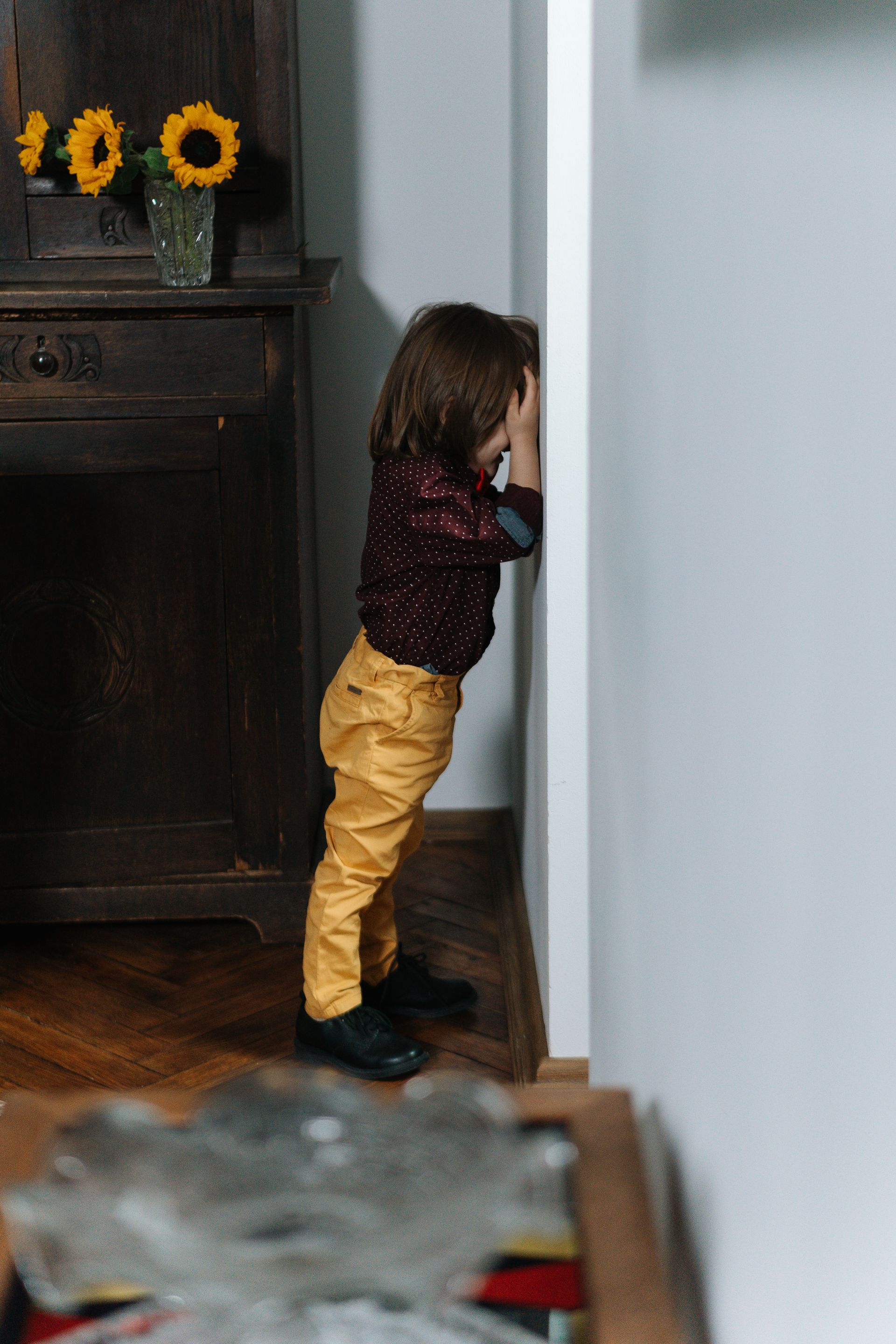
The result is what Foucault calls the production of docile bodies.
PolScience, Michel Foucault: Discipline and Punish Explained | How Modern Power Controls Us
The decisive question is no longer simply who has the right to punish. It is also who has the authority to define what counts as normal.
PolScience, Michel Foucault: Discipline and Punish Explained | How Modern Power Controls Us
For our Sunday, November 1, 2026 at 10AM CT, 4PM UK Campfire Learn Together, we are watching and discussing Michel Foucault: Discipline and Punish Explained | How Modern Power Controls Us, an explainer from the political theory channel PolScience. It walks through Discipline and Punish: The Birth of the Prison, the book Michel Foucault published in 1975, in nine insights and a conclusion.
The book is about prisons, and it is not about prisons. It starts with a man tortured in public in 1757 and ends in a classroom, a factory, a hospital, and an examination hall. Its claim is that modern power stopped needing the scaffold because it learned something quieter. It learned to watch, record, rank, and correct, until people began doing the correcting themselves.
Our community knows that machinery by its first names. The behavior chart. The IEP. The data sheet. The functioning label. Quiet hands. We were the case files before we could read them, and a lot of us still carry the file around inside us. Foucault had a phrase for what all that work is for, and it is the title of this Campfire: the production of docile bodies.
The video never says the word disability. It never says Autistic. It names the teacher, the doctor, the psychiatrist, and the social worker as judges of normality, and leaves it there. So this week we will read Foucault from where we sit — under the judges — and ask what the book looks like from the bodies it was written about.
We watch. We reflect. We bring our whole bodyminds — including the parts nobody managed to make docile.
Videos
We’ll watch it together — subtitles on, sound up, cameras optional. No need to have watched ahead.
Michel Foucault: Discipline and Punish Explained | How Modern Power Controls Us — PolScience, posted October 2026. About thirty-one minutes. A public execution in Paris, a soul that becomes the prison of the body, a student who becomes a case, a circular building with a tower in the middle, and a closing question pointed straight at the viewer.
It is careful work. The video hedges where Foucault can be overread — a classroom is not literally a prison, records can also protect people, nobody is claiming a conspiracy. Hold on to those hedges. They are where the discussion gets good.
One question for the session: who produced the person you think you are — and which parts of them were you trained into?
Table of Contents
- Videos
- The Soul Is the Prison of the Body
- You Become a Weak Student
- The Production of Docile Bodies
- Whose Illegality Counts
- The Possibility of Observation
- Judges of Normality
- The Stimpunks Synthesis
- Join Us
- Main Takeaways
- Related Glossary Entries
- Reflection Questions
- Resources
The Soul Is the Prison of the Body
Perhaps modern power has become more effective not because it has become more violent, but because it has learned to operate quietly through ordinary routines, professional judgments, institutional rules, and our own understanding of ourselves.
The story we usually tell about punishment is a story of progress. Earlier societies were cruel. Reformers demanded humane treatment. Torture disappeared, prisons replaced the scaffold, and punishment grew up. Foucault does not say the torture was fine. He asks a different question: what new kinds of power became possible once punishment stopped aiming at the body and started aiming at the person?
The scaffold, the video points out, was risky for a king. Crowds sympathized with the condemned, attacked executioners, and turned executions into protests. The prison asked a quieter question. Not what did you do? but what kind of person are you? Dangerous? Reformable? What are your habits, your tendencies, your psychology? Then the line the book is famous for:
The soul is the prison of the body.
Western philosophy had long called the body the prison of the soul. Foucault flips it. The soul — personality, psyche, character, the hidden interior — becomes the instrument that lets an institution read, monitor, and correct the body. The video is clear that this does not make inner life unreal. It is that the categories through which we understand ourselves have histories.
Power becomes more subtle when it does not merely command our bodies, but claims to know our inner selves.
This is the most familiar sentence in the video for our community. For most of our lives, professionals have claimed to know our inner selves better than we do. Our minds were said to lack a theory of other minds. Our distress was read off our behavior. Damian Milton’s double empathy problem names the move exactly: the locus of the problem has traditionally been seen to reside in the brain of the autistic person. The pathology paradigm, in Nick Walker’s words on our glossary, starts from the assumption that there is one “right” style of human neurocognitive functioning. That is a claim to know an inner self, made from outside it.
We would add one thing to Foucault’s reversal. He swaps which half is the prison and keeps the two halves. Disability studies gave us a word that refuses the split. Bodymind is Margaret Price’s term, and our entry says it insists on the inextricability of mind and body. A stim is not a body leaking out of a mind. A meltdown is not a soul failing to govern its body. There is no soul to imprison the body when there was never a gap between them.
And notice what the humane turn bought. Hold that thought for the Synthesis. Humane is not the same thing as free.
You Become a Weak Student
A single observation tells an institution what you did. A permanent record allows it to construct a narrative about who you are. You are no longer simply someone who failed an examination. You become a weak student.
Here is the historical paradox at the center of the second insight. In older regimes, the most powerful people were the most documented: kings had portraits, nobles had genealogies, rulers had biographies. Ordinary people stayed anonymous. Discipline reverses the axis. Now the student, the patient, the employee, and the prisoner are the ones with files.
The tool that does it is the examination, which the video says combines observation with normalizing judgment. It does not just notice differences. It ranks them. And it turns a person into what Foucault calls a case:
You are no longer simply someone who broke a rule. You become a disciplinary problem.
Our community could finish that list. You are no longer someone who covered your ears in the cafeteria. You become a sensory processing disorder. You are no longer someone who did not answer. You become noncompliant. You are no longer someone who rocked in your chair. You become a problem behavior, and then a goal on a behavior plan with a target percentage.
That last one is not a figure of speech. Our problem behavior entry carries Neurodiverse Connection’s summary of a 2024 review by Kristen Bottema-Beutel and her team, which found some 67 different alleged ‘problem behaviours’ from autistic young people in the research papers studied, but most of these were stereotypical behaviours (often known as ‘stimming’) such as flapping of hands or rocking. A child rocks. A file says problem. A plan says reduce. The case writes the child.
The grading entry quotes the mathematician Sunil Singh on what the ranking does: grades have been acting as academic gatekeepers for millions of students, unjustly sorting, sifting, and selecting which students get to go where and why. And our functioning labels entry describes the case file at its bluntest: labels like high-functioning and low-functioning impose external judgments that often deny Autistic people access to support, undermine autonomy, and distort how our needs are understood.
The video is fair here, and we should be too:
Of course, records can also protect people, identify discrimination, and improve access to services.
That is true, and our community lives on both sides of it. A diagnosis is a file, and a diagnosis is also what gets you an accommodation. The video’s real question is not records, yes or no. It is this one:
Who has the authority to classify us? Which standards determine the classification?
Keep it in your pocket. We come back to it twice.
The Production of Docile Bodies
A docile body is not necessarily a weak or physically passive body. It is a body that can be trained, utilized, optimized, and directed. Discipline increases certain capacities while restricting the freedom to use those capacities independently.
This is the insight that gives the session its name, and the video sets it beside Karl Marx. Marx studied the accumulation of capital. Foucault adds a second problem: how do you organize, train, and make useful the huge numbers of people that capital needs? Foucault describes the simultaneous accumulation of capital and the accumulation of men.
The factory, the barracks, and the school have different purposes and the same techniques. The video lists four. Bodies are distributed in space. Activities are organized through timetables. Training is divided into cumulative stages. Individual capacities are combined into coordinated collective forces.
Rows of desks. Bells. Grade levels. Group work with assigned roles. Every one of the four is still in the building.
Read that definition again: a body that can be trained, utilized, optimized, and directed. Then read our quiet hands entry, which opens with the Autistic Self Advocacy Network’s Loud Hands anthology:
Abuse and silencing is a constant, pervasive theme in the lives of autistic people, and for many people it is best expressed by that old, familiar phrase from special education: quiet hands!
Quiet hands is the docile body in two words. It restricts the hands so the rest of the child can be directed. And the increased capacity it promises — sitting still, looking ready, being available for learning — is a capacity for being directed.
Robert Chapman’s Empire of Normality reads the same history Foucault reads, and goes where the video does not. On our Empire of Normality entry:
The body and mind were increasingly seen as machines, and the new concept of normality began to be used to determine whether these machines were working or broken.
A docile body is a machine that works. Normality was invented to check the machines. Chapman calls the result a complex nexus of different carceral systems, legal precedents, institutions, concepts, and practices that led to populations beginning to be systematically ranked in terms of mental and neurological ability. That nexus is the accumulation of men with the next chapter written in — the chapter about the bodies that could not be made to work.
The education version of the story has names too. Our post The Road to Neuronormative Domination borrows Hack Education’s summary of a century of education technology: Seymour Papert lost and B. F. Skinner won. Behaviorism is Foucault’s timetable with the reinforcement schedule attached.
The video closes the insight with a question we would put on a wall:
The crucial question is therefore not only who owns the means of production, it is also who organizes our time, determines our movements, evaluates our performance, and establishes the standards according to which our capacities are used.
Crip time is one answer to who organizes our time. Our bodymind break is another. It is a pause to move, stim, snack, step away, or just breathe — a break the room schedules for bodies, instead of bodies scheduled for the room.
Whose Illegality Counts
The modern penal system can preserve a formal language of equality while producing unequal patterns of visibility, surveillance, and punishment.
The fourth and fifth insights go to the prison itself. The law speaks to everyone equally. The institutions that enforce it do not watch everyone equally. A poor person who steals something small and a powerful company that cheats its customers may both have broken the law, the video says, but they do not necessarily encounter the same institutional treatment, resources, or consequences. One gets policing. The other gets a negotiation.
Our page The Cult of Compliance and the Policing of the Norm carries the numbers for who gets watched in school. From a reflection on the ADA at 33 by Jordyn Jensen, Jamelia Morgan, and Nicholas Lawson:
The rate of law enforcement referrals for students reveals clear intersectional marginalization, rising from 36 of 10,000 students for White students, to 88 for Native-American students, 93 for Black students, and 113 for students with disabilities, and soars to 221 for Black boys with disabilities, and 235 for Native-American boys with disabilities.
That is unequal patterns of visibility with the arithmetic done. The tower sees disability, and it sees race, and it sees both hardest of all.
Then comes the most counterintuitive argument in the book. Prisons fail at what they say they do. They do not rehabilitate. They often make things worse. So why do they last? Foucault turns the question around. Look at what the prison actually produces. It produces a category — the delinquent — and the video is precise about the difference:
A crime is an act defined as unlawful.
A delinquent is an individual represented through a more extensive narrative of dangerousness, abnormality, criminal tendencies, personal history, and anticipated future conduct.
The act is over. The narrative never is. And once a population is sorted into narratives, it is easier to identify, monitor, and control.
David Gray-Hammond makes the same move about the insanity defence, writing on his site NeuroHub in Ecosystemic Distress and the Limits of Criminal Defences — and he names Foucault while he does it:
Foucault would recognise this immediately. The insanity defence is not a mercy mechanism, it is a sorting mechanism. It separates the mad from the bad, and it does so on terms set by the institutions that will subsequently manage whichever category you land in. Prison or hospital order, either way, you are dealt with.
The video gives us the method in one sentence, and it is the most useful sentence in the whole thirty minutes:
An institution must be studied not only through the goals it announces, but also through the effects it repeatedly produces.
Study an institution by what it keeps producing, not by what it promises. Try it on the behavior plan. It announces regulation and independence. It repeatedly produces compliance, masking, and burnout. Try it on segregated classrooms, on seclusion rooms, on the threat assessment. The video says it about the prison, and it holds for all of them: Its failure to eliminate crime does not necessarily prevent it from being useful to the system in which it operates.
That is why we keep saying Fix Injustice, Not Kids. Its full title is a list of refusals: Justice, not grit. Justice, not growth mindset. Justice, not behavior “management.”
The Possibility of Observation
Because surveillance may occur at any moment, the individual begins to regulate their own behavior. The observer does not need to intervene constantly. The possibility of observation becomes enough to make discipline operate.
The Panopticon is the one idea from the book that everybody has heard of. Jeremy Bentham designed it: a ring of cells around a central tower, where everyone can be seen and nobody can tell whether anyone is looking. For Foucault it is much more than a prison design. It is a diagram of power. The video walks it into an exam hall, a monitored workplace, and a digital platform, and it is careful to say these are not automatically equivalent to a prison. Their purposes, consequences, and degrees of coercion differ enormously.
Then it lands here:
We begin to monitor our own conduct. We become both the objects and the agents of discipline.
Our community has a word for that, and it is not a metaphor. David Gray-Hammond’s Understanding Autism: Masking, on NeuroHub, says it in four lines:
- Masking is vigilance.
- Masking is self-surveillance.
- Masking is living as if you are always being assessed.
- Masking doesn’t always mean appearing less Autistic
Living as if you are always being assessed is the Panopticon, described from inside the cell. No guard needed. The tower can stand empty for years and the hands stay quiet.
And he is exact about where we learn it: in classrooms where compliance is rewarded and difference is corrected, and in healthcare settings where distress is dismissed unless it looks right. Those are two of the video’s own institutions. Gray-Hammond describes the result as the accumulated knowledge that safety, care, and belonging are conditional, and that those conditions are set by other people.
The masking we do is not the same in every room, because the tower does not watch every room with the same eyes. Our policing page says what masking means when the observer has a gun:
We are schooled to act as neurotypical as possible to avoid triggering police escalation. We have to defy our neurologies to avoid deadly conflict.
We will push on this in the Synthesis. The video’s we in we become both the objects and the agents of discipline is a little too even.
Judges of Normality
The teacher, doctor, psychiatrist, and social worker may all become what Foucault calls judges of normality.
The last two insights pull the camera all the way back. Liberal societies promise equality before the law. But in schools, factories, hospitals, and offices, someone sets the timetable, someone evaluates performance, and someone decides whether you met the standard. Foucault calls discipline a kind of counter-law running alongside the real one. And the prison, it turns out, is only one island in a carceral archipelago — a network of institutions that classify, train, supervise, and correct.
The video is generous to the judges, and it is right to be:
Not necessarily because they intend to dominate, but because their professional roles involve evaluating people according to established standards.
Most of the people who wrote our files meant well. That was never the problem. The problem is the standard, and who holds it.
The phrase judges of normality has a second life in our glossary. Jonathan Mooney borrows it in Normal Sucks, quoted on our normal entry:
We are all surrounded by institutions, systems, and cultural practices that demand and enforce normalcy. We all have to build a life and a self—despite, around, or through—the strict judges of normality’s jurisprudence.
And I want you to know, if those judges of normality wound you, like they have me and so many others, how to stitch yourself up and fight for a world that is not governed by those judges.
The same entry opens with Mooney’s short version: Normal was created, not discovered. Foucault says the norm has a history. Chapman says what it was for. Mooney says what it did to a kid in a reading group.
The video ends the archipelago on its sharpest question:
The decisive question is no longer simply who has the right to punish. It is also who has the authority to define what counts as normal.
Our power entry has an answer in one line, from the political scientist Karl Deutsch by way of Nick Walker: Power is the ability not to have to learn. The judge of normality never has to learn the child. The child has to learn the norm. Authority to define normal is the authority to make everyone else do the translating.
The Stimpunks Synthesis
The following is a Stimpunks synthesis — our own extension and critique, not a claim made by the video, PolScience, or Michel Foucault.
Grant it all first, because it earns it. The video takes a famously difficult book and makes it legible in half an hour without flattening it. It hedges exactly where Foucault gets overread. It hands us a method we will use for years: study an institution by the effects it repeatedly produces, not the goals it announces. It names the teacher, the doctor, the psychiatrist, and the social worker as judges of normality, which is close to a biography of our community. And it ends on a question instead of a verdict. We are arguing with a thirty-minute explainer, not with the whole book, and explainers compress. Here is where we would push — and the last push is aimed at us.
First: read the book from the bodies it could not use. The docile body is a body that can be trained, utilized, optimized, and directed. Every example in the video is someone discipline can make useful: the soldier, the worker, the student who learns to perform. But a sorting machine has two outputs. The bodies that take the training become docile. The bodies that do not — the ones that rock, flap, bolt, melt down, cannot hold the timetable, cannot be made to work at the factory’s pace — become something else. Chapman says what: normality began to be used to determine whether these machines were working or broken. The broken ones go to the special classroom, the seclusion room, the institution, the benefits assessment. Read from there, discipline does not only train. It sorts out the untrainable, and the sorting is where our community has always lived. The docile body has an underside, and it is us. A video about who produces the person you think you are never once says disability. That is not a gotcha. It is a measure of how normal the norm still is.
Second: the tower does not watch everyone with the same eyes. We begin to monitor our own conduct. We become both the objects and the agents of discipline. That we is doing a lot of work. For the person in the exam hall it means sitting a little straighter. For a Black Autistic teenager stopped by police, it means defy our neurologies to avoid deadly conflict. The video knows the gaze is uneven — it says so in the insight on illegality — and then it speaks of self-discipline as a shared human condition. It is not shared evenly. Masking costs most where difference is most visible and the punishment for being caught is worst, which is where race and disability cross. And because the cost is uneven, masking is not false consciousness either. One of our own Campfires said it this way: masking is not self-censorship, and it is not complicity. It is a risk calculation made under a tower that someone else lit. Our Masking and Burnout Why Sheet keeps the bill.
Third: the case file’s word can be taken back. Who has the authority to classify us? The video answers with institutions. Our community answers, sometimes, with us. Our labels entry carries a summary of Renee Anspach’s work in the 1970s on Disabled and mentally ill people organizing around their identities: Anspach observed that the taking up of these stigmatised identities was key in interrupting the process of stigmatisation. And it carries AutCollab: Autistic people / Autists must take ownership of the label in the same way that other minorities describe their experience and define their identity. Autistic was a word in a clinician’s file. Capitalized, it is a culture. The neurodiversity movement is a counter-knowledge written by the people the cases were written about.
None of that makes the file go away. Our diagnosis entry says it plainly: diagnoses determine the allocation of resources and supports. To get access, you have to become legible to the judges. That is a disability double bind — in Janet Gunter’s words, damned-if-we-do, damned-if-we-don’t. A label claimed is a different object from a label imposed, and most of us are carrying both. The question is not whether there should be categories. It is who writes them, who can change them, and whether being counted ever stops costing you.
Fourth: a method of questioning is a start, not a practice. The video ends well: Foucault gives us a method of questioning the arrangements that appear natural, necessary, and inevitable. Then it turns the question inward — our own understanding of ourselves become objects of political inquiry. That is honest, and it is lonely. Inquiry alone, at your desk, against the whole archipelago, is the most expensive way to resist there is, and the people with the least energy for it are the ones discipline leans on hardest. Our noncompliance entry puts it differently: Noncompliance is a social skill, and it gets easier with practice. Skills are practiced with other people. The answer to a disciplinary room is not only a critique of the room. It is another room — one with no examination, no ranking, and a break scheduled for the bodies in it. Questioning the machinery is step one. Building rooms that run on something else is step two.
Fifth, and aimed at ourselves: every glossary is a classification, including ours. We publish nearly 450 glossary terms. We name things — masking, monotropism, problem behavior in scare quotes. That is knowledge, and the video is right that knowledge and power travel together. So turn its test on us: Who establishes the standards? Can those standards be challenged? We think the honest answer has to be: the community writes them, and the community can change them, in rooms like this one. If a word on our glossary has ever made you feel filed instead of found, say so on Sunday. No designated expert includes us, and it includes our dictionary.
None of which makes Foucault wrong. It makes him an argument in progress, which is the best kind to bring to a campfire — especially one built to be the opposite of an examination.
Join Us
Campfire Learn Together happens every Sunday at 10AM Central in the Events Room in Stimpunks.World. This session is on Sunday, November 1, 2026 at 10AM CT, 4PM UK. US clocks fall back an hour the night before, so check your calendar if you are in the States. Open to the whole community — no preparation needed, no expertise required. Come as you are.
Getting in: the call in the Events Room is open to anybody. Type the name you want to be called, and knock. You’ll wait in the lobby until a moderator lets you in. Your camera and microphone start off.
We’ll watch the video, take a bodymind break, and then open up the reflection questions as a community conversation. You can take part by video, voice, text chat, or just by being in the room. All modes are welcome. Cameras optional. Silence is participation.
Nobody here is graded. Nobody takes attendance on you, ranks your answer, or writes down what kind of person you are. There is no designated expert, including us. This is omni-directional learning in a Cavendish Space campfire — which is to say, the least panoptic room we know how to build. Rock in your chair. Pace. Leave and come back.
Join our community, and our Campfire Learn Together page describes some of what to expect. If this is your first Campfire, you’re in good company — many of our regulars showed up for the first time not knowing quite what to expect, and stayed.
Come with one thing a file once said about you. A grade, a label, a line from a report card, a goal on a plan. You can keep it to yourself, or put it on the table and tell us who you actually were.
Main Takeaways
- Humane is not the same as free. The scaffold went away. The watching, recording, and correcting arrived in its place.
- A record of what you did becomes a story about who you are. You do not fail a test. You become a weak student.
- A child rocks. A file says problem. A plan says reduce. Most alleged problem behaviors in the research are stims.
- Quiet hands is the docile body in two words. It restricts the hands so the rest of the child can be directed.
- Normality was invented to check the machines. Chapman’s history is Foucault’s with the broken machines left in.
- Study an institution by what it keeps producing, not by what it promises. A behavior plan that reliably produces masking and burnout is producing masking and burnout.
- Masking is the Panopticon, described from inside the cell. The tower can stand empty and the hands stay quiet.
- The tower does not watch everyone with the same eyes. Self-discipline costs most where race and disability cross.
- A label claimed is a different object from a label imposed. Most of us are carrying both.
- Questioning the machinery is step one. Building other rooms is step two. Noncompliance is a social skill, and skills are practiced together.
- Every glossary is a classification, including ours. No designated expert includes the dictionary.
Related Glossary Entries
- Bodymind — Mind and body as one thing. The answer to a soul that imprisons a body: there was never a gap.
- Pathology Paradigm — One right way to have a mind. Power that claims to know our inner selves.
- Problem Behavior — A category with no agreed definition, mostly filled with stims. A case file writing a child.
- Functioning Labels — External judgments that distort how our needs are understood. The examination, compressed to two words.
- Grading — Sorting, sifting, and selecting. Foucault’s normalizing judgment, on a report card.
- Quiet Hands — The old phrase from special education. The docile body in two words.
- Behaviorism — Learning reduced to inputs and outputs. The timetable with a reinforcement schedule attached.
- Empire of Normality — Robert Chapman’s name for the apparatus that ranks minds by productivity. The accumulation of men, with the broken machines left in.
- Normal — Created, not discovered. Where Jonathan Mooney meets the judges of normality.
- Masking — Suppressing yourself to stay safe. Self-surveillance, lived.
- Noncompliance — A social skill that gets easier with practice. What a docile body is trained out of.
- Labels — Imposed by others, or taken up as identity. The case file’s word, taken back.
- Disability Double Bind — Damned if we do, damned if we don’t. To get support, you have to become a case.
- Power — The ability not to have to learn. Why the child learns the norm and the judge never learns the child.
- Crip Time — Time bent to bodyminds. An answer to who organizes our time.
Reflection Questions
On your file. Somewhere there is a record of you — a report card, an evaluation, an IEP, a chart. If you have read it, what did it get wrong? If you never have, what do you think it says? When did a record of what you did become a story about who you are?
On the timetable. Bells, rows, grade levels, group roles. Which of the four disciplinary techniques did your body fight hardest? Which one did you get good at, and what did getting good at it cost?
On the tower. Where do you still act as if you are being watched when nobody is? Is there a room where the tower goes dark for you? What is different about that room?
On the judges. Who was the first judge of normality in your life? A teacher, a doctor, a relative, a stranger in a shop? Did they mean well? Does it matter?
On the word you took back. Is there a label someone put on you that you later claimed for yourself? What changed when it became yours? Is there one you still cannot reclaim, and what would it take?
On what the institution produces. Pick one institution you have lived inside. Forget what it promised. What did it repeatedly produce — in you, and in the people around you?
On this room. We say Campfire is the least panoptic room we know how to build. Is it? What in this room still feels like an examination, and what would you change first?
—
This page draws on Michel Foucault: Discipline and Punish Explained | How Modern Power Controls Us by PolScience (posted October 2026), an explainer on Michel Foucault’s Discipline and Punish: The Birth of the Prison (1975). Quotations from the video are taken from its transcript; phrases the video attributes to Foucault — docile bodies, the soul as the prison of the body, judges of normality, the carceral archipelago — are quoted as the video gives them. David Gray-Hammond is quoted from NeuroHub, his own site. Robert Chapman, Jonathan Mooney, Damian Milton, Nick Walker, Karl Deutsch, Renee Anspach, AutCollab, Kristen Bottema-Beutel and colleagues, Neurodiverse Connection, Sunil Singh, Janet Gunter, the Autistic Self Advocacy Network, and Jordyn Jensen, Jamelia Morgan, and Nicholas Lawson are quoted from entries on our glossary and pages that cite them. The Stimpunks Synthesis section is our own extension and critique, not attributed to PolScience or Michel Foucault.
Resources
- Michel Foucault: Discipline and Punish Explained | How Modern Power Controls Us — PolScience, YouTube — posted October 2026
- Michel Foucault, Discipline and Punish: The Birth of the Prison (1975)
- Robert Chapman, Empire of Normality: Neurodiversity and Capitalism
- Jonathan Mooney, Normal Sucks: How to Live, Learn, and Thrive, Outside the Lines
- Understanding Autism: Masking — David Gray-Hammond, NeuroHub
- Ecosystemic Distress and the Limits of Criminal Defences — David Gray-Hammond, NeuroHub
- Loud Hands: Autistic People, Speaking — Autistic Self Advocacy Network
- 33 Years and Still So Much Work Must be Done: A Reflection on the ADA at 33 — Jordyn Jensen, Jamelia Morgan, and Nicholas Lawson
- The Disability Double-bind — Janet Gunter
- The Cult of Compliance and the Policing of the Norm — Stimpunks Foundation
- The Road to Neuronormative Domination: Thorndike won, Dewey lost. Skinner won, Papert lost. — Stimpunks Foundation
- Fix Injustice, Not Kids — Stimpunks Foundation
- Broken Systems, Not Broken People — Stimpunks Foundation
- Masking and Burnout — Stimpunks Foundation
- Bodymind Break — Stimpunks Foundation
- The Events Room — Stimpunks.World
- Campfire Learn Together: The Subtle Art of Normalising Dystopia — Stimpunks Foundation
- Campfire Learn Together: Lines of Flight in the Classroom — Stimpunks Foundation
- Campfire Learn Together: Therapy Is Not Neutral — Stimpunks Foundation
- Campfire Learn Together: Cogens and Being Ratchetdemic — Stimpunks Foundation