
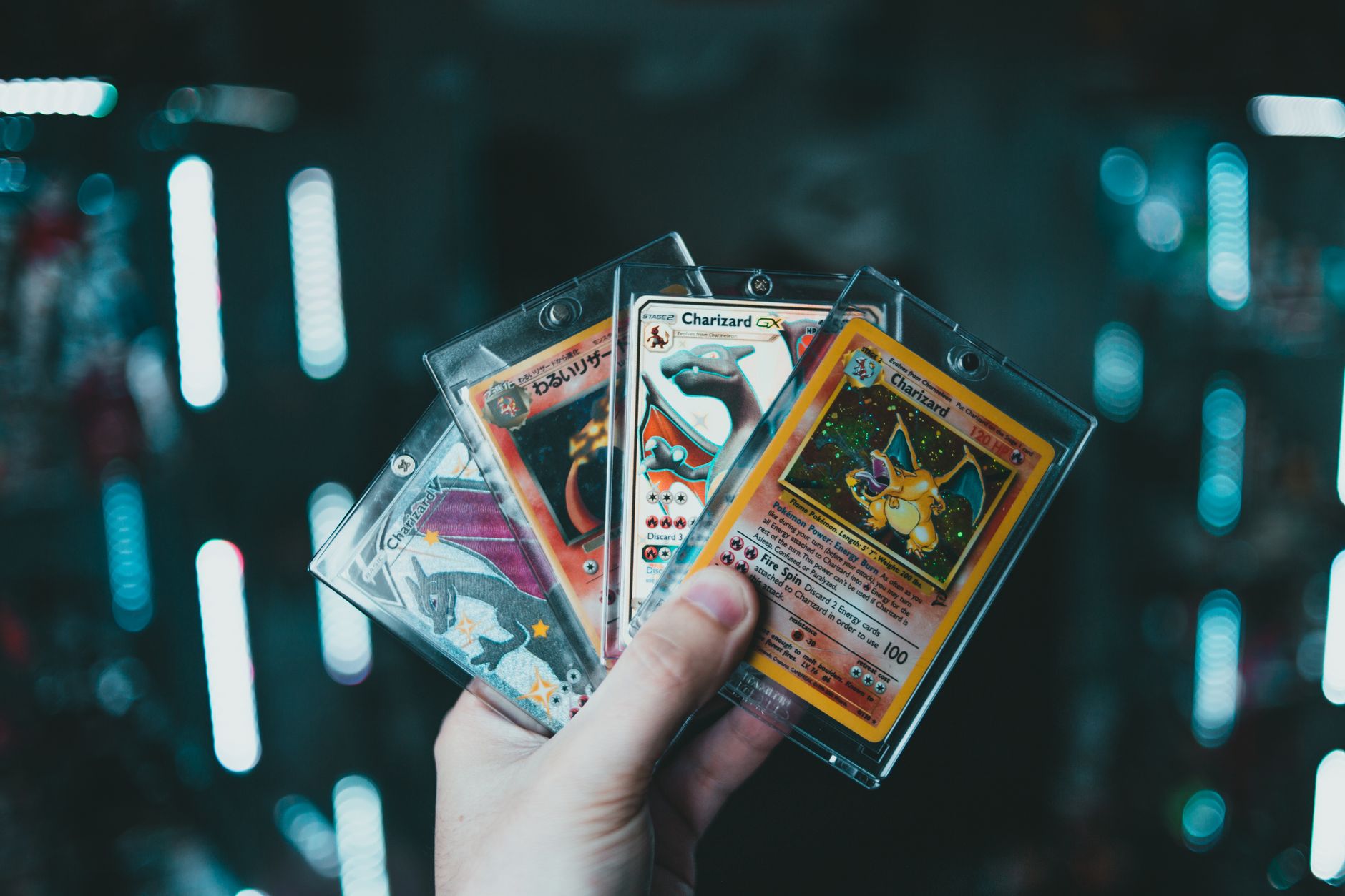
The interest becomes a credential. The talent becomes labor. The hobby itself becomes a product.
— We’ve Killed Kid’s Hobbies, Reptarus On Ice
Everything moves so fast now that the ability to be bad at something for 2 years just because you like it, that that doesn’t exist anymore.
— We’ve Killed Kid’s Hobbies
For our Sunday, September 13, 2026 at 10AM CT, 4PM UK Campfire Learn Together, we are watching and discussing We’ve Killed Kid’s Hobbies, a video essay by Reptarus On Ice about what happens to a child’s interest the moment an adult can see a return in it.
The argument is a machine with six steps. A kid gets into something. The system around the kid notices. The serious version shows up — coaching, grading, tournament circuits, a channel. The money goes up, the expectations go up, a goal arrives. The fun goes, because kids don’t keep loving something that’s being measured. And then, usually between eleven and fourteen, usually quietly, the kid quits.
He walks that machine through three sectors: trading cards and collectibles, youth sports, and the kid content economy. He is a parent inside all three, and he does not write from above them. His daughter’s graded card came back a seven. His other kids are in his videos. He is arguing with himself on camera, and the post is better for it.
This one lands hard in our territory, and the video only brushes against why. We publish nearly 450 glossary terms about attention, interest, flow, and burnout, because for Autistic and Neurodivergent people an interest is not a pastime. It is how attention works, how regulation happens, and how you find your way back from burnout. When the machine eats a hobby, most kids lose a hobby. Some of us lose the route home.
We watch. We reflect. We bring our whole bodyminds. And we ask what it would take to let a kid be bad at something for two years.
Videos
We’ll watch this together at the start of the session — subtitles on, sound up, cameras optional. No need to have watched ahead.
We’ve Killed Kid’s Hobbies, by Reptarus On Ice, published June 2026. About thirty minutes. It is the third part of a trilogy that started with a dad taking his kids to Friday Night Magic and ended up somewhere much larger. Along the way: a five-million-dollar Pikachu, a grading slab that made a twelve-year-old’s card worth less than it was before she sent it in, a private equity fund that owns your kid’s hockey rink, and an eighty-five-year-old loophole in child labor law that family vlogging fits through exactly.
Fair warning, and it is worth discussing rather than skipping: there is a sponsor segment in the middle, and it is the creator sponsoring his own web shop. In a video about the monetization of hobbies. He says so plainly and explains the economics — two or three people buying something pays him twice what a month of ad revenue does. That is not hypocrisy. It is the same thing the VPN sponsorship in last week’s film was: evidence of how narrow the exit is.
One video, one question: what did you love before anyone was counting?
Table of Contents
- Videos
- The Interest Becomes a Credential
- Regular Play and Public Labor
- The Slab Is Permanent
- A Generation That Can’t See a Toy Anymore
- You’re Not Signing a Contract Until You Are
- The Oldest Creative Impulse Children Have
- The Pattern Is the Villain
- The Stimpunks Synthesis
- Join Us
- Main Takeaways
- Related Glossary Entries
- Reflection Questions
- Resources
The Interest Becomes a Credential
We have built a culture in which the moment a child shows interest or talent in something, a machine, a trap, it just activates around them. The interest becomes a credential. The talent becomes labor. The hobby itself becomes a product.
That is the thesis, delivered in the first minute, and the rest of the video is the proof.
What makes it work is the second step, which is where he insists most people go wrong:
This is the part most people get wrong because they picture some cartoon villain. It’s almost never that. The adult who triggers step two is usually a parent or coach who looks at the kid’s talent and thinks, “Okay, this kid’s pretty good. This could lead somewhere. A scholarship, you know, a shot at college, a head start on whatever’s coming up in the future.”
He names what that parent is doing: a parent doing what their economic moment taught them to do.
This is our house position stated in someone else’s words. We write against broken systems, not broken people, and a parent reaching for a scholarship because college costs what it costs is not a villain. They are doing arithmetic in a fantasy economy — Neil Kraus’s term for the story that leaves the political and economic arrangements untouched and puts all the pressure on what a young person does with their education.
And then step five, which is the one we want to sit with:
The fun goes. Kids don’t keep loving something that’s being measured.
We have a whole vocabulary for this sentence. Metric fixation, Jerry Muller’s name for the irresistible pressure to measure, publicize, and reward performance in the face of evidence that it does not work. The McNamara fallacy, which measures what is easy, discards what is not, and then presumes what cannot be measured does not exist. Alfie Kohn on grades — every study that ever looked found receiving a grade has a negative effect on interest in the thing being graded. Intrinsic motivation, and what happens when you bolt a reward onto it.
A grade is a grade whether a school issues it or a card grader does. That is the connection this video makes that we had not made in quite those words, and it is the reason we are watching it.
Regular Play and Public Labor
A kid drawing in their notebook is regular play. A kid running a YouTube channel about their drawings, it becomes public labor. A kid throwing a baseball with friends in the yard, once again, regular play. A kid playing in a tournament where scouts are filming every single pitch, that becomes public labor.
Same activity. What changes is whether someone’s measuring it, monetizing it, or harvesting it.
And then he immediately says the split no longer holds:
A pickup game amongst friends could end up a viral moment by the time that that kid gets home for dinner. The private side keeps leaking into the public side, and because kids are growing up in a culture that assumes everything that they do is eventually content. Even kids whose families aren’t trying to make money off of them are, in a way, inheriting that assumption.
Every interest is on stage. Every stage has a producer, and every producer needs to, at the end of the day, justify their budget.
That last line is the rot economy applied to childhood — Ed Zitron’s name for the growth-at-all-costs logic that has to keep extracting because extraction is the only thing it knows how to measure. A stage with a producer is not a place you can be bad at something. It is a place with a budget to justify.
Play is not a warm-up for work. Our page on it opens with the plainest possible claim: there is nothing more human than play, and children evolved to learn through thousands of hours of it. Play that is being filmed is not play. It is a performance with a child in it.
The Slab Is Permanent
My oldest spent her own money to send one card in. She got back a seven. […] A seven sounds fine until you remember that the slab is permanent first off. The grade is now a part of that card forever. A raw card can sell at whatever the buyer thinks that it’s worth. A seven graded card can’t. It’s officially been stamped less than perfect. The slab made her card less valuable than if she never submitted it at all.
He gets visibly upset telling this. It is the best two minutes in the video, because it is the whole thesis happening to a specific twelve-year-old who paid for it herself.
Submitting the card destroyed value that existed only while the card was unmeasured. Before the slab, it was worth whatever it was worth to whoever wanted it — including her. After, it carries a permanent number that is not seven out of ten so much as not ten. The measurement did not describe the card. It changed it.
Around that grading counter, he describes an industry consolidating. By his account, the parent company of PSA moved to buy Beckett in December 2025, already owned SGC, and now controls close to eighty percent of global card grading. One company owning the machinery that turns kid card games into financial assets.
And he refuses the easy nostalgia:
Pokémon flipping predates Logan Paul. I remember asking my dad to buy me a first edition Charizard at a freaking comic book convention in the late ’90s. […] What changed is the economy around the collectible tier. […] It used to coexist with the play tier, but now it has completely eaten it.
The play tier and the collectible tier, and one ate the other. That is artificial scarcity run as a business model. The LEGO half of the section makes it explicit — a catalogue split in two, with the eighteen-plus branding on the box as the literal admission. As he puts it: the kid is not on the box anymore.
A Generation That Can’t See a Toy Anymore
A lot of adults with financial trauma. I’m not like trying to boohoo or excuse any of this, but hear me out.
This is the most generous thing in the video and the part most likely to get argued with at the campfire.
Years later, we discovered the cards that we got rid of as kids would have been worth tens or even in some cases hundreds of thousands of dollars if we just would have kept them. […] and combine that with things like stagnant wages, housing price increases that have doubled while paychecks have remained, and the fact that most of us don’t even know what retirement could even feasibly look like […] we’re a generation of adults who can’t think of Pokémon cards as toys anymore. We think of them as not only reclaiming what we lost, but also on top of that a potential way out.
That kind of adult is the customer base that this entire scalper industry was built for. Calling them villains misses a point of how the system works.
We have a word for the condition he is describing: precarity. Our entry carries John Green’s line that wealth is the closest one can feel to secure in a society that runs on precarity — and a scalper economy is what happens when a few million people who will never feel secure go looking for an asset class they are allowed to buy into.
This is neoliberalism arriving in a card shop. Privatize the upside, individualize the risk, and then act surprised when people treat their children’s toys as a retirement plan. The hustle did not start with the kids. The kids inherited it.
You’re Not Signing a Contract Until You Are
My 12-year-old daughter is in volleyball right now. She got into it through the Boys and Girls Club in our town. Twice a week, volunteer coached […] For a child of the ’90s, it is always how community recreation always worked. […] I’m telling you all this because it’s part of the system that’s been disappearing for like 15 years now.
Here is the structural claim of the entire video, and it goes by in about fifteen seconds:
Places like the YMCA and the Boys and Girls Club are one of the few safe institutional spaces that are still standing and they’re not getting a whole lot of money.
That is a third place — not home, not school or work, community without a purchase requirement — being defunded while a market grows in the space it used to fill. The commons did not lose a fair fight. It was starved first, and then the private version arrived charging four figures a season.
What arrived is specific and he names names: travel team fees in the four-digit range, out-of-town tournaments with stay to play rules that disqualify your kid’s team if you book a cheaper hotel, thousand-dollar bats, and in some cases a private equity owner behind the league. Varsity Brands in competitive cheer. Black Bear Sports Group buying up ice rinks. The owners of an NBA franchise building a youth sports business on the side.
And the engine underneath all of it:
The entire reason the travel team can charge what it charges is the scholarship chase. The pitch is pretty simple. Invest in your kid now […] and you’ll earn that money back as athletic aid once they get into the college.
By his numbers: over four billion dollars a year in Division 1 and Division 2 athletic aid, up from roughly two hundred fifty million in the early nineties, chased by families of whom about two percent will ever see an athletic scholarship.
The pitch itself is absolutely broken. You are not going to hit it, but because of the pressure of our modern society, you sure as hell are still going to swing.
That is the myth of meritocracy sold as a financial product. And the sale closes without anyone signing anything:
You’re not signing a contract until you are. You’re just standing there at a Saturday morning game having a conversation with the other parents, looking at your kid doing well, and thinking, “Can I give them a chance to not have to worry and suffer like I did?”
The Oldest Creative Impulse Children Have
The third pillar is the one where he most visibly refuses the comfortable answer.
The easy version of this pillar, don’t put your kids on the internet, is the version that lets the structural argument off the hook. The kid that wants to create and wanting to share what they make is, in my opinion, one of the healthiest impulses to have.
The impulse to make things and share them is like one of the oldest creative impulses that children have.
He is right, and the refusal matters. “Keep your kids offline” is an individual prohibition standing in for a structural fix, and it costs the kid the affinity spaces and fandoms where a lot of Neurodivergent young people find the first people who get it.
So he moves the question to where the harm actually is:
To me, the whole trap is in what happens to the kids’ creative labor once it enters public platforms.
Then the history, which is the sharpest research in the video. Jackie Coogan starred in Chaplin’s The Kid in 1921, grew up, and found his parents had spent almost everything he earned. California passed a law in 1939 locking fifteen percent of a child actor’s money in a trust. But that law only ever covered children with an employer and a contract — and family vlogging has neither.
The parent is a camera operator, the guardian, and the name on the check.
An eighty-five-year-old protection with a hole in it exactly the shape of the thing that came later. He reports legislation moving in Illinois, California, Minnesota, and Utah, sixteen more states stuck in committee, and nothing federal.
And he lands on a question rather than a rule:
Am I helping them express their creativity, or am I feeding their creativity, not their content, their creativity, into a machine that only runs if they want this?
A kid can have a perfectly healthy relationship with making things in a deeply unhealthy relationship with the platform that publishes them.
The Pattern Is the Villain
This is a video about capitalism, baby. […] Specifically, late-stage capitalism habits of converting any unmonetized human activity, whether it be labor, leisure, sleep, attention, just your childhood, it’s all an asset class now. The pattern doesn’t have a villain because the pattern is the villain. It doesn’t need one. It just needs a market to sell it.
The gigafication of the economy has reached now our kids’ childhoods. We’re not putting them in the mines or in the machines anymore. We’re putting them in front of the freaking cameras.
And the sentence we keep coming back to:
The kids inherit what the adults have already lost, the ability to be in unproductive time. Like everything moves so fast now that the ability to be bad at something for 2 years just because you like it, that that doesn’t exist anymore.
The ability to be in unproductive time. He is describing rest as a structural condition rather than a personal virtue, and he is describing what we call slow pedagogy and developmental pace without the vocabulary for it.
The ending is small on purpose. He has an enchanted Bell card in his Lorcana collection that would clear seven hundred dollars at a PSA 10. He is not grading it.
I’m not going to feed the layer of the hobby that ate my daughter’s Espeon VMAX card. That’s the only thing I can really do, but that’s one parent in the room making one choice.
The Stimpunks Synthesis
The following is a Stimpunks synthesis — our own extension and critique, not a claim made by the video or its creator.
For a monotropic kid, the interest is not a hobby. It is an organ.
This is the extension we most want to bring to the campfire, because the video has the right machine and the wrong stakes for our people.
When a typical kid burns out of a measured hobby, they lose the hobby. When an Autistic or ADHD kid’s interest gets measured, monetized, or turned into a performance, something structurally different happens. Monotropism describes attention that pulls hard into a small number of interests at a time — which means the interest is not one activity among many. It is the doorway into flow, a reliable source of Autistic joy, and very often the only dependable route back from burnout.
Helen Edgar of Autistic Realms has written the sharpest version of this, and it should be read alongside the video. In Why “Interest-Led” Isn’t Enough, she names what happens when adults use a child’s passion as leverage:
If an Autistic child hits burnout or a mental health crisis, and their passions have been weaponised like this, they will have even less to fall back on to help recovery.
If interests get weaponised and a child hits burnout it may take even longer to recover, as they will no longer be able to hook into a flow state that could help them.
That is the missing stake. Reptarus says kids don’t keep loving something that’s being measured, and he is right. Helen’s point is the one after it: for some kids, the thing that got measured was the medicine. The pipeline does not just cost them a hobby. It removes the tool they would have used to recover from having lost it.
It is worth adding that the word he reaches for three times is ours. He says kids burn out of three or four hobbies by fourteen. Autistic burnout is not a synonym for getting tired of something — it is a distinct, documented state of exhaustion, skill loss, and reduced tolerance to stimulus that can take months or years to come back from. The machine he describes is a burnout generator aimed at exactly the kids whose burnout is hardest to reverse.
Now the pushback, in four parts, because a video this good deserves argument rather than applause.
First: he priced the pipeline and never priced the exit. That’s one parent in the room making one choice is an honest sentence and an individual remedy for a structural trap — and the exit is cheapest for the parent who can already afford not to chase the scholarship. He documents four billion dollars in athletic aid against families who cannot absorb tuition, and then the recommendation is to decline. A family that could comfortably decline was never the one being squeezed. The structural version is not better parents. It is funded public recreation so the YMCA is not the last building standing, the Coogan gap closed federally rather than sixteen states at a time, and card grading regulated as the financial instrument it now is. You cannot opt out of a market. You can only fund the alternative or regulate the market.
Second: “the pattern is the villain” is right, and he already built a hook it lets people off. We say critique systems, not the people struggling inside them — and the parents at the Saturday morning game are unmistakably people struggling inside it. Varsity Brands is not. Neither is a company consolidating to eighty percent of global grading, or an influencer who sets a price floor in public and cashes it out five years later. Structure and agency are not exclusive; structure is made of decisions, and some of those decisions have names, addresses, and quarterly filings. “No villains” is the correct posture toward the family. It is too generous to the fund.
Third: disability is the missing variable in all three pillars, and it changes every number. Four-figure season fees, stay-to-play hotels, and thousand-dollar bats are a barrier for most families. Add the crip tax and the ADHD tax — the documented extra cost of getting through a world not built for you — and it stops being a barrier and becomes a wall. Then consider what the elite team actually selects for: an uninjured, regulated, reliably available body that shows up on schedule and does not need the accommodations nobody offered. The travel team is not only a pay gate. It is a sorting machine for neuronormativity, and the kids it sorts out are ours, who were already the least likely to have a second activity waiting.
Fourth, and this is the one we would want him to sit with: the kidfluencer question is harder when the kid is Autistic. Am I feeding their creativity into a machine that only runs if they want this? is the right question. But a monotropic kid’s wanting is not a dial that gets turned down when the situation calls for it. The interest that finally got them engaged, verbal, joyful, and visibly happy is exactly the interest a family is most tempted to build something around — and the kid’s own enthusiasm will be the evidence everybody points at. Consent given from inside a flow state, to a parent holding the camera, about a thing you love more than anything, is not a clean yes. This is where bodily autonomy and privacy stop being abstractions and become a specific child’s specific archive, permanent and searchable, made when they were seven.
And then the thing we would put on a wall. His best line — the ability to be bad at something for 2 years just because you like it — is a disability rights claim that does not know it yet. That is crip time: not a slower version of normal time but a different relationship to it, where the schedule bends to the bodymind instead of the bodymind breaking against the schedule. The right to be bad at something for two years was never only about kids. It is what Disabled people have been asking for the whole time, and it is the first thing every pipeline in this video takes away.
None of which makes the video wrong. It makes it an argument in progress, which is the best kind to bring to a campfire. He asked one question at the end, and we are going to answer it in a Discord voice channel on a Sunday morning: what are you going to do to save your hobbies?
Join Us
Campfire Learn Together happens every Sunday at 10AM Central, online via Discord. This session is on Sunday, September 13, 2026 at 10AM CT, 4PM UK. Open to the whole community — no preparation needed, no expertise required. Come as you are.
We’ll watch together, take a bodymind break, and then open up the reflection questions as a community conversation. You can participate by video, voice, text chat, or just by being in the room. All modes are welcome. Cameras optional. Silence is participation.
There is no designated expert here, including us. This is omni-directional learning in a Cavendish Space campfire, and the most useful thing in the room is going to be somebody’s story about the hobby that stopped being fun — not our glossary.
Join our community to get access, then find us in our online space. Our Campfire Learn Together page describes some of what to expect. If this is your first Campfire, you’re in good company — many of our regulars showed up for the first time not knowing quite what to expect, and stayed.
Come with the thing you quit. The instrument, the sport, the collection, the craft, the channel. And if you have one, bring the opposite too — the thing you still do badly, on purpose, that nobody has ever measured.
Main Takeaways
- A grade is a grade whether a school issues it or a card grader does. Alfie Kohn found that every study of grading showed a negative effect on interest in the graded thing. The slab does to a card what the report card does to a book.
- The measurement doesn’t describe the thing. It changes it. A twelve-year-old’s card was worth whatever someone would pay until a seven made it permanently not a ten. Measuring destroyed value that existed only while it was unmeasured.
- Play stops being play the moment it has a producer. Every interest on stage, every stage with a budget to justify. That is the rot economy arriving in a driveway basketball game.
- The hustle didn’t start with the kids — they inherited it. Adults told for fifteen years that every hobby is a brand raised kids who assume everything they make is eventually content.
- The commons didn’t lose a fair fight. It was defunded first. The YMCA and the Boys and Girls Club are among the last third places standing, and the private version arrived charging four figures a season only after the public one was starved.
- You’re not signing a contract until you are. Nobody sells you the pipeline. You talk to another parent at a Saturday game and do arithmetic about your kid’s future in a fantasy economy.
- For a monotropic kid, the interest is not a hobby — it’s an organ. It is the doorway to flow, a source of joy, and the route back from burnout. Weaponize it and you remove the medicine along with the fun.
- The travel team is a sorting machine for neuronormativity, not only a pay gate. Add the crip tax to stay-to-play and the barrier becomes a wall.
- Consent from inside a flow state, to a parent holding the camera, is not a clean yes. The most joyful interest is the one a family is most tempted to build a business on, and the kid’s enthusiasm becomes the evidence.
- The right to be bad at something for two years is crip time. It was never only about kids, and it is the first thing every pipeline takes.
Related Glossary Entries
- Play — There is nothing more human than play, and children evolved to learn through thousands of hours of it. The thing the video says we killed.
- Special Interest — Intense, delightful, and a vital part of Autistic culture. What the machine mistakes for a business opportunity.
- Monotropism — Attention that flows deep into a few interests at a time. Why the stakes of a captured interest are higher for us.
- Flow — Attention tunnels as a necessary coping strategy, not a productivity hack. The state a measured hobby makes unreachable.
- Autistic Joy — The whole-body, all-encompassing joy that radiates out of a deep interest. The first casualty of a scoreboard.
- Burnout — Not “got tired of it.” A documented state of exhaustion and skill loss that the pipeline reliably produces.
- Intrinsic Motivation — Autonomy, mastery, and purpose. What the reward reliably displaces.
- Grading — A grading orientation and a learning orientation are inversely related. True of report cards and of slabs.
- Metric Fixation — The irresistible pressure to measure, publicize, and reward, in the face of evidence it doesn’t work.
- McNamara Fallacy — Measure what’s easy, ignore what isn’t, then presume what can’t be measured doesn’t exist. How a childhood gets scored.
- Childism — Children’s radical equality on children’s own terms. The frame that makes “kids are people now, not investments” an argument rather than a sentiment.
- Third Places — Community without being required to buy stuff. The YMCA, the Boys and Girls Club, the game shop — and what replaces them.
- Fantasy Economy — Neil Kraus’s term for the story that leaves the economy untouched and puts all the pressure on education. The scholarship chase, exactly.
- The Myth of Meritocracy — Two percent get the scholarship and everyone swings anyway. Structural inequality converted into personal failure.
- Rot Economy — Growth at all costs, where the only thing that matters is extracting more. Now applied to a nine-year-old’s card binder.
- Precarity — Wealth is the closest one can feel to secure in a society that runs on precarity. Why a generation can’t see a toy anymore.
- Artificial Scarcity — Scarcity manufactured as a business model. The collectible tier that ate the play tier.
- Crip Tax — The hidden costs of being Disabled in a world not built for you. What stay-to-play fees land on top of.
- Crip Time — A different relationship to time, not a slower one. The right to be bad at something for two years.
- Rest — A society better at letting people get the rest they need. What “the ability to be in unproductive time” is asking for.
Reflection Questions
On the thing you quit. Almost everyone has one — the instrument, the sport, the collection, the craft that stopped being fun somewhere between eleven and fourteen. What was yours, and what was the first moment somebody started counting? Not to relitigate it. To find out whether you quit the thing or quit the measurement.
On being bad at something. The video’s best line is about the vanished ability to be bad at something for two years just because you like it. Do you have anything like that right now — genuinely unmeasured, genuinely mediocre, genuinely yours? If not, what would it take to start one, and what would you have to stop justifying?
On the interest that became the medicine. For a lot of us the deep interest is how we regulate, how we find flow, how we come back from burnout. Has one of yours ever been used as leverage — a reward, a bargaining chip, a way to get you to do something else? What did that cost you later?
On the room you were in. The video’s trap closes in ordinary places: a gym on a Saturday, a group chat, a grading counter, a kitchen table. When were you in one of those rooms — as the kid, the parent, the coach, the friend? What did the pressure feel like from where you were standing?
On what you’d want funded. If the answer is not better parents, what is it? What would have to exist in your town for a kid to play a sport badly for two years without anyone’s finances being involved? Who would pay for it, and what are we currently paying for instead?
On the archive. Somewhere there are pictures, videos, and posts of you that somebody else made public. What do you wish had been asked first? And for the people raising kids now — what does asking actually look like when the kid is seven and delighted?
—
This page draws on We’ve Killed Kid’s Hobbies, a video essay by Reptarus On Ice, which itself credits Mother’s Basement, “Parasites Are Eating Your Hobbies Alive” and More Perfect Union, “How Private Equity Destroyed Youth Sports”; and on Helen Edgar’s Why “Interest-Led” Isn’t Enough: Embracing Monotropism & Neuro-Affirming Practice at Autistic Realms, which is her work and not ours. Quotations from the video are transcribed from its captions. Figures cited — grading market share, athletic aid totals, scholarship rates, and creator earnings — are as stated in the video and have not been independently verified by us. The Stimpunks Synthesis section is our own extension and critique, not attributed to the video or its creator.
Resources
- We’ve Killed Kid’s Hobbies — YouTube — Reptarus On Ice
- Parasites Are Eating Your Hobbies Alive — YouTube — Mother’s Basement, credited in the video
- How Private Equity Destroyed Youth Sports — YouTube — More Perfect Union, credited in the video
- Why “Interest-Led” Isn’t Enough: Embracing Monotropism & Neuro-Affirming Practice — Helen Edgar, Autistic Realms
- Glimmers: Autistic Joy and Monotropism — Helen Edgar, Autistic Realms
- Octavia Butler on Positive Obsession — Stimpunks Foundation
- Interest-Driven Learning — Stimpunks Foundation
- The Myth of Meritocracy — Stimpunks Foundation
- Broken Systems, Not Broken People — Stimpunks Foundation
- We’re Raising Whole Children, Not Frankenstein Children — Stimpunks Foundation
- When You Measure, Include the Measurer — Stimpunks Foundation
- Cavendish Space: Caves, Campfires, and Watering Holes — Stimpunks Foundation
- Campfire Learn Together: The Subtle Art of Normalising Dystopia — Stimpunks Foundation
- Campfire Learn Together: Free for All — A People’s History of the Public Library — Stimpunks Foundation
- Campfire Learn Together: Code for the People — Stimpunks Foundation
- The Case Against Grades — Alfie Kohn
- Punished by Rewards — Alfie Kohn
- Play’s Power — Human Restoration Project
- The Rot Economy — Ed Zitron, Where’s Your Ed At