
He couldn’t stand any spaces.
— Count Basie on Art Tatum
Words & Music (1980) | Oscar Peterson, Count Basie, and Joe Pass
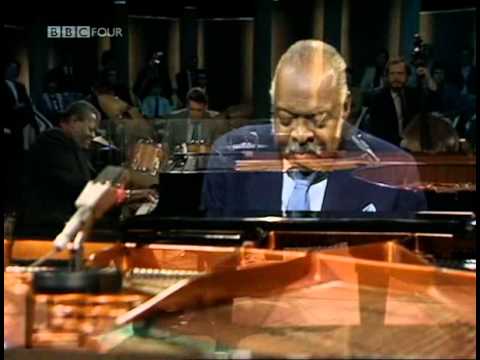
For our July 5, 2026, Campfire Learn Together, we are watching two of the greatest pianists in the history of Jazz sit at two enormous grand pianos and talk about the ones who came before them.
Oscar Peterson and Count Basie trade stories about the greats of Jazz piano — Art Tatum most of all — in between playing songs together. The style is cozy and affable. Peterson is a superb conversationalist and a generous host; Basie follows his lead with warmth. The conversation on how intimidating Tatum was as a player is captivating.
This is not a lecture. It is elders keeping a lineage alive by hand, because the institutions of their time would not carry it for them. That is a systems fact, not a footnote. We watch it here because it is the oldest form of the thing this gathering is named for.
The Campfire That Watches a Campfire
A campfire is the oldest learning space we have. A master tells stories, and the rest of us learn by listening. It predates the classroom, the curriculum, and the test. It is how knowledge moved for most of human history, and it is the space this gathering takes its name from.
Watch what Peterson and Basie are actually doing. They are keeping a campfire. Two masters, trading stories about the ones who came before — passing a lineage forward in the only reliable way it has ever moved, which is hand to hand, voice to voice, one player to the next.
So we are screening a campfire during a Campfire. The footage and the gathering are the same act at two scales. That is not a coincidence to point out and move past. It is the whole reason this tape belongs here.
The Whole Ecosystem in One Hour
The Cavendish Space model names three learning spaces: the Cave, the Campfire, and the Watering Hole. Most of this hour of tape shows two of them plainly, and the third is the one that made the other two possible.
The Campfire is the talk. Two elders telling stories about Tatum, about the players they measured themselves against, about a history they lived inside.
The Watering Hole is what happens when they stop talking and play. Two pianists meeting as peers, no hierarchy, improvising in real time, listening harder than they speak. The Watering Hole is where equals learn from each other sideways, and that is exactly what those duets are.
The Cave is the space you do not see. It is the years each of them spent alone at a keyboard, building a voice in solitude — the woodshed time, the deep focus, the ten thousand unglamorous hours. The Campfire and the Watering Hole rest on Cave time. You are watching the visible tip of an enormous submerged discipline.
One hour of footage, and the whole ecosystem is on screen — the two social spaces in front of you, and the solitary one holding them both up.
Art Tatum and the Weight of a Space
The heart of the conversation is Tatum, and the sharpest line in it is Basie’s: he couldn’t stand any spaces.
Read it once and it is a remark about density. Tatum played so much, so fast, so completely, that he left no gaps — the sound was total. Read it again next to Basie, and it lands harder, because Basie’s entire genius was the opposite. Basie built a style out of the note he did not play, the space he left open, the silence that swings. Two masters, two opposite relationships to the empty bar, both of them right.
But the line is also about attention. What Peterson and Basie describe when they talk about Tatum is the particular terror of watching someone whose focus is so complete it becomes legible from across the room. Mastery at that depth reads as intimidating precisely because it is a flow state made visible — a mind fully inside its material, leaving no room for anything else. We do not need to diagnose a dead genius to notice the shape of that attention, or to recognize it. Many of us know that shape from the inside.
Made Under Conditions Built to Prevent It
These men made transcendent art inside a country that was actively hostile to their existence. Basie built and rebuilt a great American orchestra across the Jim Crow era. Peterson, a Black Canadian, toured a segregated United States that would seat him on a stage and refuse him a hotel room in the same night. The touring circuits were rigged. The venues were rigged. The recording industry was rigged. The system was broken.
They were not.
Peterson’s own answer to it is concrete. In 1962 he wrote “Hymn to Freedom,” and the civil rights movement took it up as an anthem. Culture made load-bearing. That is ★stuff in the most literal sense — a life’s worth of meaning produced under conditions engineered to prevent it, and then handed to a movement that needed exactly that.
The WordPress community practice of naming software releases after Jazz greats sits in this same lineage. It is a refusal to let the transmission go unmarked. Every release name is a small campfire — a way of saying this history matters, and we will keep telling it. The thing being celebrated is not nostalgia. It is the fact that these players kept building anyway.
The Stimpunks Synthesis
The following section is a Stimpunks synthesis — an extension of the footage through our own lens, not a claim about the intentions of anyone in it.
Lineage is infrastructure, not sentiment. What looks like two old friends reminiscing is a load-bearing transfer of knowledge that no institution of their era was built to carry. When the formal systems will not hold a tradition, people build the informal ones that will — the campfire, the after-hours session, the duet. We recognize that move because it is our move. We build in the cracks because the cracks are where the building has to happen.
The three-space model is not a diagram we imposed on this footage. It is already there. The talk is a Campfire, the duets are a Watering Hole, and the invisible years of solitary practice are the Cave. What this tape shows, better than most things we could screen, is that the social spaces and the solitary space are not in competition. Deep focus in solitude and generous connection in company are the same ecology, not opposites. A person needs all three, and so does a tradition.
And the throughline of the whole hour is the counter-deficit spine of everything we do. Two Black artists, working inside systems designed to diminish them, produced some of the most sophisticated music the century made — and then sat down to make sure the ones who came before them were not forgotten. Broken systems. Unbroken people. Star stuff, made under conditions built to prevent it, and passed forward on purpose.
Join Us
Campfire Learn Together happens every Sunday at 10AM Central, online via Discord. This session is on Sunday, July 5. Open to the whole community — no preparation needed, no expertise required. Come as you are.
We’ll watch together, take a bodymind break, and then open up the reflection questions as a community conversation. You can participate by video, voice, text chat, or just by being in the room. All modes are welcome. Cameras optional. Silence is participation.
Join our community to get access, then find us in our online space. Our Campfire Learn Together page describes some of what to expect. If this is your first Campfire, you’re in good company — many of our regulars showed up for the first time not knowing quite what to expect, and stayed.
Main Takeaways
A campfire is a learning space, not a break from one. Two masters telling stories about the players who came before them is knowledge moving in its oldest and most durable form. We are watching a campfire during a Campfire, and that recursion is the point.
The whole three-space ecosystem is on the tape. The talk is a Campfire, the duets are a Watering Hole, and the years of solitary practice are the invisible Cave beneath both. The social spaces rest on the solitary one. A tradition, like a person, needs all three.
“He couldn’t stand any spaces” is a line about attention. Basie, the master of the note left unplayed, naming Tatum, who left none. Two opposite relationships to silence, both of them mastery. What made Tatum intimidating was focus so complete it was visible from across the room — a flow state made legible.
The system was broken; the people were not. Basie and Peterson made transcendent art inside Jim Crow and a segregated touring industry. Peterson answered it directly by writing “Hymn to Freedom” in 1962, which the civil rights movement adopted. That is the counter-deficit frame, stated in music.
Naming releases after Jazz greats is a lineage practice. It refuses to let the transmission go unmarked. Every name is a small campfire — a way of insisting the history matters and will keep being told.
Reflection Questions
On the campfire This footage is elders keeping a lineage alive because no institution would carry it for them. Where in your life have you received something important hand to hand, outside the official channels? Who kept a campfire for you?
On the three spaces The tape shows the Campfire and the Watering Hole, but the Cave — the solitary practice — is invisible. Where is your Cave time? Is it protected, or is it the first thing that gets taken when the day gets hostile? What would it take to defend it?
On spaces and silence Basie built a style out of the notes he did not play; Tatum left no space at all. Both were right. Where do you thrive on fullness, and where do you need the empty bar? Has anyone ever mistaken your version for the wrong one?
On focus that others can see Peterson and Basie describe Tatum’s mastery as intimidating — a depth of attention legible from across the room. When has your own deep focus been read by others as too much, or as strange, rather than as the thing making the work possible?
On building anyway These artists made their work inside systems designed to diminish them, and then made sure their predecessors were remembered. Where are you building anyway? What are you refusing to let go unmarked, and who are you keeping the campfire for?
This page draws on the 1980 Words & Music session with Oscar Peterson, Count Basie, and Joe Pass; the Cavendish Space framework; and the Stimpunks pattern language. The Stimpunks synthesis section is our own extension, not attributed to the artists.