
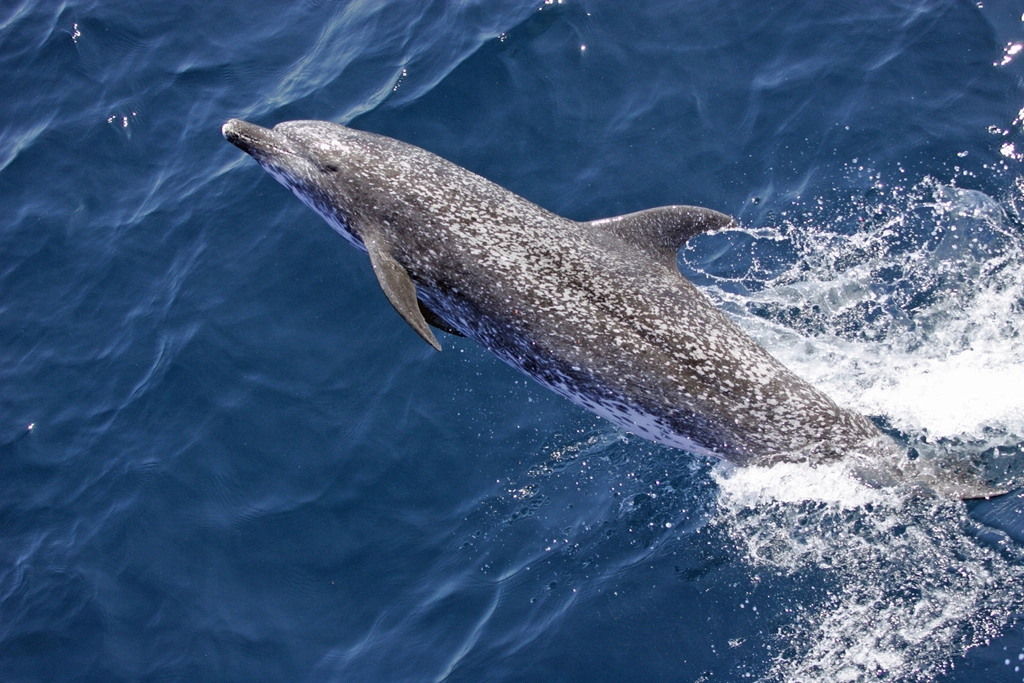
The dive is natural. What happens to the diver depends on the water.
The question was never what’s wrong with us. It was always what the environment made possible.
For our Sunday, June 28, 2026 Campfire Learn Together, we’re putting two of our glossary entries in the same room and watching what happens. Dolphining is about how a mind moves through a conversation. Attachment Theory — read through a neurodivergent lens — is about how a mind forms safety with other people. On the surface they’re about different things. Underneath, they’re doing the same work, asking the same question: what does the environment make possible, and what does it punish?
That shared question has a name here. Broken Systems, Not Broken People. This session is that frame, traced twice — once through cognition, once through connection — until both threads land in the same place.
Videos
We’ll watch a few short videos together at the start of the session and open the conversation around them — nothing to watch ahead of time, and no expertise required. We chose shorts on purpose: short, lived-experience and plain-language clips that show the ideas from the inside or name them clearly, rather than explaining us at length from the outside.
The dive. First, two community clips that name Dolphining from the inside — both already living in our glossary. Professor Sol’s ADHD Dolphining walks you through the silent deep-dive and the “where did that come from?” surface, and Leia Morshedi’s reel shows how neurodivergent friends can follow one another’s dives even when others can’t. A minute or two each, and most people in the room will recognize themselves immediately.
The water. Then a short overview of the framework we’re building the second half around: New “Neurodivergent Attachment Theory” Framework — 2025 Paper (about three minutes) from the Adult Autism Assessment Center. It walks through Letsoalo’s core move — that many autistic and ADHD attachment behaviors get misread because they’re measured against neurotypical standards — and names the proposed styles, including the Masking-Avoidant pattern at the heart of this session. It’s a clean on-ramp into Attachment Theory read through a neurodivergent lens.
The bridge (optional, if time allows). If the room wants the connective tissue made explicit, An Introduction to the Double Empathy Problem (about five minutes) from The Autistic Advocate, Kieran Rose — the advocate whose work anchors our Attachment Theory glossary entry — names why the difficulty so often gets located in the neurodivergent person when it actually lives in the gap between two different styles. It’s the same mechanism that lets a dive get read as “off-topic” and lets neurodivergent connection get assessed as “insecure.” Screen it if you have the time; skip it if the conversation is already running.
We let these land, then use the frameworks to name what we just watched.
If the attachment framework grabs you and you want it style by style, we’ve gathered a full short-video series in Going Deeper at the end of this page — take it at your own pace, before or after the session.
The Dive Is Natural
Some minds dive deep mid-conversation and surface somewhere unexpected. From the outside, the connection is invisible. From the inside, it was perfectly logical — you just got there faster than anyone else could follow. That’s Dolphining: a monotropic mind tunneling deep and then breaching, surfacing with what looks like a non-sequitur and was actually the only logical conclusion.
The person who named it best wasn’t a clinician. It was @3TrackMind79, in the Twitter thread that went viral because people recognized themselves in it:
Our brains don’t wait for a response from the other person. It’s not rudeness or impatience. We can’t control it. It’s just how our brains work. So, NTs only see what breaches the surface, which is just a fraction of what’s happening.
— @3TrackMind79, the “Dolphin Mind” thread
Notice where the difficulty actually lives. Not in the diver — in the watcher who can only see the surface. This is the double empathy problem in miniature: a meeting of two different styles, with the dive read as disruption by people who never learned to follow it. The thread doesn’t end with a management strategy. It ends with I love your Dolphin Mind. Not here’s how to make it less inconvenient for others. Just: love.
So we open with a recognition rather than a definition. The dive is not a malfunction. It’s a mind doing what minds can do — before most people were trained to stop. The question was never why some people Dolphin. The question is why everyone else learned to pretend they don’t.
What Happens to the Diver Depends on the Water
Here’s the turn. The dive is natural — but a natural capacity still happens somewhere, in conditions that are or aren’t safe for it. Some water makes diving possible. Some punishes it. Some trains us to hide that we ever dove at all. Whether your dive runs in a given room is not a fact about your stability. It’s information about the room.
That’s where attachment enters — not as a clinical instrument pointed at you, but as a map of what relational water does to a mind over time.
The Water We Swam In
We have to be careful here, because classical attachment theory has done real harm to neurodivergent people. As Autistic advocate Kieran Rose points out, it isn’t established science treated as a theory — it’s a theory reified into clinical truth:
Hear something enough times and eventually it becomes a truth, especially when it “makes sense.”
— Kieran Rose, Autism and Attachment Theory
Applied uncritically, that “truth” measures Autistic connection against a neurotypical template and finds it lacking — not because the connection is absent, but because it’s different. Assessments tend to happen in exactly the high-pressure, unfamiliar settings most likely to trigger masking. The instrument and the context collude to measure how well a person performs neurotypical relatedness under stress, then file the result as “secure” or “insecure.” That’s not measuring attachment. It’s measuring whether someone learned to hide it.
Letsoalo’s (2025) neurodivergent attachment framework gives us language for what that costs. Masking-Avoidant attachment: the pursuit of closeness alongside the fear of being genuinely seen, where emotional availability narrows not from any absence of desire for connection but from the sheer exhaustion of sustained performance. The short we watch puts the stakes about as plainly as they can be put:
Authenticity is a prerequisite for secure attachment in neurodivergent people. Chronic masking doesn’t just cause burnout, it actively prevents secure attachment from forming.
— New “Neurodivergent Attachment Theory” Framework, Adult Autism Assessment Center
That’s the whole turn. The same survival strategy that teaches you to hide the dive teaches you to perform the bond — and the performance is exactly what keeps the bond from ever going deep. You can’t be securely held as someone you’re working full-time not to be. Letsoalo lands the affirmative corollary as a design requirement rather than a soft aspiration:
True relational security arises not merely from others’ consistency, but from the freedom to exist authentically without judgment or performance. Environments and relationships that reward unmasking are more likely to cultivate secure neurodivergent attachment.
— Letsoalo, Neurodivergent Attachment Theory, Global Scientific Journal, 2025
Psychological safety and sensory safety, then, aren’t perks. They’re the conditions under which secure attachment becomes possible for a neurodivergent bodymind at all. Environments that reward unmasking cultivate it. Environments that don’t, don’t.
The Same Sentence, Twice
Put the two glossary entries side by side and you find them saying the same thing from opposite ends.
The Dolphining thread: your Dolphin Mind is amazing, and the fact that others can’t follow it doesn’t make it less so. The attachment reframe: the attachment system is not broken in neurodivergent people — the framework for assessing it is broken. One sentence about a mind. One about a bond. Both relocate the defect from the person to the system doing the looking.
This is the whole argument of the pathology paradigm turned inside out. What gets labeled disorder — the dive that lost the room, the attachment that varied across contexts — is frequently a coherent, legible response to environments that varied in how safe they were. The variability was never the instability. The variability was the data.
The Stimpunks Synthesis
The following is a Stimpunks synthesis — an extension of these ideas through our own lens, not a claim made by any single source above.
Hold both threads at once and a single principle falls out: your variability is information about your environment, not a verdict on your worth. Whether your dive surfaces, whether you can stop performing long enough to be known — these track the safety of the water, not a flaw in the swimmer. The necessary shift isn’t asking whether you’re disordered. It’s asking whether your environments are safe, inclusive, and responsive enough.
That reframe is load-bearing for everything we build. A Cavendish Space is, in this light, simply water engineered to be safe enough to dive in — caves where a monotropic mind can fall all the way into an interest unsurveilled, campfires where the dive can surface without being called off-topic, watering holes where presence is the only thing asked of you. The same conditions that let the dive run are the conditions that let the mask come off. Safe water does both jobs at once.
And it’s why we keep insisting that authenticity is our purest freedom — not as a vibe, but as architecture. The framework we watched names the same thing from the clinical side: authenticity isn’t the reward you get once you feel secure, it’s the precondition for security forming at all. A competency network of people who can follow your dive is relational security, distributed across a community instead of hoarded in one perfect dyad. Mutual aid is what it looks like to build that water on purpose, together, so that belonging doesn’t require anyone to seem less like themselves to earn it.
We are not here to fix ourselves. We are here to name the system, find the people who can follow the dive, and build environments where the water is safe enough to swim in as we actually are.
Join Us
Campfire Learn Together happens every Sunday at 10AM Central, online via Discord. This session is on Sunday, June 28. Open to the whole community — no preparation needed, no expertise required. Come as you are.
We’ll watch the videos together, take a bodymind break, and then open the reflection questions as a community conversation. You can participate by video, voice, text chat, or just by being in the room. All modes are welcome. Cameras optional. Silence is participation.
Join our community to get access, then find us in our online space. If this is your first Campfire, you’re in good company — many of our regulars showed up the first time not knowing quite what to expect, and stayed.
This room is safe water. Dive if you want to.
Main Takeaways
The dive is natural; the suppression is the intervention. Dolphining isn’t a neurodivergent malfunction. It’s a monotropic mind doing what minds can do — associative, connective, fast. Most people were trained out of it. The training is the thing to question, not the dive.
The watcher’s limits get mislabeled as the diver’s disorder. Neuronormative framing notices only what breaches the surface; standard attachment instruments see only the distance between neurodivergent connection and a neuronormative template. In both cases the difficulty is located in the observer, then billed to the observed.
Classical attachment theory measures masking, not attachment. Assessed in high-pressure, unfamiliar settings that trigger performance, it captures how well someone hides their relational life under scrutiny — and files the performance as a secure or insecure self.
Masking is the shared cost. The same survival strategy that hides the dive performs the bond. Letsoalo’s Masking-Avoidant attachment names what that exhaustion does: it makes the real person harder to reach, by others and by themselves.
Security is a design requirement, not a personal achievement. True relational security comes from the freedom to exist without performance. Environments that reward unmasking cultivate it; environments that don’t, can’t. Safe water is something a community builds on purpose.
Variability is information, not instability. Whether your dive runs and whether you can stop masking both track the safety of the environment. The question is not whether you’re disordered. It’s whether your environments are safe, inclusive, and responsive enough.
Reflection Questions
On the dive. Have you ever made a connection that felt obvious to you and landed as strange or off-topic to others? What was happening underneath the surface that they couldn’t see — and what conditions, if any, make it safer for your dive to run?
On the watcher. Both halves of this session relocate the problem from the person to the observer. Where in your life has someone decided in advance that the way you think, or the way you connect, was the thing that needed correcting — when the gap was really in their ability to follow?
On performance. Think of a relationship or space where you didn’t have to perform. What made that possible, and what did it feel like in your body? Now think of one where closeness required the mask. What did sustaining it cost you?
On variability. Letsoalo’s reframe: your variability across contexts isn’t instability — it’s a legible response to environments that vary in safety. Run a relationship or a room from your own life back through that lens. What shifts?
On the second question. The necessary turn is from is this person disordered? to are this person’s environments safe, inclusive, and responsive enough? Has anyone in your life ever asked that second question about you? What was that like — and who could you ask it about now?
On building the water. Broken systems, not broken people. What’s one thing — a relationship, a space, a practice — that already makes it safer to be the mind you actually have? What would it take to build more of it, on purpose, for someone else?
Going Deeper: A Neurodivergent Attachment Theory Series
If the framework grabs you and you want it style by style, the creator Chloe (@Chloescraftco) has made a short, plain-spoken series walking through the neurodivergent attachment styles one at a time. None runs longer than about three minutes. We’re gathering them here rather than screening them all live, so you can take them at your own pace, before or after Sunday.
The framework, style by style:
- Neurodivergent Attachment Theory, Part 1 — the overview: why a framework built on neurotypical norms misreads neurodivergent connection, and what shifts when you measure it on its own terms.
- Part 2: Masking-Avoidant — the pattern at the center of this session: reaching for closeness while fearing being seen, availability worn down by the cost of performance.
- Part 3: Hyperfocus-Attached — when connection runs through intensity and deep focus on a person or a bond.
- Hyperfocus-Attached: the behaviors — what that style tends to look like in day-to-day relating.
- Looping-Disorganized attachment — the push-pull of wanting closeness and bracing against it at the same time.
- Looping-Disorganized: the behaviors — how that loop shows up in practice.
Related patterns:
- Limerence — the itch that gets louder when you don’t scratch it
- Limerence and trauma
- Hyperfocus and hyperfixation
This page draws on the Stimpunks glossary entries for Dolphining and Attachment Theory; the @3TrackMind79 “Dolphin Mind” thread; Professor Sol’s and Leia Morshedi’s community clips on ADHD Dolphining; the Adult Autism Assessment Center’s overview of the 2025 Neurodivergent Attachment Theory paper; Chloe’s (@Chloescraftco) Neurodivergent Attachment Theory video series; Kieran Rose’s Autism and Attachment Theory and The Autistic Advocate’s An Introduction to the Double Empathy Problem; Letsoalo’s Neurodivergent Attachment Theory (Global Scientific Journal, 2025); and Damian Milton’s Double Empathy Problem. The Stimpunks synthesis section is our own extension, not attributed to any single source.