
Category: Neurodiversity
-
Belonging in School
Belonging is very close to the idea of feeling safe. Belonging in School: Resource Introduction Webinar – YouTube We added quotes from the recently released “Belonging in School – a school-level resource for developing inclusive policies” to our “Belonging” glossary page, to our “Accommodation” glossary page, and to the “The Feeling: Electric Belonging and Soaring…
-
Oliver Sacks: There is no standard way of being, or knowing, or perceiving.
There is no standard way of being, or knowing, or perceiving. Variation is of the essence. There are an infinite number of ways of being and doing and knowing and remembering. And there are an infinite number of ways of being healthy. Oliver Sacks Today we remember Oliver Sacks. A naturalist, a writer, a psychonaut,…
-

Exceeding Least Restrictive Environment with Niche Construction and the Honor of Legibility
UDL creates a learning environment that is the least restrictive and most culturally responsive, trauma-informed environment for all students .If Equity is a Priority, UDL is a Must | Cult of Pedagogy In our little community of neurodivergent and disabled people, we try to go beyond “least restrictive environment” via “niche construction”. Here’s how we…
-
Autism Professionals: Have you heard of monotropism?
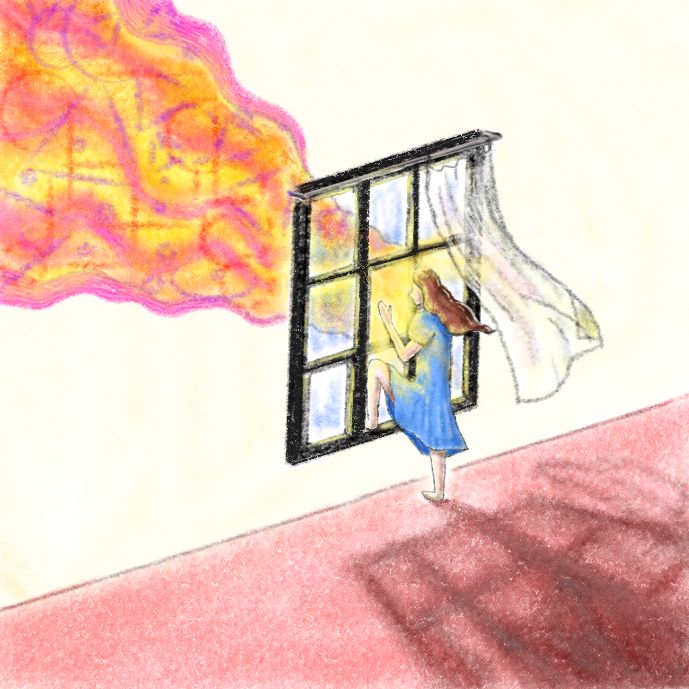
Not once in my ADOS training did they ever cover the topic of monotropism. That means people are getting trained to diagnose autism without a full understanding of the most important theory related around autism. Monotropism. Have you even heard of it? @playspark@tiktok Header art: “Attention Tunnel” by Betsy Selvam is licensed under CC BY-NC 4.0 Likewise, SpEd…
-
Meerkat Mode, Monotropic Split, and Monotropic Spiral
Tanya Adkin and David Gray-Hammond are doing great work furthering our understanding of atypical burnout, monotropism, and the intersections of the two. Tanya’s conceptions of Meerkat Mode, Monotropic Split, and Monotropic Spiral really resonate with me. We created new glossary pages and updated our Monotropism and Burnout pages with selections from their work: Meerkat Mode…
-
Changelog: The Cult of Compliance 33 Years After the ADA
We updated “The Cult of Compliance and the Policing of the Norm” with a selection from “33 Years and Still So Much Work Must be Done: A Reflection on the ADA at 33 | by Jordyn Jensen, Jamelia Morgan, and Nicholas Lawson | CRDJ | Medium”. Disabled people, particularly people of color with disabilities, are…
-

This Is My Space: Collaborative Niche Construction in Psychologically Safe Space
This is my space. It allows me to have control over one small part of a traumatic and offensive world. AuDHD and me: My nesting habits – Emergent Divergence I love that quote from David Gray-Hammond at Emergent Divergence. It nicely distills our Cavendish Space and collaborative niche construction advocacy. I added the quote to…
-

This Is Not About Me: The Journey from Patient to Agent and the Fight for Educational Inclusion
What is it like to be autistic and non-speaking in a world that has already made up its mind about you? This Is Not About Me tells the story of Jordyn Zimmerman. Jordyn dreamt of becoming a teacher. She started out eager to learn at school, but she was soon separated from the other children.…
-
Stimpunks Guide to the NeurodiVerse Issue #5: Redefining Autism Science with Monotropism and the Double Empathy Problem
If we are right, then monotropism is one of the key ideas required for making sense of autism, along with the double empathy problem and neurodiversity. Monotropism makes sense of many autistic experiences at the individual level. The double empathy problem explains the misunderstandings that occur between people who process the world differently, often mistaken for a lack of empathy…
-
Stimpunks Guide to the NeurodiVerse Issue #4: From an Ivory Tower Built on Sand to Open, Participatory, Emancipatory, Activist Research
Autism research is out-of-touch with the “real” world Frontiers | From ivory tower to inclusion: Stakeholders’ experiences of community engagement in Australian autism research Our “Stimpunks Guide to the NeurodiVerse” series surveys recent neurodiversity and disability related research. In this issue, we highlight how the vast majority of autism research is divorced from the lived…
-
Stimpunks Guide to the NeurodiVerse Issue #3: Mental Health and Epistemic Justice
May is Mental Health Awareness Month. We dedicate this issue to epistemic justice, something sorely missing in the treatment of neurodivergent and disabled people’s mental health. Negative stereotypes stifle voices and useful tools. Lack of epistemic justice proliferates harm.
-
Stimpunks Guide to the NeurodiVerse Issue #2: Healthcare Access
This issue gathers recent research on healthcare access for autistic people. These studies confirm autistic common knowledge about our healthcare accessibility struggles and how to ameliorate them.